MedTech Innovations: Bridging Health Equity Gaps by 2026

MedTech Innovations: Bridging Health Equity Gaps by 2026
Published:
The landscape of healthcare is in a perpetual state of evolution, driven by scientific breakthroughs, technological advancements, and an ever-increasing demand for more accessible and equitable care. In the United States, the concept of health equity – where everyone has a fair and just opportunity to be as healthy as possible – remains a significant challenge. Disparities in health outcomes persist across various demographics, influenced by socio-economic status, geographic location, race, ethnicity, and other factors. However, the rapid growth of medical technology, or MedTech Health Equity, presents a powerful opportunity to dismantle these barriers and foster a more inclusive healthcare system. By 2026, the initiatives currently underway and those on the horizon are poised to make a substantial impact on addressing health equity with MedTech.
This article delves into the critical role of MedTech innovations in achieving health equity, exploring the current state, future initiatives, and the profound impact these developments are expected to have on the US healthcare system by 2026. We will examine how technologies like telemedicine, artificial intelligence, wearable devices, and digital health platforms are being leveraged to reach underserved populations, improve diagnostic accuracy, personalize treatment, and empower individuals to take a more active role in their health management. The journey towards health equity is complex, but with strategic investment and thoughtful implementation of MedTech, the vision of a healthier, more equitable society is within reach.
Understanding the Health Equity Challenge in the US
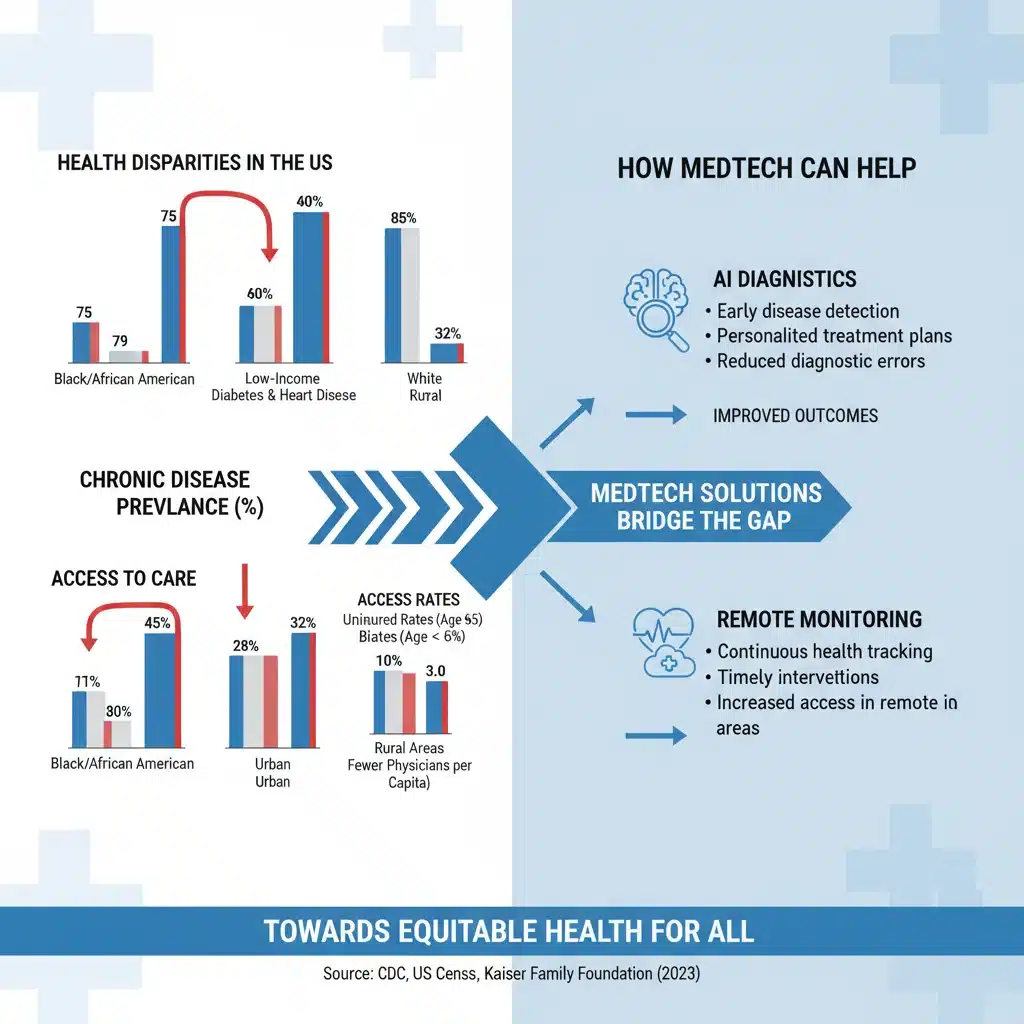
Before we explore the solutions, it’s crucial to grasp the depth of the health equity problem in the US. Health disparities are not merely statistical anomalies; they represent systemic failures that lead to preventable suffering and premature deaths. These disparities manifest in various forms:
- Access to Care: Millions lack adequate health insurance, live in ‘healthcare deserts’ without nearby facilities or specialists, or face transportation barriers.
- Quality of Care: Even with access, the quality of care can vary significantly, with minority groups often receiving suboptimal treatment or experiencing communication barriers.
- Social Determinants of Health (SDOH): Factors like economic stability, education, neighborhood and built environment, social and community context, and health and healthcare all profoundly influence health outcomes. These are often disproportionately negative for marginalized communities.
- Digital Divide: While MedTech offers immense potential, the lack of internet access or digital literacy in certain communities can exacerbate existing inequalities.
The COVID-19 pandemic starkly illuminated these pre-existing inequities, with marginalized communities experiencing higher rates of infection, severe illness, and death. This crisis underscored the urgent need for innovative, scalable solutions that can reach every corner of society, making the focus on MedTech Health Equity more pertinent than ever.
The Promise of MedTech in Addressing Health Disparities
Medical technology encompasses a vast array of devices, software, and services designed to prevent, diagnose, monitor, treat, or alleviate disease and injury. Its potential to revolutionize health equity is multifaceted:
Telemedicine and Remote Monitoring: Bridging Geographic Gaps
Telemedicine, encompassing virtual consultations, remote diagnostics, and e-prescribing, has emerged as a cornerstone of equitable healthcare delivery. For individuals in rural areas or those with limited mobility, virtual care eliminates the need for long-distance travel, reducing time off work and associated costs. Remote patient monitoring (RPM) devices, such as continuous glucose monitors, blood pressure cuffs, and smartwatches, allow healthcare providers to track vital signs and health metrics from a distance, enabling early intervention and preventing complications. This is a direct application of MedTech Health Equity, ensuring that geographical location does not dictate access to essential medical advice and ongoing care.
By 2026, we anticipate a significant expansion of telehealth infrastructure, supported by improved broadband access in underserved areas and more robust reimbursement policies. This will not only make routine care more accessible but also facilitate specialist consultations for conditions that might otherwise go untreated in remote communities.

Artificial Intelligence (AI) and Machine Learning (ML): Enhancing Diagnostics and Personalization
AI and ML algorithms are transforming diagnostics, drug discovery, and treatment personalization. In the context of health equity, AI can:
- Improve Diagnostic Accuracy: AI-powered tools can analyze medical images (e.g., X-rays, MRIs) or pathology slides with incredible precision, potentially overcoming shortages of specialized radiologists or pathologists in certain regions. This can lead to earlier and more accurate diagnoses, particularly for conditions like cancer or retinal diseases.
- Personalize Treatment Plans: By analyzing vast datasets, AI can help tailor treatment plans to individual patient characteristics, including genetic makeup, lifestyle, and social determinants of health. This personalized approach can lead to more effective treatments and better outcomes, especially for populations that have historically been underrepresented in clinical trials.
- Predict Disease Outbreaks: AI can analyze public health data to predict disease outbreaks, allowing for proactive interventions in vulnerable communities.
The ethical implementation of AI is paramount to ensure it does not perpetuate existing biases. Developers are increasingly focused on creating AI models trained on diverse datasets to ensure fairness and accuracy across all populations, a critical component of advancing MedTech Health Equity.
Wearable Devices and Digital Health Platforms: Empowering Patients
Wearable devices, from fitness trackers to medical-grade sensors, empower individuals to monitor their own health data, track activity levels, sleep patterns, and even detect early signs of health issues. When integrated with digital health platforms, this data can be shared with healthcare providers, fostering a more proactive and preventive approach to health. For individuals with chronic conditions, these tools can facilitate self-management and provide continuous feedback, reducing the need for frequent clinic visits.
Digital health platforms also offer educational resources, support networks, and appointment scheduling, all of which contribute to greater patient engagement and self-efficacy. By making health information and tools readily available, these technologies address informational and access barriers that disproportionately affect underserved communities, thereby promoting MedTech Health Equity.
Key Initiatives and Their US Impact by 2026
Several significant initiatives are underway, or are expected to gain momentum, that will leverage MedTech to improve health equity in the US by 2026. These efforts often involve collaboration between government agencies, healthcare providers, technology companies, and community organizations.
Government Funding and Policy Support
Federal and state governments are recognizing the potential of MedTech. Initiatives include:
- Broadband Expansion: Increased investment in infrastructure to expand high-speed internet access to rural and low-income urban areas is foundational for widespread adoption of telehealth and digital health platforms.
- Reimbursement Reforms: Permanent expansion of telehealth reimbursement policies, ensuring that virtual care services are compensated similarly to in-person visits, incentivizes providers to adopt these technologies.
- Data Sharing and Interoperability: Policies promoting seamless data exchange between different healthcare systems and devices are crucial for creating a holistic view of a patient’s health, regardless of where they receive care.
- Regulatory Pathways: Streamlined regulatory processes for innovative MedTech solutions that specifically target health equity challenges can accelerate their deployment.
These policy shifts are creating a fertile ground for MedTech Health Equity solutions to flourish and reach those who need them most.
Community-Based MedTech Programs
Direct engagement with communities is vital. Programs are emerging that:
- Deploy Mobile Health Clinics with MedTech: Equipping mobile clinics with advanced diagnostic tools, telehealth capabilities, and digital health kiosks can bring care directly to underserved neighborhoods.
- Provide Digital Literacy Training: Offering training programs to help individuals, especially seniors and those from low-income backgrounds, navigate digital health tools and the internet.
- Distribute Wearable Devices: Providing subsidized or free wearable health monitors to at-risk populations, coupled with educational support, to encourage proactive health management.
- Leverage Community Health Workers (CHWs): CHWs can act as intermediaries, helping individuals understand and utilize MedTech, translating complex medical information, and connecting them to resources.
These grassroots efforts ensure that technology is not just available, but also accessible and understandable to diverse populations, cementing the impact of MedTech Health Equity.
Industry Innovation Focused on Equity
MedTech companies are increasingly designing products and services with equity in mind:
- Culturally Competent AI: Developing AI algorithms that are trained on diverse datasets and are sensitive to cultural nuances in health behaviors and language.
- Affordable and User-Friendly Devices: Creating medical devices that are not only effective but also cost-effective and easy to use for individuals with varying levels of technological proficiency.
- Multilingual Platforms: Ensuring digital health platforms offer content and support in multiple languages to cater to diverse linguistic communities.
- Inclusive Design: Designing MedTech solutions with input from diverse user groups to ensure they meet the specific needs of different communities.
The shift towards inclusive design and development is a testament to the growing recognition that MedTech Health Equity is not just a social good, but also a strategic imperative for market growth and impact.
Challenges and Considerations for Sustainable MedTech Health Equity
While the promise of MedTech is immense, several challenges must be addressed to ensure its equitable implementation and long-term sustainability.
The Digital Divide
Despite efforts, significant disparities in internet access and digital literacy persist. Without reliable broadband and the skills to use digital tools, many will be left behind. Bridging this gap requires ongoing investment in infrastructure and educational programs.
Data Privacy and Security
As more health data is collected and shared through MedTech, ensuring robust data privacy and security measures is paramount. Trust is essential, especially among communities that have historically experienced medical exploitation or discrimination. Clear regulations and transparent data handling practices are necessary.
Bias in Algorithms and Design
If AI algorithms are trained on biased datasets (e.g., predominantly white male populations), they can perpetuate or even amplify existing health disparities. Rigorous testing, diverse development teams, and ethical oversight are crucial to mitigate algorithmic bias and ensure fairness across all demographic groups. This is a critical area for safeguarding MedTech Health Equity.
Cost and Affordability
While some MedTech solutions can reduce overall healthcare costs, the initial investment in devices, platforms, and training can be substantial. Ensuring affordability and equitable access requires innovative financing models, public-private partnerships, and potentially government subsidies.
Workforce Training and Adaptation
Healthcare professionals need training to effectively integrate new MedTech into their practice and to understand the unique needs of diverse patient populations using these tools. This includes understanding cultural sensitivities and addressing potential digital literacy gaps among patients.
The US Impact by 2026: A Vision for the Future
By 2026, the cumulative impact of these initiatives and technological advancements is expected to significantly reshape the landscape of health equity in the US. We can envision:
- Reduced Geographic Disparities: Telehealth and mobile MedTech solutions will have dramatically expanded access to primary and specialty care in rural and underserved urban areas, making geography less of a barrier to quality healthcare.
- Earlier Disease Detection and Intervention: Widespread adoption of AI-powered diagnostics and remote monitoring will lead to earlier detection of chronic diseases and acute conditions, improving outcomes and reducing the burden of advanced illness, especially in historically neglected communities.
- More Personalized and Effective Care: Data-driven insights from MedTech will enable healthcare providers to offer more tailored and effective treatment plans, moving away from a one-size-fits-all approach and addressing the unique biological and social needs of diverse patient populations.
- Empowered Patients: Individuals will have greater control over their health data and access to user-friendly tools and information, fostering greater health literacy and self-management capabilities across all socio-economic strata.
- Improved Public Health Surveillance: Advanced MedTech will enhance the ability to monitor public health trends, predict outbreaks, and deploy targeted interventions, leading to more resilient and equitable public health systems.
- A More Diverse and Inclusive Healthcare Workforce: The integration of MedTech will necessitate and facilitate a more diverse healthcare workforce equipped to serve a wider range of patient needs, leveraging technology to bridge communication and cultural gaps.
The focus on MedTech Health Equity is not just about adopting new gadgets; it’s about fundamentally rethinking how healthcare is delivered, making it more responsive, inclusive, and fair for every American. The year 2026 marks a crucial milestone in this ongoing endeavor, where the seeds planted today will bear tangible fruits in terms of improved health outcomes and a more just society.
Conclusion
The journey towards achieving true health equity in the United States is complex and multifaceted, but the accelerating pace of MedTech innovation offers a powerful set of tools to overcome long-standing challenges. From expanding access through telemedicine to personalizing care with AI and empowering individuals with digital health platforms, MedTech Health Equity is rapidly becoming a driving force for positive change.
By 2026, with continued strategic investment, thoughtful policy development, ethical implementation, and a strong commitment to community engagement, MedTech has the potential to significantly narrow health disparities, ensuring that every individual, regardless of their background or location, has the opportunity to achieve their highest possible level of health. The future of healthcare is equitable, and MedTech is paving the way.