Predictive Analytics: Transforming US Hospital Operations by 2026

The landscape of healthcare is in a constant state of evolution, driven by technological advancements, increasing patient demands, and the imperative for greater efficiency and improved outcomes. In the United States, the MedTech sector is at the forefront of this transformation, with predictive analytics emerging as a pivotal force. By 2026, the integration of predictive analytics into hospital operations is not just a possibility; it’s an inevitability that promises to reshape how healthcare is delivered, managed, and experienced.
Predictive analytics, in essence, involves using historical data, statistical algorithms, and machine learning techniques to identify the likelihood of future outcomes based on past patterns. For hospitals, this translates into an unprecedented ability to anticipate patient needs, optimize resource allocation, prevent adverse events, and enhance overall operational efficiency. This article delves into the profound impact of predictive analytics on US hospital operations, exploring its diverse applications, benefits, challenges, and the future outlook for 2026.
Understanding Predictive Analytics in Healthcare
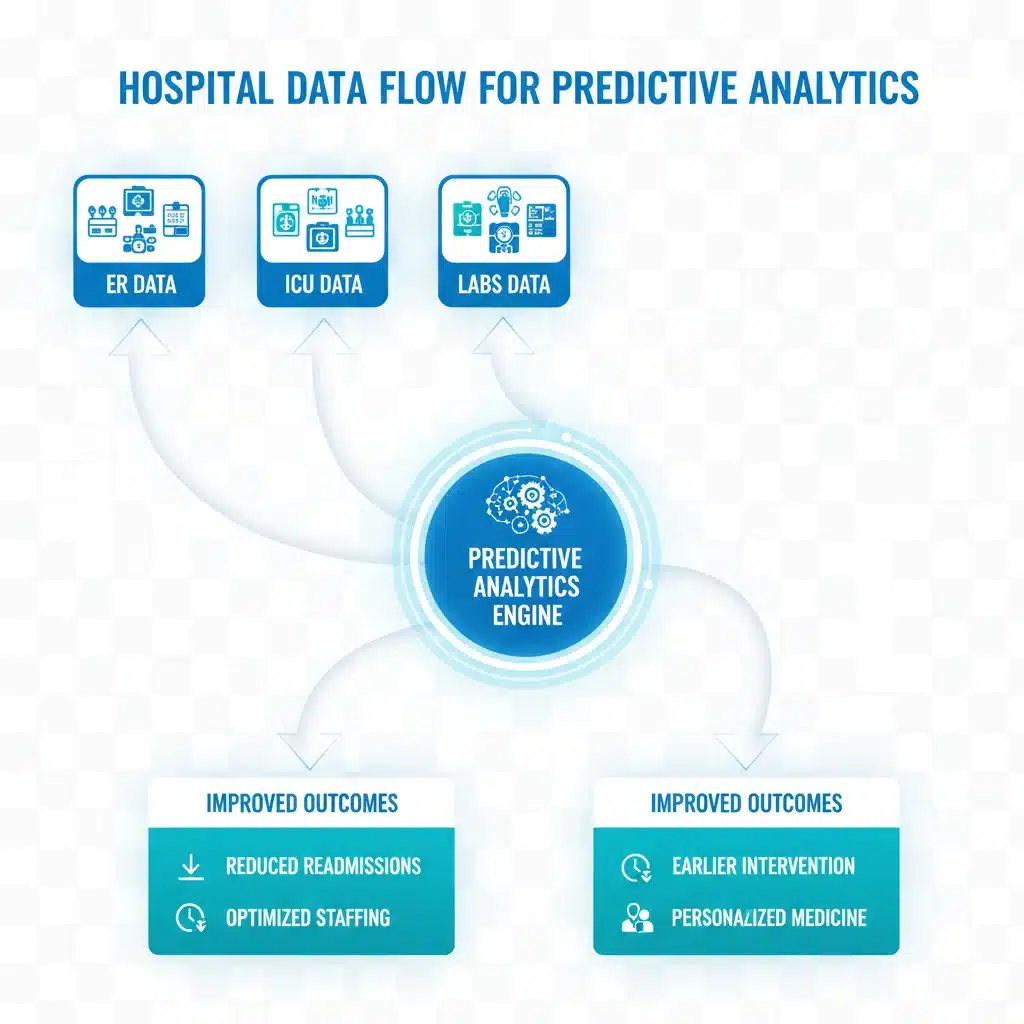
At its core, predictive analytics in healthcare leverages vast datasets—from electronic health records (EHRs), claims data, genomics, wearables, and even social determinants of health—to create models that forecast various events. These forecasts can range from predicting patient readmission risks to identifying potential equipment failures, optimizing surgical schedules, or even anticipating disease outbreaks.
The power of predictive analytics lies in its ability to shift healthcare from a reactive model to a proactive one. Instead of responding to problems after they occur, hospitals can use these insights to intervene earlier, allocate resources more effectively, and ultimately provide more personalized and preventative care. This proactive approach is not only beneficial for patient outcomes but also crucial for managing the escalating costs of healthcare.
The Data Foundation: Fueling Predictive Power
The efficacy of predictive analytics is directly proportional to the quality and quantity of data it consumes. Hospitals generate an enormous amount of data daily, yet much of it remains siloed or underutilized. The journey towards effective predictive analytics begins with robust data infrastructure, including:
- Electronic Health Records (EHRs): The cornerstone of patient data, EHRs provide a rich source of information on diagnoses, treatments, medications, and patient history.
- Operational Data: Information on bed availability, staff schedules, equipment utilization, and supply chain logistics.
- Financial Data: Billing information, insurance claims, and revenue cycles.
- External Data: Public health data, socioeconomic indicators, weather patterns, and even social media sentiment can offer valuable context.
Integrating and standardizing these disparate data sources is a significant undertaking, but it’s essential for creating a comprehensive view that fuels accurate predictive models. The development of interoperable systems and common data standards is therefore a critical enabler for the widespread adoption of predictive analytics.
Key Applications of Predictive Analytics in US Hospital Operations
By 2026, predictive analytics will have permeated almost every facet of hospital operations. Here are some of the most impactful applications:
1. Enhancing Patient Care and Outcomes
Reducing Readmissions
One of the most significant challenges for hospitals is reducing preventable readmissions, which not only impact patient health but also incur substantial financial penalties. Predictive models can identify patients at high risk of readmission based on factors like medical history, comorbidities, socioeconomic status, and adherence to discharge instructions. This allows care teams to implement targeted interventions, such as enhanced post-discharge follow-up, home health services, or patient education, thereby improving outcomes and reducing costs.
Early Detection of Sepsis and Other Critical Conditions
Sepsis is a life-threatening condition where early detection is paramount. Predictive algorithms can continuously monitor patient vital signs, lab results, and other clinical data to identify subtle patterns indicative of sepsis onset hours before traditional methods. This early warning system enables clinicians to initiate treatment sooner, significantly improving survival rates and reducing the severity of the illness.
Personalized Treatment Plans
With a deeper understanding of individual patient characteristics and responses to various treatments, predictive analytics can help tailor treatment plans. This includes predicting which medications will be most effective for a patient based on their genetic profile or identifying patients who are likely to benefit most from a particular therapeutic intervention. This level of personalization moves healthcare closer to true precision medicine.
Optimizing Staffing and Resource Allocation
Hospital staffing is a complex puzzle, balancing patient needs with staff availability and budget constraints. Predictive models can forecast patient volumes, acuity levels, and emergency department surges based on historical data, seasonal trends, and even local events. This allows hospitals to optimize nurse-to-patient ratios, deploy specialists where they are most needed, and ensure adequate resources are available, reducing staff burnout and improving patient safety.
2. Improving Operational Efficiency and Financial Health
Forecasting Patient Flow and Bed Management
Efficient patient flow is crucial for hospital operations. Predictive analytics can forecast admissions, discharges, and transfers, allowing hospitals to proactively manage bed capacity. This reduces wait times, streamlines patient placement, and prevents bottlenecks in critical areas like the emergency department and operating rooms. By optimizing bed utilization, hospitals can increase throughput and accommodate more patients, directly impacting revenue.
Supply Chain Optimization
Hospitals maintain vast inventories of medical supplies, medications, and equipment. Predictive analytics can forecast demand for these items, taking into account patient volumes, seasonal illnesses, and upcoming procedures. This helps hospitals optimize inventory levels, reduce waste, prevent stockouts, and negotiate better pricing with suppliers, leading to significant cost savings.
Revenue Cycle Management
Predictive analytics can identify potential issues in the revenue cycle, such as claim denials or underpayments, before they occur. By analyzing historical billing data, models can flag claims that are likely to be rejected, allowing staff to correct errors proactively. This accelerates the billing process, reduces administrative burden, and improves the hospital’s financial health.
Equipment Maintenance and Predictive Failures
Medical equipment failures can disrupt operations and compromise patient care. Predictive analytics can monitor equipment performance data to anticipate potential malfunctions. By scheduling preventive maintenance before a breakdown occurs, hospitals can minimize downtime, extend the lifespan of expensive equipment, and avoid costly emergency repairs.
3. Public Health and Disease Surveillance
Beyond individual patient care, predictive analytics plays a vital role in public health. By analyzing anonymized patient data and external factors, hospitals can contribute to and benefit from:
- Outbreak Prediction: Identifying potential disease outbreaks (e.g., flu, COVID-19 surges) based on syndromic surveillance data, geographical patterns, and social activity. This allows public health officials and hospitals to prepare resources, implement preventive measures, and communicate effectively with the community.
- Population Health Management: Understanding health trends within specific patient populations, identifying at-risk groups for chronic diseases, and designing targeted interventions to improve community health outcomes.
Challenges and Considerations for 2026
While the promise of predictive analytics is immense, several challenges must be addressed for its successful and ethical implementation by 2026:
Data Quality and Integration
The adage ‘garbage in, garbage out’ holds true for predictive models. Inaccurate, incomplete, or inconsistent data can lead to flawed predictions. Hospitals need to invest in robust data governance strategies, data standardization, and interoperable systems to ensure high-quality data feeds their analytics engines.
Privacy and Security Concerns
Handling sensitive patient data requires stringent privacy and security measures. Compliance with regulations like HIPAA is paramount. Hospitals must implement robust cybersecurity protocols, anonymization techniques, and ethical data usage policies to build and maintain patient trust.
Algorithmic Bias and Equity
Predictive models are trained on historical data, which can sometimes reflect existing societal biases. If not carefully managed, these biases can lead to discriminatory outcomes, particularly for underserved or minority populations. Hospitals must commit to rigorous testing, validation, and continuous monitoring of their algorithms to ensure fairness and equity in healthcare delivery.
Workforce Readiness and Adoption
The successful integration of predictive analytics requires a workforce equipped with the necessary skills. This includes data scientists to build and maintain models, as well as clinicians and administrators who understand how to interpret and act upon predictive insights. Training programs and change management strategies are crucial to foster adoption and ensure that technology augments, rather than replaces, human expertise.
Cost of Implementation
Implementing sophisticated predictive analytics solutions involves significant investment in technology infrastructure, software licenses, and skilled personnel. Hospitals, particularly smaller ones, may face budget constraints. Innovative funding models, partnerships with MedTech companies, and demonstrating clear ROI will be essential for widespread adoption.
The Future Outlook: Predictive Analytics in US MedTech by 2026
Looking ahead to 2026, the trajectory for predictive analytics in the US MedTech landscape is one of accelerated growth and deeper integration. We can anticipate several key trends:
Increased AI and Machine Learning Sophistication
The algorithms underpinning predictive analytics will become even more advanced, incorporating deep learning techniques that can identify complex, non-obvious patterns in vast datasets. This will lead to more accurate predictions and a wider range of actionable insights.
Real-time Predictive Capabilities
The shift towards real-time data processing will enable hospitals to make immediate, informed decisions. This is particularly critical in acute care settings where every second counts, allowing for dynamic adjustments to patient care plans and resource deployment.
Integration with IoT and Wearable Devices
The proliferation of Internet of Things (IoT) devices and wearables will provide a continuous stream of physiological data from patients both inside and outside the hospital. Integrating this data into predictive models will offer an even more holistic view of patient health, enabling proactive interventions and personalized health management.
Greater Focus on Explainable AI (XAI)
As predictive models become more complex, there will be an increasing demand for Explainable AI (XAI). Clinicians and patients need to understand why an algorithm made a particular prediction to build trust and facilitate informed decision-making. XAI will be crucial for the ethical and practical adoption of advanced analytics.
Standardization and Interoperability
Efforts to standardize healthcare data formats and improve interoperability between different systems will intensify. This will break down data silos, making it easier for hospitals to leverage comprehensive datasets for predictive modeling and for different healthcare entities to share insights securely.
Value-Based Care Alignment
Predictive analytics is a natural fit for value-based care models, which incentivize quality over quantity. By optimizing patient outcomes, reducing readmissions, and improving efficiency, predictive analytics directly supports the goals of value-based care, leading to better financial performance for hospitals under these models.
Emergence of Predictive Command Centers
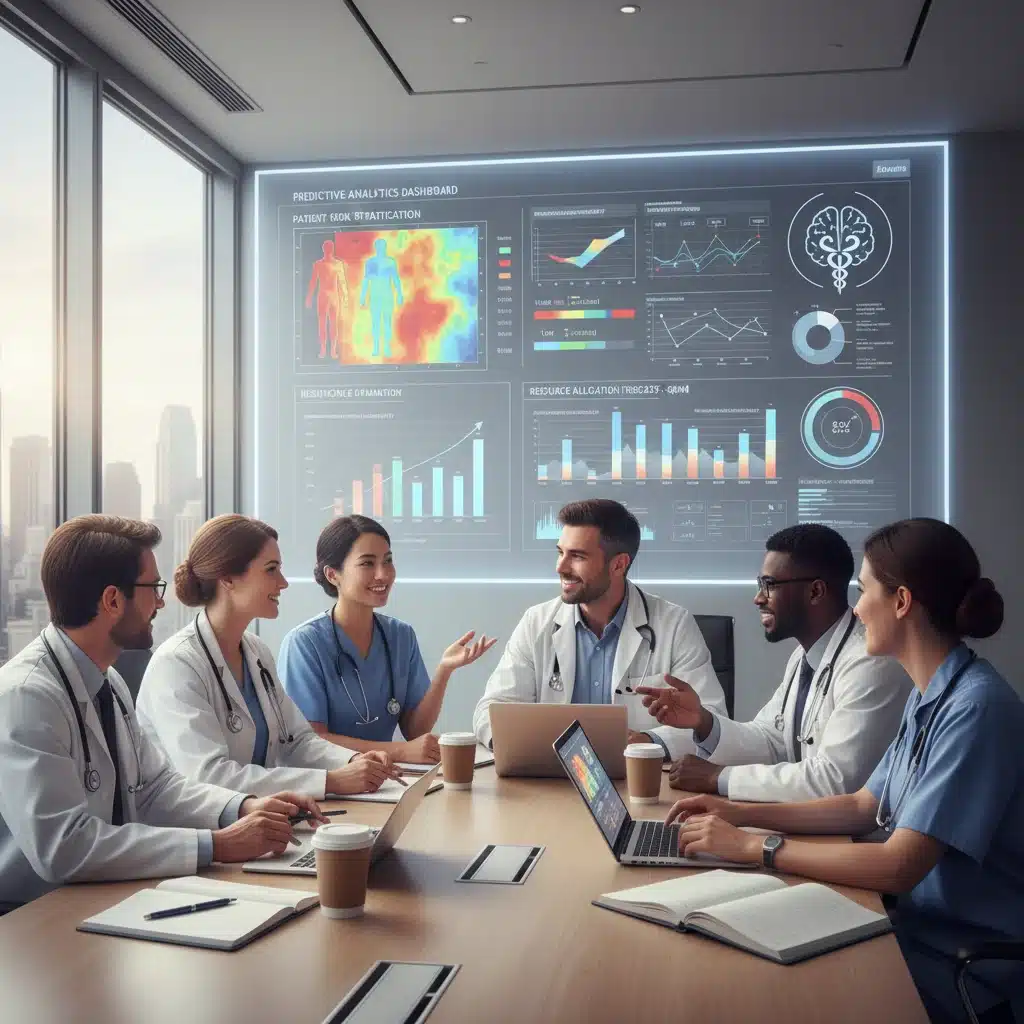
Hospitals may increasingly adopt centralized ‘command centers’ equipped with real-time predictive dashboards. These centers will act as operational hubs, providing a comprehensive overview of patient flow, resource availability, and potential bottlenecks, enabling proactive management of the entire hospital ecosystem.
The Role of MedTech Companies
MedTech companies are instrumental in driving the adoption of predictive analytics. They are developing sophisticated software platforms, AI algorithms, and integrated solutions that simplify data ingestion, model building, and insight delivery. Partnerships between hospitals and MedTech innovators will be crucial for tailoring these technologies to specific clinical and operational needs, ensuring that the solutions are both effective and user-friendly.
These companies are not just providing tools; they are also offering expertise in data science, implementation, and ongoing support, helping hospitals navigate the complexities of integrating advanced analytics into their existing workflows. Their role extends to ensuring compliance with healthcare regulations and developing ethical frameworks for AI usage.
Case Studies and Early Successes
While the full impact of predictive analytics will be realized by 2026, many US hospitals are already demonstrating early successes:
- University of California San Francisco (UCSF) Medical Center: UCSF has used predictive analytics to reduce patient no-show rates by identifying patients likely to miss appointments and implementing targeted reminders, significantly improving access to care and clinic efficiency.
- Rush University Medical Center: Rush has developed predictive models to identify patients at high risk of readmission for conditions like heart failure and pneumonia, leading to a notable decrease in readmission rates and improved post-discharge care coordination.
- Cleveland Clinic: The Cleveland Clinic has leveraged predictive analytics to optimize operating room schedules, reducing wasted time and improving the utilization of surgical suites, leading to increased patient throughput and revenue.
These examples highlight the tangible benefits that predictive analytics can bring, from enhancing patient safety to improving financial performance. As these technologies mature and become more accessible, their impact will only grow.
Conclusion: A Smarter, More Proactive Healthcare Future
By 2026, predictive analytics will have fundamentally transformed US hospital operations, moving them towards a more intelligent, proactive, and patient-centric model. From optimizing patient flow and staffing to preventing adverse events and personalizing care, the applications are vast and the benefits profound. While challenges related to data, ethics, and workforce readiness persist, the concerted efforts of hospitals, MedTech innovators, and policymakers are paving the way for a future where data-driven insights empower healthcare professionals to deliver higher quality, more efficient, and more equitable care.
The journey towards a fully integrated predictive analytics ecosystem is ongoing, but the momentum is undeniable. Hospitals that embrace this technological revolution will not only gain a competitive edge but, more importantly, will be better equipped to meet the evolving healthcare needs of their communities, ensuring a healthier future for all.