Digital Health Equity in the US: Bridging Access Gaps with New Initiatives and Technologies by 2026

Digital Health Equity in the US: Bridging Access Gaps with New Initiatives and Technologies by 2026
The landscape of healthcare in the United States is undergoing a profound transformation, largely driven by technological advancements. From telemedicine to AI-powered diagnostics, digital health tools promise to revolutionize how we access and receive care. However, the promise of this revolution is only as strong as its reach. The concept of digital health equity has emerged as a critical imperative, recognizing that not all Americans have equal access to these life-changing technologies. This article delves into the current state of digital health equity in the US, exploring the persistent access gaps and highlighting the innovative initiatives and technologies poised to bridge these divides by 2026.
The COVID-19 pandemic starkly illuminated existing disparities in healthcare access, particularly for underserved communities. While digital health solutions, such as virtual consultations, became a lifeline for many, they simultaneously exposed a significant digital divide. Millions of Americans lack reliable internet access, essential digital literacy skills, or the necessary devices to participate fully in the digital health ecosystem. Addressing these fundamental barriers is not merely a matter of convenience; it is a moral and public health imperative to achieve true digital health equity.
Understanding the Digital Divide in Healthcare
The digital divide is a multifaceted problem, extending beyond simple internet access. It encompasses several interconnected challenges that prevent equitable engagement with digital health resources:
- Broadband Access and Affordability: In many rural and low-income urban areas, high-speed internet is either unavailable or prohibitively expensive. This foundational barrier immediately excludes a significant portion of the population from digital health services.
- Device Access: Ownership of smartphones, tablets, or computers is not universal. Even with internet access, the lack of appropriate devices can hinder participation in virtual care or online health management.
- Digital Literacy and Skills: Even with access to devices and internet, many individuals, particularly older adults and those with lower educational attainment, may lack the confidence or skills to navigate digital platforms, manage online appointments, or understand health information presented digitally.
- Language and Cultural Barriers: Digital health tools are often designed without sufficient consideration for diverse linguistic and cultural backgrounds, creating additional hurdles for non-English speakers or specific ethnic groups.
- Trust and Privacy Concerns: Vulnerable populations may harbor distrust towards digital systems, especially concerning the privacy and security of their sensitive health information.
- Disability Access: Digital health platforms must be designed with accessibility in mind, ensuring they are usable by individuals with visual, auditory, cognitive, or motor impairments.
These barriers collectively contribute to a lack of digital health equity, exacerbating existing health disparities and preventing marginalized communities from reaping the full benefits of modern healthcare innovations.
The Vision for 2026: A Future of Equitable Digital Health
The year 2026 serves as a crucial benchmark for many health initiatives, including the push for widespread digital health equity. This timeframe allows for strategic planning, resource allocation, and the implementation of sustainable solutions. The vision is clear: to ensure that every individual in the US, regardless of their socioeconomic status, geographic location, or demographic background, has the opportunity to leverage digital health tools to improve their health and well-being.
Achieving this vision requires a concerted effort from government agencies, healthcare providers, technology developers, community organizations, and individual advocates. It’s about building an inclusive digital health ecosystem that actively seeks to uplift and empower those who have historically been left behind.
Key Initiatives Bridging the Digital Divide
Several promising initiatives are already underway, demonstrating a commitment to enhancing digital health equity across the nation:
1. Expanding Broadband Infrastructure and Affordability Programs
Recognizing broadband as a fundamental utility, federal and state governments are investing heavily in infrastructure development, particularly in rural and underserved urban areas. Programs like the Affordable Connectivity Program (ACP) offer subsidies to help low-income households afford internet services, directly addressing the cost barrier. Efforts are also being made to increase awareness and enrollment in these programs.
2. Digital Literacy and Navigation Support
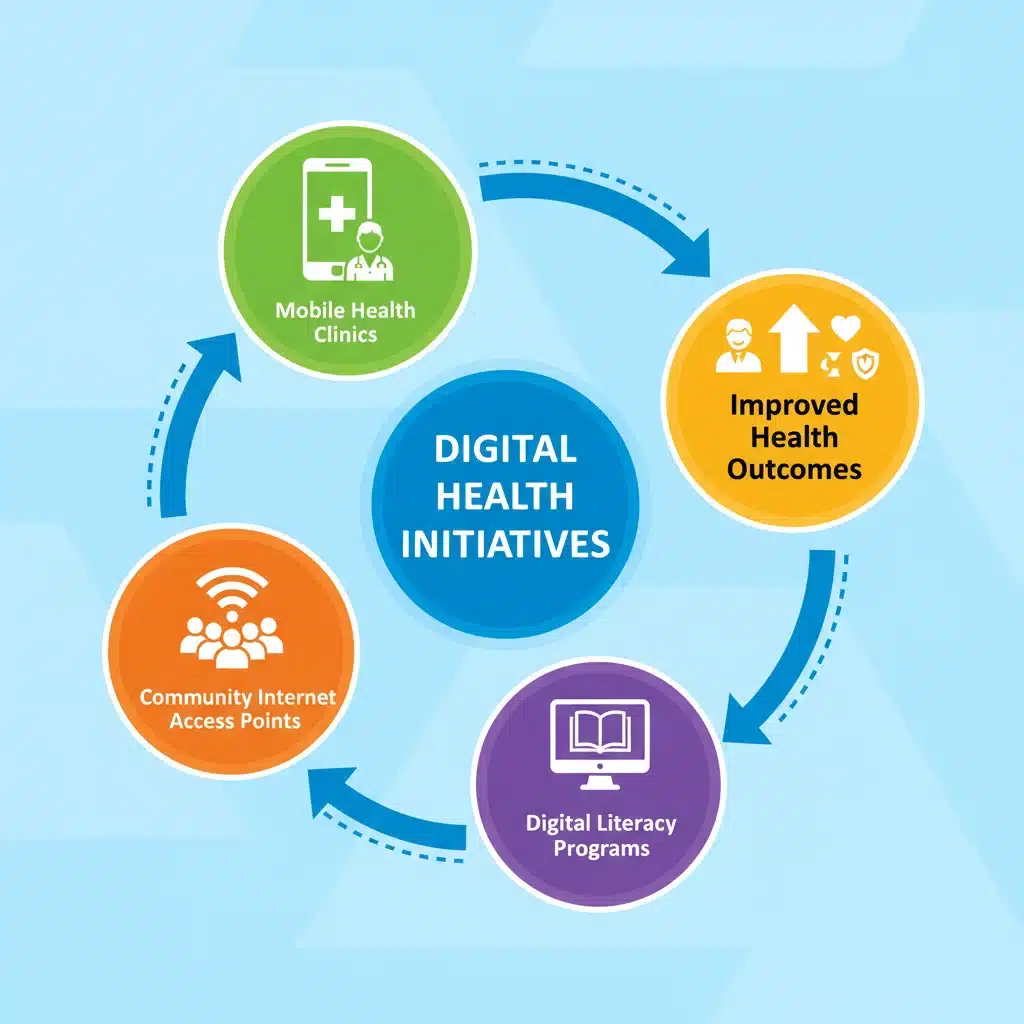
Community-based organizations, libraries, and healthcare systems are launching programs to teach essential digital skills. These initiatives range from basic computer use to navigating patient portals and understanding telehealth platforms. The goal is to empower individuals with the confidence and knowledge to effectively use digital health tools. Furthermore, ‘digital navigators’ are emerging roles, providing personalized assistance to patients in setting up and utilizing digital health services.
3. Device Provisioning Programs
Some programs and grants are focused on providing devices (smartphones, tablets) to individuals who lack them, often bundled with internet access and digital literacy training. This holistic approach ensures that people not only have the connectivity but also the means to engage with digital health.
4. Culturally and Linguistically Appropriate Digital Tools
Developers are increasingly focusing on creating digital health applications and platforms that are multilingual, culturally sensitive, and easy to understand for diverse populations. This includes features like language toggles, culturally relevant imagery, and simplified interfaces. The aim is to make digital health feel inclusive and accessible to everyone, promoting true digital health equity.
5. Telehealth Policy and Reimbursement Evolution
The pandemic accelerated the adoption of telehealth, and policymakers are working to make these changes permanent. Expanding reimbursement for a wider range of telehealth services, across different modalities (audio-only, video), and for various providers helps ensure that telehealth remains a viable and accessible option, particularly for those in remote areas or with transportation challenges.

Technological Innovations Driving Digital Health Equity
Beyond policy and programmatic efforts, technological advancements themselves are playing a pivotal role in fostering digital health equity:
1. Mobile Health (mHealth) Solutions
Smartphones are ubiquitous, even in underserved communities. mHealth apps offer a powerful avenue for delivering health education, chronic disease management tools, appointment reminders, and even remote monitoring directly to patients’ pockets. Designing apps that are low-bandwidth friendly and accessible on older devices is crucial for equitable reach.
2. AI and Machine Learning for Personalized Care
AI can help analyze vast datasets to identify populations at risk, predict health outcomes, and personalize health recommendations. When applied ethically and responsibly, AI can help tailor interventions and information to individual needs, addressing disparities by providing targeted support. For instance, AI-powered chatbots can offer health information in multiple languages and at varying literacy levels.
3. Remote Patient Monitoring (RPM)
RPM devices allow healthcare providers to track vital signs, glucose levels, and other health metrics from a distance. This is particularly beneficial for managing chronic conditions in rural areas or for patients with mobility issues, reducing the need for frequent in-person visits and improving outcomes. Accessible and user-friendly RPM devices are key to their equitable deployment.
4. Digital Therapeutics (DTx)
DTx are software programs that deliver evidence-based therapeutic interventions to prevent, manage, or treat a medical disorder or disease. These can be particularly impactful for mental health conditions, substance use disorders, and chronic diseases, offering scalable and accessible treatment options, especially in areas with a shortage of specialists.
5. Community Wi-Fi Hotspots and Telehealth Kiosks
To address the immediate lack of home internet access, communities are establishing public Wi-Fi hotspots in libraries, community centers, and even mobile clinics. Telehealth kiosks, often located in pharmacies or community hubs, provide private spaces with internet-enabled devices for virtual consultations, offering a vital bridge for those without home access or privacy.
Challenges and Ongoing Efforts
While significant progress is being made, achieving comprehensive digital health equity by 2026 is not without its challenges:
- Sustained Funding: Many initiatives rely on grants and temporary funding. Long-term, sustainable funding models are essential to maintain and expand these programs.
- Interoperability and Data Sharing: Ensuring that various digital health systems can communicate with each other is crucial for seamless care coordination and to prevent fragmented patient experiences.
- Data Privacy and Security: As more health data goes digital, robust cybersecurity measures and clear data privacy policies are paramount to build and maintain patient trust, especially among vulnerable populations.
- Workforce Development: Training healthcare professionals to effectively utilize digital tools and communicate with patients virtually is critical. This includes cultural competency training to ensure equitable care delivery.
- Regulatory Frameworks: Evolving regulations need to keep pace with technological advancements, ensuring safety, efficacy, and equitable access without stifling innovation.
Addressing these challenges requires continuous collaboration and adaptation. The commitment to digital health equity must be embedded in every stage of digital health development and deployment.
The Role of Stakeholders in Achieving Digital Health Equity
Achieving digital health equity is a shared responsibility. Each stakeholder plays a vital role:
- Government Agencies (Federal, State, Local): Responsible for policy-making, funding infrastructure, regulating digital health, and supporting affordability programs.
- Healthcare Providers and Systems: Must adopt inclusive digital health strategies, train staff, offer digital literacy support, and ensure their platforms are accessible and culturally competent.
- Technology Developers: Have a responsibility to design user-friendly, accessible, and secure digital health tools that consider diverse user needs and low-resource settings.
- Community Organizations: Serve as crucial bridges, providing digital literacy training, device access, and trusted points of contact for community members.
- Payers and Insurers: Can incentivize the use of equitable digital health solutions and ensure reimbursement policies support widespread adoption.
- Patients and Advocates: Their voices are essential in shaping policies and technologies to meet real-world needs and ensure solutions are patient-centered.
By working in concert, these groups can create a robust ecosystem that supports and sustains digital health equity.
Measuring Progress Towards 2026 Goals
To ensure that efforts are effective, it is crucial to establish clear metrics for measuring progress towards digital health equity. These might include:
- Percentage of households with affordable broadband access.
- Rates of digital device ownership across different demographic groups.
- Patient engagement rates with digital health tools, disaggregated by race, ethnicity, income, and geographic location.
- Reduction in health disparities attributed to improved digital health access.
- Number of individuals receiving digital literacy training.
- Accessibility ratings of digital health platforms for individuals with disabilities.
Regular evaluation and data collection will allow stakeholders to identify areas of success, pinpoint persistent challenges, and adapt strategies to ensure the most impactful outcomes.
Conclusion: A More Inclusive Digital Health Future
The journey towards full digital health equity in the US by 2026 is ambitious but achievable. It demands a holistic approach that tackles infrastructure gaps, enhances digital literacy, fosters inclusive technology design, and champions supportive policies. The benefits of achieving this equity are immense: improved health outcomes for all, reduced healthcare costs through preventative care and efficient service delivery, and a more resilient and responsive healthcare system.
As we move closer to 2026, the focus must remain steadfast on ensuring that the digital health revolution leaves no one behind. By prioritizing equitable access and thoughtful implementation of new technologies, the US can truly transform its healthcare landscape, making quality care a reality for every American, regardless of their connection to the digital world. The future of healthcare is digital, and with dedicated effort, it can also be equitable.