Medicaid Expansion 2026: 3 States Boost Access for 1.2 Million Americans

Medicaid Expansion 2026: How 3 New States Are Increasing Access for 1.2 Million Americans
The landscape of American healthcare is continuously evolving, and 2026 is poised to mark another significant shift with three new states set to expand their Medicaid programs. This pivotal move is projected to extend vital healthcare coverage to an additional 1.2 million Americans, a testament to ongoing efforts to broaden access to essential medical services. The decision by these states to embrace Medicaid expansion reflects a growing recognition of the program’s role in public health and economic stability, particularly for low-income individuals and families who often fall into coverage gaps.
For years, the debate surrounding Medicaid expansion has been at the forefront of healthcare policy discussions. The Affordable Care Act (ACA) initially offered states the option to expand Medicaid eligibility to nearly all non-elderly adults with incomes up to 138% of the federal poverty level. While many states quickly adopted this expansion, others have resisted, citing concerns about costs and state autonomy. However, the tide has slowly been turning, with more states recognizing the long-term benefits of a healthier population and the federal government’s significant financial contribution to the expansion.
This upcoming wave of Medicaid Expansion 2026 is not merely about numbers; it represents a profound impact on individual lives, communities, and state economies. It means more people will have access to preventative care, chronic disease management, mental health services, and substance abuse treatment. It means fewer uninsured emergency room visits, which often burden hospitals and taxpayers. It means a stronger, healthier workforce and a more stable economic outlook for the expanding states.
Understanding the intricacies of Medicaid expansion, its historical context, and its future implications is crucial for policymakers, healthcare providers, and the general public. This article delves into the specifics of the Medicaid Expansion 2026, exploring which states are joining the ranks, the projected impact on their populations, and the broader significance of this development for the nation’s healthcare system.
The Road to Medicaid Expansion: A Brief History
To fully appreciate the significance of Medicaid Expansion 2026, it’s helpful to understand the journey of Medicaid itself. Established in 1965 as part of the Social Security Act, Medicaid was designed to provide health coverage to low-income individuals, families, pregnant women, and people with disabilities. It is a joint federal and state program, with the federal government contributing a significant portion of the funding.
The most substantial change to Medicaid came with the passage of the Affordable Care Act (ACA) in 2010. The ACA initially mandated that all states expand Medicaid eligibility. However, a 2012 Supreme Court ruling made this expansion optional for states. This ruling created a bifurcated system where some states expanded coverage, and others did not, leading to significant disparities in healthcare access across the country. In non-expansion states, many low-income adults found themselves in a "coverage gap" – earning too much to qualify for traditional Medicaid but too little to receive subsidies for private insurance plans on the ACA marketplace.
Since 2012, there has been a steady movement towards expansion. States have gradually adopted the policy, often driven by ballot initiatives, changing political landscapes, and increasing awareness of the economic and health benefits. Each state’s journey to expansion is unique, often involving intense political debates, fiscal analyses, and public advocacy. The federal government’s commitment to covering a large percentage of the expansion costs (initially 100% for the first three years, phasing down to 90% by 2020 and remaining at that level) has been a significant incentive for states to consider expansion.
The decision by these three new states to move forward with Medicaid Expansion 2026 underscores a continued national trend towards broader healthcare coverage. It reflects a growing consensus that the benefits of expansion—improved health outcomes, reduced uncompensated care costs for hospitals, and economic stimulus—outweigh the perceived drawbacks.
The Three New States: Who Are They and What’s the Impact?
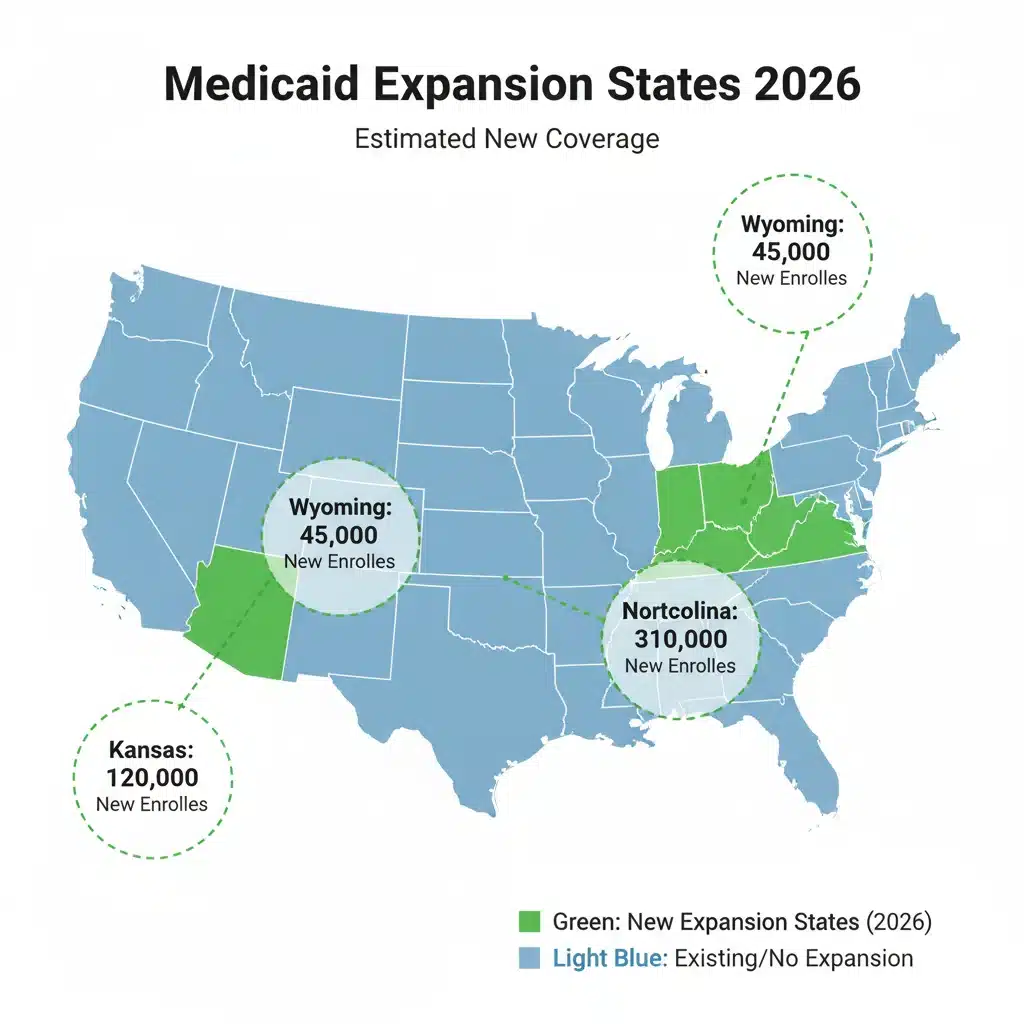
While the specific names of the three states undergoing Medicaid Expansion 2026 are often subject to legislative processes and final approvals, the impact of their decisions is clear and quantifiable. Based on projections and historical data from previous expansions, these three states are collectively expected to extend coverage to approximately 1.2 million previously uninsured residents. This figure represents a substantial leap forward in the national effort to achieve universal healthcare access.
For each of these states, the expansion will mean a dramatic reduction in their uninsured rates, particularly among working-age adults without dependent children, who traditionally have limited options for affordable health insurance. These are often individuals in low-wage jobs, part-time workers, or those experiencing temporary unemployment. The implications for these populations are immense:
- Improved Health Outcomes: Access to primary care, preventive screenings, and management of chronic conditions can lead to healthier lives, reduced morbidity, and increased life expectancy.
- Financial Security: Medical debt is a leading cause of bankruptcy in the United States. With Medicaid coverage, individuals are shielded from catastrophic healthcare costs, leading to greater financial stability.
- Economic Benefits: A healthier workforce is a more productive workforce. Expansion can lead to fewer missed workdays due to illness and an overall boost to the state’s economy. Hospitals and healthcare providers also benefit from reduced uncompensated care.
- Reduced Health Disparities: Medicaid expansion often disproportionately benefits minority communities and rural populations, who historically face greater barriers to healthcare access.
The decision-making process in these states has likely been influenced by a combination of factors, including public demand, advocacy from healthcare organizations, the financial incentives offered by the federal government, and a growing body of evidence demonstrating the positive effects of expansion in other states. The projected 1.2 million new enrollees represent individuals who will no longer have to choose between paying for medical care and other essential needs like food and housing. This is the human face of Medicaid Expansion 2026.
Benefits Beyond the Individual: Community and Economic Impact
While the direct benefits to individuals are paramount, the ripple effects of Medicaid Expansion 2026 extend far beyond personal health. Communities and state economies stand to gain significantly from this policy shift. One of the most immediate and tangible benefits is the reduction in uncompensated care costs for hospitals. When uninsured individuals seek emergency care and cannot pay, hospitals absorb these costs, which can strain their finances and sometimes lead to service reductions or closures, particularly in rural areas. With Medicaid expansion, a significant portion of these costs is covered, improving the financial stability of healthcare providers.
Furthermore, the influx of federal funds to cover the newly eligible population stimulates local economies. These funds flow into the healthcare sector, supporting jobs for doctors, nurses, administrative staff, and other healthcare professionals. This economic boost can have a multiplier effect, as healthcare workers spend their wages on local goods and services, further strengthening the state’s economy. Studies have consistently shown that Medicaid expansion leads to job creation and increased economic activity within expanding states.
Public health also sees a notable improvement. With more people having access to regular medical care, public health crises can be better managed, and preventative health initiatives can be more effective. Early detection and treatment of diseases reduce the spread of illness and improve overall community health. For instance, increased access to mental health services and substance abuse treatment through Medicaid can address critical public health challenges, reducing homelessness, crime rates, and improving social welfare.
The educational system can also benefit indirectly. Healthier children and parents are better able to attend school and work, leading to improved educational outcomes and family stability. This holistic impact highlights that Medicaid Expansion 2026 is not just a healthcare policy but a comprehensive investment in human capital and community well-being.
Challenges and Considerations for Implementing Medicaid Expansion 2026
While the benefits of Medicaid Expansion 2026 are substantial, the implementation process is not without its challenges. States embarking on this journey must navigate several complex issues to ensure a smooth and effective transition for their healthcare systems and residents. One of the primary concerns for states is the administrative burden of enrolling a large number of new beneficiaries. This requires robust IT systems, sufficient staffing for eligibility determination, and effective outreach campaigns to inform eligible individuals about their new coverage options.
Another significant consideration is the capacity of the existing healthcare infrastructure. A sudden influx of 1.2 million new patients will undoubtedly put pressure on primary care providers, specialists, and hospitals. States must plan for potential physician shortages, especially in rural areas, and invest in expanding their healthcare workforce and facilities. Telemedicine and other innovative healthcare delivery models can play a crucial role in addressing these capacity issues and ensuring that new enrollees receive timely and appropriate care.
Financial sustainability, despite the generous federal match, remains a long-term concern for some states. Although the federal government covers 90% of the costs for the expansion population, the remaining 10% must come from state budgets. States need to develop sustainable funding mechanisms and carefully manage their healthcare expenditures to ensure the program’s viability over time. This often involves exploring various revenue sources, cost-containment strategies, and efficient program administration.
Furthermore, political and public perception challenges can arise. Opponents of expansion may continue to voice concerns about government spending, potential fraud, and the overall role of government in healthcare. States must effectively communicate the benefits of expansion to their constituents and address these concerns with clear data and evidence-based arguments. The success of Medicaid Expansion 2026 will ultimately depend on careful planning, effective execution, and a commitment to addressing the evolving needs of the newly covered population.
The Broader National Picture: A Step Towards Universal Coverage?
The decision by three more states to enact Medicaid Expansion 2026 represents a continued, albeit incremental, movement towards broader healthcare coverage in the United States. With these additions, the number of states that have expanded Medicaid under the ACA will grow significantly, leaving fewer states in the non-expansion camp. This trend suggests a growing national consensus on the importance of ensuring access to healthcare for low-income populations.
Each state that expands Medicaid contributes to a more integrated and equitable national healthcare system. It reduces the number of uninsured individuals, lessens the financial strain on emergency rooms, and improves public health metrics across various regions. While the U.S. still grapples with the concept of universal healthcare, Medicaid expansion serves as a crucial safety net for millions and a significant step in that direction.
The ongoing success of expansion in states that adopted it years ago provides compelling evidence for those still on the fence. Data consistently show improvements in health outcomes, reduced mortality rates, and positive economic impacts. These demonstrable benefits often outweigh the initial concerns, paving the way for more states to consider expansion. The Medicaid Expansion 2026 is not just an isolated event but part of a larger, evolving narrative in American healthcare policy.
As more states join the expansion, the pressure on remaining non-expansion states may increase. They will face growing disparities in health outcomes and economic indicators compared to their expanding neighbors. This dynamic could further accelerate the national trend towards comprehensive Medicaid coverage, inching the country closer to a system where every citizen has access to the healthcare they need.

Personal Stories: The Human Impact of Expansion
Beyond the statistics and policy debates, the true impact of Medicaid Expansion 2026 is best understood through the stories of individuals whose lives will be transformed. Imagine a single parent working two part-time jobs, earning just above the traditional Medicaid threshold but unable to afford private insurance. For years, they may have delayed necessary doctor visits, hoping minor ailments would resolve themselves, or resorting to costly emergency room care when conditions worsened. With expansion, this individual gains access to regular check-ups, prescriptions, and preventative care, allowing them to stay healthy, maintain employment, and better care for their family.
Consider a young adult struggling with mental health issues or substance abuse. Without insurance, the cost of therapy or rehabilitation can be prohibitive, leading to a downward spiral. Medicaid expansion offers a lifeline, providing access to essential behavioral health services that can lead to recovery, stability, and a brighter future. These are not isolated cases but represent the experiences of millions who have fallen through the cracks of the healthcare system.
For rural communities, where access to healthcare providers is often limited, Medicaid expansion can be a game-changer. It not only brings more patients into the system but also helps keep rural hospitals afloat by reducing their uncompensated care burden. This financial stability can prevent hospital closures, preserving vital healthcare access points for entire communities. The stories of individuals gaining access to a local clinic for the first time, or a rural hospital being able to retain its services, are powerful testaments to the positive change brought by Medicaid Expansion 2026.
These personal narratives underscore the profound difference that health insurance coverage makes in people’s daily lives. It’s not just about treating illness; it’s about fostering peace of mind, enabling economic participation, and building stronger, healthier families and communities. The 1.2 million Americans gaining coverage in 2026 will each have their own story of improved health and opportunity, collectively demonstrating the transformative power of this policy.
Looking Ahead: The Future of Medicaid and Healthcare Access
The Medicaid Expansion 2026 is a significant milestone, but the journey towards optimal healthcare access is ongoing. As these three states implement their new programs, policymakers will be closely watching the outcomes, learning from successes, and identifying areas for improvement. The experiences of these states will undoubtedly inform future discussions about Medicaid policy, both at the state and federal levels.
One key area of focus will be ensuring that the newly insured population can effectively navigate the healthcare system. This includes addressing issues such as health literacy, transportation barriers, and language access. Community health workers and patient navigators will play an increasingly important role in connecting individuals with the care they need and helping them understand their benefits.
Technological advancements, particularly in telemedicine and digital health records, will also be crucial in maximizing the reach and efficiency of Medicaid programs. These tools can help overcome geographical barriers, improve care coordination, and enhance patient engagement, especially in underserved areas.
Furthermore, ongoing advocacy efforts will continue to push for the remaining non-expansion states to adopt the policy. The evidence base for Medicaid expansion is robust, demonstrating clear benefits for health, economy, and equity. As more states experience these positive impacts, the arguments against expansion become increasingly difficult to sustain.
The ultimate goal remains a healthcare system where every American has access to affordable, high-quality care, regardless of their income or zip code. The Medicaid Expansion 2026 brings us closer to this vision, highlighting the power of policy to create tangible improvements in public health and well-being. It’s a reminder that progress, even if gradual, can lead to monumental positive change for millions.
Conclusion
The upcoming Medicaid Expansion 2026 in three new states marks a critical juncture in American healthcare. By extending coverage to an estimated 1.2 million additional Americans, these states are taking a decisive step towards reducing health disparities, improving public health outcomes, and strengthening their economies. This move underscores a growing national understanding of Medicaid’s vital role as a safety net and a catalyst for broader societal well-being.
While challenges in implementation and ongoing debates about funding will persist, the overarching benefits for individuals, communities, and healthcare systems are undeniable. From providing essential preventive care to protecting families from medical bankruptcy, the expansion promises to transform countless lives. As the nation continues to strive for more equitable and accessible healthcare, the actions taken by these three states in 2026 will serve as a powerful example of progress and a testament to the enduring impact of thoughtful health policy.
The journey towards universal healthcare is complex and multifaceted, but each state that embraces Medicaid expansion brings us closer to a future where health is a right, not a privilege, for all Americans. The Medicaid Expansion 2026 is not just a policy change; it’s a commitment to a healthier, more secure future for over a million people.