Digital Therapeutics US Market: Outlook 2026 & New Treatment Access

Digital Therapeutics US Market: Outlook 2026 & How to Access New Treatment Programs
The landscape of healthcare is undergoing a profound transformation, driven by technological advancements and an increasing demand for personalized, accessible, and effective treatment solutions. At the forefront of this revolution are digital therapeutics market (DTx), a category of evidence-based therapeutic interventions delivered through software programs to prevent, manage, or treat a medical disorder or disease. These innovative solutions are poised to redefine patient care, offering new avenues for managing chronic conditions, mental health disorders, and a myriad of other health challenges. The United States, with its robust healthcare infrastructure and strong embrace of technological innovation, is a pivotal battleground for the growth and adoption of DTx.
This comprehensive article will delve into the current state and future outlook of the digital therapeutics market in the US, projecting its trajectory towards 2026. We will explore the key drivers propelling this growth, the regulatory frameworks shaping its evolution, the challenges that need to be overcome, and crucially, provide actionable insights on how patients and healthcare providers can access these groundbreaking new treatment programs. Understanding the nuances of the digital therapeutics market is not just an academic exercise; it’s essential for anyone looking to navigate the future of healthcare.
Understanding Digital Therapeutics: More Than Just Health Apps
Before we dive into the market dynamics, it’s crucial to distinguish digital therapeutics from the broader category of health and wellness apps. While both leverage technology, DTx are characterized by several key features:
- Evidence-Based: DTx products are clinically validated, demonstrating efficacy through rigorous clinical trials, similar to traditional pharmaceuticals.
- Medical Device Classification: Many DTx fall under the classification of medical devices and are subject to regulatory oversight by bodies like the FDA.
- Prescription or Provider-Recommended: Some DTx require a prescription from a healthcare provider, while others are recommended as part of a treatment plan.
- Specific Therapeutic Interventions: They deliver specific, therapeutic interventions directly to patients, addressing a particular medical condition.
- Personalized and Engaging: DTx often incorporate elements of behavioral science, gamification, and personalization to enhance patient engagement and adherence.
This distinction is vital for understanding why the digital therapeutics market is garnering such significant attention and investment. They are not merely tools for tracking steps or calories; they are legitimate medical interventions designed to improve health outcomes.
The Current Landscape of the US Digital Therapeutics Market
The US digital therapeutics market is in a period of rapid expansion. Several factors contribute to its current vibrancy:
- Rising Prevalence of Chronic Diseases: Conditions like diabetes, hypertension, and cardiovascular diseases are rampant, and DTx offer scalable, cost-effective solutions for their management.
- Mental Health Crisis: The growing awareness and demand for mental health support have propelled DTx for conditions such as anxiety, depression, and insomnia.
- Technological Advancements: The proliferation of smartphones, wearables, and advanced data analytics has created fertile ground for DTx development.
- Shift Towards Value-Based Care: Healthcare systems are increasingly focused on outcomes, and DTx, with their measurable efficacy, align perfectly with this paradigm.
- COVID-19 Pandemic Acceleration: The pandemic highlighted the critical need for remote care solutions, significantly accelerating the adoption and acceptance of digital health technologies, including DTx.
Key players in the digital therapeutics market range from established pharmaceutical companies venturing into digital health to innovative startups specializing in specific therapeutic areas. The competitive landscape is dynamic, with continuous innovation and strategic partnerships shaping its evolution.
Digital Therapeutics Market Outlook 2026: Projections and Growth Drivers
The future of the digital therapeutics market in the US looks exceedingly promising. Analysts project significant growth, with market valuations expected to reach several billion dollars by 2026. This impressive growth will be fueled by:
1. Expanding Clinical Evidence and Regulatory Clarity
As more DTx products undergo rigorous clinical trials and receive regulatory approvals, confidence among healthcare providers, payers, and patients will grow. The FDA’s evolving framework for digital health is providing clearer pathways for developers, reducing uncertainty and accelerating market entry. This will be a critical factor in driving the digital therapeutics market forward.
2. Increased Payer Coverage and Reimbursement
Historically, reimbursement for DTx has been a significant barrier. However, this is changing. Major payers, including commercial insurers and government programs like Medicare and Medicaid, are increasingly recognizing the value of DTx and developing pathways for coverage and reimbursement. This shift is paramount for widespread adoption and will substantially impact the digital therapeutics market.
3. Integration into Clinical Workflows
For DTx to become mainstream, seamless integration into existing clinical workflows is essential. This includes interoperability with Electronic Health Records (EHRs), physician prescribing platforms, and patient monitoring systems. Efforts to standardize data exchange and create user-friendly interfaces will enhance adoption rates.
4. Therapeutic Area Expansion
While early DTx focused on diabetes and mental health, the pipeline is expanding rapidly to cover a broader range of conditions, including neurological disorders, cardiovascular diseases, respiratory conditions, and even oncology support. This diversification will open up new segments within the digital therapeutics market.
5. Strategic Partnerships and Acquisitions
Collaborations between DTx companies, pharmaceutical giants, tech firms, and healthcare systems will become more common. These partnerships can leverage the strengths of each entity, combining clinical expertise with technological prowess and market reach, further accelerating the growth of the digital therapeutics market.
Navigating the Regulatory Landscape for Digital Therapeutics in the US
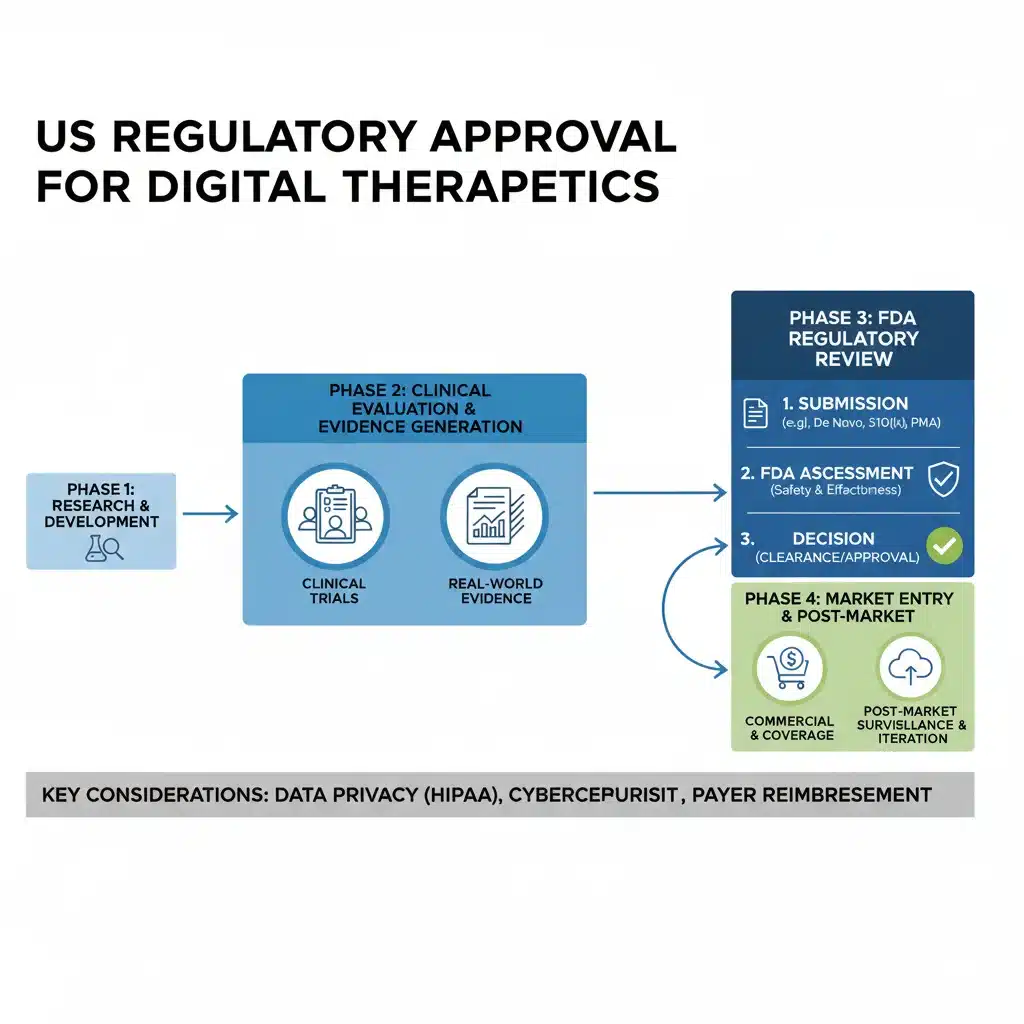
The regulatory environment for digital therapeutics in the US is complex but increasingly defined. The Food and Drug Administration (FDA) plays a crucial role in ensuring the safety and effectiveness of these products. DTx can fall under various regulatory pathways depending on their intended use and risk profile:
FDA’s Role in Digital Therapeutics
- Medical Device Classification: Many DTx are classified as Software as a Medical Device (SaMD), requiring premarket review (e.g., 510(k) clearance, De Novo classification, or PMA approval).
- Premarket Notification (510(k)): For low-to-moderate risk devices that are substantially equivalent to a legally marketed device.
- De Novo Classification: For novel, low-to-moderate risk devices that have no predicate device.
- Premarket Approval (PMA): For high-risk devices that pose a significant risk of illness or injury.
- Guidance Documents: The FDA continually issues guidance documents to clarify regulatory expectations for digital health products, including those related to clinical decision support software and general wellness products.
- Digital Health Software Precertification (Pre-Cert) Program: Although the pilot program concluded, its principles are influencing future regulatory approaches, aiming to streamline review for trusted developers.
Understanding these pathways is critical for developers entering the digital therapeutics market and for healthcare providers assessing the credibility of new DTx solutions. Products with FDA clearance or approval have undergone a rigorous review process, offering a higher degree of assurance regarding their safety and efficacy.
Challenges and Considerations for the Digital Therapeutics Market
Despite the optimistic outlook, the digital therapeutics market faces several hurdles that need to be addressed for sustained growth:
1. Evidence Generation and Clinical Validation
While DTx are evidence-based, the continuous need for robust clinical trials and real-world evidence generation remains a challenge. Demonstrating long-term efficacy and cost-effectiveness is crucial for wider adoption and payer coverage.
2. Data Privacy and Security
Handling sensitive patient health data requires stringent security measures and adherence to regulations like HIPAA. Building and maintaining patient trust in data privacy is paramount for the success of DTx.
3. Integration into Clinical Workflows
Seamless integration with existing healthcare IT systems (EHRs, e-prescribing) is often complex. Overcoming technical and organizational barriers to integration is essential for widespread clinical use.
4. Payer Reimbursement and Business Models
While improving, consistent and favorable reimbursement policies are still evolving. DTx companies need to develop sustainable business models that align with payer expectations and demonstrate clear return on investment.
5. Digital Divide and Health Equity
Ensuring equitable access to DTx for all populations, regardless of socioeconomic status, technological literacy, or access to broadband internet, is a critical challenge. Addressing the digital divide is essential for the ethical and inclusive growth of the digital therapeutics market.
6. Provider Education and Adoption
Many healthcare providers may not be fully aware of DTx options or how to integrate them into their practice. Education and training are vital to foster provider confidence and encourage prescription and recommendation.
How to Access New Digital Therapeutics Treatment Programs
For patients and healthcare providers eager to leverage the benefits of DTx, accessing these new treatment programs involves several steps:
For Patients:
- Talk to Your Doctor: This is the most crucial first step. Discuss your condition and ask if a digital therapeutic might be a suitable part of your treatment plan. Your doctor can assess your needs and prescribe or recommend an appropriate DTx.
- Research FDA-Cleared DTx: Look for DTx products that have received FDA clearance or approval. This ensures they have met specific standards for safety and effectiveness. Websites like the Digital Therapeutics Alliance (DTA) or the FDA’s device databases can be good starting points.
- Check Insurance Coverage: As reimbursement evolves, check with your health insurance provider to understand if a specific DTx is covered under your plan. Some DTx may be covered as a pharmacy benefit, while others might fall under medical device benefits.
- Understand the Program Requirements: Each DTx program has specific requirements, such as device compatibility (smartphone, tablet), internet access, and commitment to engagement. Ensure you can meet these requirements.
- Engage Actively: For DTx to be effective, consistent engagement is key. Follow the program as prescribed by your doctor and utilize all its features.
For Healthcare Providers:
- Stay Informed: Regularly research and attend webinars or conferences on digital health and DTx. Organizations like the DTA offer valuable resources.
- Evaluate Clinical Evidence: Critically assess the clinical evidence supporting DTx products. Look for peer-reviewed studies and FDA clearances.
- Understand Regulatory Status: Be aware of the regulatory status of DTx you consider recommending. Prioritize products with FDA clearance or approval.
- Integrate into Workflow: Explore how DTx can be seamlessly integrated into your existing clinical workflow, from prescribing to monitoring patient progress.
- Educate Patients: Clearly explain the benefits, risks, and proper use of DTx to your patients. Address their concerns regarding data privacy and technical requirements.
- Monitor and Track Outcomes: Utilize the data and insights provided by DTx platforms to monitor patient progress and adjust treatment plans as needed.

The Future Impact of Digital Therapeutics on Healthcare
By 2026 and beyond, the digital therapeutics market is expected to profoundly reshape healthcare delivery. We can anticipate:
- Personalized Medicine at Scale: DTx will enable highly personalized interventions, adapting to individual patient needs and progress, leading to more effective and tailored care.
- Enhanced Patient Engagement and Adherence: The interactive and engaging nature of DTx can significantly improve patient adherence to treatment plans, a persistent challenge in traditional healthcare.
- Improved Access to Care: DTx can bridge gaps in access to specialists, particularly for mental health and chronic disease management, reaching underserved populations.
- Data-Driven Insights: The vast amounts of real-world data generated by DTx will provide invaluable insights for research, public health initiatives, and further product development.
- Cost-Effectiveness: By preventing disease progression, reducing hospitalizations, and optimizing treatment, DTx have the potential to significantly lower healthcare costs in the long run.
- Hybrid Care Models: The future will likely see a blend of traditional in-person care with digital therapeutic interventions, creating more comprehensive and flexible treatment models.
The synergy between DTx and other emerging technologies like AI, machine learning, and advanced sensor technology will further unlock new possibilities, making DTx even more sophisticated and impactful.
Conclusion: A Transformative Era for the Digital Therapeutics Market
The digital therapeutics market in the US is not just a burgeoning sector; it represents a fundamental shift in how we approach health and disease. With a projected strong outlook for 2026, driven by growing clinical evidence, clearer regulatory pathways, increasing payer acceptance, and a pressing need for innovative solutions, DTx are poised to become an indispensable part of modern healthcare. While challenges remain in areas such as integration, reimbursement, and ensuring equitable access, the momentum is undeniable.
For patients, this means new opportunities for effective, convenient, and personalized care. For healthcare providers, it offers powerful tools to enhance treatment outcomes and extend their reach. For innovators, the digital therapeutics market presents a fertile ground for developing solutions that can genuinely transform lives. As we move towards 2026, embracing and understanding the potential of digital therapeutics will be key to navigating and shaping the future of health in the United States.