
Navigating the 2026 Regulatory Pathway for Breakthrough Medical Devices: Accelerating Market Access
The landscape of medical innovation is constantly evolving, bringing forth devices that promise to revolutionize patient care and outcomes. As we look towards 2026, the regulatory pathway for breakthrough medical devices is undergoing significant refinements, aimed at accelerating market access without compromising patient safety or efficacy. For innovators, understanding these changes is not just beneficial; it’s critical for successful product development and commercialization. This comprehensive guide will delve into the intricacies of the Breakthrough Medical Devices 2026 regulatory framework, offering insights into how companies can strategically navigate this path to bring life-changing technologies to patients faster.
The Evolution of Regulatory Pathways for Breakthrough Innovation
Historically, the journey from concept to market for medical devices has been arduous, often taking many years. Recognizing the urgency of certain medical needs and the potential of groundbreaking technologies, regulatory bodies worldwide, particularly the U.S. Food and Drug Administration (FDA), have introduced programs designed to expedite this process. The Breakthrough Devices Program, established by the FDA, is a prime example, offering an expedited review pathway for certain medical devices and device-led combination products that provide more effective treatment or diagnosis of life-threatening or irreversibly debilitating diseases or conditions.
The 2026 outlook amplifies these efforts, with a strong emphasis on fostering innovation while maintaining robust oversight. The goal is to reduce the time to market by as much as 18 months for eligible devices, a significant advantage for both patients awaiting novel therapies and companies seeking a competitive edge. This acceleration is not merely about speed; it’s about intelligent, risk-based regulation that leverages early engagement, adaptive clinical trial designs, and real-world evidence.
Key Drivers Behind the 2026 Regulatory Shift
Several factors are driving the anticipated regulatory shifts for Breakthrough Medical Devices 2026. Firstly, the rapid pace of technological advancement, particularly in areas like artificial intelligence, machine learning, and personalized medicine, demands a more flexible and responsive regulatory approach. Traditional regulatory frameworks, often designed for static technologies, struggle to keep up with dynamic, learning algorithms and highly individualized therapies.
Secondly, global health crises have underscored the critical need for rapid development and deployment of diagnostic and therapeutic tools. Lessons learned from recent pandemics are influencing policy-makers to streamline processes for technologies addressing unmet medical needs. Thirdly, there’s a growing recognition of the economic impact of delayed market access. Faster approval for breakthrough devices can stimulate investment in R&D, create jobs, and enhance a nation’s competitiveness in the global healthcare market.
Understanding the Breakthrough Devices Program: A Foundation for 2026
The existing Breakthrough Devices Program serves as the bedrock upon which the 2026 regulatory pathway is being built. For a device to qualify, it must meet specific criteria:
- It must provide for more effective treatment or diagnosis of a life-threatening or irreversibly debilitating disease or condition.
- It must meet one of the following criteria:
- Represent a breakthrough technology.
- Offer significant advantages over existing approved or cleared alternatives.
- Offer significant advantages over existing approved or cleared alternatives.
- Make the availability of the device in the best interest of patients.
Once designated as a breakthrough device, companies benefit from:
- Interactive and Timely Communication: Opportunities for early and frequent engagement with FDA experts.
- Expedited Review: A commitment from the FDA to prioritize the review of breakthrough device submissions.
- Senior Management Engagement: Access to senior FDA management for addressing complex issues.
- Prioritization of Review Resources: Dedicated resources to facilitate an efficient review process.
The 2026 framework is expected to further institutionalize and refine these benefits, making the pathway even more predictable and efficient for eligible devices. Companies aiming for Breakthrough Medical Devices 2026 designation should familiarize themselves thoroughly with these foundational elements.
Accelerating Market Access by 18 Months: The 2026 Vision
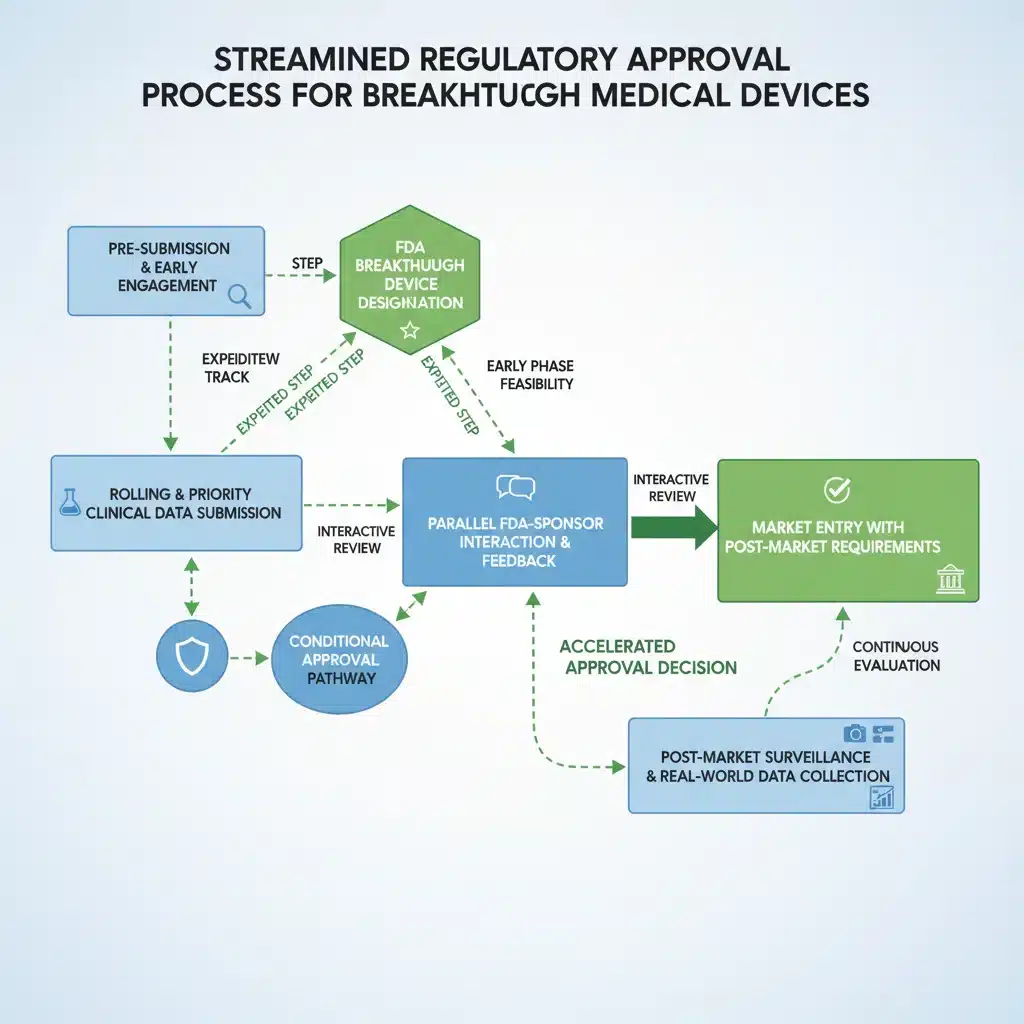
The ambitious goal of shaving 18 months off the traditional regulatory timeline for breakthrough devices is a testament to the commitment to fostering innovation. This acceleration will be achieved through a multi-pronged approach:
Early and Sustained Engagement
The 2026 pathway places an even greater emphasis on early and sustained engagement between developers and regulatory bodies. This means initiating dialogue with the FDA much earlier in the product development lifecycle, ideally during the pre-clinical phase. Early engagement allows for:
- Clearer Expectations: Understanding regulatory requirements and expectations from the outset.
- Streamlined Study Designs: Designing clinical trials that are robust enough to meet regulatory scrutiny while being as efficient as possible.
- Identification of Potential Hurdles: Proactively addressing challenges related to manufacturing, quality systems, or performance testing.
- Feedback on Data Generation: Receiving guidance on the type and quantity of data needed for submission.
Companies should view regulatory engagement not as a one-time event but as an ongoing partnership throughout the development process. This proactive approach is a cornerstone of accelerating market access for Breakthrough Medical Devices 2026.
Adaptive Clinical Trial Designs and Real-World Evidence (RWE)
Traditional clinical trials, while robust, can be time-consuming. The 2026 pathway is expected to encourage and facilitate the use of adaptive clinical trial designs. These designs allow for modifications to trial parameters (e.g., sample size, treatment arms) based on accumulating data, making trials more efficient and potentially shorter. Furthermore, the increasing acceptance and integration of Real-World Evidence (RWE) will play a pivotal role. RWE, derived from sources like electronic health records, claims data, and patient registries, can complement traditional clinical trial data, offering insights into device performance in diverse, real-world settings. This can reduce the need for extensive, purely prospective studies, thereby shortening development timelines.
Leveraging Digital Health Technologies and AI
The devices themselves are often at the forefront of digital health. The regulatory pathway in 2026 will likely be better equipped to assess and approve devices that incorporate artificial intelligence (AI) and machine learning (ML) algorithms. This includes developing clear guidelines for validating AI models, managing data privacy, and ensuring the continued safety and effectiveness of adaptive algorithms. Regulators are keen on understanding how these technologies evolve post-market and how to best monitor their performance. Companies developing such advanced devices must demonstrate robust validation strategies and comprehensive post-market surveillance plans.
Challenges and Considerations for Innovators
While the accelerated pathway offers immense opportunities, it also presents challenges that innovators must be prepared to address.
Maintaining Data Quality and Integrity
With expedited timelines, there’s an even greater imperative to ensure the highest quality of data. Sloppy data collection or analysis can lead to delays or even rejection. Companies must invest in robust data management systems and adhere to stringent data integrity protocols from the earliest stages of development. The FDA’s focus on data quality will remain paramount, regardless of the accelerated review process for Breakthrough Medical Devices 2026.
Navigating Evolving Regulatory Guidance
The regulatory landscape is dynamic. While the general direction towards acceleration is clear, specific guidance documents and policies will continue to evolve. Innovators must stay abreast of these changes, possibly through active participation in industry forums, engaging with regulatory consultants, and maintaining open lines of communication with the FDA. A flexible regulatory strategy is crucial.
Post-Market Surveillance and Real-World Performance
Accelerated market access often comes with increased scrutiny during the post-market phase. Regulators will be keen to ensure that the real-world performance of breakthrough devices matches their pre-market promises. Companies must have robust post-market surveillance plans, including real-world evidence generation strategies, to continuously monitor safety and effectiveness. This might involve registries, patient-reported outcomes, and integration with electronic health records. The emphasis on continuous learning and adaptation will be a hallmark of the Breakthrough Medical Devices 2026 framework.
Global Harmonization and International Market Access
While this discussion primarily focuses on the FDA’s pathway, many breakthrough devices aim for global market access. Innovators must consider how regulatory accelerations in one jurisdiction align with or diverge from those in others (e.g., CE Mark in Europe, PMDA in Japan). Efforts towards global regulatory harmonization are ongoing, but significant differences still exist. A global regulatory strategy is essential to avoid bottlenecks in other key markets.
Strategic Approaches for Success in 2026
To successfully navigate the 2026 regulatory pathway for breakthrough medical devices and truly accelerate market access, companies should adopt several strategic approaches:
1. Early and Continuous Regulatory Strategy Development
Begin developing your regulatory strategy as early as possible, ideally during the conceptualization phase. This involves identifying the appropriate regulatory classification, understanding potential predicate devices, and mapping out the data generation plan. Engage with regulatory experts who specialize in breakthrough devices to ensure your strategy is robust and aligned with the latest guidance. This early planning is paramount for Breakthrough Medical Devices 2026.
2. Proactive Engagement with Regulatory Bodies
Don’t wait until you have a complete submission package. Utilize pre-submission meetings and other formal and informal communication channels to engage with the FDA early and often. Seek feedback on your development plan, clinical trial design, and manufacturing processes. This iterative dialogue can significantly de-risk the regulatory journey and prevent costly delays down the line.
3. Invest in Robust Quality Management Systems (QMS)
A strong QMS is non-negotiable. With accelerated timelines, there’s no room for deficiencies in design controls, risk management, or manufacturing processes. A well-implemented QMS not only ensures compliance but also fosters a culture of quality that is essential for producing safe and effective breakthrough devices.

4. Embrace Innovative Clinical Trial Designs and RWE
Explore the feasibility of adaptive clinical trials and the strategic incorporation of real-world evidence. This requires careful planning and potentially partnerships with healthcare providers and data analytics firms. Understanding how to collect, analyze, and present RWE in a way that satisfies regulatory requirements will be a key differentiator for Breakthrough Medical Devices 2026.
5. Develop a Comprehensive Post-Market Surveillance Plan
Your regulatory submission should include a detailed plan for post-market surveillance. This demonstrates a commitment to patient safety and continuous improvement. Consider leveraging digital tools for remote monitoring, patient engagement platforms, and advanced analytics to track device performance and identify any emerging issues promptly.
6. Foster an Interdisciplinary Team
Successful navigation of the Breakthrough Medical Devices 2026 pathway requires a highly interdisciplinary team. This includes not just engineers and scientists, but also regulatory affairs specialists, clinical experts, biostatisticians, and quality assurance professionals. Effective communication and collaboration among these different disciplines are crucial for a cohesive and efficient development process.
7. Understand Reimbursement Strategies Early
While not strictly regulatory, understanding potential reimbursement pathways is critical for market access. A breakthrough device, even if approved quickly, will struggle to gain adoption if it’s not adequately reimbursed. Engage with health economics and market access experts early to develop a strategy that aligns with your regulatory approach.
The Impact on Patients and Healthcare Systems
The accelerated pathway for Breakthrough Medical Devices 2026 holds immense promise for patients. Faster access to innovative therapies means earlier diagnosis, more effective treatments, and ultimately, improved quality of life and potentially saved lives. For healthcare systems, these devices can lead to more efficient care delivery, reduced long-term healthcare costs, and a greater ability to address previously intractable medical challenges.
However, it also places a greater responsibility on healthcare providers and patients to engage in shared decision-making, understanding that some of these devices may enter the market with less long-term data than traditionally approved products. The emphasis on post-market surveillance and real-world evidence will be crucial in building a comprehensive understanding of these devices over time.
Conclusion: A New Era for Medical Device Innovation
The 2026 regulatory pathway for breakthrough medical devices represents a significant step forward in fostering healthcare innovation. By emphasizing early engagement, adaptive methodologies, and the strategic use of real-world evidence, regulatory bodies are creating an environment where life-changing technologies can reach patients up to 18 months faster. For companies developing these cutting-edge devices, success hinges on a proactive, well-informed, and collaborative approach to regulatory strategy. Embracing the spirit of innovation while adhering to rigorous standards of safety and efficacy will define the leaders in the era of Breakthrough Medical Devices 2026. The future of medicine is here, and the regulatory framework is adapting to ensure its swift and safe integration into patient care.