Cures Act 2.0: Digital Health Device Approvals in 2026

The Transformative Impact of the 2026 Cures Act 2.0 on Digital Health Device Approvals: A 4-Month Outlook
The healthcare landscape is perpetually in motion, driven by technological advancements and evolving patient needs. Among the most significant legislative shifts poised to redefine this terrain is the 2026 Cures Act 2.0. Building upon the foundational principles of its predecessor, this updated legislation promises to usher in a new era for digital health, particularly concerning device approvals. As we stand just four months away from its full implementation, understanding the nuances of the Cures Act 2.0 Impact on digital health device approvals is paramount for innovators, regulators, and healthcare providers alike.
The original 21st Century Cures Act, enacted in 2016, aimed to accelerate medical product development and bring new innovations to patients faster and more efficiently. It emphasized interoperability, patient access to health information, and streamlined regulatory processes for certain technologies. Cures Act 2.0, however, is designed to address the rapid evolution of digital health technologies, artificial intelligence (AI) in medicine, and the increasing demand for personalized, data-driven healthcare solutions. Its scope is broader, its implications deeper, and its potential to reshape the industry is immense.
This article will delve into the anticipated Cures Act 2.0 Impact, exploring the key provisions affecting digital health device approvals, the opportunities they present, and the challenges that stakeholders must prepare to navigate. We will examine the shifts in regulatory pathways, the emphasis on real-world evidence, the implications for data security and interoperability, and the strategic considerations for companies looking to thrive in this new environment.
Understanding the Core Tenets of Cures Act 2.0 for Digital Health
At its heart, the 2026 Cures Act 2.0 seeks to modernize the regulatory framework to keep pace with the swift innovation cycle of digital health. It recognizes that traditional, often lengthy, approval processes are ill-suited for software-as-a-medical-device (SaMD), AI/ML-driven diagnostics, and remote monitoring tools that can evolve rapidly through updates and iterative development. The Cures Act 2.0 Impact is expected to manifest primarily through several key provisions:
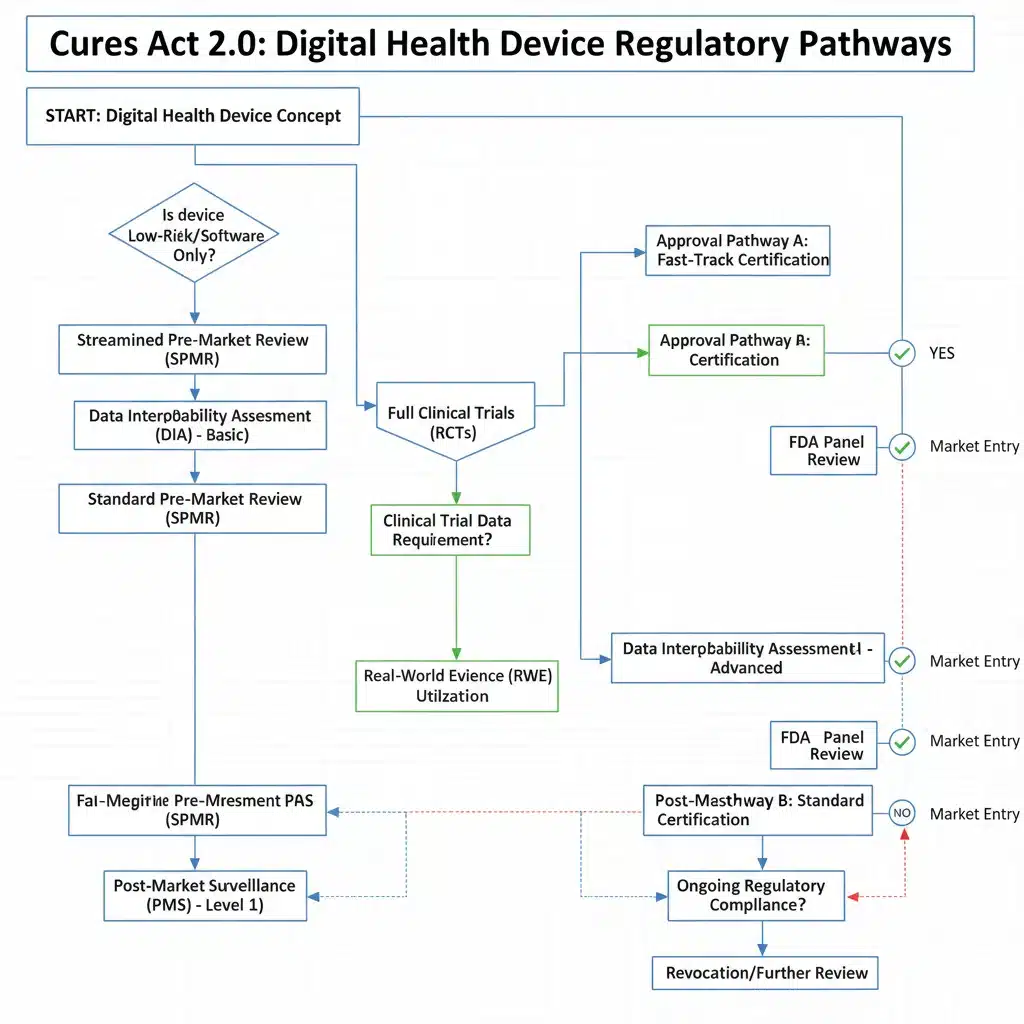
- Streamlined Approval Pathways: The Act is anticipated to introduce more flexible and adaptive regulatory pathways specifically tailored for digital health devices. This could include further expansion of pre-certification programs, reliance on real-world performance data, and potentially a tiered approach to oversight based on the risk profile of the digital health product. The goal is to reduce time-to-market for safe and effective innovations without compromising patient safety.
- Enhanced Data Interoperability: Building on the original Cures Act, version 2.0 places an even greater emphasis on seamless data exchange. Digital health devices, by their very nature, generate vast amounts of data. The Act will likely mandate stricter standards for interoperability, ensuring that data from these devices can be easily integrated into electronic health records (EHRs) and other healthcare IT systems. This is crucial for comprehensive patient care and for leveraging data for population health management and research.
- Focus on Real-World Evidence (RWE): The Cures Act 2.0 is expected to solidify the role of RWE in both pre-market approval and post-market surveillance. For digital health devices, which are often used continuously in real-world settings, RWE offers invaluable insights into their effectiveness, safety, and user experience. This shift could mean that continuous performance monitoring and user feedback become more integral to the approval and maintenance of device clearances.
- Clarity on Software as a Medical Device (SaMD): While the FDA has made strides in defining SaMD, Cures Act 2.0 is likely to provide legislative backing and further clarification on the regulatory classification and oversight of various software-based medical functions. This will be critical for developers to understand whether their product falls under FDA purview and what specific requirements apply.
- Patient Access and Engagement: The Act will continue to champion patient access to their health information and empower them to play a more active role in their care. Digital health devices are central to this paradigm, offering tools for self-management, remote monitoring, and direct communication with providers. The Cures Act 2.0 will likely reinforce policies that support these capabilities, potentially including provisions for digital health literacy and equitable access.
The Cures Act 2.0 Impact is not merely about procedural changes; it’s about fostering an ecosystem where innovation can flourish responsibly, and patient outcomes are continuously improved through technology. For companies navigating this new landscape, a proactive approach to understanding and adapting to these core tenets will be essential.
Anticipated Opportunities for Digital Health Innovators
The impending implementation of Cures Act 2.0 presents a wealth of opportunities for digital health innovators. Companies that can strategically align their development and regulatory strategies with the Act’s provisions are poised for significant growth and market advantage.
- Faster Market Entry: With streamlined approval pathways, innovative digital health solutions, particularly those offering significant clinical benefits and robust safety profiles, could reach patients much faster. This accelerates the return on investment for developers and allows patients to benefit from cutting-edge technologies sooner.
- Increased Investment and Collaboration: A clearer, more predictable regulatory environment often attracts greater investment. As the Cures Act 2.0 Impact becomes clearer, venture capitalists and pharmaceutical companies may be more willing to invest in digital health startups, fostering a more vibrant innovation ecosystem. Furthermore, the emphasis on interoperability could spur collaborations between device manufacturers, EHR vendors, and healthcare providers.
- Leveraging Real-World Data for Competitive Advantage: Companies adept at collecting, analyzing, and presenting real-world evidence will have a distinct edge. This data can not only support regulatory approvals but also demonstrate the long-term value, cost-effectiveness, and patient satisfaction associated with their devices, which are powerful differentiators in the market.
- Expansion into New Therapeutic Areas: As the regulatory framework matures for digital health, it may open doors for devices to address a wider range of conditions, from chronic disease management to mental health and preventative care. The flexibility offered by Cures Act 2.0 could encourage innovation in areas previously considered too complex or niche for digital interventions.
- Enhanced Patient Trust and Adoption: A robust regulatory framework, even if streamlined, instills greater confidence in both patients and providers. When digital health devices undergo rigorous, yet efficient, scrutiny, it builds trust, leading to higher adoption rates and better engagement with these technologies.
The Cures Act 2.0 Impact creates a fertile ground for innovation. Companies that embrace its principles, particularly regarding data-driven insights and patient-centric design, will find themselves well-positioned for success.
Navigating the Challenges: A Strategic Imperative
While opportunities abound, the Cures Act 2.0 also introduces several challenges that digital health companies must address proactively. Successfully navigating these will require strategic planning, robust internal processes, and a commitment to regulatory excellence.
- Evolving Regulatory Interpretations: Despite legislative clarity, the practical interpretation and implementation of new regulations by agencies like the FDA can take time to solidify. Companies will need to stay agile, closely monitor FDA guidance documents, and potentially engage in early dialogue with regulators to ensure compliance.
- Data Security and Privacy: The increased emphasis on data interoperability and real-world evidence amplifies concerns around data security and patient privacy. Digital health devices collect sensitive health information, and companies must implement state-of-the-art cybersecurity measures and adhere strictly to HIPAA and other privacy regulations. Breaches could have severe reputational and financial consequences.
- Validation of Algorithms and AI/ML Models: Many advanced digital health devices rely on complex algorithms and machine learning. Validating these models, especially those that adapt and learn over time, presents a unique challenge for regulatory approval. Companies will need to demonstrate the transparency, explainability, and robustness of their AI/ML components.
- Post-Market Surveillance Intensification: While RWE can accelerate approvals, it also implies a more rigorous and continuous post-market surveillance requirement. Companies will need sophisticated systems to monitor device performance, collect user feedback, and promptly address any safety concerns or efficacy issues that arise in real-world use.
- Talent Acquisition and Skill Gaps: The evolving regulatory landscape for digital health demands a specialized skill set that combines expertise in software development, data science, clinical science, and regulatory affairs. Companies may face challenges in acquiring and retaining talent capable of navigating these complex interdisciplinary requirements.
Addressing these challenges head-on will be critical for companies to harness the full potential of the Cures Act 2.0 and maintain a competitive edge. Proactive engagement with regulatory experts, investment in robust data infrastructure, and a culture of continuous learning will be key.
A 4-Month Outlook: Preparing for Implementation
With Cures Act 2.0 set to take full effect in 2026, the next four months represent a critical window for preparation. Companies that have not yet begun their strategic alignment should do so immediately. Here’s a breakdown of immediate priorities:
1. Deep Dive into Draft Guidance and Public Comments
Regulatory bodies, particularly the FDA, are expected to release draft guidance documents detailing the practical application of Cures Act 2.0 provisions. Companies must meticulously review these documents, participate in public comment periods, and seek clarifications. Engaging with industry associations and legal counsel specializing in digital health regulations can provide invaluable insights and help shape future guidance.
Understanding the nuances of these guidelines is not a passive exercise; it requires active engagement and a willingness to adapt internal processes. This includes:
- Identifying Gaps: Compare current development and approval processes against anticipated Cures Act 2.0 requirements to identify any significant gaps.
- Resource Allocation: Determine if additional resources, such as regulatory affairs specialists, cybersecurity experts, or data scientists, are needed to meet the new demands.
- Pilot Programs: Explore opportunities to participate in any pilot programs or voluntary initiatives offered by regulators that align with Cures Act 2.0 principles.
2. Re-evaluating Product Roadmaps and Development Cycles
The Cures Act 2.0 Impact will undoubtedly influence product development. Companies should re-evaluate their current and future product roadmaps through the lens of the new legislation. This involves:
- Designing for Interoperability: From the outset, new digital health devices should be designed with robust interoperability in mind, utilizing standardized APIs and data formats. This proactive approach will save significant retrofitting efforts later.
- Integrating RWE Collection: Build mechanisms into devices and accompanying software to systematically collect real-world evidence on an ongoing basis. This includes user feedback, performance metrics, and clinical outcomes data, all in a secure and privacy-compliant manner.
- AI/ML Governance: For AI/ML-driven devices, establish clear governance frameworks for algorithm development, validation, and continuous monitoring to ensure fairness, transparency, and clinical utility.
- Cybersecurity by Design: Embed cybersecurity considerations into every stage of the product lifecycle, from initial concept to deployment and maintenance. This includes regular security audits, penetration testing, and vulnerability management.
3. Strengthening Data Governance and Security Infrastructure
The emphasis on data in Cures Act 2.0 necessitates a robust data governance strategy. Companies must ensure their data infrastructure can handle the volume, velocity, and variety of digital health data while maintaining the highest standards of security and privacy.
- Privacy-Enhancing Technologies: Invest in technologies that protect patient privacy, such as de-identification tools, differential privacy, and secure multi-party computation.
- Compliance Audits: Conduct thorough internal audits to ensure compliance with existing data privacy regulations (e.g., HIPAA, GDPR, state-specific laws) and prepare for any new requirements under Cures Act 2.0.
- Incident Response Planning: Develop and regularly test comprehensive incident response plans for data breaches, ensuring rapid detection, containment, and notification protocols are in place.
4. Fostering Cross-Functional Collaboration
The Cures Act 2.0 Impact transcends traditional departmental silos. Successful adaptation requires seamless collaboration across R&D, regulatory affairs, legal, IT, and clinical teams. Regular communication and shared understanding of the Act’s implications are crucial.

Establishing interdisciplinary working groups focused on Cures Act 2.0 compliance and innovation can facilitate this collaboration. These groups can identify potential roadblocks, share best practices, and ensure a unified organizational response to the evolving regulatory landscape.
5. Engaging with Stakeholders and Advocacy
Beyond internal preparations, companies should actively engage with external stakeholders. This includes:
- Patient Advocacy Groups: Collaborate with patient groups to understand their needs and concerns regarding digital health technologies and data use. This can inform product development and regulatory strategies.
- Healthcare Providers: Work closely with clinicians and health systems to understand how digital health devices are used in practice, what data is most valuable, and what challenges they face with integration and interoperability.
- Policy Makers and Regulators: Maintain open lines of communication with policy makers and regulatory bodies, providing constructive feedback on draft guidance and advocating for policies that foster responsible innovation.
The next four months are not just about waiting for the Cures Act 2.0 to arrive; they are about proactive engagement, strategic re-evaluation, and robust preparation to ensure a smooth transition and capitalize on the opportunities it presents.
The Long-Term Vision: Digital Health Beyond 2026
The Cures Act 2.0 Impact extends far beyond its initial implementation in 2026. It lays the groundwork for a more dynamic, patient-centric, and data-driven healthcare system. In the long term, we can expect several transformative trends:
- Personalized Medicine Acceleration: Digital health devices, coupled with robust data interoperability, will be instrumental in delivering truly personalized medicine. Data from wearables, sensors, and apps will provide a holistic view of an individual’s health, enabling tailored interventions and preventative strategies.
- Proactive and Preventative Care: The ability to continuously monitor health parameters and integrate this data into clinical workflows will shift healthcare from a reactive model (treating illness) to a proactive and preventative one (maintaining wellness). Digital health will empower individuals to manage their health more effectively, with timely interventions based on real-time data.
- Democratization of Healthcare Access: Digital health technologies can overcome geographical barriers and improve access to care, particularly for underserved populations. The Cures Act 2.0’s emphasis on interoperability and patient engagement will further facilitate this trend, making quality healthcare more accessible to everyone.
- Continuous Learning Healthcare System: With real-world evidence becoming a cornerstone of regulatory approval and post-market surveillance, the healthcare system will evolve into a continuous learning loop. Data from millions of users will inform product improvements, refine clinical guidelines, and accelerate the discovery of new insights, leading to better outcomes for all.
- Ethical AI in Healthcare: As AI becomes more pervasive in digital health, Cures Act 2.0 will likely foster a greater emphasis on ethical considerations, including bias detection, algorithmic transparency, and accountability. This will ensure that AI-driven health solutions are not only effective but also equitable and trustworthy.
The Cures Act 2.0 is not merely a regulatory update; it is a vision for the future of healthcare. Its Cures Act 2.0 Impact will be felt for decades to come, shaping how we develop, approve, and utilize digital health technologies to improve human health.
Conclusion: Embracing the Future of Digital Health Approvals
The 2026 Cures Act 2.0 represents a pivotal moment for the digital health industry. Its impending implementation, just four months away, demands immediate attention and strategic preparation from all stakeholders. The Cures Act 2.0 Impact will be profound, offering streamlined pathways for innovation while simultaneously elevating standards for data security, interoperability, and real-world evidence.
For digital health innovators, this is an era of immense opportunity. Those who embrace the Act’s principles, design with interoperability and data security in mind, and proactively engage with regulatory bodies will be best positioned to thrive. The challenges are real, but with careful planning and a commitment to responsible innovation, they are surmountable.
Ultimately, Cures Act 2.0 is about accelerating the delivery of safe, effective, and transformative digital health solutions to patients. By understanding its nuances and strategically adapting, the industry can collectively contribute to a future where technology empowers better health outcomes for everyone. The next four months are not just a countdown; they are a call to action to shape the future of digital health.