
Navigating 2026 Regulatory Scrutiny on AI in Medical Devices: A 6-Month Action Plan
The integration of Artificial Intelligence (AI) into medical devices is revolutionizing healthcare, promising unprecedented advancements in diagnosis, treatment, and patient care. However, this rapid innovation also brings forth complex challenges, particularly concerning regulatory oversight. As we approach 2026, the regulatory landscape for AI in medical devices is poised for significant transformation, with new guidelines and increased scrutiny on the horizon. Manufacturers must proactively prepare to ensure their AI-powered devices meet stringent safety, efficacy, and ethical standards. This comprehensive guide outlines a strategic 6-month action plan to help organizations navigate the impending regulatory changes and achieve robust AI Medical Device Regulation compliance.
The Evolving Landscape of AI Medical Device Regulation
The global regulatory framework for medical devices has historically struggled to keep pace with the rapid advancements in AI. Traditional regulatory pathways, designed for static hardware and software, often fall short when addressing the dynamic, learning capabilities of AI algorithms. Recognizing this gap, major regulatory bodies worldwide, including the U.S. Food and Drug Administration (FDA), the European Union (EU) with its AI Act, and other international organizations, are actively developing and refining their approaches to AI Medical Device Regulation. By 2026, many of these frameworks are expected to be firmly in place, mandating a higher level of scrutiny on aspects such as data quality, algorithmic transparency, bias detection, and post-market surveillance.
Key areas of focus for these upcoming regulations include:
- Data Governance: Ensuring the quality, integrity, privacy, and security of data used to train, validate, and operate AI algorithms.
- Algorithmic Transparency and Explainability: The ability to understand how AI models arrive at their conclusions, crucial for clinical decision-making and accountability.
- Bias Detection and Mitigation: Addressing potential biases in AI algorithms that could lead to health inequities.
- Risk Management: Adapting traditional risk management frameworks to encompass the unique risks associated with AI, including unforeseen behaviors and continuous learning.
- Post-Market Surveillance and Real-World Performance: Continuous monitoring of AI device performance in real-world settings and managing iterative updates.
- Cybersecurity: Protecting AI-powered medical devices from cyber threats, given their reliance on data and connectivity.
Understanding these evolving requirements is the first critical step in developing an effective compliance strategy for AI Medical Device Regulation.
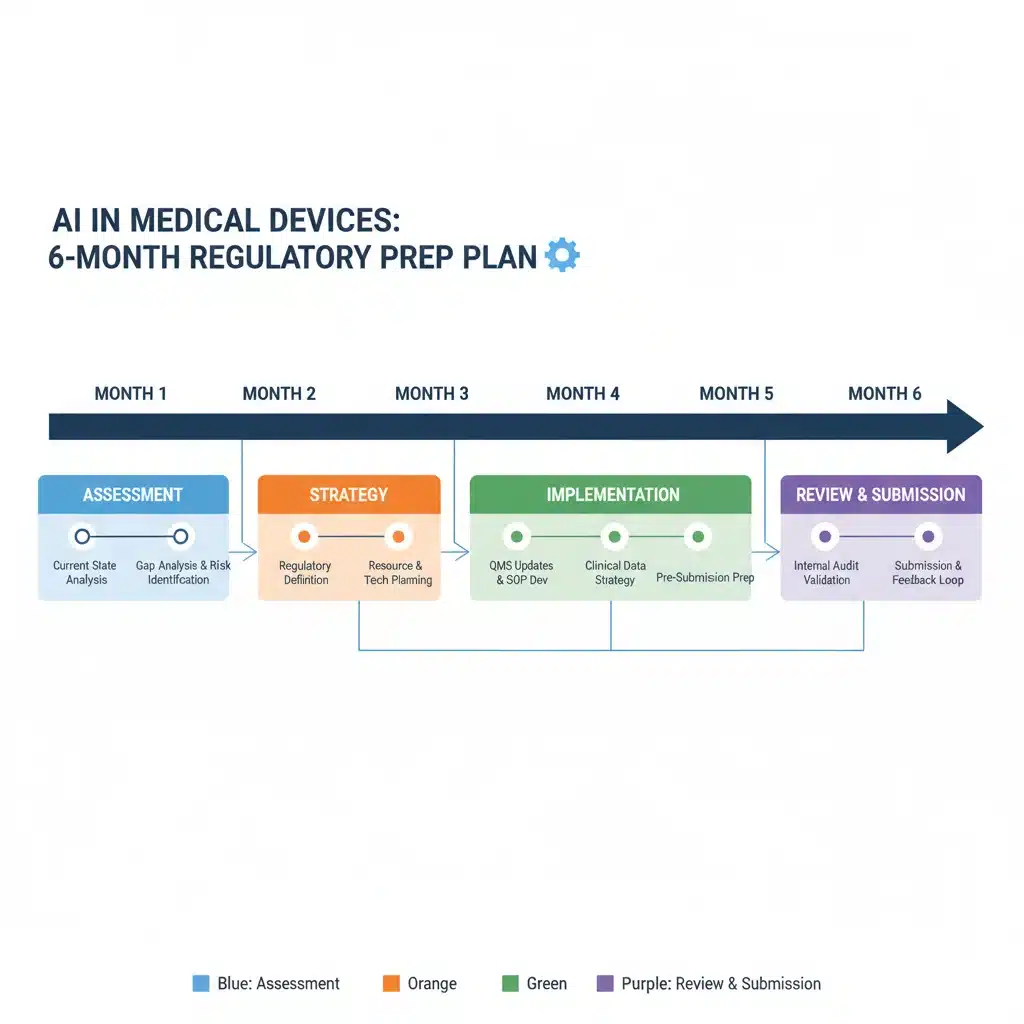
Month 1-2: Comprehensive Assessment and Gap Analysis
The initial two months of your 6-month action plan should be dedicated to a thorough internal assessment and gap analysis. This foundational phase is crucial for understanding your current standing against anticipated regulatory requirements and identifying areas that need immediate attention. A comprehensive assessment helps in prioritizing efforts and allocating resources effectively for AI Medical Device Regulation compliance.
Task 1.1: Form a Cross-Functional Regulatory Compliance Team
Assemble a dedicated team comprising experts from various departments: regulatory affairs, quality assurance, R&D (AI/ML engineers), data science, legal, cybersecurity, and clinical affairs. This multidisciplinary approach ensures all facets of AI Medical Device Regulation are covered.
Task 1.2: Identify and Catalog All AI-Powered Medical Devices
Create a detailed inventory of all AI-powered medical devices currently on the market or in your development pipeline. For each device, document its intended use, AI functionality, data sources, development lifecycle, and current regulatory status.
Task 1.3: Conduct a Regulatory Landscape Review
Deep dive into the latest drafts and finalized guidance documents from key regulatory bodies, such as the FDA’s guidance on AI/ML-based SaMD, the EU AI Act (especially high-risk AI systems), and ISO standards relevant to AI in health. Pay close attention to specific requirements for data management, transparency, bias, and post-market changes. This review is paramount for understanding future AI Medical Device Regulation.
Task 1.4: Perform a Gap Analysis Against Emerging Regulations
Compare your current practices, documentation, and technical capabilities against the identified regulatory requirements. This includes:
- Data Governance: Assess data acquisition, curation, annotation, storage, privacy (GDPR, HIPAA), and security protocols.
- Algorithmic Development: Review model design, training methodologies, validation strategies, and explainability mechanisms.
- Risk Management: Evaluate existing risk assessments to see if they adequately address AI-specific risks (e.g., drift, adversarial attacks, unintended biases).
- Quality Management System (QMS): Verify if your QMS is robust enough to incorporate AI-specific requirements and changes.
- Post-Market Surveillance (PMS): Examine current PMS plans for their ability to monitor AI performance, detect anomalies, and manage continuous learning.
Task 1.5: Prioritize Gaps and Develop a Remediation Roadmap
Based on the gap analysis, prioritize the identified deficiencies by their potential impact on compliance and patient safety. Develop a preliminary remediation roadmap outlining specific actions, responsible parties, timelines, and required resources. This roadmap will guide the subsequent months of your AI Medical Device Regulation preparation.
Month 3-4: Strategy Development and System Implementation
With a clear understanding of the gaps, the next two months focus on developing strategic solutions and beginning the implementation of necessary changes. This phase involves refining processes, updating documentation, and potentially investing in new technologies to meet AI Medical Device Regulation standards.
Task 2.1: Enhance Data Governance Frameworks
Strengthen your data governance policies and procedures. This includes implementing robust data anonymization/pseudonymization techniques, establishing clear data ownership and access controls, and ensuring data quality throughout the entire lifecycle. Develop clear documentation for data provenance and usage to demonstrate compliance with privacy regulations and AI Medical Device Regulation.
Task 2.2: Implement Algorithmic Transparency and Explainability Solutions
Explore and implement tools and methodologies that enhance the transparency and explainability of your AI models. This might involve using interpretable AI models, developing feature importance analyses, or creating user-friendly explanations for clinical users. Document your approach to explainability, demonstrating how clinicians can understand the basis of AI-driven decisions.
Task 2.3: Develop and Integrate Bias Detection and Mitigation Strategies
Establish protocols for systematically identifying and mitigating biases in your training data and AI algorithms. This includes diverse data collection, fairness metrics, and robust testing across different demographic groups. Document your bias assessment and mitigation efforts as part of your AI Medical Device Regulation compliance strategy.
Task 2.4: Update Risk Management Processes for AI
Revise your existing risk management framework (e.g., ISO 14971) to specifically address AI-related risks. This includes identifying potential risks from model drift, unexpected outputs, data poisoning, and cybersecurity vulnerabilities. Develop strategies for monitoring and mitigating these risks throughout the device’s lifecycle.
Task 2.5: Strengthen Cybersecurity Measures
Implement enhanced cybersecurity protocols tailored for AI-powered medical devices. This involves secure development lifecycle practices, regular vulnerability assessments, penetration testing, and robust incident response plans. Ensure compliance with relevant cybersecurity standards for medical devices.
Month 5-6: Validation, Documentation, and Readiness for Submission
The final two months are dedicated to validating the implemented changes, meticulously documenting all processes, and preparing for potential regulatory submissions or audits. This phase is critical for demonstrating readiness and ensuring all aspects of AI Medical Device Regulation are met.
Task 3.1: Conduct Rigorous Validation and Verification Testing
Perform extensive validation and verification testing on your AI-powered medical devices. This should include:
- Clinical Validation: Demonstrate the clinical efficacy and safety of the AI algorithm in relevant patient populations.
- Performance Testing: Assess the AI’s performance against predefined metrics, including accuracy, sensitivity, specificity, and robustness under various conditions.
- Bias Testing: Verify the effectiveness of bias mitigation strategies across diverse datasets.
- Security Testing: Conduct comprehensive cybersecurity tests to ensure the device is resilient against threats.
Task 3.2: Develop and Update Comprehensive Documentation
Documentation is paramount for AI Medical Device Regulation. Ensure all aspects of your AI device’s lifecycle are thoroughly documented, including:
- AI/ML Development Plan: Details on model design, training, validation, and verification.
- Data Management Plan: Comprehensive documentation of data sources, collection, processing, privacy, and security.
- Risk Management File: Updated to include AI-specific risks and mitigation strategies.
- Post-Market Surveillance Plan: Detailed plan for continuous monitoring, performance assessment, and managing changes.
- Clinical Evaluation Report: Evidence of clinical safety and performance.
- Software Bill of Materials (SBOM): Listing all software components, including open-source libraries, used in the AI device.
Task 3.3: Refine Quality Management System (QMS) Processes
Integrate all new AI-specific processes and documentation into your existing QMS. Ensure that QMS procedures reflect the unique challenges and requirements of AI, particularly regarding change control, software updates, and continuous learning models. Regular internal audits should confirm adherence to these updated QMS procedures for AI Medical Device Regulation.
Task 3.4: Train Personnel on New Policies and Procedures
Conduct comprehensive training for all relevant personnel on the updated regulatory requirements, internal policies, and operational procedures. This ensures that everyone involved in the design, development, manufacturing, and post-market activities of AI medical devices understands their roles and responsibilities in maintaining compliance.
Task 3.5: Conduct a Final Internal Audit and Mock Regulatory Review
Before any official submission, conduct a final internal audit to identify any remaining non-conformities. Consider performing a mock regulatory review with external experts to simulate a real audit and gain objective feedback on your preparedness. This final step is crucial for bolstering confidence in your AI Medical Device Regulation readiness.
Key Considerations Beyond the 6-Month Plan
While the 6-month plan provides a structured approach to immediate regulatory readiness, AI Medical Device Regulation is an ongoing commitment. Several factors will continue to influence compliance beyond this initial period:
Continuous Monitoring and Iterative Updates
AI models, especially those with continuous learning capabilities, require ongoing monitoring for performance, bias, and safety. Establish robust post-market surveillance systems that can detect model drift, identify new risks, and facilitate safe and compliant iterative updates. Regulators are increasingly focused on how manufacturers manage these dynamic aspects of AI.
Ethical AI Principles
Beyond strict legal compliance, ethical considerations are becoming increasingly central to AI Medical Device Regulation. Incorporate ethical AI principles – such as fairness, accountability, transparency, and human oversight – into your development lifecycle. This not only builds trust but also aligns with the spirit of emerging regulations.

International Harmonization
Keep abreast of international harmonization efforts (e.g., IMDRF, WHO) for AI Medical Device Regulation. While specific requirements may vary by jurisdiction, there is a growing consensus on core principles. Aligning with these global standards can streamline multi-market access.
Stakeholder Engagement
Engage with regulatory bodies, industry associations, and patient advocacy groups. Participating in discussions and pilot programs can provide valuable insights into evolving expectations and help shape future policies. This proactive engagement can also position your organization as a leader in responsible AI development.
Resource Allocation and Investment
Achieving and maintaining AI Medical Device Regulation compliance requires significant investment in expertise, technology, and processes. Ensure your organization allocates sufficient resources to sustain these efforts long-term. This includes hiring specialized talent, investing in AI-specific validation tools, and continuous training.
Conclusion
The year 2026 marks a pivotal moment for AI Medical Device Regulation. The increased regulatory scrutiny, while challenging, is essential for fostering innovation responsibly and ensuring patient safety. By adopting a proactive and structured 6-month action plan, medical device manufacturers can systematically address the complexities of AI regulation, transform potential hurdles into opportunities, and position themselves as leaders in the safe and ethical deployment of AI in healthcare. Embracing these changes now will not only ensure compliance but also build greater trust in AI-powered medical technologies, ultimately benefiting patients and healthcare systems worldwide. The journey to compliance is continuous, but a well-executed preparation strategy is the cornerstone of future success in this dynamic field.