Navigating the 2026 FDA Guidance: Real-World Evidence for Device Approvals
Understanding the 2026 FDA Guidance on Real-World Evidence (RWE) for Device Approvals: What’s Changed?
The landscape of medical device regulation is continuously evolving, driven by advancements in technology, data analytics, and a growing emphasis on patient-centric outcomes. A pivotal development in this evolution is the increasing reliance on Real-World Evidence (RWE). The U.S. Food and Drug Administration (FDA) has been at the forefront of integrating RWE into its regulatory decision-making processes, recognizing its potential to accelerate safe and effective device approvals. As we approach 2026, the FDA is set to release updated guidance on RWE for medical device approvals, a move that promises to redefine how manufacturers gather and submit data for their innovative products. This comprehensive article delves into the anticipated changes, their implications, and strategies for navigating this new regulatory terrain.
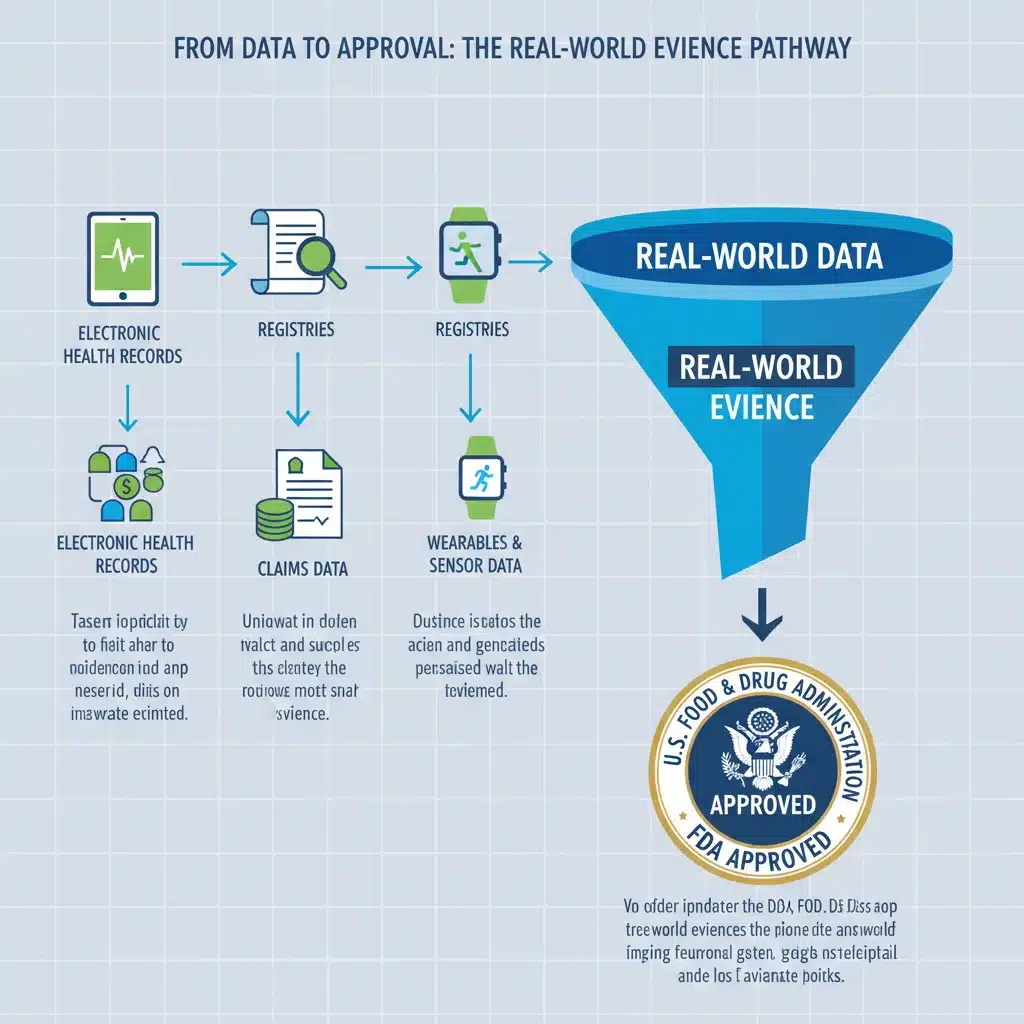
The concept of Real-World Evidence (RWE) stems from Real-World Data (RWD), which includes data relating to patient health status and/or the delivery of health care routinely collected from a variety of sources. These sources are diverse and can include electronic health records (EHRs), claims and billing data, product and disease registries, patient-generated data (including from wearables and other portable devices), and data gathered during pragmatic clinical trials. RWE is the clinical evidence regarding the usage and potential benefits or risks of a medical product derived from analysis of RWD. For medical devices, RWE offers a compelling alternative or complement to traditional randomized controlled trials (RCTs), especially for post-market surveillance, label expansion, and even initial pre-market approvals in certain contexts.
The FDA’s commitment to RWE is not new. The 21st Century Cures Act, passed in 2016, specifically called for the FDA to establish a program to evaluate the use of RWE to support approval of new indications for approved drugs and approval of new drug applications. While initially focused on pharmaceuticals, the principles and potential benefits quickly extended to medical devices. The FDA has since published several guidance documents and frameworks to clarify its stance on RWE, aiming to provide a structured approach for its use in regulatory submissions. The 2026 FDA RWE Device Guidance is expected to build upon these foundations, offering more refined and detailed expectations for device manufacturers.
The Evolving Role of Real-World Evidence in Device Regulation
Traditionally, medical device approvals have heavily relied on data generated from controlled clinical trials. While robust, these trials often operate under highly controlled conditions that may not fully reflect the complexities of real-world clinical practice. This is where RWE steps in. By leveraging data from diverse patient populations and varied clinical settings, RWE can provide a more comprehensive understanding of a device’s performance, safety, and effectiveness in its intended use environment.
The drive towards greater incorporation of RWE is multifaceted. Firstly, it offers the potential for faster market access for innovative devices, as certain regulatory pathways could be streamlined with robust RWE. Secondly, it can reduce the burden and cost associated with extensive, long-term clinical trials. Thirdly, and perhaps most importantly, RWE can provide a more accurate and generalizable picture of a device’s performance across a broader patient demographic and in routine clinical care, ultimately leading to better patient outcomes and more informed healthcare decisions. The 2026 FDA RWE Device Guidance is poised to formalize many of these aspirations, providing a clearer roadmap for industry stakeholders.
However, the use of RWE is not without its challenges. Data quality, validity, and relevance are paramount. The heterogeneity of RWD sources, potential biases, and the need for sophisticated analytical methods require careful consideration. The FDA’s forthcoming guidance is anticipated to address these challenges head-on, providing clarity on data standards, analytical methodologies, and the types of evidence deemed acceptable for various regulatory purposes. Understanding these nuances will be critical for any company seeking to leverage RWE effectively.
Key Anticipated Changes in the 2026 FDA RWE Device Guidance
While the exact details of the 2026 FDA RWE Device Guidance are yet to be fully revealed, industry experts and regulatory observers anticipate several key areas of focus and potential changes. These changes are expected to reflect the FDA’s ongoing learning and adaptation to the rapidly evolving data landscape.
1. Enhanced Clarity on Data Sources and Quality
One of the most significant areas of anticipated change is a more prescriptive approach to the acceptability of RWD sources. The guidance is likely to provide more specific criteria for assessing the quality, completeness, and reliability of various RWD types. This could include:
- Electronic Health Records (EHRs): Expect detailed recommendations on data extraction, standardization, and validation processes from EHR systems, emphasizing interoperability and data integrity.
- Registries: The guidance may differentiate between various types of registries (e.g., disease registries, product registries) and provide specific expectations for their design, data elements, and governance to ensure regulatory fitness.
- Patient-Generated Data (PGD): With the proliferation of wearables and digital health technologies, the FDA is likely to offer clearer guidance on the collection, validation, and use of PGD, particularly concerning its use in demonstrating clinical endpoints.
- Claims and Billing Data: While valuable for population-level insights, the guidance may outline limitations and appropriate uses of claims data, given its primary purpose is administrative rather than clinical.
The emphasis will likely be on ensuring that the RWD is fit for purpose, meaning it is sufficiently robust and relevant to answer the specific regulatory question at hand. This heightened focus on data quality will necessitate stronger data governance frameworks and potentially new technologies for data curation and validation within organizations.
2. Refined Methodological Standards for RWE Generation
Generating RWE from RWD requires rigorous analytical methods to mitigate biases and ensure the validity of findings. The 2026 FDA RWE Device Guidance is expected to provide more detailed methodological standards, moving beyond general principles to specific recommendations. This could include:
- Study Design Considerations: Guidance on appropriate observational study designs (e.g., cohort studies, case-control studies, interrupted time series) and their suitability for different regulatory contexts.
- Statistical Analysis Plans (SAPs): Clearer expectations for pre-specified SAPs, including methods for confounding adjustment, missing data handling, and sensitivity analyses.
- Bias Mitigation Strategies: Detailed recommendations on identifying and addressing potential biases inherent in RWD, such as selection bias, confounding by indication, and information bias.
- Transparency and Reproducibility: A stronger emphasis on transparent reporting of methods and results to ensure reproducibility and facilitate FDA review.
These refined standards will require manufacturers to invest in advanced epidemiological and biostatistical expertise, or to partner with organizations possessing such capabilities, to ensure their RWE submissions meet FDA’s stringent requirements. The goal is to elevate the scientific rigor of RWE studies to a level comparable with traditional clinical trials where appropriate.
3. Expanded Scope of RWE Application
While RWE has historically been more commonly used for post-market surveillance and label expansions, the 2026 guidance might signal an expanded scope for its application in pre-market settings. This could include:
- De Novo and 510(k) Submissions: Increased acceptance of RWE as primary or supportive evidence for certain low-to-moderate risk devices, potentially reducing the need for extensive prospective clinical trials.
- Premarket Approval (PMA) Supplements: Greater use of RWE to support changes to approved PMAs, such as new indications, modifications to device design, or changes in manufacturing processes.
- Clinical Trial Design: RWE could be increasingly used to inform the design of prospective clinical trials, identify appropriate patient populations, and select relevant endpoints.
This expansion would represent a significant shift, offering manufacturers new avenues for accelerating device development and market access. However, it will also come with heightened expectations regarding the quality and robustness of the RWE submitted, particularly for higher-risk devices.

4. Integration with Digital Health Technologies
The convergence of digital health technologies (DHTs) and RWE is an area of intense interest. The 2026 FDA RWE Device Guidance is likely to provide specific considerations for:
- Software as a Medical Device (SaMD): Guidance on how RWE can be generated from SaMD products themselves (e.g., algorithm performance data, user interaction data) and how it can support regulatory submissions.
- Wearable Devices and Sensors: Recommendations on validating data collected from consumer-grade and medical-grade wearable devices for regulatory purposes, including data accuracy, precision, and clinical relevance.
- Artificial Intelligence (AI) and Machine Learning (ML): Insights into how RWE can be used to train, validate, and monitor AI/ML-driven medical devices, especially concerning their continuous learning capabilities.
This integration reflects the FDA’s forward-thinking approach to regulating cutting-edge technologies and will be crucial for companies developing innovative digital health solutions. The guidance will likely emphasize the need for robust validation of these digital data sources.
Implications for Medical Device Manufacturers
The forthcoming 2026 FDA RWE Device Guidance will have profound implications for medical device manufacturers, necessitating strategic adjustments across various functions.
1. Investment in Data Infrastructure and Expertise
Companies will need to invest significantly in robust data infrastructure capable of collecting, curating, and analyzing large volumes of RWD. This includes secure data storage, advanced analytics platforms, and potentially partnerships with data science and bioinformatics firms. Furthermore, there will be a growing demand for internal expertise in epidemiology, biostatistics, health informatics, and regulatory science specific to RWE. Building cross-functional teams that understand both clinical and data science aspects will be critical.
2. Early Engagement with the FDA
Given the complexity and evolving nature of RWE, early and frequent engagement with the FDA will become even more crucial. Manufacturers should consider leveraging pre-submission meetings and other formal communication pathways to discuss their RWE strategies, data sources, and analytical plans with the agency. This proactive approach can help align expectations, identify potential challenges early, and increase the likelihood of successful submissions.
3. Strategic RWE Planning
Developing a comprehensive RWE strategy should become an integral part of the overall device development lifecycle. This involves identifying specific regulatory questions that RWE can address, selecting appropriate RWD sources, designing rigorous RWE studies, and preparing detailed statistical analysis plans. The strategy should also consider the potential for generating RWE throughout the device’s market life, from initial approval to post-market surveillance and new indication development.
4. Quality Management Systems and Data Governance
The emphasis on data quality and reliability in the 2026 guidance will necessitate strengthening quality management systems (QMS) to encompass RWD collection, processing, and analysis. This includes establishing clear standard operating procedures (SOPs) for data governance, data security, privacy protection (e.g., HIPAA compliance), and data validation. Companies must demonstrate that their RWD is generated and managed in a controlled and auditable manner.
5. Collaboration and Partnerships
Generating high-quality RWE often requires access to diverse and extensive RWD sources, which may not always be available internally. Manufacturers may need to explore collaborations with healthcare providers, academic institutions, patient advocacy groups, and technology companies that manage large datasets or possess specialized analytical capabilities. These partnerships can be instrumental in accessing relevant data and expertise.
Preparing for the Future: Best Practices for Leveraging RWE
To effectively navigate the 2026 FDA RWE Device Guidance and maximize the potential of RWE, medical device manufacturers should adopt several best practices:
1. Understand the Regulatory Context
Stay updated on all FDA guidance documents related to RWE, not just the upcoming 2026 guidance. Understand the specific regulatory pathways for your device and how RWE can best fit into those pathways. Recognize that the level of evidence required will vary based on the device’s risk profile and the regulatory question being addressed.
2. Prioritize Data Quality and Integrity
Invest in robust data management practices from the outset. This includes ensuring data accuracy, completeness, consistency, and timeliness. Implement data validation checks, establish clear data dictionaries, and ensure proper documentation of data sources and methodologies. Poor data quality can undermine even the most sophisticated RWE analysis.
3. Employ Sound Methodological Approaches
Engage epidemiologists and biostatisticians with expertise in RWE studies. Design studies that minimize bias and confounding, and pre-specify analytical plans. Be transparent about any limitations of the RWD or the analytical methods used. The FDA will scrutinize the scientific rigor of RWE studies, so a strong methodological foundation is non-negotiable.
4. Focus on Patient-Centric Outcomes
RWE offers a unique opportunity to capture patient-relevant outcomes that may not be fully assessed in traditional clinical trials. Consider incorporating patient-reported outcomes (PROs) and other patient-generated data into your RWE studies to provide a more holistic view of device performance and patient experience. This aligns with the FDA’s broader focus on patient-centricity.
5. Leverage Technology and Analytics
Utilize advanced analytics tools, artificial intelligence, and machine learning to process, analyze, and interpret large and complex RWD datasets. These technologies can help identify patterns, predict outcomes, and generate insights that would be difficult to uncover using traditional methods. However, ensure that the use of these technologies is transparent and their methodologies are well-documented and validated.
6. Foster Internal and External Collaboration
Break down internal silos between R&D, regulatory affairs, clinical operations, and data science teams. Externally, seek collaborations with academic centers, professional societies, and patient organizations to access diverse data sources and expertise. Collaborative efforts can enhance the credibility and generalizability of RWE.
7. Plan for Continuous Learning and Adaptation
The field of RWE is dynamic. Stay abreast of new methodological developments, technological advancements, and evolving regulatory expectations. Be prepared to adapt your RWE strategies and capabilities as the FDA continues to refine its guidance and as new data sources and analytical techniques emerge. The 2026 FDA RWE Device Guidance is not the final word, but rather another significant step in an ongoing journey.
Conclusion
The 2026 FDA RWE Device Guidance marks a crucial juncture in the regulation of medical devices. It signifies the FDA’s increasing confidence in the power of Real-World Evidence to inform regulatory decisions, accelerate innovation, and ultimately benefit patients. For medical device manufacturers, this guidance presents both opportunities and challenges. Those who proactively understand the anticipated changes, invest in the necessary infrastructure and expertise, and adopt rigorous methodological approaches will be best positioned to leverage RWE effectively for successful device approvals and market access.
The future of medical device development is intertwined with the intelligent and strategic use of RWE. By embracing this evolving paradigm, companies can not only meet regulatory expectations but also gain deeper insights into their products’ performance in real-world settings, driving continuous improvement and delivering greater value to healthcare systems and patients alike. The journey towards a more RWE-driven regulatory landscape is well underway, and the 2026 FDA RWE Device Guidance will serve as a critical compass for all stakeholders involved.