Biometric Authentication in Healthcare: Securing Patient Access in 2026 US Facilities

Biometric Authentication in Healthcare: Securing Patient Access in 2026 US Facilities
The landscape of healthcare in the United States is undergoing a profound transformation, driven by technological advancements and an ever-increasing need for robust security measures. As we look towards 2026, one technology stands out as a critical enabler of this evolution: healthcare biometric authentication. The integration of biometrics into US healthcare facilities is no longer a futuristic concept but a rapidly accelerating reality, promising to redefine how patient data is protected, how access is managed, and how the overall patient experience is delivered.
The digital age has brought unparalleled convenience and efficiency to healthcare, but it has also introduced significant vulnerabilities. Data breaches, identity theft, and unauthorized access to sensitive patient information are growing concerns that demand sophisticated solutions. Traditional authentication methods, such as passwords and PINs, are increasingly proving inadequate in the face of evolving cyber threats. This is where healthcare biometric authentication steps in, offering a more secure, efficient, and user-friendly alternative.
By 2026, we anticipate a widespread adoption of biometric technologies across various facets of US healthcare. From patient registration and electronic health record (EHR) access to medication dispensing and facility entry, biometrics will play a pivotal role in creating a seamless yet highly secure environment. This article delves into the critical importance of healthcare biometric authentication, exploring its benefits, challenges, and the future outlook for its implementation in US healthcare facilities.
The Imperative for Enhanced Security in Healthcare
Healthcare organizations are prime targets for cyberattacks due to the highly sensitive and valuable nature of the data they hold. Protected Health Information (PHI) can fetch a high price on the black market, making healthcare a lucrative target for malicious actors. The consequences of a data breach in healthcare are severe, leading to financial penalties, reputational damage, and, most importantly, a loss of patient trust. Regulatory frameworks like HIPAA (Health Insurance Portability and Accountability Act) mandate stringent security measures to protect PHI, placing a significant burden on healthcare providers to implement effective safeguards.
Traditional security protocols often involve a combination of usernames, passwords, and multi-factor authentication (MFA) using tokens or SMS codes. While MFA adds a layer of security, it can still be cumbersome and prone to human error. Passwords are notoriously weak, often reused, and susceptible to phishing attacks. The sheer volume of access points in a typical healthcare facility, from administrative workstations to medical devices, exacerbates these challenges. This creates a compelling case for a more robust and inherent form of authentication – one that is tied directly to the individual.
Healthcare biometric authentication offers a solution that addresses these vulnerabilities head-on. By leveraging unique biological or behavioral characteristics, biometrics provides a higher level of assurance regarding identity verification. This significantly reduces the risk of unauthorized access, enhances data integrity, and helps healthcare organizations meet and exceed regulatory compliance requirements. The move towards biometrics is not merely an upgrade; it’s a fundamental shift in how healthcare security is conceived and implemented.
Types of Biometric Authentication in Healthcare
The field of biometrics is diverse, offering a range of technologies, each with its own strengths and applications. In the context of healthcare biometric authentication, several types are gaining traction:
- Fingerprint Recognition: This is perhaps the most common and widely accepted form of biometrics. Fingerprint scanners are relatively inexpensive, easy to integrate, and provide a high level of accuracy. They are ideal for quick authentication at workstations, medication dispensing units, and for patient check-in.
- Iris Recognition: Considered one of the most accurate biometric modalities, iris recognition involves scanning the unique patterns in a person’s iris. It offers a very low false acceptance rate, making it suitable for highly sensitive areas or for verifying patient identity for critical procedures.
- Facial Recognition: Advancements in facial recognition technology have made it increasingly viable for healthcare. It can be used for touchless authentication, which is particularly appealing in a healthcare setting to minimize germ transmission. Applications include patient identification at kiosks, access control, and even monitoring for patient safety.
- Palm Vein Recognition: This technology maps the unique vein patterns beneath the skin of the palm. It is highly accurate and considered very secure as the patterns are internal and difficult to spoof. It’s often used in environments requiring high security and hygiene.
- Voice Recognition: While not as common for primary authentication in healthcare due to potential environmental noise, voice biometrics can serve as a valuable secondary factor for verification, especially in telehealth or call center settings.
Each of these biometric modalities offers distinct advantages, and the optimal choice often depends on the specific use case, security requirements, and environmental factors within a healthcare facility. The trend for 2026 is likely to see a hybrid approach, where different biometric types are deployed strategically across various access points and functions.
Benefits of Biometric Authentication for US Healthcare by 2026
The adoption of healthcare biometric authentication brings a multitude of benefits that extend beyond just enhanced security. These advantages will be increasingly evident in US healthcare facilities by 2026:
Enhanced Patient Data Security and Privacy
At the core of biometric implementation is the paramount goal of protecting patient data. Biometrics significantly reduces the risk of identity theft and unauthorized access to Electronic Health Records (EHRs). With unique biological identifiers, it becomes far more difficult for unauthorized individuals to impersonate patients or staff. This directly contributes to stronger compliance with regulations like HIPAA, safeguarding sensitive information from breaches and misuse.
Streamlined Patient Identification and Access
Imagine a patient arriving at a clinic, and instead of fumbling for ID cards or reciting personal details, a quick scan of their finger or face instantly verifies their identity and pulls up their records. This is the promise of biometric authentication. It streamlines the patient check-in process, reduces wait times, and minimizes administrative burden. For emergency situations, rapid and accurate patient identification can be life-saving, ensuring that critical medical history is immediately accessible to care providers.
Improved Operational Efficiency for Healthcare Staff
For healthcare professionals, biometric authentication means faster and more secure access to the systems and information they need. No more forgotten passwords, locked accounts, or time spent on password resets. This frees up valuable time that can be redirected towards patient care, improving overall operational efficiency. It also enhances accountability, as every access point is tied directly to an individual’s biometric signature.
Prevention of Medical Identity Fraud
Medical identity fraud is a growing problem, costing billions of dollars annually and jeopardizing patient safety. Individuals using another person’s identity to receive care or obtain prescription drugs can lead to incorrect medical records and inappropriate treatments. Healthcare biometric authentication acts as a powerful deterrent and detection mechanism against such fraud, ensuring that the person receiving care is indeed the person whose records are being accessed.
Enhanced Patient Experience and Trust
Patients are increasingly aware of data privacy concerns. Seeing their healthcare providers invest in advanced security measures like biometrics can significantly boost their confidence and trust in the institution. The seamless and secure experience, coupled with the knowledge that their personal health information is well-protected, contributes to a positive patient journey.
Challenges and Considerations for 2026 Implementation
While the benefits of healthcare biometric authentication are compelling, its widespread implementation by 2026 is not without challenges. Addressing these proactively is crucial for successful adoption:
Privacy Concerns and Data Storage
The collection and storage of biometric data raise significant privacy concerns. Patients may be hesitant to provide their unique biological identifiers due to fears of misuse, data breaches, or government surveillance. Healthcare organizations must implement robust encryption and anonymization techniques for biometric templates, ensuring that raw biometric data is never stored and that privacy-by-design principles are followed. Transparent communication with patients about how their data is handled is paramount.
Accuracy and Reliability
No biometric system is 100% infallible. Factors such as environmental conditions, user presentation (e.g., a dirty finger, a mask covering the face), and sensor quality can affect accuracy. Healthcare facilities must invest in high-quality biometric systems with low False Acceptance Rates (FAR) and False Rejection Rates (FRR) to minimize inconvenience and security risks. Regular calibration and maintenance of biometric devices will be essential.
Integration with Existing Systems
US healthcare facilities often operate with a complex web of legacy systems, including EHRs, patient management systems, and various departmental applications. Integrating new biometric authentication solutions into this existing infrastructure can be a significant technical challenge. Interoperability standards and flexible API-driven solutions will be key to ensuring seamless integration without disrupting critical workflows.
Cost of Implementation and Maintenance
The initial investment in biometric hardware, software, and integration can be substantial. Furthermore, ongoing maintenance, software updates, and staff training contribute to the total cost of ownership. Healthcare organizations must conduct thorough cost-benefit analyses, considering the long-term savings from reduced fraud, enhanced efficiency, and avoided data breach penalties.
User Acceptance and Training
Both patients and staff need to be educated and trained on how to use biometric systems effectively. Resistance to change, discomfort with new technology, or misunderstandings about how biometrics work can hinder adoption. Comprehensive training programs and clear communication strategies are essential to foster user acceptance and ensure smooth transitions.
Regulatory and Legal Landscape Evolution
While HIPAA provides a framework for data security, specific regulations pertaining to biometric data in healthcare are still evolving. Healthcare organizations must stay abreast of new legal interpretations and best practices to ensure compliance. This includes understanding consent requirements for biometric data collection and adherence to state-specific privacy laws.
Use Cases for Biometric Authentication in 2026 US Healthcare
By 2026, healthcare biometric authentication will be integrated into numerous critical workflows within US healthcare facilities. Here are some key use cases:
Patient Registration and Check-in
Patients can use fingerprint, facial, or iris scans at kiosks or reception desks for rapid and accurate identification. This eliminates the need for multiple forms of ID, reduces clerical errors, and speeds up the entire check-in process. It also helps in identifying returning patients and linking them to their correct medical records instantly.
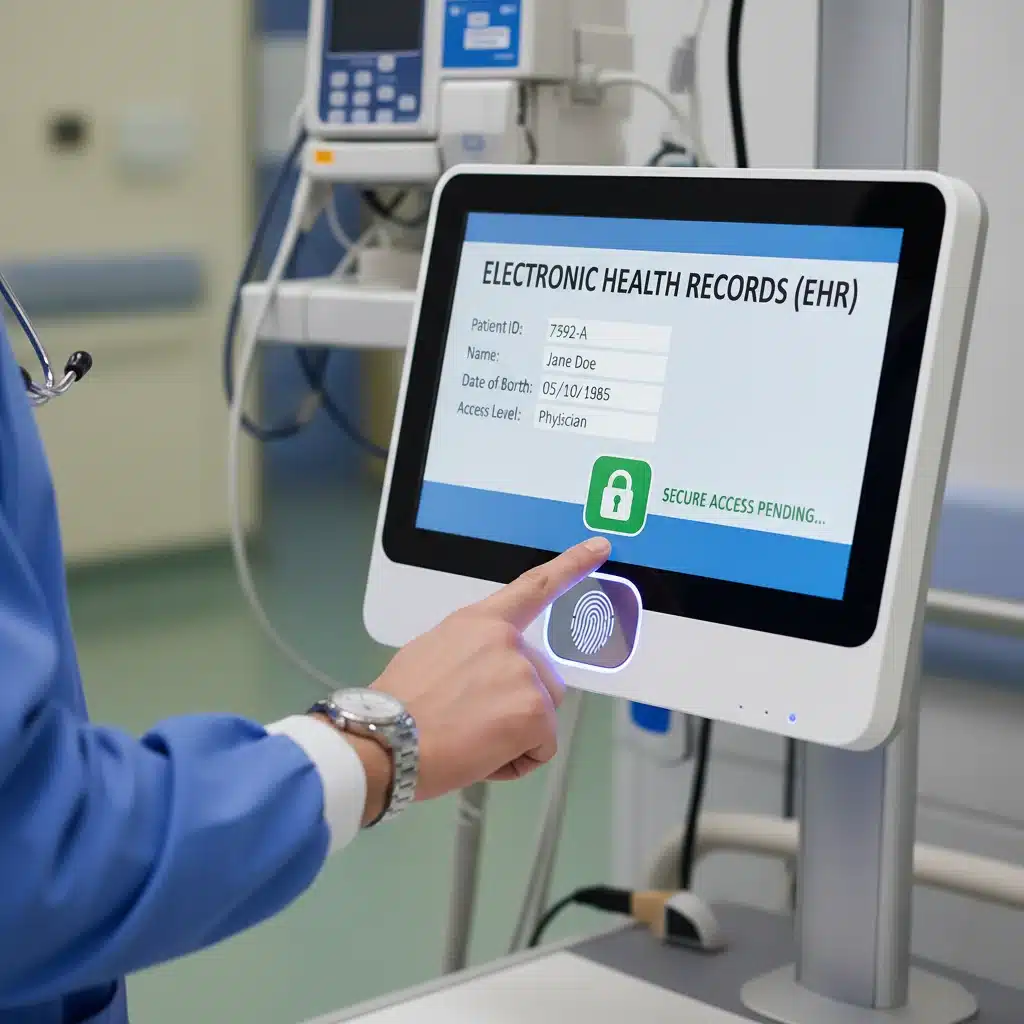
Secure Access to Electronic Health Records (EHRs)
Healthcare providers, nurses, and administrative staff can use biometrics (e.g., fingerprint, palm vein) to log into EHR systems and access patient files. This ensures that only authorized personnel can view sensitive information, enhancing data security and accountability. It also simplifies the login process, allowing staff to quickly access necessary data at the point of care.
Medication Dispensing and Administration
To prevent medication errors and ensure patient safety, biometric authentication can be used to verify both the healthcare professional dispensing medication and the patient receiving it. This adds a crucial layer of verification, particularly for controlled substances, reducing the risk of fraud and ensuring the right patient receives the right medication.
Restricted Area Access Control
Critical areas within a hospital, such as pharmacies, operating rooms, data centers, and neonatal units, require stringent access control. Biometric systems can replace or augment traditional key cards, providing a more secure and auditable method of entry. This ensures that only authorized personnel can enter sensitive zones, protecting both assets and vulnerable patients.
Time and Attendance Tracking for Staff
Biometric authentication can be used for accurate and indisputable time and attendance tracking for healthcare staff. This not only improves payroll accuracy but also prevents ‘buddy punching’ and enhances operational integrity. It offers a clear audit trail of who was present and when, which can be crucial in various scenarios.
Telehealth and Remote Patient Monitoring
As telehealth services expand, verifying the identity of both the patient and the provider remotely becomes increasingly important. Biometric solutions, such as facial or voice recognition integrated into telehealth platforms, can ensure secure and authenticated virtual consultations, maintaining the integrity of remote care.

Future Outlook: Biometrics Beyond 2026
Looking beyond 2026, the evolution of healthcare biometric authentication is expected to continue at a rapid pace. We can anticipate several key trends and innovations:
Multi-Modal Biometric Systems
To further enhance security and reliability, healthcare facilities will increasingly adopt multi-modal biometric systems. These systems combine two or more biometric modalities (e.g., fingerprint and facial recognition) to provide a higher level of assurance. This redundancy improves accuracy and resilience against spoofing attempts, making the authentication process even more robust.
Behavioral Biometrics
Beyond physical characteristics, behavioral biometrics, which analyze unique patterns in a person’s behavior (e.g., typing rhythm, gait, mouse movements), will gain prominence. These ‘passive’ biometrics can continuously authenticate users in the background, adding an invisible layer of security without requiring explicit user interaction. This could be particularly useful for continuous monitoring of access to sensitive data within an active session.
Integration with Blockchain and AI
The convergence of biometrics with other emerging technologies like blockchain and artificial intelligence (AI) holds immense potential. Blockchain can provide an immutable and distributed ledger for storing encrypted biometric templates, further enhancing data security and integrity. AI algorithms can improve the accuracy of biometric recognition, detect anomalies, and identify potential fraud attempts in real-time.
Standardization and Interoperability
As biometric adoption grows, there will be an increasing need for industry-wide standards and protocols to ensure interoperability between different systems and vendors. This will facilitate easier integration, reduce implementation complexities, and foster a more cohesive biometric ecosystem across US healthcare. Organizations like the FIDO Alliance are already working on such standards.
Patient-Centric Biometric Management
Future systems will likely empower patients with more control over their biometric data. This could involve patient portals where individuals can manage their biometric profiles, grant or revoke access, and view audit trails of their data usage. This patient-centric approach will build greater trust and acceptance of biometric technologies.
Wearable and Implantable Biometrics
While still in early stages for mainstream healthcare, wearable devices with integrated biometric sensors (e.g., smartwatches for heart rate or gait analysis) could play a role in continuous authentication or health monitoring. Longer-term, the possibility of implantable biometrics for seamless, high-security identification might emerge, though ethical considerations would be paramount.
Implementing a Successful Biometric Strategy
For US healthcare facilities planning to integrate healthcare biometric authentication by 2026, a strategic approach is essential:
- Conduct a Thorough Needs Assessment: Identify specific security vulnerabilities, access points, and workflows that would benefit most from biometric authentication. Prioritize areas based on risk and impact.
- Choose the Right Technology: Evaluate different biometric modalities based on accuracy, cost, ease of use, hygiene considerations, and suitability for specific applications. Consider a multi-modal approach for enhanced security.
- Ensure Robust Data Protection: Implement strong encryption for biometric templates. Adhere to privacy-by-design principles and ensure compliance with HIPAA and other relevant regulations. Do not store raw biometric data.
- Plan for Seamless Integration: Work with vendors who offer flexible, API-driven solutions that can integrate smoothly with existing EHR and other healthcare IT systems.
- Prioritize User Training and Education: Develop comprehensive training programs for staff and clear communication strategies for patients to ensure smooth adoption and address any concerns.
- Establish Clear Policies and Procedures: Define clear guidelines for biometric data collection, usage, storage, and deletion. Outline protocols for system failures or biometric non-matches.
- Pilot Programs and Phased Rollout: Start with pilot programs in specific departments or for particular use cases to test the system, gather feedback, and refine the implementation strategy before a broader rollout.
- Regular Auditing and Maintenance: Continuously monitor the performance of biometric systems, conduct regular security audits, and ensure timely software updates and hardware maintenance.
By following these steps, healthcare organizations can effectively navigate the complexities of biometric implementation and harness its full potential to enhance security, efficiency, and patient trust.
Conclusion
The imperative for robust security in US healthcare will only intensify as we approach 2026. Healthcare biometric authentication is poised to become a cornerstone of this enhanced security framework, offering a powerful combination of protection, efficiency, and convenience. While challenges related to privacy, integration, and cost must be addressed thoughtfully, the benefits of preventing data breaches, combating fraud, and streamlining operations are undeniable.
By embracing advanced biometric technologies, US healthcare facilities can build a more secure, trustworthy, and patient-centric ecosystem. The future of healthcare access and data protection is undoubtedly biometric, promising a new era of secure and seamless interactions for patients and providers alike.