2026 HIPAA Update: MedTech Data Privacy Compliance Guide

The landscape of healthcare technology is constantly evolving, bringing with it incredible advancements in patient care and operational efficiency. However, this rapid innovation also introduces complex challenges, particularly concerning the protection of sensitive patient information. As we approach 2026, the healthcare industry, and specifically the MedTech sector, is bracing for a significant update to the Health Insurance Portability and Accountability Act (HIPAA) guidelines. These forthcoming changes are not merely minor tweaks; they represent a comprehensive overhaul designed to strengthen MedTech Data Privacy and ensure that patient data remains secure in an increasingly interconnected digital world. Understanding and proactively preparing for these updates is paramount for any organization operating within the MedTech space.
The core purpose of HIPAA has always been to establish national standards for the protection of protected health information (PHI). While the original act, and subsequent amendments like the HITECH Act, laid a robust foundation, the proliferation of new technologies – from wearable devices and remote monitoring tools to advanced AI diagnostics and cloud-based data storage – has created new avenues for data collection, processing, and potential vulnerabilities. The 2026 HIPAA update aims to address these emerging complexities directly, ensuring that the regulatory framework remains relevant and effective in safeguarding MedTech Data Privacy. Non-compliance, as always, carries severe penalties, including substantial fines and reputational damage, making proactive preparation not just good practice, but an absolute necessity.
This comprehensive guide will delve into the critical aspects of the 2026 HIPAA update, focusing specifically on its implications for MedTech companies. We will explore the key changes, outline the steps necessary for achieving and maintaining compliance, discuss the technological solutions that can aid in this endeavor, and emphasize the importance of a strong organizational culture around MedTech Data Privacy. By the end of this article, you will have a clear roadmap to navigate the upcoming regulatory environment, ensuring your organization is fully prepared to meet the demands of enhanced data protection.
Understanding the Evolution of HIPAA and the 2026 Update
To fully grasp the significance of the 2026 HIPAA update, it’s essential to appreciate the historical context and the driving forces behind these new regulations. HIPAA was enacted in 1996, primarily to improve the portability and accountability of health insurance coverage. However, its administrative simplification provisions, particularly those related to privacy and security, have become its most widely recognized and impactful components. The Privacy Rule (2003) set national standards for protecting individually identifiable health information, while the Security Rule (2005) established national standards for protecting electronic protected health information (ePHI).
The HITECH Act of 2009 further strengthened HIPAA by promoting the adoption and meaningful use of health information technology. It also expanded the scope of HIPAA’s privacy and security rules to business associates and increased the penalties for violations. Despite these significant milestones, the technological landscape has continued its relentless march forward. The rise of interconnected medical devices (IoMT), the widespread use of cloud computing for healthcare data, the increasing sophistication of cyber threats, and the growing demand for data interoperability have all highlighted areas where existing HIPAA guidelines needed modernization.
The 2026 update is a direct response to these advancements. It aims to clarify ambiguities, address new technologies, and enhance the enforcement capabilities of regulatory bodies. The core objective remains the same: to protect patient data. However, the methods and specific requirements for achieving this protection are evolving to match the complexities of modern healthcare delivery and technology. For MedTech companies, this means re-evaluating everything from product design and data collection practices to vendor management and incident response protocols. The focus is not just on preventing breaches but on building a resilient and privacy-conscious ecosystem for MedTech Data Privacy.
Key Changes and Their Impact on MedTech Data Privacy
While the full details of the 2026 HIPAA update are still being finalized and communicated, several key areas are expected to see significant changes that will directly impact MedTech organizations. These changes are designed to close existing loopholes, adapt to new technologies, and strengthen patient rights regarding their data.
Expanded Definition of ePHI and Data Scope
One of the most critical anticipated changes is an expansion in the definition and scope of what constitutes ePHI. With the proliferation of data from wearables, remote monitoring devices, and even health-related apps, data that might not have traditionally been considered PHI under older interpretations could now fall under the updated regulations. This means MedTech companies must meticulously review all data points collected, processed, and stored to ensure they are accurately categorized and protected. Any data that, when combined with other information, could identify an individual will likely be subject to stricter MedTech Data Privacy rules.
Enhanced Security Requirements for IoMT Devices
The Internet of Medical Things (IoMT) is a rapidly growing segment of MedTech, offering incredible benefits but also presenting unique security vulnerabilities. The 2026 update is expected to introduce more stringent security requirements specifically tailored for IoMT devices. This could include mandates for secure-by-design principles, regular vulnerability assessments, robust authentication mechanisms, end-to-end encryption, and secure firmware updates. MedTech manufacturers will need to integrate these security features into their devices from the initial design phase, rather than treating them as afterthoughts. This proactive approach is crucial for maintaining MedTech Data Privacy at the device level.
Stricter Business Associate Agreements (BAAs)
Business associates (BAs) play a crucial role in the MedTech ecosystem, often handling PHI on behalf of covered entities. The 2026 update is likely to impose stricter requirements on BAAs, demanding more detailed contractual obligations regarding data protection, breach notification, and subcontractor management. MedTech companies acting as business associates, or those engaging other business associates, must review and update their BAAs to reflect these enhanced requirements. This ensures a continuous chain of trust and accountability for MedTech Data Privacy across the entire data flow.
Refined Breach Notification Rules
While breach notification has been a cornerstone of HIPAA, the 2026 update may refine these rules, potentially shortening notification timelines, expanding the definition of what constitutes a reportable breach, or requiring more detailed information in breach notifications. MedTech organizations must have robust incident response plans in place that are regularly tested and updated to comply with these potentially more stringent requirements. Prompt and transparent communication in the event of a breach is critical for maintaining trust and minimizing regulatory repercussions.
Increased Emphasis on Data Interoperability with Privacy Controls
The push for greater data interoperability in healthcare is undeniable, aiming to improve patient care coordination and outcomes. However, this must be balanced with robust privacy controls. The 2026 update is expected to provide clearer guidelines on how to achieve interoperability while ensuring MedTech Data Privacy. This could involve standards for secure data exchange, consent management for data sharing, and robust de-identification techniques when data is used for research or analytics.
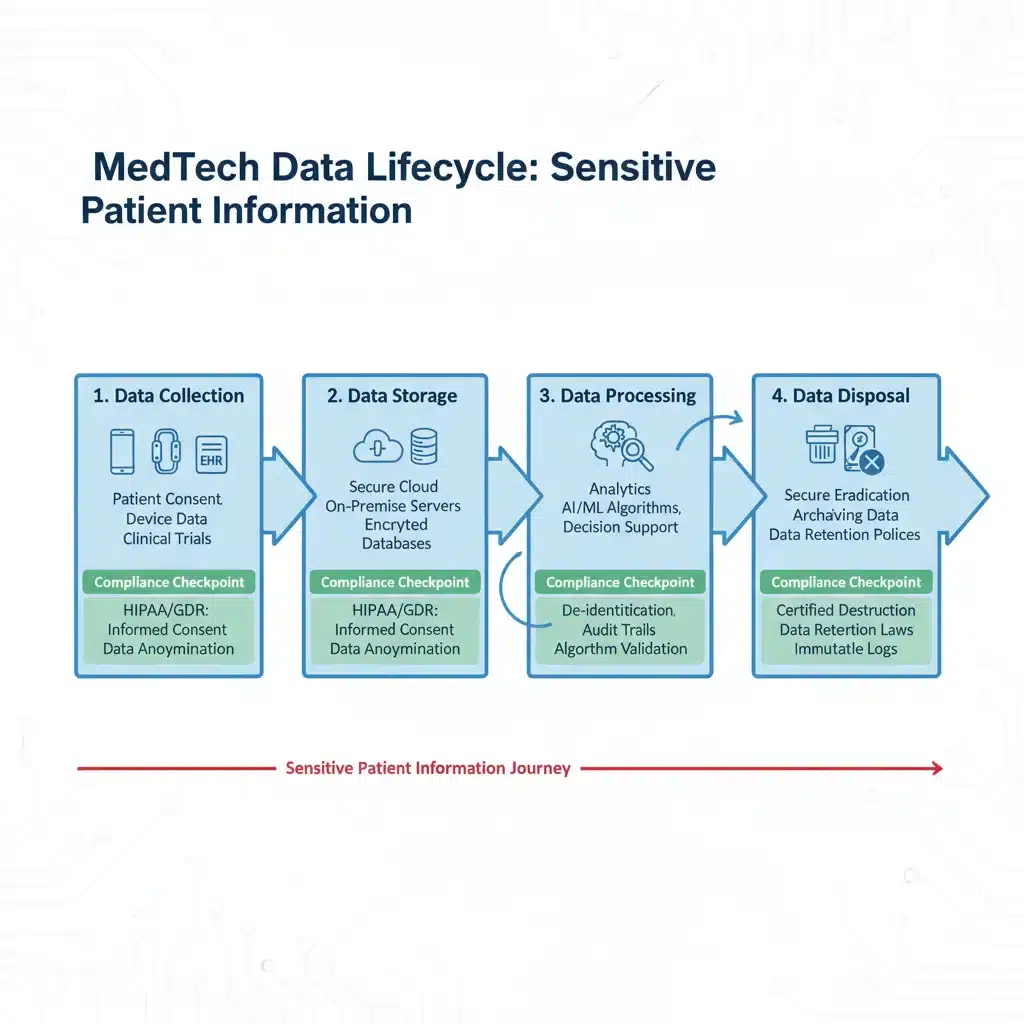
Roadmap to 100% MedTech Data Privacy Compliance
Achieving 100% compliance with the 2026 HIPAA update requires a systematic and multi-faceted approach. It’s not a one-time project but an ongoing commitment to data privacy and security. Here’s a comprehensive roadmap for MedTech companies:
1. Conduct a Comprehensive Gap Analysis and Risk Assessment
The first step is to understand your current state of compliance and identify any gaps that need addressing. This involves a thorough risk assessment that evaluates all potential vulnerabilities to ePHI within your organization. Map out all data flows, from collection to storage, processing, and transmission. Identify all systems, applications, and devices that handle PHI. Assess the effectiveness of your current security controls, administrative safeguards, and physical safeguards. This gap analysis will provide a clear picture of where your organization stands and what needs to be done to meet the new 2026 requirements for MedTech Data Privacy.
2. Update Policies and Procedures
Once gaps are identified, revise and update all relevant policies and procedures to align with the new HIPAA guidelines. This includes your privacy policies, security policies, breach notification protocols, data retention schedules, and access control policies. Ensure that these updated documents clearly articulate your organization’s commitment to MedTech Data Privacy and provide clear instructions for employees on how to handle PHI. These policies should be easily accessible and regularly reviewed.
3. Strengthen Technical Safeguards
Technical safeguards are the backbone of data security. For MedTech companies, this means focusing on:
- Encryption: Implement robust encryption for ePHI both in transit and at rest. This is particularly crucial for data stored on devices, cloud platforms, and during transmission.
- Access Controls: Implement strict access controls based on the principle of least privilege. Ensure that only authorized personnel have access to PHI, and their access is limited to what is necessary for their job functions.
- Audit Trails: Maintain comprehensive audit logs of all access to ePHI, system activity, and security events. Regular review of these logs is essential for detecting suspicious activity.
- Network Security: Employ firewalls, intrusion detection/prevention systems, and secure network configurations to protect your infrastructure from external threats.
- Malware Protection: Implement and regularly update anti-malware solutions across all endpoints and servers.
- Secure Device Configuration: For IoMT devices, ensure secure default configurations, disable unnecessary services, and implement strong password policies.
4. Enhance Administrative Safeguards
Administrative safeguards are equally vital and involve the human element of security:
- Employee Training: Conduct mandatory and ongoing HIPAA compliance training for all employees, especially those who handle PHI. Training should cover the new 2026 updates, specific organizational policies, and best practices for MedTech Data Privacy.
- Security Officer: Designate a Security Officer responsible for overseeing HIPAA compliance and managing security risks.
- Risk Management: Establish a robust risk management process that includes regular risk assessments, mitigation strategies, and ongoing monitoring.
- Contingency Planning: Develop and regularly test data backup plans, disaster recovery plans, and emergency mode operation plans to ensure business continuity and data availability in the event of an unforeseen incident.
5. Physical Safeguards
Don’t overlook the importance of physical security. Ensure that facilities housing servers, medical devices, and other equipment containing PHI are physically secured. This includes access controls, surveillance, and environmental controls to protect hardware from damage.
6. Vendor and Business Associate Management
MedTech companies often rely on third-party vendors and business associates. It is critical to:
- Due Diligence: Conduct thorough due diligence on all vendors and business associates to ensure they meet HIPAA compliance standards.
- Updated BAAs: Ensure all Business Associate Agreements are updated to reflect the 2026 HIPAA guidelines and clearly define roles, responsibilities, and liabilities regarding MedTech Data Privacy.
- Monitoring: Regularly monitor the compliance posture of your vendors and business associates.
7. Incident Response Plan (IRP)
A well-defined and regularly tested Incident Response Plan is non-negotiable. This plan should outline the steps to take in the event of a suspected or confirmed security incident or data breach, including:
- Identification and containment of the incident.
- Eradication of the threat.
- Recovery of systems and data.
- Post-incident analysis and reporting.
- Compliance with breach notification requirements, including those potentially refined in the 2026 update.
Leveraging Technology for Enhanced MedTech Data Privacy
Technology itself, while a source of new privacy challenges, also offers powerful solutions for achieving and maintaining HIPAA compliance, particularly in the MedTech Data Privacy sphere. Integrating these solutions can streamline compliance efforts and bolster your security posture.
Data Loss Prevention (DLP) Solutions
DLP tools can monitor, detect, and block sensitive data from leaving the corporate network or being used inappropriately. For MedTech, this means preventing unauthorized transmission of ePHI via email, cloud services, or removable media. DLP can be configured to recognize specific patterns of PHI and enforce policies to protect it.
Identity and Access Management (IAM) Systems
Robust IAM solutions are crucial for managing who has access to what data. This includes multi-factor authentication (MFA), single sign-on (SSO), and privileged access management (PAM). By centralizing identity management, MedTech companies can enforce granular access controls and ensure that only authorized personnel can access sensitive patient data, thereby strengthening MedTech Data Privacy.
Security Information and Event Management (SIEM)
SIEM systems aggregate and analyze security logs from various sources across your network, applications, and devices. This provides real-time visibility into security events, enabling quicker detection of potential threats and breaches. For MedTech, SIEM can be invaluable in monitoring IoMT device activity, detecting anomalous access patterns to ePHI, and supporting incident response efforts.
Cloud Security Posture Management (CSPM)
As more MedTech data moves to the cloud, CSPM tools become essential. These solutions continuously monitor cloud environments for misconfigurations, compliance violations, and security risks. They help ensure that cloud-based PHI storage and processing adhere to HIPAA requirements and best practices for MedTech Data Privacy in a dynamic cloud setting.
De-identification and Anonymization Tools
For research, analytics, or secondary uses of health data, de-identification and anonymization are critical. New technologies offer advanced methods to remove or obscure identifying information from datasets, allowing for data utilization while preserving patient privacy. Understanding and implementing these tools correctly will be vital under the new HIPAA guidelines.

Building a Culture of MedTech Data Privacy
Technology and policies alone are insufficient to guarantee 100% compliance. The most effective defense against data breaches and compliance failures is a strong organizational culture that prioritizes MedTech Data Privacy. This involves fostering a collective responsibility among all employees, from the executive suite to frontline staff.
Leadership Buy-in and Commitment
Compliance efforts must be driven from the top. Senior leadership must visibly commit to data privacy, allocate necessary resources, and set the tone for the entire organization. When leaders prioritize MedTech Data Privacy, it signals its importance to every employee.
Continuous Training and Awareness
Beyond initial training, ongoing education is crucial. Regular refreshers, simulated phishing exercises, and updates on emerging threats keep employees vigilant. Awareness campaigns can highlight common pitfalls and best practices, reinforcing the message that data privacy is everyone’s responsibility.
Open Communication Channels
Encourage employees to report suspected security incidents or privacy concerns without fear of reprisal. Establish clear channels for reporting and ensure that all reports are taken seriously and investigated promptly. A culture of transparency helps in early detection and mitigation of potential issues.
Integration into Daily Operations
Privacy and security considerations should be integrated into every aspect of daily operations, from product development cycles (Privacy by Design) to customer support interactions. This means embedding privacy controls into workflows and making them an inherent part of how business is conducted, rather than an add-on.
Regular Audits and Reviews
Compliance is not a static state. Regular internal and external audits are necessary to assess the effectiveness of your privacy and security programs, identify new vulnerabilities, and ensure ongoing adherence to the 2026 HIPAA guidelines. These reviews provide opportunities for continuous improvement.
Challenges and Future Outlook for MedTech Data Privacy
While the 2026 HIPAA update aims to strengthen MedTech Data Privacy, several challenges will undoubtedly arise. The rapid pace of technological innovation means that regulations often struggle to keep up. Emerging technologies like quantum computing and advanced AI could introduce entirely new vectors for data privacy concerns that may not be fully addressed in the current update cycle. Furthermore, the global nature of MedTech operations means companies must often navigate a complex web of international data privacy laws, such as GDPR, in addition to HIPAA.
Another significant challenge lies in the sheer volume and diversity of data generated by MedTech devices. Managing, securing, and ensuring the privacy of this vast data ocean requires sophisticated tools and expertise that may not be readily available to all organizations, particularly smaller startups. The cost of compliance, both in terms of technology investments and personnel training, can also be a barrier.
Despite these challenges, the future of MedTech Data Privacy is one of increasing rigor and sophistication. We can expect continuous evolution of regulatory frameworks, driven by technological advancements and evolving societal expectations around privacy. MedTech companies that embrace a proactive, security-first mindset will not only achieve compliance but also build greater trust with patients and healthcare providers, ultimately gaining a competitive advantage in the market.
Conclusion: Prioritizing MedTech Data Privacy for a Secure Future
The 2026 HIPAA update marks a pivotal moment for the MedTech industry. It underscores the critical importance of MedTech Data Privacy in an era of unprecedented technological growth and data interconnectivity. Achieving 100% compliance is not merely about avoiding penalties; it’s about upholding ethical responsibilities, safeguarding patient trust, and contributing to the integrity of the healthcare ecosystem.
By conducting thorough assessments, updating policies, strengthening technical and administrative safeguards, meticulously managing third-party relationships, and fostering a pervasive culture of privacy, MedTech organizations can not only meet but exceed the new regulatory demands. The journey to compliance is continuous, requiring vigilance, adaptability, and a proactive approach to security. Those who embrace these principles will be well-positioned to thrive in the evolving landscape of healthcare technology, ensuring that innovation goes hand-in-hand with robust patient data protection.
Start your preparation today. Engage with legal experts, cybersecurity professionals, and your internal teams to dissect the upcoming changes and formulate a comprehensive strategy. The future of MedTech Data Privacy is being written now, and your organization has a crucial role to play in ensuring it’s a secure one.