Blockchain in Healthcare: Securing US Medical Records and Reducing Administrative Costs by 10% by 2027
The United States healthcare system, while advanced in many respects, grapples with persistent challenges related to data security, interoperability, and administrative overhead. Medical records, a cornerstone of patient care, are often fragmented, vulnerable to breaches, and cumbersome to manage, leading to inefficiencies and escalating costs. In this landscape, a revolutionary technology—blockchain—is emerging as a powerful solution with the potential to transform how medical information is handled, promising enhanced security, improved data integrity, and significant cost savings. This article explores the profound impact of blockchain healthcare records, detailing how this distributed ledger technology can secure sensitive patient data and contribute to a projected 10% reduction in administrative costs across the US healthcare sector by 2027.
The Current State of US Medical Records: Challenges and Vulnerabilities
Before delving into blockchain’s solutions, it’s crucial to understand the intricate problems plaguing the current system. The US healthcare landscape is characterized by a complex web of electronic health records (EHRs) and electronic medical records (EMRs) systems, often operating in silos. This fragmentation creates significant hurdles for seamless information exchange, impacting patient care coordination and leading to redundant tests and delayed diagnoses.
Data Security and Privacy Concerns
One of the most critical issues is data security. Healthcare data is a prime target for cybercriminals due to its sensitive nature and high value on the black market. Breaches of medical records can lead to identity theft, financial fraud, and severe privacy violations, eroding patient trust. The Health Insurance Portability and Accountability Act (HIPAA) sets stringent standards for protecting patient information, yet compliance is an ongoing challenge, and breaches continue to occur with alarming frequency. The centralized nature of most current record-keeping systems makes them attractive targets, as a single point of failure can expose millions of patient records.
Interoperability and Data Silos
The lack of true interoperability between different healthcare providers, hospitals, and insurance companies is another major impediment. Each institution often uses proprietary software, making it difficult to share patient data efficiently and securely. This results in information silos, where a patient’s complete medical history is not readily available to all authorized caregivers. This not only compromises the quality of care but also inflates administrative costs as staff spend countless hours manually requesting, faxing, and integrating patient information from various sources.
Administrative Burden and Cost Implications
Administrative tasks, from appointment scheduling and billing to claims processing and regulatory compliance, consume a substantial portion of healthcare expenditures. The manual processes, paperwork, and reconciliation efforts associated with managing medical records contribute significantly to this burden. Estimates suggest that administrative costs account for a considerable percentage of overall healthcare spending in the US. The inefficiencies inherent in these processes directly impact the bottom line of healthcare providers and ultimately translate into higher costs for patients and insurers.
How Blockchain Technology Addresses These Challenges
Blockchain, the technology underpinning cryptocurrencies like Bitcoin, offers a decentralized, immutable, and transparent ledger system that can fundamentally redefine how blockchain healthcare records are managed. Its core attributes—decentralization, immutability, transparency (within authorized access), and encryption—make it uniquely suited to tackle the healthcare sector’s most pressing data-related problems.
Enhanced Security and Data Integrity
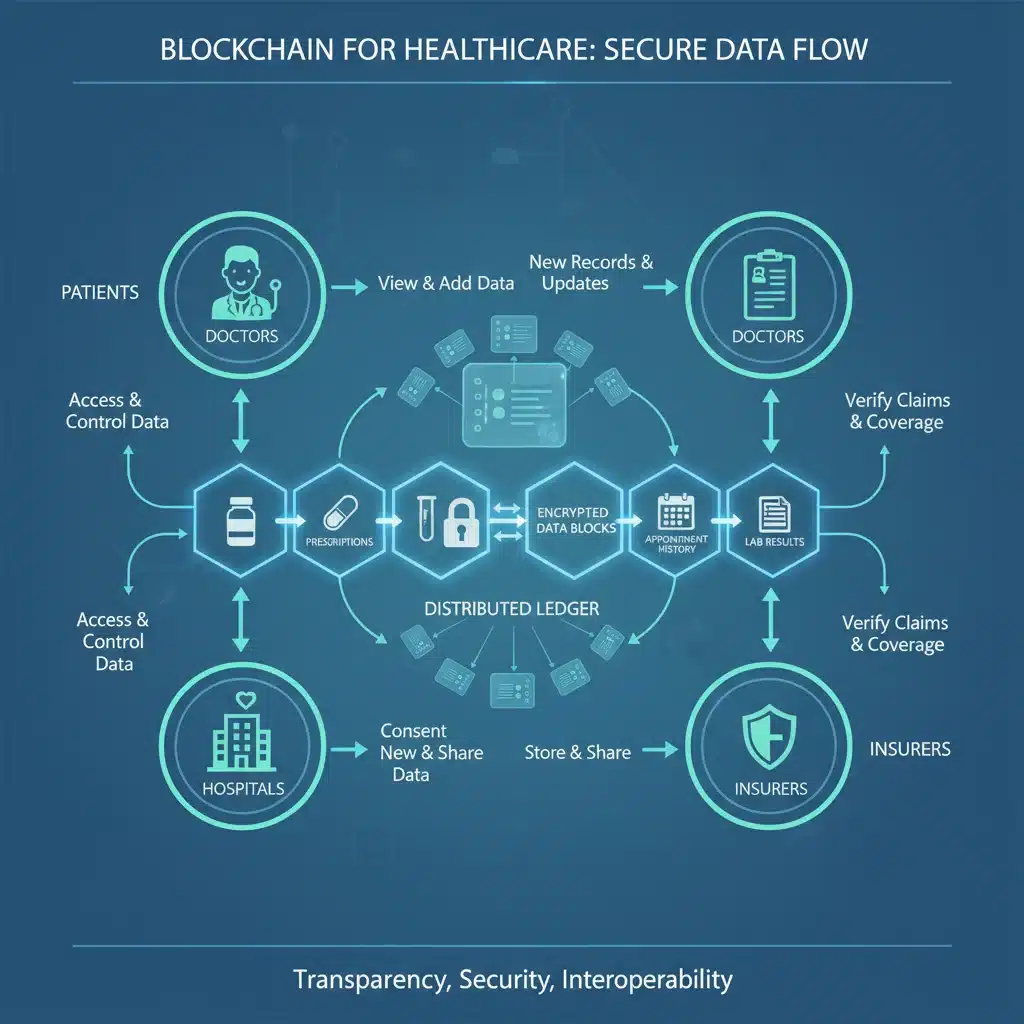
At its heart, blockchain is a distributed ledger, meaning that data is not stored in a single, vulnerable location but is replicated across a network of computers (nodes). Each block of data is cryptographically linked to the previous one, forming an unbreakable chain. Any attempt to alter a record would require changing every subsequent block on the entire network, a virtually impossible task. This inherent immutability ensures the integrity of medical records, preventing unauthorized tampering and providing an unalterable audit trail. Furthermore, advanced encryption techniques protect the confidentiality of sensitive patient information, ensuring that only authorized individuals with the appropriate cryptographic keys can access specific data.
Improved Interoperability and Data Exchange
Blockchain can act as a universal, secure layer for healthcare data exchange, overcoming the limitations of fragmented EHR/EMR systems. Instead of directly storing all patient data on the blockchain (which might be too voluminous and slow), it can store metadata, hashes, or pointers to patient records held in existing systems. This allows for a decentralized index of patient information. When a patient grants permission, authorized providers can access relevant parts of their medical history across different institutions, fostering true interoperability. This seamless data flow ensures that emergency room doctors have immediate access to a patient’s allergies, primary care physicians can view specialists’ notes, and pharmacists can verify prescriptions quickly and accurately. This approach respects existing infrastructure while providing a secure and unified access layer.
Patient Empowerment and Consent Management
One of the most transformative aspects of blockchain in healthcare is its ability to empower patients. With a blockchain-based system, patients can have greater control over their own medical data, deciding who gets access to what information and for how long. This is often achieved through smart contracts—self-executing contracts with the terms of the agreement directly written into code. Patients can grant or revoke access permissions with granular control, enhancing privacy and building trust between patients and providers. This shift from provider-centric to patient-centric data management aligns perfectly with modern healthcare philosophies that emphasize patient autonomy.
Streamlining Administrative Processes and Reducing Costs
The potential for administrative cost reduction is immense. By automating many manual processes, reducing the need for intermediaries, and improving data accuracy, blockchain can significantly streamline operations. Consider claims processing: smart contracts can automatically verify eligibility, services rendered, and policy coverage, accelerating adjudication and reducing fraud. This automation minimizes human error, cuts down on paperwork, and frees up administrative staff to focus on more critical tasks. The enhanced transparency and immutability also simplify auditing and regulatory compliance, reducing the resources spent on these activities. Our projection of a 10% reduction in administrative costs by 2027 is ambitious but achievable, driven by these efficiencies.
Key Applications of Blockchain in US Healthcare
The versatility of blockchain extends beyond basic record-keeping, offering solutions for various facets of healthcare operations.
Supply Chain Management for Pharmaceuticals and Medical Devices
Counterfeit drugs and medical devices pose a serious threat to patient safety and erode trust in the pharmaceutical supply chain. Blockchain can provide an immutable, transparent ledger for tracking products from manufacturer to patient. Each step—manufacturing, packaging, shipping, dispensing—can be recorded as a transaction on the blockchain. This allows for real-time verification of a product’s authenticity and origin, helping to prevent counterfeiting and quickly identify recalled items. This enhanced transparency and traceability ensure the integrity of the supply chain, protecting both patients and legitimate manufacturers.
Clinical Trials and Research Data Management
Clinical trials are complex, requiring meticulous data collection, management, and verification. Blockchain can enhance the integrity and transparency of clinical trial data by providing a secure, unalterable record of all trial activities, from patient recruitment and consent to data collection and results reporting. This can reduce data manipulation, accelerate regulatory approvals, and foster greater public trust in research outcomes. Researchers can securely share anonymized data, facilitating collaborative studies and accelerating medical advancements while maintaining patient privacy.
Secure Medical Billing and Claims Processing
The billing and claims process in healthcare is notoriously complex, leading to disputes, delays, and significant administrative overhead. Blockchain, particularly through smart contracts, can revolutionize this area. Once services are rendered, smart contracts can automatically trigger payment requests, verify insurance eligibility, and process claims based on predefined rules. This automation can drastically reduce the time and resources spent on manual claims processing, minimize errors and fraud, and improve the overall efficiency of the revenue cycle. This is a crucial area for achieving the projected 10% administrative cost reduction.
Identity Management and Provider Credentialing
Verifying the credentials of healthcare providers is a time-consuming and often redundant process. Blockchain can create a secure, immutable record of a practitioner’s qualifications, licenses, and certifications. This decentralized digital identity system would allow for instant verification of credentials across different healthcare organizations, streamlining onboarding processes and reducing administrative burden. It also helps combat fraud related to fake credentials, ensuring that patients receive care from qualified professionals.
Challenges and Considerations for Implementation
While the promise of blockchain healthcare records is significant, its widespread adoption in the US healthcare system faces several hurdles that need to be addressed.
Regulatory and Legal Frameworks
Integrating blockchain into healthcare requires navigating a complex regulatory landscape, particularly concerning HIPAA compliance. While blockchain’s security features align well with HIPAA’s objectives, specific regulations around data storage, patient consent, and the right to be forgotten (which conflicts with blockchain’s immutability) need careful interpretation and potentially new legal frameworks. Clear guidelines are necessary to ensure that blockchain solutions are both innovative and compliant.
Scalability and Performance
The US healthcare system generates an enormous volume of data daily. Ensuring that blockchain networks can handle this scale without compromising transaction speed and efficiency is critical. While public blockchains like Bitcoin can be slow, private or permissioned blockchains (often preferred in enterprise settings) offer higher transaction throughput. Ongoing research and development in blockchain technology are continuously addressing these scalability challenges.
Interoperability with Legacy Systems
A complete overhaul of existing EHR/EMR systems is impractical and prohibitively expensive. Therefore, blockchain solutions must be designed to integrate seamlessly with legacy systems. This often involves creating API layers and middleware that can translate data between traditional databases and blockchain networks, ensuring a smooth transition and minimizing disruption.
Cost of Implementation and Training
Implementing new technologies, especially one as transformative as blockchain, requires significant initial investment in infrastructure, software development, and workforce training. Healthcare organizations need to assess the long-term return on investment (ROI) and carefully plan their implementation strategies. Educating healthcare professionals and administrative staff on how to use and trust blockchain-based systems is also crucial for successful adoption.

The Path to a 10% Administrative Cost Reduction by 2027
Achieving a 10% reduction in administrative costs by 2027 through blockchain adoption is an ambitious but attainable goal. This will require a multi-faceted approach involving technology, policy, and collaboration.
Phased Implementation and Pilot Programs
Rather than a wholesale transformation, a phased implementation strategy is more realistic. Healthcare organizations can start with pilot programs focusing on specific, high-impact areas like claims processing, supply chain tracking, or patient consent management. These smaller-scale deployments allow for testing, refinement, and demonstration of tangible benefits before broader rollout. Success stories from these pilots will build momentum and encourage wider adoption.
Industry Collaboration and Standardization
For blockchain to achieve its full potential in healthcare, industry-wide collaboration is essential. This includes developing common standards for data formats, interoperability protocols, and governance models. Consortia involving healthcare providers, technology vendors, regulatory bodies, and patient advocacy groups can drive these standardization efforts, ensuring that different blockchain solutions can communicate effectively and create a cohesive ecosystem.
Investment in Education and Workforce Development
A skilled workforce is vital for the successful integration of blockchain. Investment in training programs for IT professionals, healthcare administrators, and clinicians will be necessary to ensure they understand the technology, its benefits, and how to effectively utilize blockchain-powered tools. This includes understanding the nuances of decentralized identity, smart contracts, and data privacy on a blockchain.
Focus on Measurable ROI
To justify the investment, organizations must meticulously track and measure the return on investment (ROI) from blockchain initiatives. This involves quantifying reductions in administrative errors, processing times, fraud, and improved data security. Demonstrating clear financial and operational benefits will be key to accelerating adoption and achieving the 10% cost reduction target.
Looking Ahead: The Future of Blockchain in US Healthcare
The journey towards a blockchain-powered healthcare system is just beginning, but the trajectory is clear. The convergence of increasing cyber threats, demands for greater patient control over data, and the relentless pressure to reduce costs makes blockchain an increasingly attractive and necessary solution. The foundational principles of blockchain—security, transparency, and decentralization—are perfectly aligned with the core needs of modern healthcare.
As the technology matures, we can anticipate more sophisticated applications, potentially integrating with artificial intelligence (AI) and the Internet of Medical Things (IoMT) to create truly intelligent and proactive healthcare systems. Imagine AI algorithms securely analyzing anonymized blockchain healthcare records to identify disease patterns, or IoMT devices securely recording patient vitals directly onto a personal health ledger. The future promises a healthcare ecosystem where patient data is not just secure but also intelligently utilized to deliver more personalized, efficient, and effective care.
The vision of a US healthcare system where blockchain healthcare records are universally secure, interoperable, and contribute to a significant reduction in administrative costs by 2027 is ambitious but within reach. By embracing this transformative technology, stakeholders can build a more resilient, trustworthy, and patient-centric healthcare future.