
Critical 2026 Updates to Clinical Trial Requirements for High-Risk Medical Devices
The medical device industry is in a perpetual state of evolution, driven by technological advancements and, perhaps more significantly, by stringent regulatory oversight. As we approach 2026, a series of critical updates to clinical trial requirements for high-risk medical devices are poised to reshape how manufacturers develop, test, and bring these life-saving innovations to market. For companies operating in this complex sector, understanding and proactively adapting to these changes is not merely an option but a paramount necessity for sustained success and patient safety. This comprehensive guide delves into the nuances of these impending regulations, offering a roadmap for navigating the challenges and seizing the opportunities they present.
The Shifting Regulatory Landscape for High-Risk Device Trials
The regulatory environment governing high-risk device trials is becoming increasingly rigorous. Driven by lessons learned from past incidents and a global push for enhanced patient safety and data transparency, major regulatory bodies like the U.S. Food and Drug Administration (FDA) and the European Medicines Agency (EMA) under the EU Medical Device Regulation (MDR) are tightening their grips. The 2026 updates are not isolated changes; they represent a continuation of a trend towards more robust evidence generation, greater scrutiny of clinical data, and a heightened emphasis on post-market surveillance for high-risk devices.
These updates are designed to ensure that medical devices, especially those implanted or used in critical life-sustaining functions, undergo thorough and ethical clinical evaluation before and after market entry. Manufacturers must prepare for increased demands on clinical trial design, data quality, statistical power, and long-term follow-up. The implications extend beyond just regulatory approval; they touch upon research and development strategies, resource allocation, and ultimately, market competitiveness.
Key Areas of Impact: What to Expect from the 2026 Updates
The upcoming changes will manifest across several critical dimensions of clinical trials for high-risk device trials. Manufacturers should pay close attention to the following areas:
Enhanced Clinical Evidence Requirements
One of the most significant shifts is the demand for more comprehensive and robust clinical evidence. Regulators are moving away from reliance on equivalence arguments for high-risk devices and are increasingly requiring de novo clinical studies with larger patient cohorts and longer follow-up periods. This means:
- Larger Sample Sizes: Expect requirements for statistically powered studies capable of detecting clinically meaningful differences and rare adverse events.
- Longer Follow-up: The trend is towards extended post-market clinical follow-up (PMCF) studies, sometimes spanning several years, to assess long-term safety and performance.
- Real-World Evidence (RWE): While traditional randomized controlled trials (RCTs) remain the gold standard, regulators are increasingly open to incorporating high-quality RWE from registries and electronic health records to supplement pre-market data or support post-market claims. However, the standards for RWE quality and relevance will be extremely high for high-risk devices.
- Objective Endpoints: A greater emphasis will be placed on objective, measurable clinical endpoints directly relevant to patient outcomes, moving beyond surrogate markers where possible.
Stricter Protocol Design and Methodology
The design and execution of clinical trials will face intensified scrutiny. Regulators will demand:
- Rigor in Study Design: Protocols must be meticulously designed to minimize bias, ensure patient safety, and generate reliable data. This includes clear primary and secondary endpoints, robust statistical analysis plans, and well-defined inclusion/exclusion criteria.
- Risk-Benefit Assessment: A more thorough and continuous risk-benefit assessment throughout the trial lifecycle will be mandatory. This includes detailed mitigation strategies for identified risks.
- Patient-Centricity: Greater emphasis on patient-reported outcomes (PROs) and patient preference studies will be integrated into trial designs, especially for devices impacting quality of life.
- Adaptive Trial Designs: While offering flexibility, adaptive designs for high-risk devices will require careful justification and pre-specified rules to maintain scientific validity and regulatory acceptance.
Increased Transparency and Data Sharing
Transparency is a cornerstone of the new regulatory paradigm. Manufacturers must be prepared for:
- Public Registration of Trials: Mandatory registration of all clinical trials for high-risk devices in publicly accessible databases (e.g., ClinicalTrials.gov, EudraCT) will be enforced, including detailed protocols and results.
- Data Anonymization and Sharing: While patient privacy remains paramount, there will be increased pressure to share anonymized clinical trial data with researchers and the public, fostering scientific advancement and independent scrutiny.
- Publication of Results: Timely publication of clinical trial results, regardless of outcome, in peer-reviewed journals will become an expectation, if not a requirement.
Enhanced Post-Market Surveillance (PMS) and PMCF
The journey for a high-risk medical device doesn’t end with market approval. The 2026 updates will significantly bolster PMS and PMCF requirements:
- Proactive Surveillance Plans: Manufacturers must develop and implement robust, proactive PMS plans that go beyond reactive incident reporting. This includes systematic data collection from various sources.
- Mandatory PMCF Studies: For many high-risk devices, PMCF studies will no longer be optional but a mandatory condition of market approval, requiring ongoing clinical data collection to confirm long-term safety and performance.
- Trend Reporting: Enhanced requirements for identifying and reporting adverse event trends will necessitate sophisticated data analytics capabilities.
- Unique Device Identification (UDI): The full implementation of UDI systems will play a crucial role in tracking devices post-market and facilitating targeted recalls or safety communications.
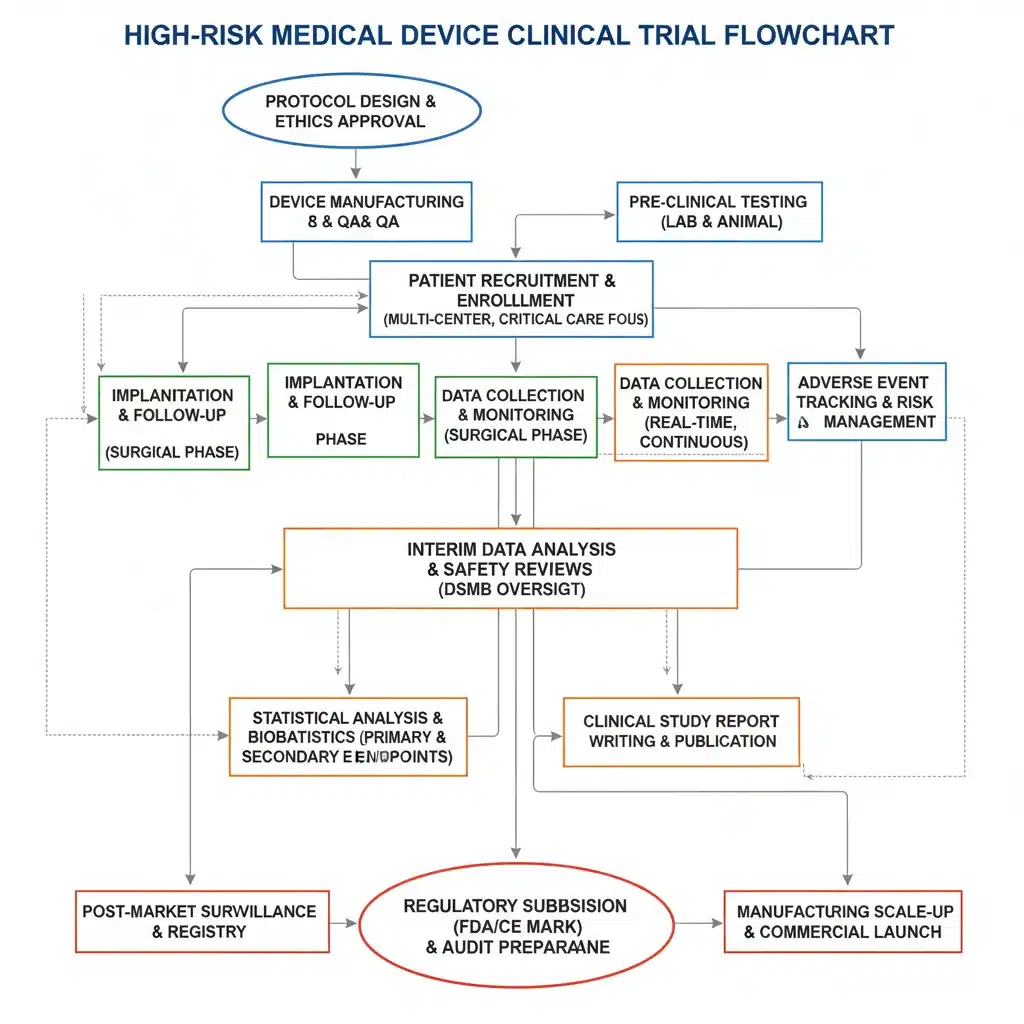
Navigating the Changes: Strategies for Manufacturers
Adapting to these critical 2026 updates requires a proactive and strategic approach. Manufacturers of high-risk device trials must begin preparing now to avoid delays in market access and ensure compliance.
1. Early Engagement with Regulatory Bodies
Don’t wait until the last minute. Engage with regulatory authorities (e.g., FDA, notified bodies in the EU) early in the device development process. Seek scientific advice on clinical trial design, endpoints, and evidence requirements. This proactive dialogue can save significant time and resources down the line.
2. Strengthening Clinical Development Teams
The increased complexity of clinical trials necessitates highly skilled and experienced teams. Invest in training for clinical affairs, biostatistics, data management, and regulatory specialists. Consider augmenting internal teams with external experts, such as Contract Research Organizations (CROs) specializing in medical device trials, to ensure adherence to new standards and best practices.
3. Robust Data Management and Analytics
The volume and complexity of data generated from clinical trials will escalate. Manufacturers need to invest in advanced Electronic Data Capture (EDC) systems, clinical trial management systems (CTMS), and robust data analytics tools. Ensure data integrity, security, and traceability throughout the entire data lifecycle. The ability to perform sophisticated statistical analyses will be paramount.
4. Comprehensive Risk Management Integration
Integrate risk management processes more deeply into all phases of clinical development. From early design to post-market surveillance, continuously identify, evaluate, and mitigate risks associated with the device and its clinical use. The updated regulations will demand a more systematic and dynamic approach to risk-benefit assessment.
5. Investing in Quality Systems and Documentation
A strong Quality Management System (QMS) is foundational. Ensure that all clinical trial activities, from protocol development to data reporting, are meticulously documented and comply with Good Clinical Practice (GCP) and relevant regulatory standards. The auditability of your processes and data will be a key focus for regulators.
6. Strategic Approach to Post-Market Surveillance
Develop a comprehensive and proactive PMS plan well before market entry. This includes establishing robust systems for adverse event reporting, trend analysis, and the implementation of PMCF studies where required. Leverage real-world data sources effectively, understanding their limitations and strengths in regulatory contexts.
7. Budgeting for Increased Costs and Timelines
The enhanced requirements for clinical evidence, larger trials, and longer follow-up periods will inevitably lead to increased costs and extended development timelines. Manufacturers must factor these into their financial planning and project management strategies. Underestimating these impacts can lead to significant financial strain and delays.

The Role of Technology in Compliance
Technology will play a pivotal role in helping manufacturers meet the 2026 requirements for high-risk device trials. Beyond EDC and CTMS, consider:
- AI and Machine Learning: These technologies can assist in identifying patient cohorts, analyzing vast datasets for safety signals, and even optimizing trial designs.
- Digital Health Tools: Wearable sensors and other digital health technologies can facilitate continuous, remote data collection, enhancing the richness and frequency of data for PMCF studies.
- Blockchain for Data Integrity: Exploring blockchain technology can enhance the security, traceability, and immutability of clinical trial data, addressing regulatory concerns around data integrity.
- Simulation and Modeling: Advanced computational modeling and simulation can help refine device designs and potentially reduce the need for certain animal or early-stage human trials, though not replacing pivotal clinical evidence for high-risk devices.
Understanding the Global Harmonization Efforts
While specific regulations vary by jurisdiction (e.g., FDA in the US, EU MDR in Europe, PMDA in Japan), there’s a growing trend towards global harmonization in clinical trial standards. The International Medical Device Regulators Forum (IMDRF) plays a crucial role in developing globally converged guidance. Manufacturers engaged in high-risk device trials for international markets should stay abreast of these harmonization efforts to streamline their global regulatory strategies and reduce redundant efforts.
However, it’s also critical to acknowledge that differences will persist. A ‘one-size-fits-all’ approach is unlikely to be sufficient. Instead, a core strategy built on IMDRF principles, supplemented by country-specific adaptations, will be necessary. This often involves careful mapping of regulatory requirements across target markets and designing clinical trials that can satisfy the most stringent requirements or allow for modular submissions with region-specific data appendices.
Impact on Innovation and Market Access
The heightened requirements for high-risk device trials could present a double-edged sword for innovation. On one hand, the increased rigor ensures that only the safest and most effective devices reach patients, fostering greater trust in medical technology. On the other hand, the higher costs and longer development timelines could potentially stifle innovation, particularly for smaller manufacturers or those developing niche devices. Regulators are aware of this tension and are actively exploring expedited pathways for breakthrough devices, provided they still meet the enhanced safety and efficacy standards.
For market access, the implications are clear: without robust clinical evidence meeting the 2026 standards, market entry will be significantly challenging, if not impossible. Early planning, strategic resource allocation, and a deep understanding of the new regulatory framework will be critical differentiators for companies aiming to successfully launch high-risk medical devices in a post-2026 world. This means integrating regulatory intelligence from the very conceptualization of a device, rather than viewing it as a downstream hurdle.
Ethical Considerations in High-Risk Device Trials
Beyond the regulatory and scientific aspects, the 2026 updates also implicitly reinforce ethical considerations in clinical trials. Given the inherent risks associated with high-risk devices, protecting patient rights and welfare is paramount. This includes:
- Informed Consent: Ensuring patients fully understand the risks, benefits, and alternatives before participating in a trial. The complexity of high-risk devices often necessitates more detailed and accessible consent processes.
- Patient Selection: Careful selection of trial participants to ensure they are appropriate for the device and can provide meaningful data, while also ensuring equitable access to trials.
- Data Privacy: Adherence to stringent data privacy regulations (e.g., GDPR, HIPAA) is non-negotiable, especially with increased data sharing mandates.
- Independent Oversight: The role of Institutional Review Boards (IRBs) or Ethics Committees (ECs) will be further emphasized, requiring thorough review and continuous oversight of trial conduct.
Manufacturers must embed a strong ethical framework into their clinical trial operations, ensuring that patient safety and well-being are at the forefront of every decision.
Conclusion: Preparing for a Future of Enhanced Rigor
The 2026 updates to clinical trial requirements for high-risk device trials mark a significant pivot towards a more evidence-driven and patient-centric regulatory paradigm. While presenting considerable challenges, these changes ultimately aim to elevate the standard of care and enhance patient safety globally. Manufacturers who embrace these changes proactively, investing in robust clinical strategies, advanced data management, and strong regulatory intelligence, will be best positioned to navigate the evolving landscape.
The future of high-risk medical device development demands not just innovation in technology, but also innovation in how we prove safety and efficacy. By understanding the nuances of the 2026 updates and implementing comprehensive preparation strategies, the industry can continue to deliver groundbreaking medical solutions that truly transform lives, responsibly and effectively.
Start your assessment today. Review your current clinical trial pipelines, identify potential gaps against the impending regulations, and formulate a detailed action plan. The time to prepare for 2026 is now.