Navigating 2026 FDA Medical Device Recalls: A 3-Step Compliance Checklist for Manufacturers
The landscape of medical device manufacturing is perpetually evolving, driven by technological advancements and, crucially, by stringent regulatory oversight. As we inch closer to 2026, the focus on compliance, particularly concerning FDA device recalls, intensifies. For medical device manufacturers, understanding and proactively preparing for potential recalls is not merely a regulatory obligation but a cornerstone of patient safety, brand reputation, and long-term viability. A recall can be devastating, impacting everything from financial performance to public trust. This comprehensive guide will equip you with a robust, 3-step compliance checklist to navigate the complexities of 2026 FDA medical device recalls, ensuring your organization is not just reactive, but resilient.
The U.S. Food and Drug Administration (FDA) plays a critical role in safeguarding public health by ensuring the safety and effectiveness of medical devices. When a device poses a risk to health, the FDA has the authority to initiate or oversee a recall. These FDA device recalls are categorized based on the severity of the health hazard: Class I (most serious, involving a reasonable probability that use will cause serious adverse health consequences or death), Class II (may cause temporary or medically reversible adverse health consequences, or where the probability of serious adverse health consequences is remote), and Class III (least serious, involving products that are unlikely to cause adverse health consequences). The implications of each class vary, but all demand a swift, organized, and compliant response from manufacturers.
The year 2026 isn’t just another calendar year; it represents a horizon where regulatory expectations may be further refined or new challenges emerge. Manufacturers must move beyond a reactive stance and embed a culture of proactive compliance. This involves not only understanding current regulations but also anticipating future trends in regulatory enforcement and technological integration. Our 3-step checklist is designed to provide a structured approach to this critical preparation, focusing on key areas that will significantly bolster your readiness for any potential FDA device recalls.
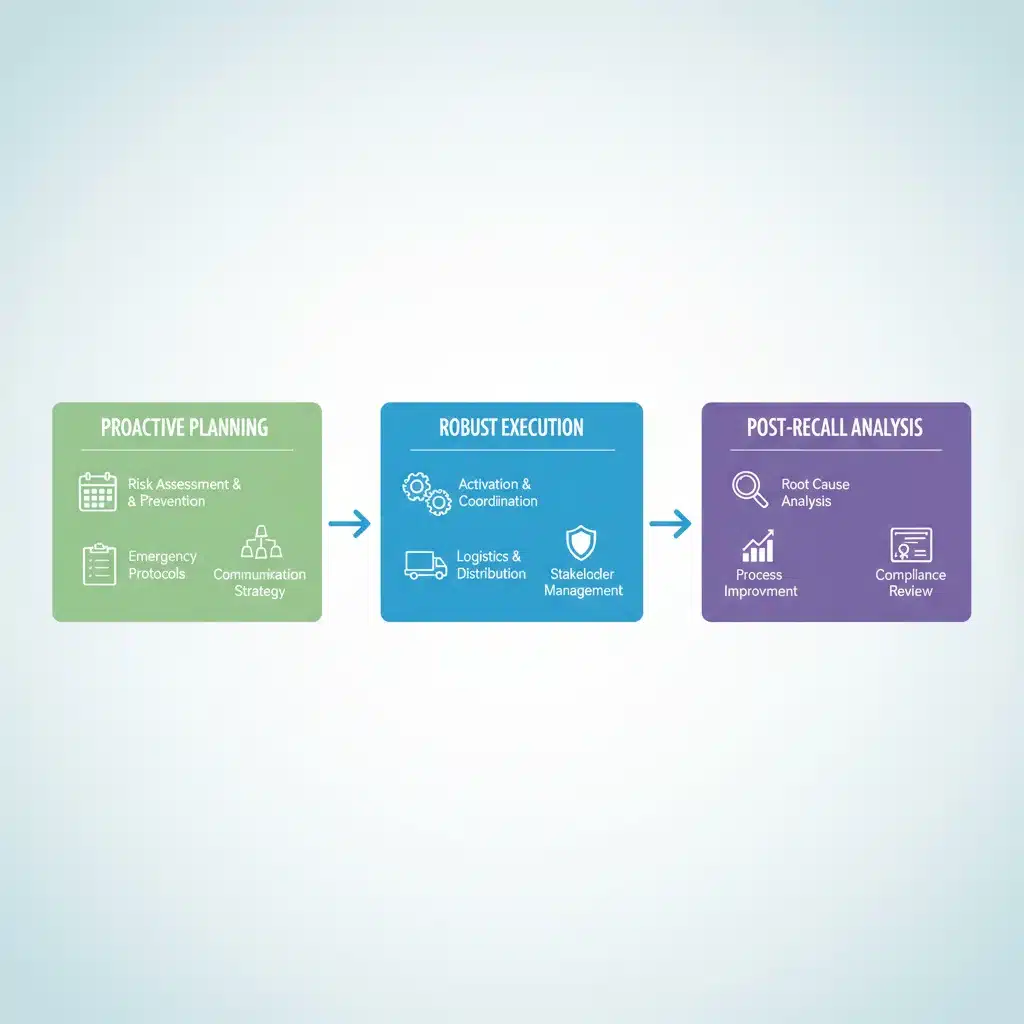
Step 1: Proactive Planning and Risk Mitigation for FDA Device Recalls
The first and arguably most crucial step in navigating potential FDA device recalls is to establish a comprehensive and proactive planning and risk mitigation strategy. This isn’t about simply having a recall plan; it’s about embedding recall prevention and efficient response mechanisms into the very fabric of your quality management system (QMS) and product lifecycle.
A. Robust Quality Management System (QMS) Implementation and Maintenance
Your QMS is the backbone of your manufacturing operations and the first line of defense against product defects that could lead to FDA device recalls. A robust QMS, compliant with FDA 21 CFR Part 820 (Quality System Regulation) and ISO 13485, is non-negotiable. Key elements include:
- Design Controls: Ensure your design process incorporates robust risk analysis, verification, and validation activities to identify and mitigate potential failure modes early. Design traceability matrixes are invaluable here.
- Process Controls: Implement stringent controls over manufacturing processes, including validation of equipment, processes, and software. Regular calibration and maintenance schedules are essential.
- Supplier Management: Your supply chain is an extension of your QMS. Establish rigorous supplier qualification processes, clear quality agreements, and ongoing monitoring to prevent defective components from entering your production line.
- Document Control: Maintain meticulous records of all design, manufacturing, testing, and distribution activities. This documentation is critical for identifying the scope of a recall and demonstrating compliance.
- Corrective and Preventive Actions (CAPA): A strong CAPA system is vital for addressing nonconformances, deviations, and complaints effectively. Timely investigation, root cause analysis, and implementation of corrective and preventive actions can prevent isolated issues from escalating into systemic problems that necessitate FDA device recalls.
- Internal Audits: Regularly conduct internal audits to assess the effectiveness of your QMS and identify areas for improvement before external regulatory bodies do.
B. Comprehensive Risk Management Framework
Risk management should be an ongoing, iterative process throughout the entire product lifecycle, not just during design. Adhering to ISO 14971 (Application of risk management to medical devices) is a fundamental requirement. This involves:
- Risk Identification: Systematically identify potential hazards associated with your device’s use, design, manufacturing, and post-market phases.
- Risk Analysis: Evaluate the probability of harm and the severity of that harm for each identified hazard.
- Risk Evaluation: Determine the acceptability of the identified risks based on predefined criteria.
- Risk Control: Implement measures to reduce risks to an acceptable level. This could involve design changes, manufacturing process improvements, warning labels, or training.
- Post-Market Risk Monitoring: Continuously monitor the device’s performance in the market to detect new risks or changes in existing risks. This feeds directly into your CAPA system and can signal the need for proactive measures to avoid FDA device recalls.
C. Robust Complaint Handling and Post-Market Surveillance Systems
Complaints and post-market surveillance data are early warning signals for potential product issues. An effective system includes:
- Efficient Complaint Intake and Triage: Establish clear procedures for receiving, documenting, and classifying all complaints, regardless of perceived severity.
- Thorough Investigation: Each complaint should be investigated promptly and thoroughly to determine the root cause.
- Medical Device Reporting (MDR): Understand and strictly adhere to FDA’s MDR requirements. Timely reporting of adverse events is crucial. Failure to do so can lead to significant regulatory penalties and potentially larger FDA device recalls.
- Trend Analysis: Regularly analyze complaint data and other post-market surveillance information (e.g., service reports, returned product analysis) to identify trends that may indicate a systemic issue requiring corrective action or even a potential recall.
- Feedback Loop: Ensure that insights gained from complaint handling and post-market surveillance are fed back into design, manufacturing, and risk management processes to drive continuous improvement and prevent future FDA device recalls.
Step 2: Establishing an Agile and Compliant Recall Execution Plan
Even with the most robust proactive measures, the possibility of an FDA device recall cannot be entirely eliminated. Therefore, having an agile, well-documented, and regularly practiced recall execution plan is paramount. This plan must ensure that if a recall becomes necessary, your organization can respond swiftly, effectively, and in full compliance with FDA regulations.
A. Developing a Detailed Recall Plan (Written Procedures)
Your recall plan should be a living document, integrated into your QMS, and accessible to all relevant personnel. It should include:
- Recall Team Structure and Responsibilities: Clearly define roles, responsibilities, and reporting lines for a dedicated recall team. This team should include representatives from regulatory affairs, quality, legal, manufacturing, sales, marketing, and communications.
- Decision-Making Process: Outline the criteria and process for initiating a recall, including thresholds for different recall classes. Who makes the final decision? What data is required?
- Communication Strategy: Develop pre-approved templates and protocols for communicating with the FDA, distributors, healthcare professionals, patients, and the public. This includes official recall notifications, press releases, and internal communications. Transparency and clarity are key during FDA device recalls.
- Product Identification and Traceability: Detail how affected products will be identified, quarantined, and traced throughout the distribution chain. This relies heavily on robust lot/batch numbering and distribution records.
- Return and Disposition Procedures: Establish clear procedures for the return, segregation, and ultimate disposition (repair, rework, destruction) of recalled products.
- Effectiveness Checks: Define how the effectiveness of the recall will be measured and documented (e.g., percentage of recalled units returned).
- Resource Allocation: Identify the resources (personnel, financial, technological) required to execute a recall efficiently.
B. Training and Drills: Practice Makes Perfect
A plan is only as good as its execution. Regular training and mock recalls are critical to ensure your team is prepared to handle real FDA device recalls:
- Team Training: All members of the recall team, and other relevant personnel, should receive regular training on the recall plan, their specific roles, and regulatory requirements.
- Mock Recalls (Drills): Conduct periodic, unannounced mock recalls. These drills should simulate real-world scenarios, testing the efficiency of your communication channels, traceability systems, and decision-making processes. Document the outcomes, identify weaknesses, and update your plan accordingly. This iterative improvement is crucial for readiness for FDA device recalls.
- Crisis Communication Training: Train key personnel on how to handle media inquiries and communicate effectively with stakeholders during a crisis.
C. Technology and Data Management
Leveraging technology is essential for efficient recall management:
- Enterprise Resource Planning (ERP) and Quality Management Software (QMS): Ensure your systems can quickly identify affected product lots, track distribution, and manage inventory.
- Document Management Systems: A centralized, accessible system for all recall-related documents, including regulatory submissions, communications, and internal records.
- Communication Platforms: Utilize secure and efficient platforms for internal team communication and external stakeholder engagement during a recall.

Step 3: Post-Recall Analysis and Continuous Improvement
The process doesn’t end when the physical recall is complete. The third critical step involves a thorough post-recall analysis and integrating lessons learned into your QMS to prevent future FDA device recalls and enhance overall compliance.
A. Comprehensive Root Cause Analysis
After a recall, a deep dive into the root cause is essential. This goes beyond identifying the immediate problem to understanding why it occurred in the first place:
- Multidisciplinary Investigation: Involve experts from all relevant departments (design, manufacturing, quality, engineering) to conduct a thorough investigation.
- Utilize Analytical Tools: Employ tools like 5 Whys, Fishbone diagrams, and FMEA (Failure Mode and Effects Analysis) to systematically uncover root causes.
- Documentation: Meticulously document the entire investigation process, findings, and conclusions.
B. Implementing Corrective and Preventive Actions (CAPA)
The insights from the root cause analysis must feed directly into your CAPA system:
- Develop and Implement CAPAs: Based on the root cause, develop specific corrective actions to address the immediate problem and preventive actions to avoid recurrence. These could involve design changes, process improvements, supplier changes, or enhanced training.
- Verify Effectiveness: Crucially, verify the effectiveness of the implemented CAPAs to ensure they have truly resolved the issue and prevented its recurrence. This might involve long-term monitoring or re-validation activities.
- Update QMS Documents: Ensure all relevant QMS documents, including procedures, work instructions, and risk management files, are updated to reflect the changes made as a result of the CAPA.
C. Regulatory Reporting and Communication
Maintain open and transparent communication with the FDA throughout and after the recall process:
- Final Report: Submit a comprehensive final report to the FDA detailing the recall activities, effectiveness checks, root cause analysis, and implemented CAPAs.
- Follow-Up: Be prepared to respond to any further inquiries or requests from the FDA.
D. Continuous Improvement and Lessons Learned
The recall experience, though challenging, offers invaluable lessons for continuous improvement:
- Review and Update Recall Plan: Based on the actual recall experience and the mock drills, review and update your recall plan to incorporate new insights and strengthen weaknesses.
- Knowledge Sharing: Disseminate lessons learned across the organization to foster a culture of quality and proactive risk management.
- Benchmarking: Look at industry best practices and other FDA device recalls to identify further opportunities for improvement in your own processes.
- Employee Engagement: Encourage all employees to be vigilant and report potential issues, emphasizing their role in preventing future FDA device recalls.
The Evolving Landscape of FDA Device Recalls Post-2026
Looking beyond 2026, several trends suggest that the regulatory environment for medical devices will continue to become more complex and demanding. Manufacturers should anticipate:
- Increased Focus on Software as a Medical Device (SaMD): As more devices incorporate sophisticated software and AI, the FDA’s scrutiny on software validation, cybersecurity, and algorithmic bias will intensify. Recalls related to software vulnerabilities are likely to become more prevalent.
- Enhanced Data Analytics and AI in Regulatory Oversight: The FDA is increasingly leveraging advanced data analytics to identify trends and potential issues across manufacturers. This means manufacturers’ internal data quality and analytical capabilities will need to match or exceed regulatory expectations.
- Supply Chain Resilience and Transparency: Global supply chain disruptions have highlighted the need for greater visibility and resilience. Manufacturers will face increased pressure to ensure the quality and reliability of components from every tier of their supply chain.
- Personalized Medicine and Combination Products: The rise of personalized medicine and complex combination products (device-drug, device-biologic) will introduce new regulatory challenges and require integrated quality management systems that address multiple regulatory frameworks.
- Digital Health Technologies: Wearable devices, remote monitoring systems, and other digital health technologies are expanding the definition of a medical device. Manufacturers in this space must be acutely aware of their regulatory obligations, including those pertaining to data privacy and security, which can lead to unique types of FDA device recalls if compromised.
To stay ahead, manufacturers should invest in continuous regulatory intelligence, participate in industry forums, and engage with regulatory bodies to understand evolving expectations. Proactive engagement with cybersecurity best practices, robust data integrity protocols, and comprehensive lifecycle management for software components will be crucial in mitigating risks associated with future FDA device recalls.
Conclusion: Building a Culture of Recall Preparedness
Navigating the complex world of FDA device recalls in 2026 and beyond requires more than just a checklist; it demands a deep-seated culture of quality, transparency, and continuous improvement. By diligently implementing this 3-step compliance checklist – focusing on proactive planning and risk mitigation, establishing an agile recall execution plan, and committing to thorough post-recall analysis and continuous improvement – medical device manufacturers can significantly enhance their readiness.
The goal is not merely to avoid recalls, but to build an organization that is inherently resilient, capable of safeguarding patient safety, maintaining regulatory compliance, and protecting its reputation even when faced with unforeseen challenges. Embrace these strategies, and transform potential regulatory hurdles into opportunities for operational excellence and sustained success in the dynamic medical device industry.