2026 Interoperability Rules: MedTech’s Role in Health Information Exchange

The 2026 Interoperability Rules for Health Information Exchange: MedTech’s Role and Responsibilities
The healthcare landscape is in a constant state of evolution, driven by technological advancements, regulatory pressures, and an increasing demand for more personalized and efficient patient care. At the heart of this transformation lies the concept of interoperability – the ability of different information systems, devices, and applications to access, exchange, integrate, and cooperatively use data in a coordinated manner, within and across organizational boundaries, to provide seamless care. The year 2026 marks a significant milestone in this journey, with new interoperability rules set to reshape how health information is exchanged, particularly impacting the MedTech industry. Understanding the MedTech interoperability 2026 rules is not just about compliance; it’s about seizing an opportunity to innovate, enhance patient outcomes, and secure a competitive edge.
The United States Department of Health and Human Services (HHS), through its Office of the National Coordinator for Health Information Technology (ONC), has been at the forefront of this movement. The 21st Century Cures Act, passed in 2016, laid the groundwork, emphasizing the importance of patient access to their health information and prohibiting information blocking. Subsequent rules, such as the ONC Cures Act Final Rule, have progressively pushed the industry towards greater data sharing and transparency. The upcoming 2026 regulations are a continuation of this trajectory, aiming to solidify a truly connected healthcare ecosystem where patient data flows freely and securely between all stakeholders.
Understanding the Core of MedTech Interoperability 2026 Rules
The 2026 interoperability rules are designed to accelerate the widespread adoption of standardized APIs (Application Programming Interfaces) for health information exchange. The goal is to empower patients with greater control over their health data and to foster innovation in health IT. For MedTech companies, this translates into a heightened responsibility to ensure their devices and software solutions can seamlessly integrate with broader healthcare IT infrastructure, including Electronic Health Records (EHRs), health information exchanges (HIEs), and personal health applications.
Key tenets of the 2026 rules often revolve around:
- FHIR (Fast Healthcare Interoperability Resources) Standards: FHIR is rapidly becoming the universal language for healthcare data exchange. The 2026 rules are expected to further mandate or strongly encourage the use of FHIR-based APIs, requiring MedTech devices to be capable of both sending and receiving data in this format. This is crucial for achieving true MedTech interoperability 2026.
- Information Blocking Prevention: The concept of information blocking will likely be reinforced, with stricter penalties for practices that unreasonably interfere with the access, exchange, or use of electronic health information (EHI). MedTech companies must ensure their products do not create barriers to data flow.
- Patient Access and Transparency: Patients will have enhanced rights to access their EHI through third-party applications of their choice. MedTech devices that collect patient-generated health data (PGHD) will need to facilitate this access in a user-friendly and secure manner.
- Standardized Data Elements: The rules will likely specify a core set of standardized data elements that must be exchanged, ensuring consistency and usability across different systems. This standardization is vital for meaningful data analysis and improved care coordination.
- Security and Privacy: While promoting data exchange, the rules will continue to emphasize robust security and privacy safeguards, adhering to HIPAA regulations and other relevant frameworks. MedTech companies must build security by design into their products and processes.
The implications for the MedTech sector are profound. Devices that once operated in silos will now be expected to be integral components of a larger, interconnected health ecosystem. This shift demands a re-evaluation of product development strategies, data management practices, and even business models.
MedTech’s Evolving Role in Health Information Exchange
Traditionally, MedTech companies focused on developing innovative devices that performed specific diagnostic or therapeutic functions. While this core mission remains, the emphasis is now shifting towards how these devices generate, capture, and exchange data. MedTech products are no longer just tools; they are data conduits, contributing valuable insights to a patient’s overall health record. The push for MedTech interoperability 2026 transforms the industry’s role from device manufacturers to integral data partners in the healthcare continuum.
Consider the spectrum of MedTech devices:
- Wearable Devices: Smartwatches, fitness trackers, and continuous glucose monitors collect vast amounts of patient-generated health data (PGHD). Interoperability ensures this data can be seamlessly integrated into EHRs, allowing clinicians to gain a more holistic view of a patient’s health trends and make more informed decisions.
- Implantable Devices: Pacemakers, insulin pumps, and neurostimulators generate critical physiological data. Secure and standardized data exchange from these devices can enable remote monitoring, proactive intervention, and personalized treatment adjustments.
- Diagnostic Imaging Equipment: MRI, CT, and X-ray machines produce complex image data. Interoperability facilitates the sharing of these images and associated reports across different healthcare providers, reducing redundant tests and speeding up diagnoses.
- Hospital Equipment: Infusion pumps, ventilators, and patient monitors generate real-time data crucial for acute care. Integrating this data into clinical decision support systems can enhance patient safety and optimize resource allocation.
The 2026 rules will compel MedTech companies to design and develop products with interoperability as a foundational principle, not an afterthought. This means investing in open standards, developing robust APIs, and collaborating closely with EHR vendors and other health IT stakeholders.
Responsibilities of MedTech Companies Under the New Rules
With the advent of the 2026 interoperability rules, MedTech companies face a clear set of responsibilities. These responsibilities extend beyond mere technical compliance and touch upon product design, data governance, and strategic partnerships.
1. Adherence to Interoperability Standards
The foremost responsibility is to ensure that all relevant MedTech products and software solutions comply with the mandated interoperability standards, particularly FHIR. This involves:
- API Development: Building and maintaining FHIR-compliant APIs that allow for secure and efficient exchange of EHI.
- Data Mapping and Normalization: Ensuring that data generated by devices can be accurately mapped to standardized data elements and normalized for consistent interpretation across different systems.
- Testing and Validation: Rigorous testing of interoperability capabilities with various EHR systems and other health IT platforms to ensure seamless data flow and functionality.
2. Preventing Information Blocking
MedTech companies must actively work to prevent information blocking. This means:
- Transparency: Being transparent about data access policies and technical specifications of their devices.
- Non-Discriminatory Practices: Ensuring that data access is provided on non-discriminatory terms to all authorized parties.
- Avoiding Restrictive Practices: Refraining from contractual clauses or technical barriers that prevent the exchange of EHI.
3. Enhancing Data Security and Privacy
While promoting data sharing, the 2026 rules will not compromise on security and privacy. MedTech companies must:
- Implement Robust Security Measures: Employing encryption, access controls, and other cybersecurity measures to protect EHI at rest and in transit.
- Privacy by Design: Integrating privacy considerations into the design and development of all products and services.
- Compliance with Regulations: Adhering to HIPAA, GDPR (where applicable), and other relevant data protection regulations.
4. Facilitating Patient Access to Data
Empowering patients is a central theme of the interoperability push. MedTech companies should:
- Develop Patient-Facing Tools: Create or integrate with applications that allow patients to easily access and manage their device-generated health data.
- Consent Management: Implement clear and user-friendly mechanisms for patients to provide and revoke consent for data sharing.
5. Collaboration and Partnerships
No single entity can achieve full interoperability alone. MedTech companies must:
- Engage with EHR Vendors: Work collaboratively with EHR providers to ensure seamless integration.
- Participate in Industry Initiatives: Engage with industry consortia and standards development organizations to contribute to the evolution of interoperability standards.
- Partner with Healthcare Providers: Collaborate with hospitals, clinics, and other providers to understand their needs and ensure MedTech solutions align with clinical workflows.

Challenges and Opportunities for MedTech
The journey towards full MedTech interoperability 2026 is not without its challenges, but it also presents significant opportunities for growth and innovation.
Challenges:
- Legacy Systems: Many MedTech companies have a significant installed base of older devices that were not designed with interoperability in mind. Upgrading or retrofitting these systems can be costly and complex.
- Data Complexity: Healthcare data is incredibly diverse, ranging from structured lab results to unstructured clinical notes and high-resolution images. Harmonizing and exchanging this varied data effectively is a major hurdle.
- Security Risks: Increased data exchange inherently introduces new cybersecurity risks. Protecting sensitive patient information across a broader network requires continuous vigilance and investment.
- Regulatory Ambiguity: While the 2026 rules aim for clarity, interpretation and implementation can still be challenging, especially for companies operating across multiple jurisdictions.
- Resource Constraints: Smaller MedTech companies may struggle with the financial and technical resources required to achieve full compliance and implement advanced interoperability solutions.
Opportunities:
- Enhanced Patient Care: Seamless data flow leads to more comprehensive patient records, enabling better diagnostic accuracy, personalized treatment plans, and improved health outcomes.
- Innovation and New Business Models: Interoperability fosters an environment ripe for innovation. MedTech companies can develop new services, applications, and business models based on aggregated and analyzed health data, such as predictive analytics for disease management or AI-driven diagnostic support.
- Operational Efficiency: Reduced manual data entry, fewer redundant tests, and streamlined workflows can lead to significant operational efficiencies for healthcare providers, making interoperable MedTech solutions more attractive.
- Market Expansion: Companies that proactively embrace interoperability can differentiate themselves in the market, gaining a competitive advantage and potentially expanding their reach into new segments of the digital health ecosystem.
- Data-Driven Insights: Access to a broader range of interoperable data can provide MedTech companies with invaluable insights into product performance, patient populations, and unmet clinical needs, driving future R&D.
Strategies for MedTech Compliance and Success
To navigate the complexities of the 2026 interoperability rules and capitalize on the opportunities, MedTech companies should consider the following strategic approaches:
1. Conduct a Comprehensive Interoperability Audit
Begin by assessing current products and systems. Identify which devices and software solutions generate or consume EHI, and evaluate their current interoperability capabilities. Determine gaps against anticipated 2026 requirements, focusing on FHIR compliance, API readiness, and data standardization.
2. Invest in FHIR-Based API Development
Prioritize the development or enhancement of FHIR-compliant APIs for all relevant products. This is a foundational step for achieving MedTech interoperability 2026. Consider using off-the-shelf FHIR servers and toolkits to accelerate development and ensure adherence to standards.
3. Strengthen Cybersecurity and Data Governance
With more data flowing, cybersecurity becomes paramount. Implement a robust data governance framework that covers data acquisition, storage, exchange, and disposal. Invest in advanced encryption, intrusion detection systems, and regular security audits. Train staff on data privacy and security best practices.
4. Foster Strategic Partnerships
Collaborate with EHR vendors, other MedTech companies, and healthcare providers. Participate in industry working groups and pilot programs to test interoperability solutions and share best practices. These partnerships can help in understanding market needs and ensuring seamless integration.
5. Adopt an Agile Product Development Approach
The regulatory landscape is dynamic. Employ agile methodologies in product development to quickly adapt to evolving standards and requirements. This allows for iterative development, testing, and deployment of interoperable features.
6. Focus on User Experience and Patient Empowerment
While technical compliance is crucial, the ultimate goal is to improve patient care. Design interoperable solutions with a focus on intuitive user interfaces for both clinicians and patients. Empower patients by providing easy, secure access to their data and tools for managing their health. This human-centric approach will be a key differentiator.
7. Educate and Train Stakeholders
Ensure that internal teams, from R&D to sales and support, understand the implications of the 2026 rules and the importance of interoperability. Provide training on new technologies, data standards, and compliance requirements. Educate healthcare providers on how to effectively utilize the interoperable features of MedTech devices.
The Future Beyond 2026: A Fully Interconnected Health Ecosystem
The 2026 interoperability rules are not an endpoint but rather a significant step towards a future where health information flows seamlessly across the entire healthcare ecosystem. This vision includes:
- Advanced Predictive Analytics: With access to richer, more comprehensive data, AI and machine learning models can offer more accurate predictions for disease onset, treatment efficacy, and patient risk stratification.
- Personalized Medicine at Scale: Interoperable data will enable highly personalized treatment plans, tailored to an individual’s genetic makeup, lifestyle, and real-time physiological responses.
- Proactive Population Health Management: Public health initiatives can leverage aggregated, de-identified interoperable data to identify health trends, manage outbreaks, and allocate resources more effectively.
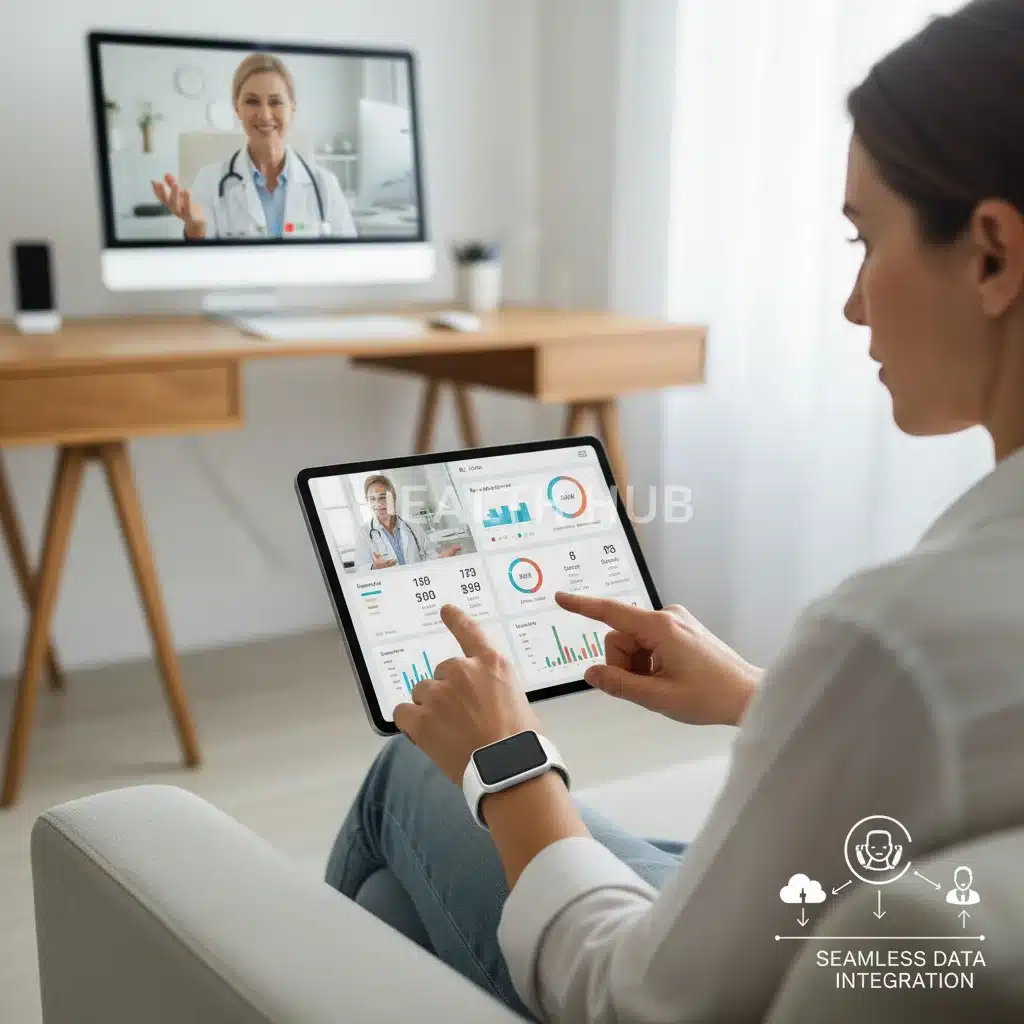
- Enhanced Telemedicine and Remote Monitoring: The integration of data from wearables and remote monitoring devices with EHRs will make telemedicine more robust and effective, enabling continuous care outside traditional clinical settings.
- Global Interoperability: While the 2026 rules focus on the US, the long-term vision includes global standards for health information exchange, facilitating international collaboration in research and patient care.
MedTech companies that embrace the spirit of MedTech interoperability 2026 – moving beyond mere compliance to genuine innovation – will be the ones that thrive in this evolving landscape. They will not only meet regulatory requirements but also contribute significantly to a future where healthcare is more efficient, equitable, and patient-centric.
Conclusion
The 2026 interoperability rules represent a pivotal moment for the MedTech industry. They underscore the imperative for devices and software to integrate seamlessly within a larger, interconnected health information exchange network. While the challenges of legacy systems, data complexity, and cybersecurity are significant, the opportunities for enhanced patient care, innovative business models, and operational efficiencies are even greater.
By proactively investing in FHIR-based APIs, strengthening data security, fostering strategic partnerships, and adopting an agile, patient-centric approach, MedTech companies can not only achieve compliance but also position themselves as leaders in the digital health revolution. The journey towards full MedTech interoperability 2026 is a shared responsibility, and the industry’s commitment to this vision will ultimately pave the way for a more integrated, intelligent, and effective healthcare system for all.