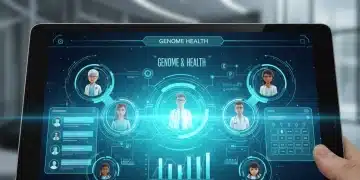
Personalized Medicine Through Digital Platforms: Achieving 30% Better Patient Outcomes in the US by 2028

Personalized Medicine Through Digital Platforms: Achieving 30% Better Patient Outcomes in the US by 2028
The landscape of healthcare is undergoing a profound transformation, moving away from a one-size-fits-all approach to one that is highly individualized and data-driven. At the heart of this revolution lies personalized medicine platforms, a paradigm shift poised to deliver significantly better patient outcomes. In the United States, the ambition is clear: to achieve a remarkable 30% improvement in patient outcomes by 2028 through the widespread adoption and sophisticated utilization of these advanced digital tools. This ambitious goal is not merely aspirational; it is grounded in the burgeoning capabilities of genomics, artificial intelligence, big data analytics, and interconnected digital health ecosystems.
For decades, medical treatment has largely relied on generalized protocols, often effective for the average patient but less so for individuals with unique genetic makeups, lifestyles, and environmental exposures. Personalized medicine, also known as precision medicine, seeks to tailor medical decisions, treatments, practices, and products to the individual patient. Digital platforms are the enablers of this tailoring, providing the infrastructure to collect, analyze, and interpret vast amounts of diverse health data. This includes everything from an individual’s genetic code and microbiome composition to their lifestyle choices, environmental factors, and real-time physiological responses.
The promise of personalized medicine platforms is immense. Imagine a world where a cancer patient receives a drug regimen precisely chosen based on the genetic mutations of their specific tumor, minimizing side effects and maximizing efficacy. Or a diabetic patient whose insulin dosage is dynamically adjusted based on continuous glucose monitoring, diet, activity levels, and even sleep patterns, all managed through an intuitive digital interface. These are not distant dreams but increasingly present realities, driven by the relentless pace of technological innovation.
This article will delve into the intricate world of personalized medicine, exploring how digital platforms are serving as its backbone. We will examine the core technologies driving this transformation, the tangible benefits for patients and healthcare providers, the challenges that need to be overcome, and the strategic roadmap to achieving that ambitious 30% improvement in patient outcomes in the US by 2028. Understanding the mechanisms and implications of personalized medicine platforms is crucial for anyone involved in healthcare, from clinicians and researchers to policymakers and patients themselves.
The Foundation of Personalized Medicine: Data and Technology
The bedrock of personalized medicine is data—lots of it. Genomic data, proteomic data, metabolomic data, clinical records, imaging results, wearable device data, environmental exposures, and even social determinants of health all contribute to a comprehensive individual health profile. Managing and making sense of this deluge of information requires sophisticated digital platforms. These platforms are not just repositories; they are intelligent systems designed for integration, analysis, and actionable insights.
Genomics and Multi-Omics Integration
One of the most significant drivers of personalized medicine is the advancement in genomics. The cost of sequencing a human genome has plummeted, making it increasingly accessible. Digital platforms are essential for storing, processing, and interpreting this complex genetic information. They allow clinicians to identify specific genetic variants that predispose individuals to certain diseases, predict drug responses, and even guide preventative strategies. Beyond genomics, multi-omics platforms integrate data from other ‘omics’ fields, such as proteomics (the study of proteins) and metabolomics (the study of metabolites), providing an even more holistic view of an individual’s biological state. These integrated personalized medicine platforms can reveal intricate disease mechanisms and identify novel therapeutic targets.
Artificial Intelligence and Machine Learning
The sheer volume and complexity of personalized health data make human analysis alone impractical. This is where Artificial Intelligence (AI) and Machine Learning (ML) become indispensable. AI algorithms can identify subtle patterns and correlations in vast datasets that might be missed by human observers. For instance, ML models can predict disease progression, identify patients at high risk for adverse drug reactions, or even discover new biomarkers for early disease detection. Natural Language Processing (NLP), another branch of AI, can extract valuable insights from unstructured clinical notes and scientific literature, further enriching the patient’s digital health profile. The power of these AI-driven personalized medicine platforms lies in their ability to learn and improve over time, making them increasingly accurate and effective.
Big Data Analytics and Cloud Computing
Handling petabytes of patient data requires robust infrastructure. Big data analytics tools enable the processing and analysis of these massive datasets in real-time. Cloud computing provides the scalable storage and computational power necessary to support these operations, ensuring that data is accessible, secure, and available on demand. Furthermore, cloud-based personalized medicine platforms facilitate collaboration among researchers, clinicians, and pharmaceutical companies, accelerating discovery and translation into clinical practice. The ability to securely share and analyze de-identified patient data across institutions is critical for advancing research and developing new personalized therapies.
Benefits of Personalized Medicine Platforms for Patient Outcomes
The impact of personalized medicine platforms on patient outcomes is multifaceted and profound. The projected 30% improvement by 2028 is a testament to the transformative potential across various dimensions of healthcare.
Improved Diagnostic Accuracy and Early Detection
By integrating genetic, clinical, and lifestyle data, personalized medicine platforms can significantly enhance diagnostic accuracy. For example, specific genetic markers can indicate a higher risk for certain cancers, allowing for earlier and more targeted screening. Similarly, AI-powered analysis of medical images, combined with patient-specific data, can detect subtle signs of disease that might be overlooked, leading to earlier intervention and better prognoses. This proactive approach, facilitated by comprehensive digital profiles, is a cornerstone of achieving better outcomes.
Optimized Treatment Efficacy and Reduced Adverse Drug Reactions
Pharmacogenomics, a key component of personalized medicine, studies how an individual’s genes affect their response to drugs. Digital platforms can leverage this information to predict how a patient will metabolize certain medications, allowing clinicians to prescribe the most effective drug at the optimal dose from the outset. This minimizes trial-and-error prescribing, reduces the likelihood of adverse drug reactions, and ultimately leads to more effective treatment with fewer complications. For complex conditions like cancer, identifying specific tumor mutations allows for targeted therapies that are highly effective against that specific cancer type, sparing healthy cells and improving quality of life.

Enhanced Preventive Care and Disease Management
Personalized medicine platforms empower individuals and healthcare providers to engage in more effective preventive care. By analyzing an individual’s genetic predispositions and lifestyle factors, these platforms can identify specific risks for chronic diseases such as diabetes, heart disease, or certain autoimmune conditions. This allows for highly tailored lifestyle recommendations, early interventions, and proactive monitoring to prevent disease onset or manage existing conditions more effectively. For chronic disease management, digital platforms can integrate data from wearable devices, electronic health records, and patient-reported outcomes to provide continuous, real-time insights, enabling timely adjustments to treatment plans and fostering greater patient engagement.
Patient Empowerment and Engagement
Digital platforms also play a crucial role in empowering patients. By providing accessible and understandable information about their health, genetic risks, and treatment options, these platforms enable patients to become active participants in their own care. Features such as personalized health dashboards, secure messaging with care teams, and educational resources foster a sense of ownership and engagement. This increased patient involvement often translates into better adherence to treatment plans, healthier lifestyle choices, and ultimately, improved outcomes. The transparency and ease of access to personalized health data build trust and collaboration between patients and providers.
Challenges and Roadblocks to Widespread Adoption
While the potential of personalized medicine platforms is undeniable, several significant challenges must be addressed to achieve the ambitious goal of a 30% improvement in patient outcomes by 2028.
Data Privacy and Security
The collection and analysis of highly sensitive patient data, particularly genomic information, raise significant concerns about privacy and security. Robust cybersecurity measures, strict adherence to regulations like HIPAA, and transparent data governance policies are paramount to building and maintaining public trust. Patients need assurances that their genetic and health information will be protected from breaches and misuse. Developing secure, interoperable platforms that can share data appropriately while safeguarding individual privacy is a complex technical and ethical undertaking.
Interoperability and Data Integration
Healthcare systems in the US are notoriously fragmented, with disparate electronic health record (EHR) systems and siloed data. For personalized medicine platforms to be truly effective, seamless interoperability between various data sources—EHRs, genomic databases, wearable devices, research platforms—is essential. Without standardized data formats and robust integration protocols, the full potential of these platforms cannot be realized. Overcoming these technical hurdles requires significant investment, industry-wide collaboration, and regulatory support.
Regulatory Frameworks and Reimbursement Policies
The rapid pace of innovation in personalized medicine often outstrips existing regulatory frameworks. Developing appropriate guidelines for the clinical validation, approval, and oversight of new personalized diagnostics and therapies is crucial. Similarly, reimbursement policies need to evolve to adequately cover the costs of these advanced treatments and diagnostic tests. Without clear pathways for regulatory approval and fair reimbursement, the adoption of personalized medicine platforms and their associated therapies will be hindered.
Workforce Training and Education
Implementing personalized medicine requires a healthcare workforce equipped with new skills and knowledge. Clinicians need training in genomics, bioinformatics, and the interpretation of complex data generated by these platforms. Medical schools and continuing education programs must adapt their curricula to prepare future and current healthcare professionals for this new era of medicine. Without a well-trained workforce, even the most advanced personalized medicine platforms will not be utilized to their full potential.
Cost and Accessibility
While the cost of genomic sequencing has decreased, personalized medicine treatments can still be expensive. Ensuring equitable access to these advanced therapies across all socioeconomic strata is a critical challenge. Strategies to reduce costs, improve insurance coverage, and develop innovative payment models will be necessary to prevent personalized medicine from exacerbating existing health disparities. Digital platforms can help by streamlining processes and potentially reducing long-term healthcare costs through more effective prevention and treatment, but initial investment and accessibility remain key considerations.
The Roadmap to 30% Better Patient Outcomes by 2028
Achieving a 30% improvement in patient outcomes in the US by 2028 through personalized medicine platforms requires a concerted, multi-pronged strategy involving various stakeholders.
Strategic Investment in Research and Development
Continued investment in basic and translational research is fundamental. This includes funding for genomic research, biomarker discovery, and the development of new AI algorithms specifically tailored for healthcare applications. Public-private partnerships can accelerate the development of innovative personalized diagnostics and therapies, pushing the boundaries of what these platforms can achieve.
Development of Standardized and Interoperable Platforms
Prioritizing the development and adoption of open standards for data exchange and interoperability is crucial. Government initiatives and industry consortia should work together to create a unified digital infrastructure that allows for seamless integration of diverse health data. This will enable comprehensive patient profiles and facilitate the use of advanced analytics across different healthcare settings.
Policy and Regulatory Modernization
Policymakers must proactively adapt regulations to foster innovation while ensuring patient safety and data privacy. This includes streamlining the approval process for personalized diagnostics and therapies, establishing clear guidelines for data sharing, and developing reimbursement models that reflect the value of personalized medicine. Advocacy for policies that support the ethical use of AI in healthcare is also vital.
Education and Training Initiatives
Comprehensive educational programs are needed to upskill the healthcare workforce. This includes training for physicians, nurses, pharmacists, and other healthcare professionals on the principles of genomics, bioinformatics, and the practical application of personalized medicine platforms. Patient education initiatives are also important to increase health literacy and empower individuals to engage with personalized care options.
Fostering Patient-Centric Design and Engagement
Digital platforms must be designed with the patient at the center, ensuring ease of use, accessibility, and clear communication. Incorporating patient feedback into the development process is essential. Furthermore, strategies to promote patient engagement, such as gamification, personalized health coaching, and community support features, can enhance adherence and improve overall health outcomes.

The Future of Personalized Medicine in the US
As we look towards 2028 and beyond, the trajectory of personalized medicine in the US is one of exponential growth and increasing sophistication. The integration of cutting-edge technologies will continue to refine and expand the capabilities of personalized medicine platforms.
Predictive and Preemptive Healthcare
The future will see an even greater emphasis on predictive and preemptive healthcare. Advanced AI models, fed by continuous streams of personalized data, will be able to forecast disease risk with unprecedented accuracy, allowing for interventions long before symptoms appear. This proactive approach will not only improve patient outcomes but also reduce the burden on acute care services.
Integration of Digital Therapeutics
Digital therapeutics (DTx) are evidence-based therapeutic interventions delivered through software programs to prevent, manage, or treat a medical disorder or disease. These will become increasingly integrated into personalized medicine platforms, offering tailored digital interventions alongside traditional pharmacological treatments. For example, a personalized platform might prescribe a specific DTx app for managing chronic pain or improving mental health, based on an individual’s unique needs and responses.
Expanded Role of Real-World Evidence (RWE)
Real-world evidence, derived from electronic health records, claims data, patient registries, and wearable devices, will play an increasingly vital role. Personalized medicine platforms will be central to collecting, analyzing, and generating RWE, which can inform treatment guidelines, support regulatory decisions, and accelerate the development of new personalized therapies. This continuous feedback loop will refine our understanding of disease and treatment effectiveness in diverse patient populations.
Ethical AI and Trustworthy Systems
As AI becomes more embedded in personalized medicine, ensuring ethical AI development and deployment will be paramount. This includes addressing issues of algorithmic bias, ensuring transparency in decision-making, and establishing clear accountability frameworks. Building trustworthy personalized medicine platforms that uphold ethical principles will be critical for widespread acceptance and sustained impact.
Conclusion
The journey towards achieving a 30% improvement in patient outcomes in the US by 2028 through personalized medicine platforms is ambitious but entirely within reach. This transformation is driven by the synergistic power of genomics, AI, big data, and digital health technologies, all converging to create a healthcare system that is truly tailored to the individual. While challenges related to data privacy, interoperability, regulation, and workforce training persist, ongoing innovation and strategic collaboration are paving the way for their resolution.
The shift to personalized medicine represents more than just a technological upgrade; it signifies a fundamental reorientation of healthcare towards prevention, precision, and patient empowerment. By leveraging the insights derived from an individual’s unique biological and lifestyle profile, healthcare providers can deliver more effective treatments, predict and prevent disease, and foster a more engaged and healthier patient population. The future of healthcare in the US is undeniably personalized, digital, and poised to deliver unprecedented benefits to patients nationwide. The progress made by 2028 will serve as a critical benchmark, setting the stage for even more profound advancements in the decades to come.