The healthcare landscape is undergoing a profound transformation, driven by technological advancements and an increasing demand for seamless data exchange. At the heart of this evolution lies MedTech interoperability standards, a critical component for enhancing patient care, improving operational efficiency, and fostering innovation. As we approach 2026, the urgency to understand and comply with these standards has never been greater. This comprehensive guide will delve into the intricacies of MedTech interoperability, providing essential education for healthcare professionals, device manufacturers, and policymakers alike.
Anúncios
The concept of interoperability in MedTech refers to the ability of different medical devices, systems, and applications to connect, exchange data, and interpret that data in a meaningful way. This seamless communication is vital for creating a holistic view of patient health, enabling informed decision-making, and streamlining workflows within healthcare ecosystems. Without robust MedTech interoperability standards, healthcare providers face fragmented data, inefficiencies, and potential risks to patient safety. The upcoming 2026 compliance deadlines are not just regulatory hurdles; they represent a pivotal opportunity to revolutionize healthcare delivery.
The Evolving Landscape of MedTech Interoperability Standards
The journey towards universal MedTech interoperability is complex, involving a myriad of stakeholders, technologies, and regulatory bodies. Historically, medical devices often operated in silos, generating data that was difficult to share or integrate with other systems. This isolation led to significant challenges, including data entry errors, delayed access to critical patient information, and an inability to leverage the full potential of digital health solutions. Recognizing these limitations, global efforts have intensified to establish common MedTech interoperability standards that facilitate secure, efficient, and reliable data exchange.
Anúncios
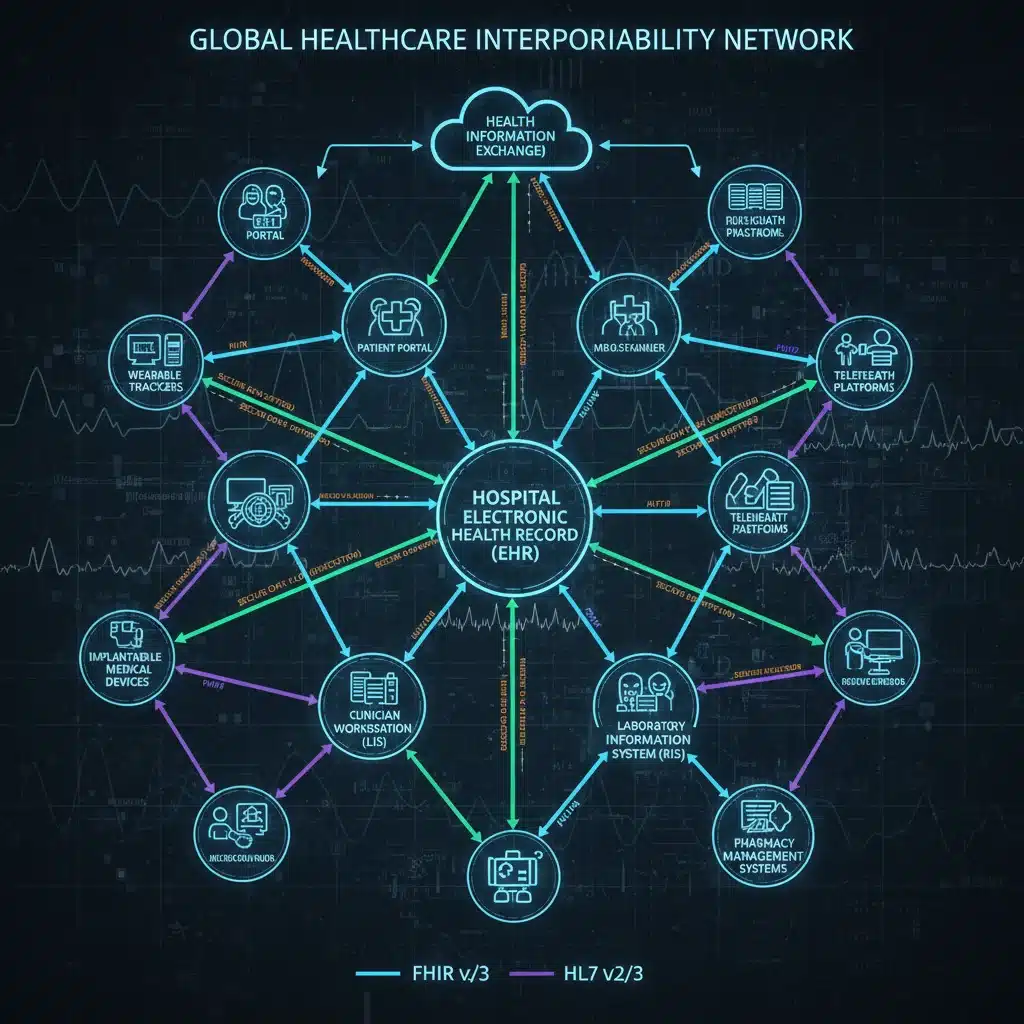
Several key factors are driving the accelerated adoption of these standards. Firstly, the increasing complexity of patient care demands a coordinated approach, where data from various sources – electronic health records (EHRs), imaging systems, wearable devices, and implantable sensors – can be aggregated and analyzed. Secondly, the rise of artificial intelligence (AI) and machine learning (ML) in healthcare relies heavily on access to large, high-quality datasets, which can only be achieved through effective interoperability. Lastly, regulatory bodies worldwide are pushing for greater transparency and accountability in data handling, making compliance with MedTech interoperability standards a non-negotiable aspect of market entry and operation.
Understanding the Regulatory Impetus for 2026 Compliance
The year 2026 is emerging as a significant benchmark for MedTech interoperability, primarily due to various legislative and regulatory initiatives in major markets. In the United States, the 21st Century Cures Act and subsequent regulations from the Office of the National Coordinator for Health Information Technology (ONC) and the Centers for Medicare & Medicaid Services (CMS) are mandating greater data access and exchange. These regulations are designed to prevent information blocking and promote the free flow of health information, empowering both patients and providers.
Similarly, the European Union is advancing its own framework, including the European Health Data Space (EHDS), which aims to create a single market for health data, fostering research, innovation, and better healthcare delivery. These initiatives underscore a global commitment to breaking down data silos and establishing a connected healthcare environment. For MedTech companies, understanding these regulations is not merely about avoiding penalties; it’s about seizing the opportunity to innovate and deliver superior products and services that align with the future of healthcare.
Key MedTech Interoperability Standards and Frameworks
Navigating the landscape of MedTech interoperability standards requires familiarity with several foundational frameworks and protocols. These standards provide the common language and technical specifications necessary for disparate systems to communicate effectively. Each standard addresses different aspects of data exchange, from clinical data to imaging and device-specific information.
Health Level Seven International (HL7) and FHIR
HL7 International is arguably the most widely recognized organization developing standards for the exchange, management, and integration of electronic health information. Its various versions, particularly HL7v2 and HL7v3, have been instrumental in healthcare IT for decades. However, the advent of Fast Healthcare Interoperability Resources (FHIR – pronounced ‘fire’) represents a significant leap forward. FHIR is a next-generation standard that leverages modern web technologies, making it easier for developers to build applications that can seamlessly access and exchange healthcare data. Its resource-based approach allows for granular control over data elements, making it highly adaptable for mobile health, cloud computing, and real-time data exchange from medical devices. Mastering FHIR is becoming increasingly essential for anyone involved in MedTech.
Digital Imaging and Communications in Medicine (DICOM)
For imaging devices and systems, DICOM remains the gold standard. This comprehensive set of MedTech interoperability standards defines how medical images and related information are stored, transmitted, and retrieved. From X-rays and CT scans to MRIs and ultrasounds, DICOM ensures that images from different manufacturers’ equipment can be viewed and interpreted consistently across various healthcare IT systems. As medical imaging technology continues to advance, DICOM’s role in facilitating interoperable imaging workflows is more crucial than ever.
Integrating the Healthcare Enterprise (IHE)
IHE is an initiative that promotes the coordinated use of established MedTech interoperability standards to address specific clinical needs. Instead of creating new standards, IHE develops ‘Integration Profiles’ that specify how existing standards (like HL7, DICOM, and others) should be implemented to achieve particular interoperability goals, such as sharing patient information or managing imaging workflows. IHE profiles provide practical implementation guides, helping healthcare organizations and vendors ensure their systems work together effectively in real-world scenarios.
Other Emerging Standards and Protocols
Beyond these established standards, other protocols and frameworks are gaining traction. These include standards for medical device connectivity (MDC) such as IEEE 11073, which aims to standardize communication between medical devices and external systems. Furthermore, the growing adoption of Application Programming Interfaces (APIs) built on RESTful principles is facilitating more agile and flexible data exchange, particularly for patient-facing applications and digital health platforms. The ecosystem of MedTech interoperability standards is dynamic, requiring continuous learning and adaptation.
The Benefits of Robust MedTech Interoperability
The investment in achieving and maintaining compliance with MedTech interoperability standards yields a multitude of benefits across the entire healthcare spectrum. These advantages extend beyond mere regulatory adherence, touching upon improved patient outcomes, operational efficiencies, and significant opportunities for innovation.
Enhanced Patient Care and Safety
One of the most profound benefits of interoperable MedTech is the direct impact on patient care. When devices and systems can communicate seamlessly, clinicians have immediate access to a complete and up-to-date view of a patient’s health information. This includes real-time vital signs, medication history, lab results, and imaging data, all consolidated from various sources. Such comprehensive data enables more accurate diagnoses, personalized treatment plans, and proactive interventions, ultimately leading to better health outcomes. Furthermore, interoperability reduces the likelihood of medical errors by minimizing manual data entry and ensuring consistent data across all systems.
Improved Operational Efficiency and Cost Reduction
Fragmented data and incompatible systems are significant drains on healthcare resources. Healthcare providers often spend considerable time manually transferring data, reconciling discrepancies, and navigating disparate interfaces. Robust MedTech interoperability standards eliminate these inefficiencies. Automated data exchange reduces administrative burden, streamlines workflows, and frees up valuable clinician time, allowing them to focus more on patient care. This operational optimization can lead to substantial cost savings by reducing redundant tests, improving resource allocation, and minimizing administrative overhead.
Accelerated Innovation and Research
Interoperability is a catalyst for innovation in MedTech. By enabling the seamless sharing of data, it creates a rich environment for developers to create new applications, algorithms, and digital health solutions. Researchers can access larger, more diverse datasets, accelerating the discovery of new treatments and insights into disease patterns. This open ecosystem fosters collaboration between device manufacturers, software developers, and healthcare providers, driving the next generation of medical technologies. The ability to integrate new devices and software easily into existing healthcare IT infrastructure is a powerful incentive for innovation.
Better Population Health Management
Beyond individual patient care, MedTech interoperability plays a crucial role in population health management. By aggregating data from a vast array of sources across different healthcare settings, public health agencies and healthcare organizations can identify trends, monitor disease outbreaks, and implement targeted interventions more effectively. This data-driven approach allows for proactive health management strategies, leading to improved community health outcomes and more efficient allocation of public health resources.
Challenges in Achieving MedTech Interoperability
Despite the undeniable benefits, achieving comprehensive MedTech interoperability is not without its challenges. These hurdles span technical, organizational, and cultural dimensions, requiring a multifaceted approach to overcome them.
Technical Complexities and Legacy Systems
One of the primary challenges lies in the sheer technical complexity of integrating diverse medical devices and IT systems. Healthcare environments often comprise a patchwork of legacy systems, some of which are decades old and were not designed with interoperability in mind. Integrating these older systems with modern, API-driven platforms can be a daunting task, requiring significant development effort and specialized expertise. Data formats, communication protocols, and security requirements vary widely across different vendors and device types, adding layers of complexity to the integration process.
Data Security and Privacy Concerns
The exchange of sensitive patient health information (PHI) raises significant concerns regarding data security and privacy. Adhering to strict regulations like HIPAA in the US and GDPR in Europe is paramount. Ensuring that interoperable systems are robustly secured against cyber threats, data breaches, and unauthorized access requires continuous vigilance and investment in advanced security measures. Balancing the need for data sharing with the imperative to protect patient privacy is a delicate act that demands careful consideration at every stage of interoperability implementation.
Lack of Standardized Implementation
While MedTech interoperability standards exist, their implementation can vary significantly among vendors and healthcare organizations. This lack of consistent interpretation and adoption can lead to ‘semantic interoperability’ challenges, where data is exchanged but its meaning is not consistently understood across different systems. This can result in misinterpretations, data quality issues, and ultimately, undermine the benefits of interoperability. Greater harmonization in implementation guidelines and certification programs is needed to address this challenge.
Vendor Lock-in and Market Dynamics
Historically, some medical device manufacturers have employed proprietary technologies and data formats, leading to ‘vendor lock-in’ where healthcare organizations become heavily reliant on a single vendor’s ecosystem. While regulatory pressures are gradually shifting this dynamic, overcoming entrenched market practices and encouraging vendors to embrace open standards remains a challenge. A truly interoperable ecosystem requires a commitment from all market players to prioritize open standards and collaborative approaches.
Organizational and Cultural Resistance
Beyond technical and market challenges, organizational and cultural factors can impede interoperability. Resistance to change, lack of awareness about the benefits of interoperability, and insufficient training can hinder successful implementation. Effective interoperability initiatives require strong leadership, cross-departmental collaboration, and a clear communication strategy to foster a culture of data sharing and digital transformation within healthcare organizations.
Essential Education for 2026 Compliance
To navigate the evolving landscape of MedTech interoperability standards and ensure compliance by 2026, a concerted educational effort is essential. This education must target a diverse audience, from executive leadership to technical staff and clinical users, equipping them with the knowledge and skills necessary to embrace interoperability.
For Healthcare Executives and Leaders
Executives need to understand the strategic importance of MedTech interoperability, its regulatory implications, and its potential to drive competitive advantage. Education should focus on the business case for interoperability, including return on investment (ROI), risk management, and opportunities for market differentiation. They should be aware of the resources required for implementation, including budget allocation for technology upgrades, talent acquisition, and training programs. Strategic leadership is crucial for fostering an organizational culture that prioritizes data exchange and collaboration.
For IT Professionals and Engineers
IT professionals and engineers are at the forefront of implementing and managing interoperable systems. Their education must be highly technical, focusing on specific MedTech interoperability standards like FHIR, DICOM, HL7, and relevant APIs. Training should cover data modeling, integration patterns, security protocols, and testing methodologies. Hands-on workshops, certification programs, and access to developer communities are vital for building practical skills. Understanding how to integrate legacy systems with modern platforms while maintaining data integrity and security is a key competency.
For Clinicians and Medical Staff
While clinicians may not need to delve into the technical intricacies, they must understand how interoperability impacts their daily workflows and patient care. Education should focus on the practical benefits, such as improved access to patient information, streamlined processes, and enhanced decision support tools. Training on new interfaces, data visualization tools, and protocols for data entry and retrieval will be essential. Emphasizing the positive impact on patient safety and outcomes can help overcome any initial resistance to new technologies.
For Medical Device Manufacturers
Device manufacturers face unique educational requirements. They need to understand how to design and develop devices that are ‘interoperability-ready’ from the outset. This includes incorporating open standards, providing robust APIs, and ensuring data formats are compatible with common healthcare IT systems. Education should cover regulatory requirements for interoperability, testing and certification processes, and strategies for collaborating with healthcare providers and other vendors to achieve seamless integration. The ability to demonstrate interoperability will become a significant market differentiator.
Continuous Learning and Adaptation
The field of MedTech interoperability is constantly evolving. Therefore, education cannot be a one-time event. Organizations must foster a culture of continuous learning, providing ongoing training, updates on new standards and regulations, and opportunities for professional development. Subscribing to industry publications, attending conferences, and participating in working groups are all ways to stay abreast of the latest developments. A proactive approach to education is the cornerstone of sustained compliance and innovation.

Strategies for Achieving 2026 MedTech Interoperability Compliance
With 2026 rapidly approaching, organizations must develop clear and actionable strategies to ensure compliance with MedTech interoperability standards. This involves a combination of technological upgrades, process re-engineering, and strategic partnerships.
Conduct a Comprehensive Interoperability Assessment
The first step is to conduct a thorough assessment of your current MedTech ecosystem. This includes identifying all medical devices, IT systems, and applications that generate or consume patient data. Evaluate their current interoperability capabilities, data formats, and adherence to existing standards. Pinpoint areas of weakness, data silos, and potential compliance gaps. This assessment will form the basis for developing a detailed interoperability roadmap.
Develop a Phased Implementation Roadmap
Achieving full interoperability is a significant undertaking that cannot be accomplished overnight. Develop a phased implementation roadmap with clear milestones, timelines, and responsible parties. Prioritize initiatives based on regulatory urgency, potential impact on patient care, and technical feasibility. Start with critical systems and gradually expand the scope to encompass the entire MedTech infrastructure. Regular reviews and adjustments to the roadmap will be necessary.
Invest in Modern Interoperability Technologies
To meet the demands of 2026 and beyond, organizations must invest in modern interoperability technologies. This includes adopting FHIR-based APIs, investing in integration engines that can handle diverse data formats, and leveraging cloud-based platforms for scalable data exchange. Consider solutions that offer robust data governance, security features, and analytics capabilities to maximize the value of interoperable data. Explore vendor solutions that demonstrate a strong commitment to open standards and ease of integration.
Strengthen Data Governance and Security Frameworks
Interoperability increases the flow of data, making robust data governance and security frameworks more critical than ever. Establish clear policies and procedures for data access, usage, and sharing. Implement advanced cybersecurity measures, including encryption, access controls, and regular security audits. Train staff on data privacy best practices and ensure compliance with all relevant regulations (e.g., HIPAA, GDPR). A strong governance framework builds trust and mitigates risks associated with data exchange.
Foster Collaboration and Partnerships
No single entity can achieve MedTech interoperability alone. Foster strong collaboration with medical device manufacturers, EHR vendors, healthcare IT providers, and other stakeholders. Engage in industry forums and working groups to contribute to the evolution of MedTech interoperability standards and best practices. Consider forming strategic partnerships to co-develop solutions or leverage external expertise. A collaborative ecosystem is essential for driving widespread adoption and success.
Prioritize Training and Change Management
As highlighted in the education section, comprehensive training is paramount. Develop tailored training programs for all relevant staff, from IT to clinical. Implement a robust change management strategy to address potential resistance and ensure smooth adoption of new systems and workflows. Communicate the benefits of interoperability clearly and consistently, highlighting how it will improve daily tasks and ultimately enhance patient care. User engagement and feedback loops are crucial for successful implementation.
The Future of MedTech: Beyond 2026
While 2026 represents an immediate compliance horizon, the journey towards a fully integrated and intelligent healthcare ecosystem extends far beyond. The foundations laid by current MedTech interoperability standards will pave the way for even more transformative innovations. We can anticipate a future where medical devices are not just connected but are also context-aware, predictive, and proactive in their support of patient health.
Imagine a scenario where a patient’s continuous glucose monitor automatically communicates with their insulin pump, adjusting dosages based on real-time data and predictive analytics. Or where a smart hospital room dynamically adjusts its environment based on a patient’s physiological data, optimizing comfort and recovery. These visions are not distant fantasies; they are the logical progression of robust MedTech interoperability. The integration of AI, machine learning, and advanced analytics will unlock unprecedented insights from aggregated health data, leading to highly personalized medicine and preventative care on a scale never before imagined.
Furthermore, the move towards value-based care models will be significantly bolstered by interoperability. The ability to track patient outcomes across various care settings and analyze the effectiveness of different interventions will enable healthcare organizations to deliver higher quality care more efficiently. Regulatory bodies will likely continue to evolve their requirements, pushing for even greater semantic interoperability and data liquidity, ensuring that the patient remains at the center of this technological revolution.
For healthcare professionals, device manufacturers, and technology innovators, the message is clear: embracing and championing MedTech interoperability standards is not just about meeting a deadline; it’s about shaping the future of healthcare. It’s about building a system that is more connected, more intelligent, and ultimately, more human-centric. The educational commitment and strategic investments made today will define the capabilities and impact of MedTech for decades to come.