Blockchain in Healthcare: Securing Patient Data in the US by 2026 with 3 Key Innovations
The healthcare industry in the United States faces a perpetual challenge: safeguarding sensitive patient data while simultaneously enabling efficient access and interoperability. With cyberattacks on the rise and the increasing complexity of medical information systems, the need for robust, innovative solutions has never been more pressing. Enter blockchain technology – a distributed ledger system renowned for its security, transparency, and immutability. While often associated with cryptocurrencies, blockchain’s fundamental attributes make it an ideal candidate for revolutionizing healthcare data management. This article delves into the burgeoning role of blockchain healthcare data security in the US, exploring how three pivotal innovations are set to transform the landscape by 2026, promising unparalleled levels of patient privacy, data integrity, and system efficiency.
The current state of healthcare data management is fraught with vulnerabilities. Centralized databases, while convenient, present single points of failure, making them attractive targets for malicious actors. Data breaches not only compromise patient privacy but also erode trust in healthcare providers and incur significant financial penalties. Moreover, the fragmented nature of healthcare systems often hinders seamless data exchange, impacting care coordination and research efforts. Blockchain offers a compelling alternative by decentralizing data storage and access, employing cryptographic principles to ensure that data remains secure and tamper-proof. By 2026, we anticipate a significant shift towards blockchain-powered solutions, driven by their ability to address these long-standing issues head-on.
The Imperative for Enhanced Healthcare Data Security
The healthcare sector is a prime target for cybercriminals due to the highly valuable and sensitive nature of medical records. A single patient record can fetch a high price on the black market, containing everything from personal identifiers to financial information and detailed health histories. The consequences of a data breach extend far beyond financial losses; they can lead to identity theft, medical fraud, and even compromise patient safety if critical information is altered or inaccessible. Regulatory frameworks like HIPAA (Health Portability and Accountability Act) in the US impose stringent requirements for protecting patient information, yet compliance remains a complex and ongoing challenge for many organizations. Traditional security measures, while essential, often prove insufficient against sophisticated cyber threats. This escalating threat landscape underscores the urgent need for a paradigm shift in how we manage and protect blockchain healthcare data.
Beyond security, interoperability remains a significant hurdle. Patient data is often siloed across different providers, hospitals, and specialty clinics, making it difficult to compile a comprehensive view of a patient’s health history. This fragmentation can lead to redundant tests, delayed diagnoses, and suboptimal treatment plans. Blockchain’s ability to create an immutable, shared ledger has the potential to break down these silos, facilitating secure and authorized data exchange without compromising privacy. Imagine a future where a patient’s entire medical journey is recorded on a blockchain, accessible only by authorized parties with the patient’s explicit consent. This vision is not merely theoretical; it is rapidly becoming a tangible reality as we approach 2026.
Innovation 1: Decentralized Patient Record Management (DPRM)
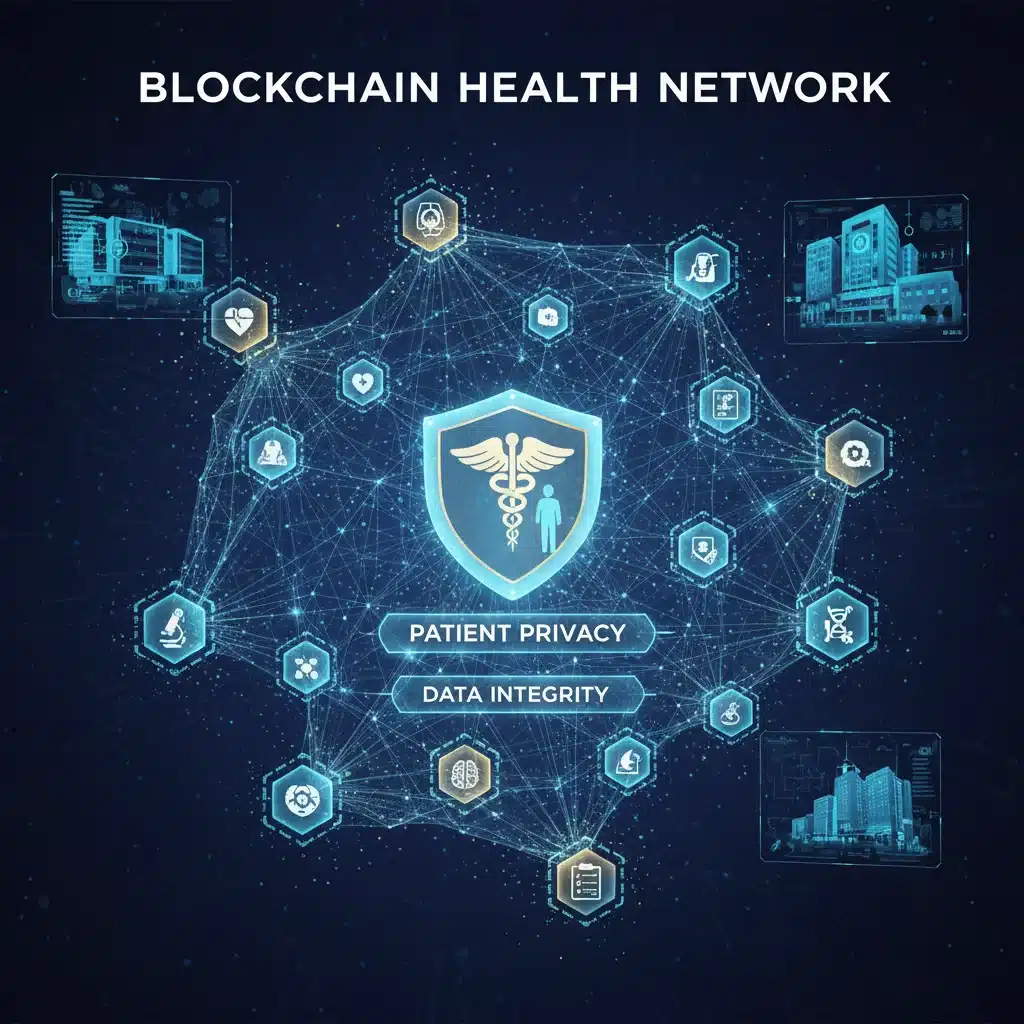
The first major innovation set to redefine blockchain healthcare data security by 2026 is Decentralized Patient Record Management (DPRM). Currently, most electronic health records (EHRs) are stored in centralized databases managed by individual healthcare providers. While these systems offer some level of security, they are inherently vulnerable to large-scale breaches. DPRM leverages blockchain to create a distributed network where patient data is encrypted and stored across multiple nodes, rather than a single server. Each piece of data, or a hash of it, is time-stamped and added to an immutable ledger, ensuring its integrity and authenticity.
Under a DPRM model, patients gain unprecedented control over their own health information. Instead of providers owning the data, patients hold the cryptographic keys that grant access. They can decide who sees their records, for how long, and for what purpose. This ‘patient-centric’ approach fundamentally shifts the power dynamic, empowering individuals to manage their health data like never before. For instance, a patient could grant temporary access to a new specialist for a consultation, then revoke that access once the appointment is complete. This granular control not only enhances privacy but also fosters greater trust between patients and the healthcare system.
Furthermore, DPRM significantly improves data integrity. Any attempt to alter a record would be immediately detectable across the distributed network, making data tampering virtually impossible. This immutability is crucial for maintaining accurate medical histories, which are vital for effective diagnosis and treatment. The transparency inherent in blockchain also allows for a clear audit trail of all data access, providing an additional layer of accountability and security. By 2026, we expect to see pilot programs and even widespread adoption of DPRM systems in various US healthcare settings, setting a new standard for patient data security and autonomy.
Innovation 2: Secure Interoperability and Data Exchange Platforms
The second transformative innovation lies in the development of secure interoperability and data exchange platforms powered by blockchain healthcare data. One of the most persistent challenges in US healthcare is the lack of seamless communication between disparate systems. Hospitals, clinics, pharmacies, and laboratories often use different EHR systems that struggle to communicate with each other. This fragmentation leads to inefficiencies, medical errors, and incomplete patient histories. Blockchain technology offers a robust solution by providing a secure, standardized, and transparent framework for data exchange.
These blockchain-based platforms will enable different healthcare entities to share patient data securely and efficiently, without relying on intermediaries or proprietary systems. Instead of directly sharing sensitive patient information, these platforms can share encrypted hashes or pointers to data, with the actual data remaining securely stored and accessible only through patient-granted permissions. This approach ensures that data privacy is maintained while still facilitating the necessary exchange of information for coordinated care. For example, a primary care physician could securely request relevant lab results from a different hospital system, with the patient’s consent, and receive them almost instantly, streamlining the diagnostic process.

By 2026, we anticipate the emergence of industry-wide blockchain consortia and standardized protocols for healthcare data exchange. These initiatives will pave the way for a truly interconnected healthcare ecosystem where patient information can flow securely and efficiently across the entire continuum of care. This will not only improve patient outcomes by ensuring that healthcare providers have access to the most up-to-date and comprehensive information but also significantly reduce administrative burdens and costs associated with manual data transfer and reconciliation. The focus will be on creating a ‘single source of truth’ for patient data, accessible and verifiable by authorized parties, thereby enhancing the overall quality and safety of healthcare delivery.
Innovation 3: Supply Chain Integrity and Drug Traceability
The third key innovation leveraging blockchain healthcare data will significantly enhance the integrity of the medical supply chain and improve drug traceability. The pharmaceutical supply chain is notoriously complex and vulnerable to counterfeiting, diversion, and inefficiencies. Counterfeit drugs pose a serious public health risk, leading to ineffective treatments, adverse reactions, and even death. The current paper-based or siloed electronic tracking systems often lack the transparency and immutability required to combat these issues effectively.
Blockchain technology provides an unalterable, transparent ledger that can record every step of a drug’s journey, from manufacturing to distribution and dispensing. Each batch of medication can be assigned a unique identifier, and every transaction—from factory to wholesaler, to pharmacy, to patient—can be recorded on the blockchain. This creates an end-to-end audit trail that is virtually impossible to tamper with. If a counterfeit drug enters the supply chain, its lack of a verifiable blockchain record would immediately flag it as suspicious. This enhanced traceability not only helps in identifying and removing counterfeit products but also in quickly recalling faulty batches, protecting patient safety.
Beyond drug traceability, blockchain can also optimize the entire medical supply chain, improving inventory management, reducing waste, and ensuring the authenticity of medical devices and equipment. By 2026, we expect many pharmaceutical companies and healthcare providers in the US to have implemented blockchain-based solutions to secure their supply chains. This will not only safeguard patients from dangerous counterfeit products but also streamline logistics, reduce operational costs, and build greater trust in the integrity of the medications and medical supplies we rely on. The transparency offered by blockchain will also empower regulators to monitor the supply chain more effectively, ensuring compliance and preventing illicit activities.
Challenges and the Path Forward for Blockchain in US Healthcare
While the potential of blockchain healthcare data is immense, its widespread adoption in the US healthcare system is not without challenges. These include regulatory hurdles, scalability concerns, integration with legacy systems, and the need for significant investment in infrastructure and training. HIPAA, for example, presents specific requirements for data privacy that need careful consideration when designing blockchain solutions. Ensuring that blockchain implementations comply with existing regulations while also providing enhanced security and interoperability will be a critical task for developers and policymakers alike.
Scalability is another concern. Healthcare generates vast amounts of data, and blockchain networks need to be able to handle this volume without compromising transaction speed or efficiency. Ongoing research and development in areas like sharding, layer-2 solutions, and different consensus mechanisms are addressing these scalability issues, making blockchain increasingly viable for large-scale healthcare applications. Furthermore, integrating new blockchain systems with existing, often decades-old, legacy EHR systems will require careful planning and execution to ensure a smooth transition and avoid disruption to patient care.

Despite these challenges, the momentum behind blockchain in healthcare is undeniable. Strategic partnerships between technology companies, healthcare providers, and government agencies are crucial for overcoming these obstacles. Investment in pilot projects, development of open standards, and educational initiatives for healthcare professionals will accelerate adoption. The benefits of enhanced security, improved interoperability, and greater patient control are too significant to ignore. By 2026, we anticipate that many of these challenges will have been substantially addressed, paving the way for more widespread implementation of blockchain-based solutions across the US healthcare landscape.
The Impact on Patient Privacy and Trust
One of the most profound impacts of blockchain healthcare data innovations will be on patient privacy and trust. In an era where data breaches are common, patients are increasingly concerned about the security of their personal health information. Blockchain’s inherent security features—cryptographic encryption, immutability, and decentralization—offer a robust framework for protecting this sensitive data. By giving patients direct control over who accesses their records, blockchain empowers individuals and restores a sense of agency over their most private information.
This enhanced privacy, coupled with the transparency of an immutable audit trail, will significantly bolster patient trust in healthcare providers and the broader healthcare system. When patients know their data is secure and that they have control over its access, they are more likely to share comprehensive information, leading to better diagnostic accuracy and more personalized treatment plans. This shift from a provider-centric to a patient-centric data model is a cornerstone of modern healthcare transformation.
Moreover, the ability to track every access to a patient’s record means that any unauthorized viewing or attempted alteration would be immediately evident. This level of accountability is unprecedented in traditional systems and acts as a powerful deterrent against misuse of data. As these innovations mature by 2026, the US healthcare system will likely witness a significant improvement in patient satisfaction regarding data privacy, fostering a more collaborative and trusting environment between patients and their care teams.
Economic Implications and Future Outlook
The adoption of blockchain healthcare data solutions also carries significant economic implications. While initial implementation costs might be substantial, the long-term benefits in terms of cost savings are considerable. Reducing data breaches, preventing medical fraud, streamlining administrative processes, and improving supply chain efficiency can lead to billions of dollars in savings annually. For instance, the reduction in costs associated with data breach remediation, legal fees, and regulatory fines alone could justify the investment.
Furthermore, improved interoperability facilitated by blockchain will lead to better care coordination, reducing redundant tests and treatments, which are major drivers of healthcare expenditure. The ability to quickly and securely share patient data can also accelerate medical research and drug development, bringing new treatments to market faster and more efficiently. This creates a virtuous cycle where innovation in data management directly translates into better patient care and economic benefits for the entire healthcare ecosystem.
Looking ahead to 2026 and beyond, blockchain is poised to become an indispensable component of the US healthcare infrastructure. As the technology matures and regulatory frameworks adapt, we can expect to see an even broader range of applications, including secure medical device data management, insurance claims processing, and even personalized medicine initiatives. The foundational shift towards decentralized, secure, and patient-controlled data management promises a future where healthcare is not only more efficient and cost-effective but also inherently more trustworthy and patient-centric. The journey to fully realize this vision is ongoing, but the trajectory is clear: blockchain is set to redefine healthcare data in the US.
Conclusion
The journey towards a more secure, efficient, and patient-centric healthcare system in the US is being profoundly shaped by blockchain technology. By 2026, the three key innovations discussed – Decentralized Patient Record Management, Secure Interoperability and Data Exchange Platforms, and Supply Chain Integrity with Drug Traceability – will have significantly transformed how blockchain healthcare data is managed and protected. These advancements promise to address critical challenges related to data security, privacy, and interoperability, which have long plagued the industry.
While challenges remain in terms of scalability, integration, and regulatory alignment, the benefits of widespread blockchain adoption are too compelling to ignore. The empowerment of patients with greater control over their health information, the enhanced integrity of medical records, and the creation of a more transparent and secure medical supply chain are just a few of the revolutionary changes on the horizon. As we move closer to 2026, the convergence of technological innovation and a growing imperative for robust data security will firmly establish blockchain as a cornerstone of the future of US healthcare, fostering an environment of greater trust, efficiency, and ultimately, better patient outcomes.