Quantum Computing Impact on Medical Imaging: US Outlook 2024
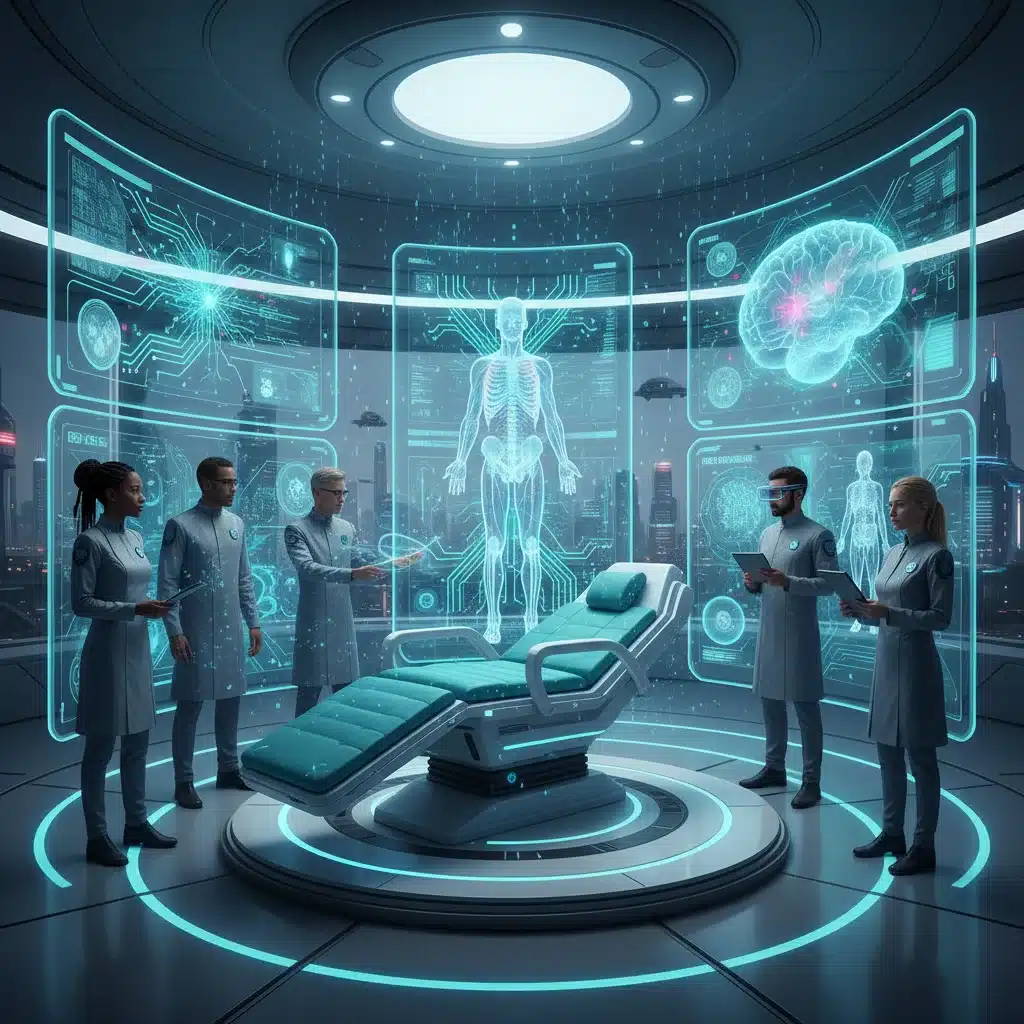
The Transformative Impact of Quantum Computing on Medical Imaging: A US Outlook for the Next 12 Months
The landscape of healthcare is perpetually on the brink of revolutionary change, driven by advancements in technology. Among these, quantum computing stands out as a frontier technology with the potential to fundamentally redefine how we approach complex problems, particularly in medical imaging. In the United States, the next 12 months are poised to be a critical period for foundational developments and increased exploration into how this nascent field will begin to shape diagnostic capabilities, treatment planning, and overall patient care. The promise of quantum computing in medical imaging is not merely an incremental improvement but a paradigm shift, offering computational power far beyond the reach of even the most sophisticated classical supercomputers.
Traditional medical imaging techniques, such as MRI, CT scans, and X-rays, have been cornerstones of modern medicine, providing invaluable insights into the human body. However, as medical science progresses, so does the demand for higher resolution, faster processing, and more accurate interpretation of these images. This is where quantum computing enters the picture. Its ability to process vast amounts of data simultaneously, explore multiple possibilities in parallel, and solve optimization problems at unprecedented speeds could unlock new dimensions in image acquisition, reconstruction, analysis, and personalized medicine. Understanding the immediate implications and the trajectory of this technology in the US healthcare system is crucial for stakeholders across the spectrum, from researchers and clinicians to policymakers and investors.
Understanding Quantum Computing’s Core Principles for Medical Imaging
Before delving into its specific applications, it’s essential to grasp the fundamental principles that make quantum computing so powerful. Unlike classical computers that store information as bits representing either a 0 or a 1, quantum computers use ‘qubits.’ Qubits can represent 0, 1, or both simultaneously through a phenomenon called superposition. This allows quantum computers to process multiple calculations at once. Furthermore, quantum entanglement, where qubits become linked and share the same fate regardless of distance, enables complex correlations to be explored, a capability vital for intricate biological systems. Another key principle is quantum tunneling, which can help in navigating complex computational landscapes more efficiently.
For medical imaging, these principles translate into several key advantages. The sheer volume of data generated by advanced imaging modalities—think high-resolution 3D and 4D scans, functional imaging, and multi-modal fusion—often overwhelms classical computational capabilities. Quantum algorithms, such as Shor’s algorithm for factoring and Grover’s algorithm for searching unsorted databases, while not directly applicable to imaging, lay the groundwork for new algorithms specifically designed for image processing, pattern recognition, and machine learning tasks that are integral to medical diagnostics. The ability to handle this data more efficiently promises to reduce scan times, improve image quality, and provide more comprehensive diagnostic information.
In the US, significant investments from both government agencies like the National Science Foundation (NSF) and the Department of Energy (DOE), along with private sector giants, are fueling quantum research and development. This funding is critical for translating theoretical quantum advantages into practical, real-world applications within healthcare. The focus in the next 12 months will likely be on developing stable quantum hardware, refining error correction techniques, and creating more robust quantum algorithms tailored for specific medical imaging challenges. Early proof-of-concept studies and collaborations between quantum hardware developers and medical research institutions will be paramount.
Enhanced Image Acquisition and Reconstruction
One of the most immediate and impactful areas for quantum computing in medical imaging is the enhancement of image acquisition and reconstruction. Modern imaging techniques often involve trade-offs between resolution, scan time, and patient comfort. For instance, MRI scans, while highly detailed, can be lengthy and uncomfortable for patients. Quantum algorithms could potentially revolutionize this by enabling faster data acquisition without compromising image quality, or even improving it.
Consider the process of MRI reconstruction. Raw data from an MRI scanner is a complex signal that needs to be mathematically transformed into a visual image. This reconstruction is computationally intensive. Quantum Fourier Transforms (QFT) and other quantum signal processing techniques could dramatically accelerate this process. By leveraging superposition and entanglement, a quantum computer could explore many possible image reconstructions simultaneously, identifying the most accurate and artifact-free representation far quicker than classical methods. This could lead to shorter scan times, reducing patient discomfort and increasing throughput in busy diagnostic centers.
Furthermore, quantum machine learning (QML) algorithms could be trained on smaller datasets to achieve higher accuracy in image denoising and artifact reduction. This is particularly relevant for low-dose CT scans, where reducing radiation exposure often comes at the cost of image clarity. A quantum-enhanced denoising algorithm could potentially restore clarity to low-dose images, allowing for safer imaging protocols without sacrificing diagnostic accuracy. Over the next year, we can expect to see more research prototypes and simulations demonstrating these capabilities, with early-stage partnerships forming between quantum computing companies and medical device manufacturers in the US.
Accelerated Image Analysis and Diagnosis
Beyond acquisition, the analysis and interpretation of medical images present another formidable challenge that quantum computing is uniquely positioned to address. Radiologists and clinicians spend significant time meticulously examining images for subtle anomalies. As imaging technology advances, the volume and complexity of data increase exponentially, leading to potential for human error and diagnostic fatigue.
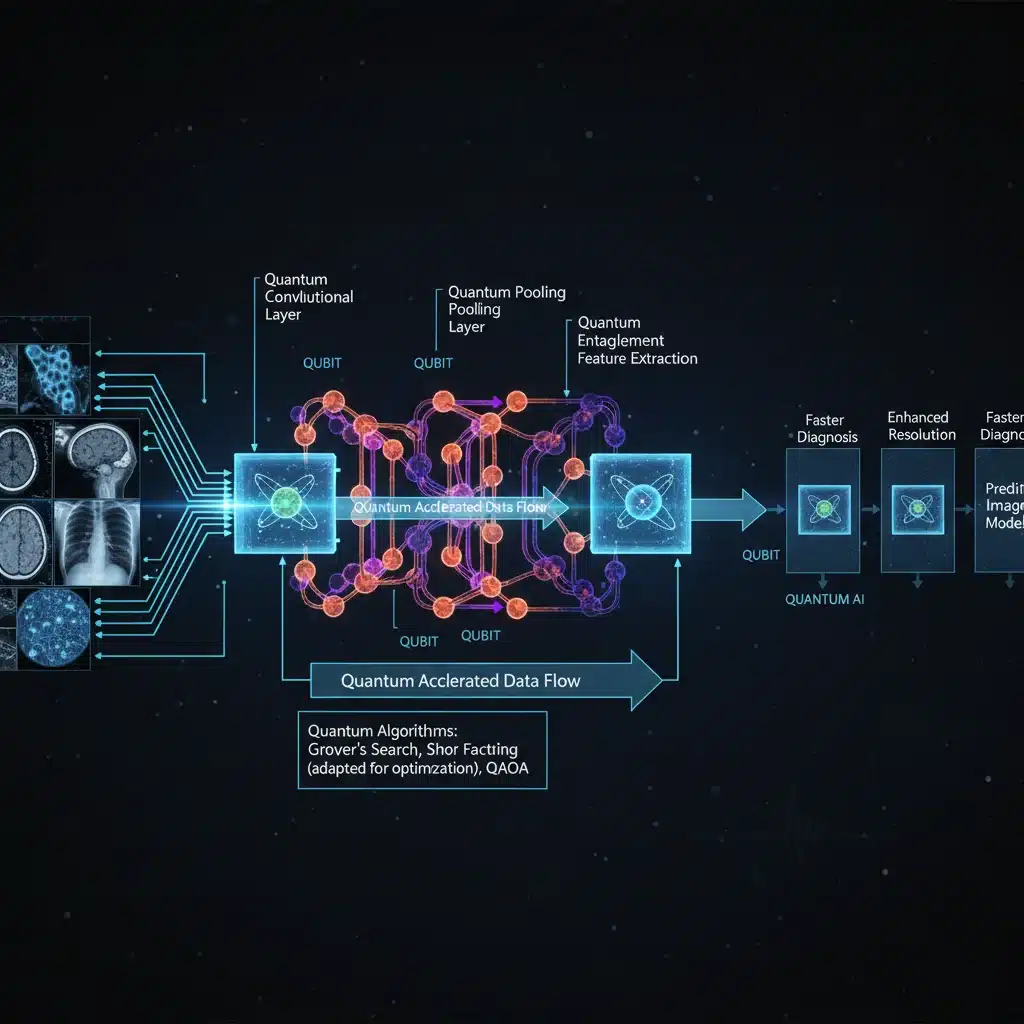
Quantum machine learning (QML) is a promising avenue here. Traditional AI algorithms, particularly deep learning models, have already made significant strides in image analysis, from tumor detection to disease classification. However, QML could offer superior performance in handling high-dimensional data, identifying complex patterns, and performing classification tasks with greater accuracy and speed. For instance, quantum support vector machines (QSVMs) or quantum neural networks (QNNs) could be trained on vast datasets of medical images to identify biomarkers for early disease detection that are imperceptible to the human eye or even current classical AI.
In the next 12 months, the focus in the US will likely be on developing hybrid quantum-classical algorithms, where quantum computers handle the most computationally intensive parts of a problem (e.g., feature extraction or complex pattern recognition), while classical computers manage the broader workflow. This approach is more feasible given the current limitations of quantum hardware (noise, limited qubit count). Early applications could include more precise segmentation of organs and tumors, improved quantification of disease progression in conditions like Alzheimer’s or multiple sclerosis, and enhanced prognostication based on imaging features. The goal is to move towards a future where quantum-assisted diagnostics provide clinicians with more definitive and faster insights, ultimately leading to earlier interventions and better patient outcomes.
Drug Discovery and Personalized Medicine through Quantum Imaging
The impact of quantum computing on medical imaging extends beyond diagnostics into the realm of drug discovery and personalized medicine. High-resolution imaging plays a crucial role in understanding drug-target interactions, monitoring treatment efficacy, and tailoring therapies to individual patients. Quantum computing can accelerate these processes in several ways.
For drug discovery, understanding molecular structures and their interactions with biological targets is paramount. While not strictly ‘imaging’ in the traditional sense, quantum simulations can model these interactions with unprecedented accuracy, providing insights into how potential drug compounds bind to proteins or other cellular components. This capability, when combined with advanced imaging techniques that visualize these interactions at a cellular or even sub-cellular level, could drastically shorten the drug discovery pipeline. Imaging techniques like cryo-electron microscopy (cryo-EM) generate massive datasets, and quantum computing could accelerate the reconstruction and analysis of these 3D molecular structures, leading to faster identification of drug candidates.
In personalized medicine, quantum-enhanced imaging could analyze an individual’s unique biological data (e.g., genetic profile, proteomic data, and high-resolution imaging) to predict their response to specific treatments. By identifying subtle patterns and correlations that classical computers might miss, quantum algorithms could help tailor treatment plans, optimize drug dosages, and predict potential side effects with greater precision. For example, quantum algorithms could analyze detailed tumor images to identify specific genetic mutations or protein expressions that indicate responsiveness to particular immunotherapies or targeted drugs. This level of personalized insight is a holy grail of modern medicine.
Over the next year, US pharmaceutical companies and research institutions are likely to explore pilot projects using quantum simulation platforms to aid in early-stage drug discovery, with a keen eye on how advanced imaging data can inform these simulations. The integration of quantum computational chemistry with medical imaging data analysis will be a significant area of focus, aiming to bridge the gap between molecular understanding and clinical application.
Challenges and Limitations in the Next 12 Months
Despite the immense promise, the widespread adoption of quantum computing in medical imaging within the next 12 months faces significant challenges. The primary hurdle is the current state of quantum hardware. Quantum computers are still in their early stages of development, characterized by limited qubit counts, high error rates (noise), and the need for extremely low temperatures to operate. These ‘noisy intermediate-scale quantum’ (NISQ) devices are powerful for specific problems but are not yet robust enough for complex, real-world medical applications.
Another challenge is the development of practical quantum algorithms tailored specifically for medical imaging. While theoretical frameworks exist, translating them into efficient, error-resilient algorithms that can run on existing hardware is a complex task. This requires a deep understanding of both quantum mechanics and the specific nuances of medical imaging data. A skilled workforce proficient in both quantum computing and biomedical sciences is currently scarce, posing a bottleneck for rapid development.
Data integration and security are also critical considerations. Medical imaging data is highly sensitive, and any quantum solution must adhere to strict privacy regulations (like HIPAA in the US). Integrating quantum systems with existing hospital IT infrastructure, ensuring data integrity, and establishing secure quantum communication channels will require significant investment and careful planning. The ‘quantum advantage’ – the point at which a quantum computer definitively outperforms a classical computer for a useful task – has yet to be unequivocally demonstrated for many medical applications, and achieving this within the next year for broad imaging tasks is ambitious.
Furthermore, the cost associated with quantum computing research, development, and eventual deployment is substantial. Convincing healthcare providers and research institutions to invest in unproven technology requires clear demonstrations of value and a viable path to scalability. The next 12 months will likely focus on overcoming some of these hardware and algorithmic limitations through focused research and development efforts, rather than widespread clinical deployment. Demonstrating ‘quantum utility’ – where quantum computers solve problems that classical computers struggle with, even if not strictly ‘advantage’ – will be key.
Key Players and Collaborations in the US
The US is at the forefront of quantum computing research and development, with a vibrant ecosystem of academic institutions, government labs, and private companies driving innovation. Major tech companies like IBM, Google, Microsoft, and Amazon are heavily invested in quantum hardware and software development, offering cloud-based quantum computing services that allow researchers to experiment with quantum algorithms without owning the expensive hardware.
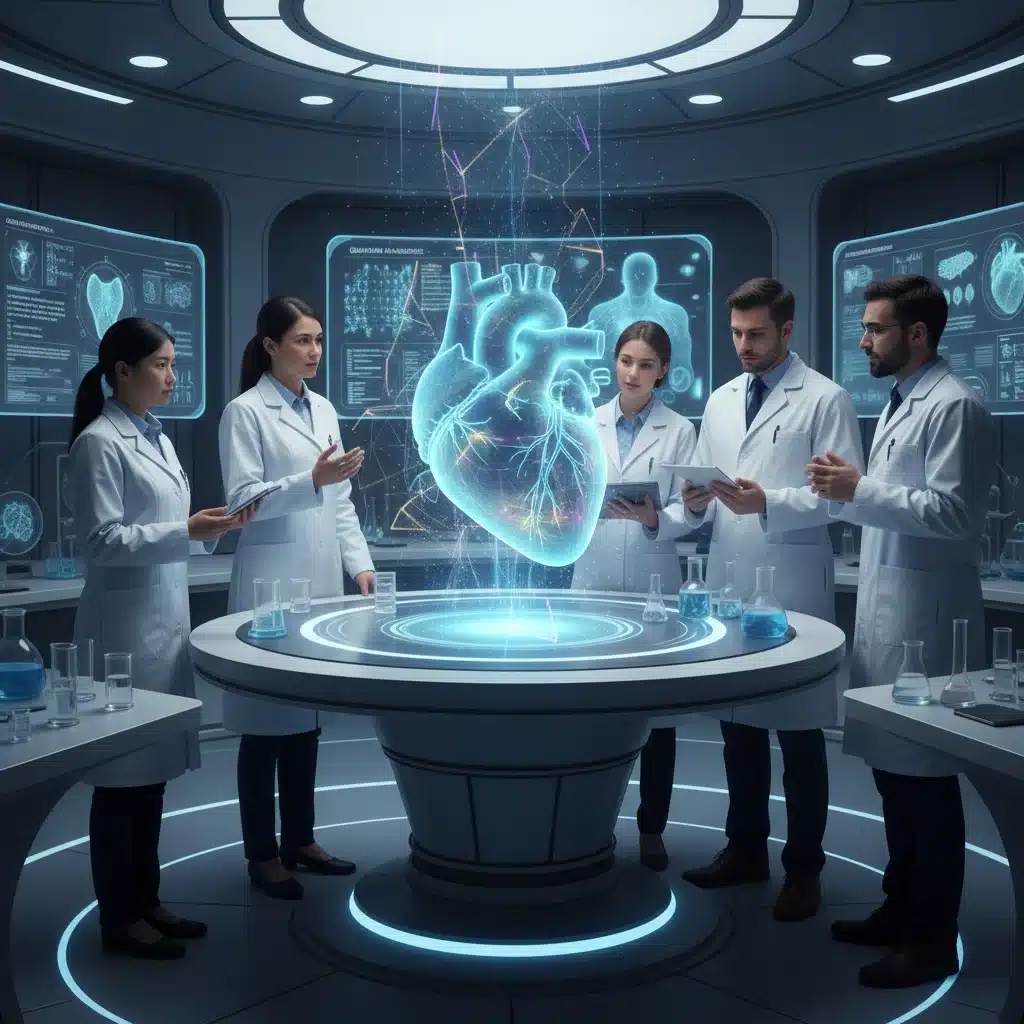
Academic powerhouses such as MIT, Stanford, Caltech, and the University of Chicago have dedicated quantum research centers, fostering interdisciplinary collaboration between physicists, computer scientists, and medical researchers. These institutions are crucial for fundamental research and the training of the next generation of quantum scientists. Government initiatives, including the National Quantum Initiative Act, have provided significant funding and a strategic framework for advancing quantum information science across various sectors, including healthcare.
In the medical imaging space, collaborations are emerging between these quantum technology providers and leading medical centers and device manufacturers. For example, partnerships might involve quantum software companies working with MRI manufacturers to explore quantum-enhanced image reconstruction, or with pharmaceutical companies to accelerate drug discovery through quantum simulations informed by imaging data. Over the next year, we anticipate more announcements of such strategic alliances, focusing on pilot projects and proof-of-concept studies that aim to demonstrate the tangible benefits of quantum computing for specific medical imaging challenges. These collaborations are vital for translating theoretical potential into practical applications within the US healthcare system.
The Future Outlook: Beyond 12 Months
While the next 12 months will primarily focus on foundational research, algorithmic development, and early-stage demonstrations, the long-term impact of quantum computing on medical imaging in the US is truly transformative. Beyond the immediate horizon, we can envision a future where quantum-enhanced imaging becomes a standard component of diagnostic workflows.
Imagine quantum sensors that can detect disease biomarkers at extremely low concentrations, long before symptoms appear, offering unprecedented capabilities for preventative medicine. Picture quantum-powered image analysis systems that can provide instant, highly accurate diagnoses, reducing the burden on radiologists and ensuring consistent quality of care across all healthcare settings. Consider personalized treatment plans derived from quantum analysis of a patient’s entire medical and genetic profile, combined with real-time imaging feedback, leading to therapies that are precisely tailored and maximally effective.
Quantum computing also holds the potential to revolutionize medical education and training. Complex anatomical and physiological processes could be simulated with unparalleled realism, allowing medical students to interact with virtual patients and explore disease pathologies in dynamic, quantum-enhanced environments. This could lead to a new generation of highly skilled healthcare professionals equipped to leverage advanced technologies.
The journey from current NISQ devices to fault-tolerant quantum computers capable of these grand visions will be long and challenging, requiring continuous innovation in hardware, software, and error correction. However, the foundational work being laid in the US over the next year is crucial for building this future. The synergy between quantum computing and medical imaging represents one of the most exciting frontiers in healthcare, promising a future where diagnostics are more precise, treatments are more personalized, and patient outcomes are significantly improved.
Conclusion
The next 12 months represent a pivotal period for the nascent integration of quantum computing into medical imaging within the United States. While widespread clinical deployment remains further in the future, significant strides are expected in foundational research, algorithmic development, and collaborative pilot projects. The unique capabilities of quantum mechanics—superposition, entanglement, and tunneling—offer unprecedented computational power to address the growing complexities of medical imaging data.
From enhancing image acquisition and reconstruction to accelerating analysis and aiding in drug discovery and personalized medicine, the potential applications are vast and transformative. However, challenges related to hardware limitations, algorithm development, workforce training, and data security must be diligently addressed. The collaborative efforts of government, academia, and industry in the US are crucial for navigating these hurdles and translating theoretical promise into tangible healthcare solutions.
As we look ahead, the continuous evolution of quantum technology promises a future where medical imaging is not just clearer and faster, but fundamentally smarter, leading to earlier diagnoses, more effective treatments, and ultimately, a healthier population. The journey has just begun, and the coming year will lay critical groundwork for this quantum leap in healthcare.