Digital Twins in US Medical Research: Accelerating Drug Discovery by 20%
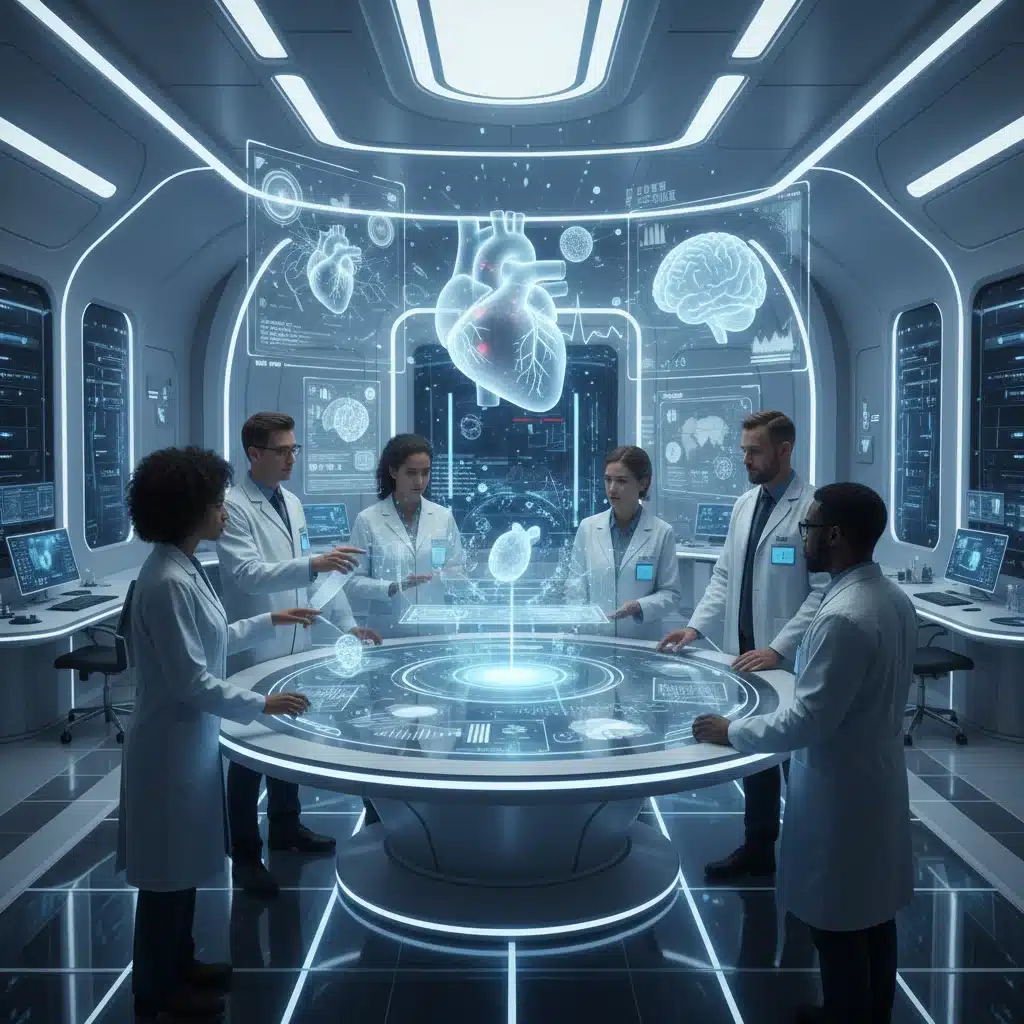
In the rapidly evolving landscape of healthcare, innovation is not just a buzzword; it’s a necessity. The quest for more effective treatments, faster drug development, and truly personalized medicine has led researchers to explore groundbreaking technologies. Among these, digital twins medical research stands out as a transformative force, promising to revolutionize how we understand, diagnose, and treat diseases. This article delves into the profound impact of digital twins in US medical research, highlighting their potential to accelerate drug discovery by an impressive 20% within the next five years and charting a course for the future of healthcare.
What Are Digital Twins in Medical Research?
At its core, a digital twin is a virtual replica of a physical entity, process, or system. In the context of medical research, this translates to creating highly detailed, dynamic virtual models of human organs, physiological systems, or even entire individuals. These digital counterparts are fed with real-time data from their physical counterparts – ranging from genetic information and medical history to real-time physiological measurements from wearables and sensors. This continuous data flow allows the digital twin to evolve and behave exactly like its physical counterpart, offering an unprecedented level of insight into individual health and disease progression.
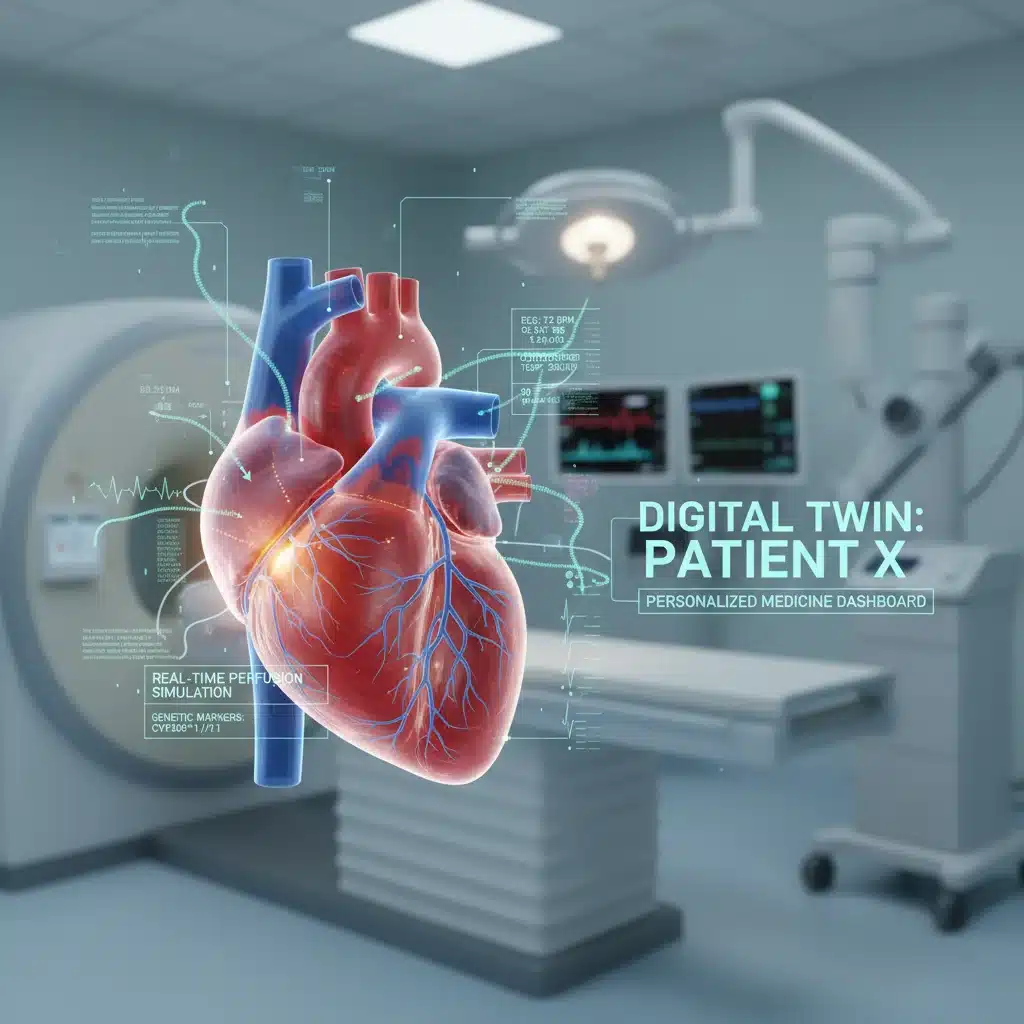
The concept of digital twins originated in manufacturing and engineering, where they are used to optimize product design, predict maintenance needs, and simulate complex operational scenarios. Their application in medicine, however, opens up a new frontier, promising to unlock insights that were previously unattainable. Imagine a ‘digital heart’ that accurately mirrors a patient’s cardiac function, allowing doctors to test different drug dosages or surgical interventions virtually before applying them to the actual patient. This is the promise of digital twins medical research.
The Evolution of Medical Modeling
Medical modeling is not a new concept. For decades, researchers have used statistical models, animal models, and cell cultures to understand biological processes and test therapies. While these methods have been invaluable, they often fall short in replicating the complexity and individuality of human physiology. Animal models, for instance, may not always translate directly to humans due to species-specific differences. Statistical models, while useful for population-level insights, often lack the granularity needed for personalized treatment.
Digital twins overcome many of these limitations by offering a dynamic, patient-specific representation. They integrate vast amounts of data from various sources – genomics, proteomics, imaging, electronic health records, and real-time physiological monitoring – to create a holistic and continuously updated model. This integration allows for a level of precision and personalization that traditional methods cannot match, making digital twins a game-changer in medical research.
Accelerating Drug Discovery: The 20% Advantage
One of the most significant impacts of digital twins is their potential to dramatically accelerate drug discovery. The traditional drug development pipeline is notoriously long, expensive, and fraught with high failure rates. It typically takes 10-15 years and billions of dollars to bring a new drug to market, with a success rate of less than 10% for compounds entering clinical trials.
Digital twins can significantly streamline this process by offering virtual platforms for:
- Target Identification and Validation: By simulating complex biological pathways and disease mechanisms, digital twins can help identify novel drug targets with higher precision, reducing the guesswork involved in early-stage research.
- In Silico Drug Screening: Instead of laboriously testing thousands of compounds in laboratories, researchers can use digital twins to virtually screen potential drug candidates, predicting their efficacy and toxicity profiles with remarkable accuracy. This can drastically reduce the number of compounds that need to be synthesized and tested physically.
- Optimizing Clinical Trial Design: Digital twins of patient populations can be used to simulate different clinical trial protocols, identify optimal patient cohorts, and even predict trial outcomes. This can lead to more efficient and successful clinical trials, reducing costs and accelerating approval times.
- Personalized Dosage and Treatment Regimens: For drugs that make it to market, digital twins can help tailor dosages and treatment plans to individual patients, minimizing side effects and maximizing therapeutic benefits.
Experts predict that by leveraging digital twins, the drug discovery timeline could be shortened by as much as 20% in the next five years. This acceleration would not only bring life-saving medications to patients faster but also free up substantial resources that can be reinvested into further research and development. The economic implications alone are staggering, with billions of dollars potentially saved annually across the pharmaceutical industry.
Key Applications of Digital Twins in US Medical Research
The applications of digital twins in medical research are vast and continually expanding. Here are some of the most promising areas:
Personalized Medicine and Treatment Optimization
The vision of personalized medicine – tailoring medical treatment to the individual characteristics of each patient – is becoming a reality with digital twins. By creating a digital replica of a patient, doctors can simulate how different treatments, medications, or lifestyle changes might affect that specific individual. This allows for highly customized care plans that are optimized for efficacy and minimize adverse effects.
For example, a digital twin of a cancer patient could incorporate their genetic profile, tumor characteristics, and past treatment responses. Researchers could then virtually test various chemotherapy regimens or radiation doses to determine the most effective strategy with the least toxicity before administering it to the patient. This not only improves patient outcomes but also reduces the trial-and-error approach often associated with complex diseases.
Disease Modeling and Progression Prediction
Understanding how diseases develop and progress is crucial for effective intervention. Digital twins offer dynamic models that can simulate disease progression over time, taking into account genetic predispositions, environmental factors, and individual physiological responses. This capability is particularly powerful for chronic diseases like diabetes, cardiovascular disease, and neurodegenerative disorders.
Researchers can use digital twins to explore ‘what-if’ scenarios, predicting the impact of different lifestyle choices, dietary changes, or early interventions on disease trajectory. This predictive power can lead to earlier diagnoses, more proactive management strategies, and ultimately, better quality of life for patients. For instance, a digital twin of an individual at risk for Alzheimer’s could simulate the effects of various preventative measures, helping to identify the most impactful interventions.
Surgical Planning and Training
In complex surgical procedures, precision is paramount. Digital twins of patient anatomy, derived from high-resolution imaging data, can provide surgeons with a virtual sandbox to plan and rehearse operations. This allows them to anticipate challenges, optimize approaches, and minimize risks before entering the operating room.
Furthermore, digital twins can be invaluable tools for surgical training. Medical students and residents can practice intricate procedures on realistic virtual models, gaining experience and honing their skills without any risk to actual patients. This leads to better-trained surgeons and improved patient safety. The integration of haptic feedback systems with digital twins can create incredibly immersive and realistic training environments.
Drug Repurposing and Combination Therapies
The high cost and long timelines of developing new drugs make drug repurposing an attractive strategy. Digital twins can facilitate this by simulating the effects of existing drugs on various disease models, identifying new therapeutic applications. This can significantly reduce development costs and accelerate market entry for new indications.
Similarly, digital twins can help optimize combination therapies. By simulating how multiple drugs interact within a patient’s system, researchers can identify synergistic combinations that are more effective than single-agent treatments, while also predicting and mitigating potential adverse interactions. This is especially relevant in complex diseases like cancer or infectious diseases where combination therapies are often the standard of care.
Challenges and Considerations in Implementation
While the promise of digital twins in medical research is immense, their widespread adoption comes with several challenges:
- Data Integration and Standardization: Digital twins rely on vast amounts of diverse data – from genomics to wearables. Integrating and standardizing this data from disparate sources is a significant hurdle. Interoperability between different healthcare systems and research platforms is crucial.
- Computational Power and Infrastructure: Creating and running highly complex, dynamic digital twins requires immense computational resources, including high-performance computing and cloud infrastructure. The US medical research community will need significant investment in these areas.
- Model Validation and Accuracy: Ensuring that digital twins accurately reflect their physical counterparts is critical. Rigorous validation against real-world clinical data is essential to build trust and ensure reliability. This involves continuous refinement and adjustment of the models.
- Ethical and Privacy Concerns: The use of highly personal and sensitive health data raises significant ethical and privacy concerns. Robust data security measures, anonymization techniques, and clear ethical guidelines are necessary to protect patient information and maintain public trust.
- Regulatory Frameworks: As digital twins move from research tools to clinical applications, appropriate regulatory frameworks will be needed to ensure their safety and efficacy. Agencies like the FDA will play a crucial role in establishing these guidelines.
- Interdisciplinary Collaboration: Developing and deploying digital twins requires expertise from various fields, including medicine, engineering, computer science, data science, and ethics. Fostering strong interdisciplinary collaboration is key to success.
The Future Outlook: A Healthier Tomorrow
Despite the challenges, the trajectory for digital twins medical research in the US is overwhelmingly positive. Major investments from government agencies, pharmaceutical companies, and tech giants are fueling rapid advancements in the field. The potential for a 20% acceleration in drug discovery is just one facet of a much larger transformation.
Looking ahead, we can anticipate:
- Predictive Healthcare: Digital twins will enable a shift from reactive to proactive healthcare, allowing for early detection and prevention of diseases before they manifest.
- Democratization of Medical Expertise: Advanced digital twin models could potentially make complex medical insights more accessible to a wider range of healthcare professionals, particularly in underserved areas.
- Enhanced Medical Education: Digital twins will become standard tools in medical schools, providing unparalleled opportunities for hands-on learning and simulation.
- Global Health Impact: The ability to rapidly develop and test vaccines and treatments using digital twins could significantly improve our response to global health crises and pandemics.

The integration of artificial intelligence (AI) and machine learning (ML) with digital twins will further amplify their capabilities. AI can analyze the vast datasets generated by digital twins, identify complex patterns, and make predictions with even greater accuracy. This synergy between AI, ML, and digital twins will unlock new frontiers in understanding human biology and disease.
Government and Industry Initiatives
The US government, through agencies like the National Institutes of Health (NIH) and the Department of Defense (DoD), is actively funding research into digital twin technologies for various medical applications. Private sector investments from pharmaceutical companies and tech innovators are also pouring into the field, recognizing its immense potential. Partnerships between academia, industry, and government are crucial for building the necessary infrastructure and talent pipeline to fully realize the promise of digital twins medical research.
For instance, initiatives focusing on creating ‘virtual human’ models are gaining traction, aiming to develop comprehensive digital twins that encompass all aspects of human physiology. These ambitious projects require massive collaborative efforts but hold the key to unlocking unprecedented insights into human health and disease.
Conclusion
The advent of digital twins in US medical research marks a pivotal moment in healthcare history. By providing dynamic, patient-specific virtual models, these technologies are poised to accelerate drug discovery by 20% in the coming years, bringing life-saving treatments to market faster and more efficiently. Beyond drug development, digital twins are revolutionizing personalized medicine, disease modeling, surgical planning, and medical education.
While challenges related to data integration, computational resources, and ethical considerations remain, the collaborative efforts of researchers, industry leaders, and policymakers are paving the way for a future where healthcare is more precise, predictive, and personalized. The journey towards a healthier tomorrow is being significantly propelled by the transformative power of digital twins medical research, promising a future where every patient can benefit from tailored, data-driven medical care.
Embracing this technology is not merely an option but a strategic imperative for the US to maintain its leadership in global medical innovation and deliver superior health outcomes for its citizens. The 20% acceleration in drug discovery is just the beginning of what digital twins will achieve in redefining the boundaries of medical science.