Virtual Reality Medical Training: Accelerating US Skill Acquisition by 40%
The landscape of medical education in the United States is on the cusp of a profound transformation, driven by the immersive power of Virtual Reality (VR). For decades, medical training has relied on a combination of theoretical knowledge, cadaver dissection, and hands-on clinical experience. While invaluable, these traditional methods often face limitations in terms of accessibility, repeatability, and the inherent risks associated with real-patient interactions. Enter VR medical training, a revolutionary approach poised to accelerate skill acquisition by an estimated 40% by 2026, fundamentally reshaping how future healthcare professionals are educated and prepared.
The promise of VR in medicine extends beyond mere novelty; it offers a safe, controlled, and highly effective environment for learning and practicing complex procedures. From surgical simulations to diagnostic training and patient communication, VR provides an unparalleled platform for trainees to hone their skills without the fear of adverse outcomes. This article will delve into the multifaceted impact of VR medical training, exploring its current applications, the significant advantages it offers, the challenges that need to be overcome, and the exciting future it holds for US healthcare.
The Dawn of Immersive Learning: What is VR Medical Training?
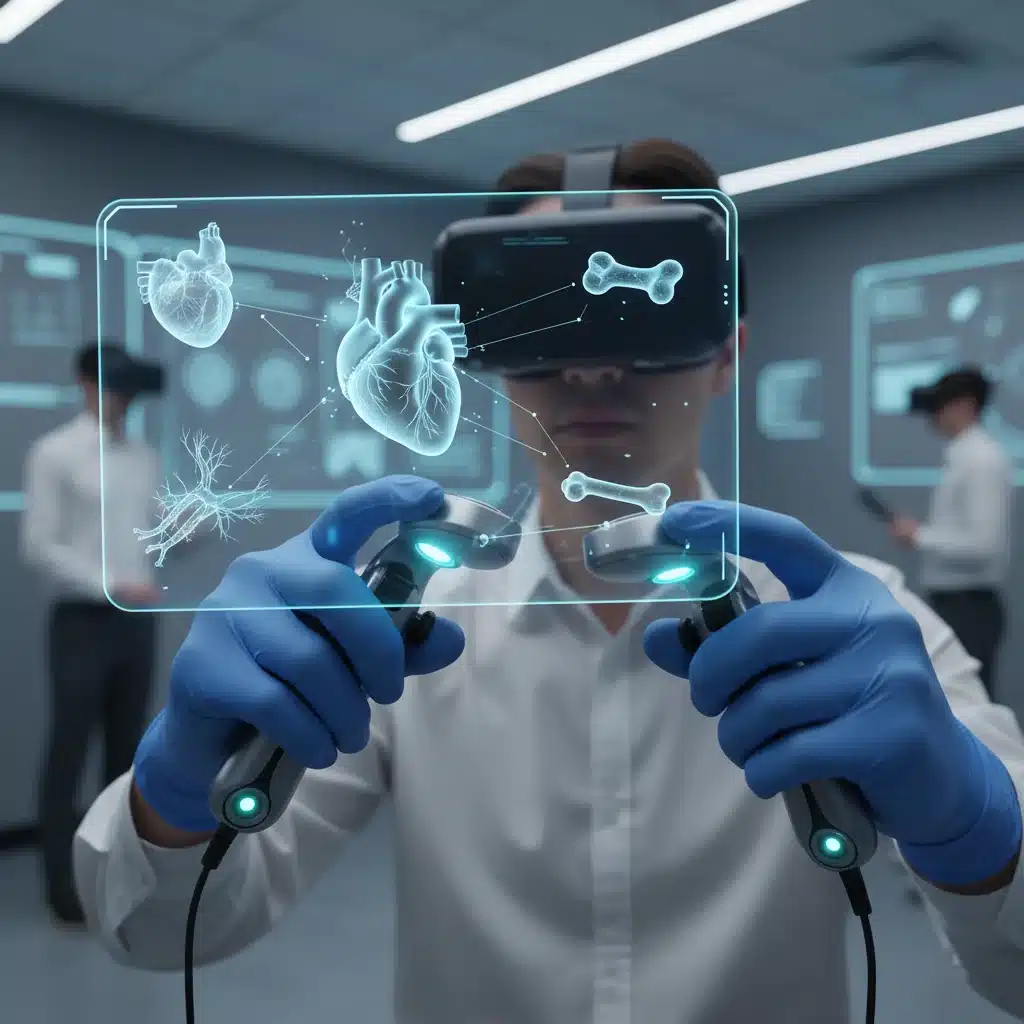
VR medical training involves the use of specialized hardware, such as headsets and haptic feedback devices, to create highly realistic, interactive simulations of medical scenarios. These simulations can range from basic anatomy lessons to intricate surgical operations, emergency response protocols, and even empathetic patient interactions. Unlike traditional simulation, VR fully immerses the user in a digital environment, making the learning experience incredibly engaging and effective.
The core principle behind VR medical training is experiential learning. By actively participating in virtual scenarios, trainees can develop muscle memory, refine decision-making processes, and build confidence in a way that passive learning cannot achieve. This active engagement is critical for mastering complex medical skills, where theoretical understanding must be seamlessly integrated with practical execution.
Consider a surgical resident learning a new procedure. In a traditional setting, they might observe, assist, and eventually perform under direct supervision. With VR, they can repeat the procedure countless times, receive instant feedback, and even experience rare complications in a risk-free environment. This repetitive, high-fidelity practice is a cornerstone of accelerating skill acquisition, making VR medical training an indispensable tool for modern medical education.
Accelerating Skill Acquisition: The 40% Advantage
The claim that VR medical training can accelerate skill acquisition by 40% is not merely an ambitious projection; it’s supported by a growing body of research and pilot programs across the US. This significant acceleration stems from several key factors inherent to the VR learning environment:
-
Repetitive Practice with Immediate Feedback:
In VR, trainees can practice procedures repeatedly, receiving real-time feedback on their performance. This allows for immediate correction of errors and reinforcement of correct techniques, leading to faster mastery. Unlike traditional methods where feedback might be delayed or less detailed, VR systems can pinpoint exact areas for improvement.
-
Standardized Learning Experience:
Every trainee can experience the exact same high-quality, standardized simulation. This eliminates inconsistencies that can arise from varying instructor styles or limited access to specific cases in traditional clinical settings. This standardization ensures a consistent baseline of skill development across all participants in VR medical training programs.
-
Exposure to Rare and Complex Cases:
VR allows trainees to encounter and manage rare or high-risk medical conditions that they might not otherwise experience during their conventional training. This exposure is crucial for developing adaptability and critical thinking skills under pressure, preparing them for a wider range of clinical realities.
-
Reduced Stress and Enhanced Confidence:
Practicing in a risk-free virtual environment reduces the anxiety associated with making mistakes on real patients. This allows trainees to experiment, learn from errors, and build confidence before entering real-world clinical scenarios. The psychological safety offered by VR medical training is a significant advantage.
-
Objective Performance Metrics:
VR platforms can track a multitude of performance metrics, such as surgical precision, decision-making speed, and adherence to protocols. This data provides objective insights into a trainee’s progress and areas needing further development, allowing for personalized learning pathways.
The cumulative effect of these advantages is a dramatically more efficient and effective learning process. Institutions adopting VR medical training are reporting shorter learning curves, higher retention rates, and ultimately, a more competent and confident medical workforce. This efficiency translates directly into the projected 40% acceleration in skill acquisition, a metric that could revolutionize healthcare delivery.
Current Applications of VR Medical Training in the US
Across the United States, medical schools, hospitals, and specialized training centers are increasingly integrating VR into their curricula. The applications are diverse and continually expanding:
Surgical Training and Simulation:
Perhaps the most prominent application, VR surgical simulators allow aspiring surgeons to practice complex operations, from laparoscopic procedures to neurosurgery, in a highly realistic virtual environment. These simulators often incorporate haptic feedback, mimicking the tactile sensations of tissue manipulation, suturing, and cutting. Companies like Osso VR and FundamentalVR are leading the charge, providing platforms that enable residents to master procedures with greater precision and fewer errors before entering the operating room. This is a critical component of VR medical training.
Anatomy and Physiology Education:
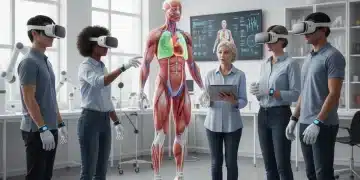
VR offers an unparalleled way to explore human anatomy in three dimensions. Instead of relying solely on textbooks and cadavers, students can virtually dissect organs, explore physiological systems, and visualize complex structures from any angle. This immersive approach enhances understanding and retention, making abstract concepts tangible. Platforms like BodyViz allow students to interact with 3D models derived from actual patient scans.
Emergency Medicine and Trauma Response:
Training for high-stakes emergency situations requires quick thinking and coordinated action. VR simulations can replicate chaotic emergency room environments, mass casualty incidents, or specific trauma scenarios, allowing medical personnel to practice triage, resuscitation, and team communication under pressure. This prepares them for real-life crises more effectively than traditional drills.
Patient Communication and Empathy Training:
Beyond technical skills, effective communication and empathy are crucial for patient care. VR can create scenarios where trainees interact with virtual patients, practicing difficult conversations, delivering bad news, or managing challenging patient behaviors. This helps develop crucial soft skills in a safe space where mistakes can be made and learned from without consequence to a real person. This aspect of VR medical training is often overlooked but profoundly impactful.
Pain Management and Rehabilitation:
VR is also being used in therapeutic contexts. For patients, it can distract from pain during procedures or provide engaging environments for physical and occupational therapy. For practitioners, VR can help them understand patient perspectives on pain and improve their approaches to rehabilitation. This dual application highlights the versatility of VR medical training.
Benefits Beyond Accelerated Learning
While accelerated skill acquisition is a primary driver for adopting VR medical training, the benefits extend much further, impacting various facets of medical education and healthcare delivery:
-
Enhanced Patient Safety:
By allowing trainees to practice and perfect procedures in a risk-free virtual environment, VR significantly reduces the likelihood of errors when they transition to real patients. This direct impact on patient safety is arguably the most critical benefit.
-
Cost-Effectiveness in the Long Run:
Although initial investment in VR hardware and software can be substantial, it can lead to significant cost savings over time. It reduces the need for expensive cadaver labs, specialized equipment, and minimizes the use of disposable materials. Furthermore, faster training means doctors can enter the workforce sooner, contributing to healthcare delivery.
-
Accessibility and Scalability:
VR medical training can democratize access to high-quality medical education. It allows trainees in remote areas or underserved communities to access the same advanced simulations as those in major urban centers. VR modules can be easily scaled and updated, ensuring that training remains current with the latest medical advancements.
-
Objective Assessment and Personalization:
VR platforms provide robust data on trainee performance, enabling objective assessment of skills. This data can be used to identify individual strengths and weaknesses, allowing for personalized learning plans and targeted interventions. This level of granular feedback is difficult to achieve with traditional methods.
-
Reduced Resource Strain:
Traditional medical training often places a heavy burden on clinical resources, including operating room time, patient availability, and senior physician supervision. VR medical training can alleviate some of this strain by offloading initial skill development to a virtual environment, freeing up valuable real-world resources.
These benefits collectively paint a picture of a more efficient, safer, and equitable future for medical education, all powered by the transformative potential of VR medical training.
Challenges and Considerations for Widespread Adoption
Despite the immense promise, the widespread adoption of VR medical training in the US faces several challenges that need to be addressed:
High Initial Investment:
The cost of high-fidelity VR hardware, specialized software, and ongoing content development can be prohibitive for some institutions, especially smaller hospitals or medical schools with limited budgets. Securing funding and demonstrating a clear return on investment are crucial for overcoming this barrier.
Content Development and Customization:
Creating realistic and medically accurate VR simulations is a complex and time-consuming process. It requires collaboration between medical experts, software developers, and instructional designers. The need for specialized content for various medical disciplines and sub-specialties means a continuous investment in development.
Integration with Existing Curricula:
Successfully integrating VR medical training into established medical school and residency programs requires careful planning and curriculum redesign. It’s not simply about adding VR; it’s about thoughtfully embedding it to complement and enhance existing learning pathways. Faculty training is also essential to ensure effective utilization.
Technological Hurdles and User Experience:
While VR technology has advanced significantly, issues such as motion sickness, headset comfort, and the need for powerful computing resources can still impact the user experience. Ensuring a seamless and comfortable experience is vital for sustained engagement in VR medical training.
Validation and Accreditation:
For VR medical training to gain full acceptance, the efficacy of VR-based skill acquisition needs to be rigorously validated through research and recognized by accreditation bodies. Establishing clear metrics for performance and ensuring that VR-trained individuals meet the same competency standards as traditionally trained ones is paramount.
Addressing these challenges will require collaborative efforts from technology developers, medical educators, policymakers, and funding bodies. However, the compelling advantages of VR medical training suggest that these hurdles are well worth overcoming.
The Future of Medical Education: A VR-Enhanced Ecosystem
Looking ahead to 2026 and beyond, VR medical training is poised to become an indispensable component of medical education in the US. The projected 40% acceleration in skill acquisition is just the beginning. We can anticipate several exciting developments:
Hyper-Personalized Learning Paths:
Advanced AI integration with VR will allow for highly personalized training programs. AI will analyze a trainee’s performance data, identify specific areas of weakness, and adapt the VR scenarios in real-time to focus on those areas. This will optimize learning efficiency and cater to individual learning styles.
Interprofessional Team Training:
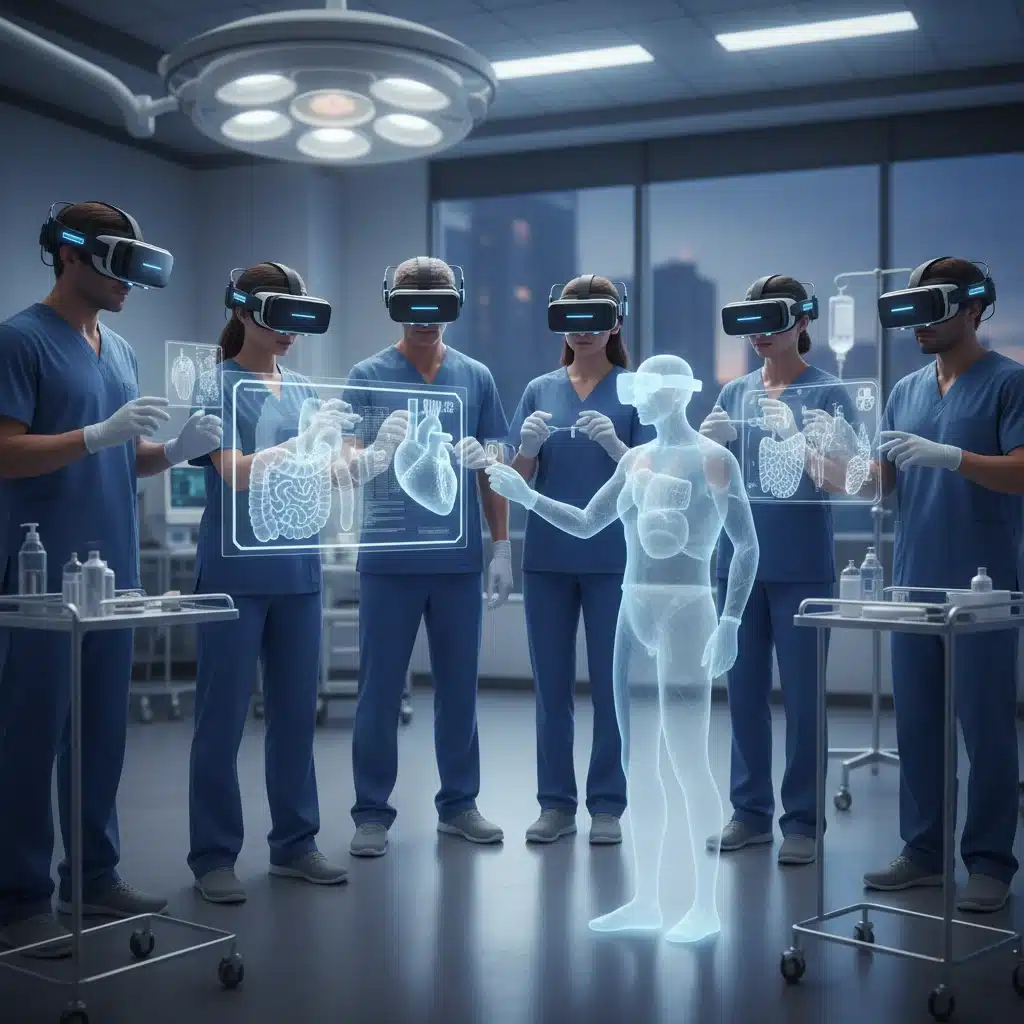
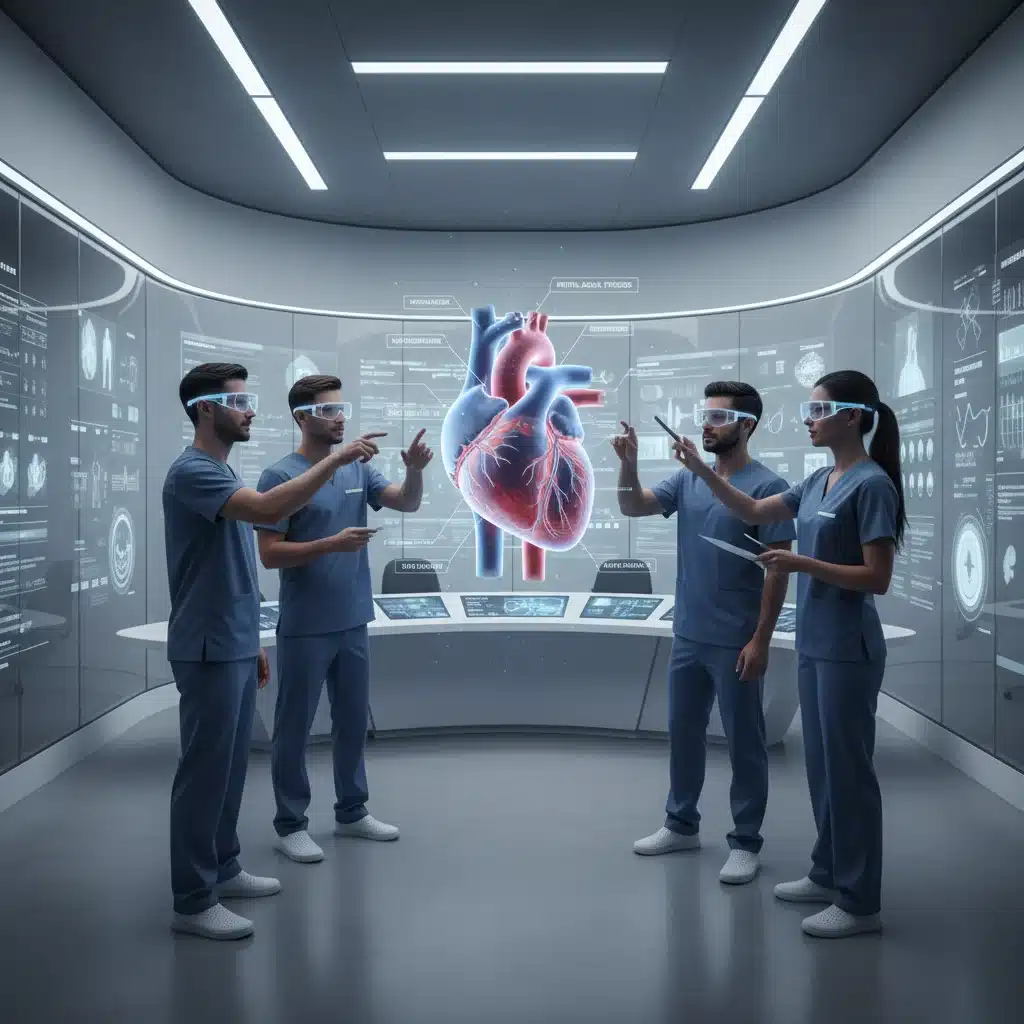
VR will facilitate more effective interprofessional team training, allowing doctors, nurses, and other healthcare professionals to practice complex scenarios together in a shared virtual environment. This will improve communication, coordination, and overall team dynamics, leading to better patient outcomes. This collaborative aspect is a huge potential for VR medical training.
Remote Training and Global Collaboration:
The ability to deliver high-quality training remotely will become even more critical. VR will enable medical professionals from different geographical locations to train together, share expertise, and even participate in virtual grand rounds or surgical simulations with experts from around the globe. This fosters a truly global medical community.
Integration with Augmented Reality (AR):
While VR offers full immersion, Augmented Reality (AR) will also play a significant role. AR overlays digital information onto the real world, allowing surgeons to view patient data or anatomical structures directly during a real procedure, or for students to see virtual organs superimposed on a mannequin. The combination of VR and AR will create a truly blended learning experience.
Continuous Professional Development (CPD):
VR will not only be for initial training but also for ongoing professional development. Experienced physicians can use VR to practice new techniques, refresh their skills, and stay current with medical advancements without the need for extensive travel or disruption to their clinical practice. This ensures lifelong learning in the medical field.
The transition to a VR-enhanced medical education ecosystem will not happen overnight, but the momentum is undeniable. Institutions that embrace this technology will not only be at the forefront of medical innovation but will also be instrumental in producing a new generation of highly skilled, confident, and patient-centric healthcare professionals.
Conclusion: The Future is Immersive for US Medical Training
The advent of VR medical training marks a pivotal moment in the history of medical education in the United States. With the undeniable potential to accelerate skill acquisition by 40% by 2026, enhance patient safety, and provide an accessible, standardized, and cost-effective training environment, VR is more than just a technological trend; it’s a fundamental shift in how we prepare our medical workforce.
While challenges related to cost, content development, and integration remain, the benefits far outweigh the hurdles. As technology continues to evolve and become more accessible, VR medical training will undoubtedly become a standard component of every medical curriculum, from foundational anatomy to advanced surgical residency. The future of medicine demands innovative solutions to complex educational needs, and Virtual Reality is stepping up to meet that challenge, promising a brighter, safer, and more efficient healthcare landscape for all.