Virtual Reality in Medical Training: How US Institutions are Adopting VR by 2026
Virtual Reality in Medical Training: How US Institutions are Adopting VR by 2026
The landscape of medical education is undergoing a profound transformation, driven by technological advancements that promise to revolutionize how future healthcare professionals are trained. Among these innovations, Virtual Reality (VR) stands out as a powerful tool, rapidly gaining traction within US medical institutions. As we approach 2026, the adoption of VR medical training US is not just a trend; it’s becoming a fundamental pillar of modern medical pedagogy.
For decades, medical training has relied heavily on cadaver dissection, textbooks, and clinical rotations. While these methods remain invaluable, they often come with limitations in terms of accessibility, ethical considerations, cost, and the ability to simulate rare or complex scenarios repeatedly. VR offers a compelling solution, providing immersive, interactive, and risk-free environments for learning and practice. This article delves into the current state of VR integration in US medical education, explores the driving forces behind its adoption, and forecasts its significant impact by 2026.
The promise of VR in medical training extends beyond mere visualization. It encompasses a holistic approach to skill development, cognitive enhancement, and emotional resilience. From mastering intricate surgical procedures to improving diagnostic accuracy and fostering empathetic patient communication, VR is proving to be an indispensable asset. US institutions, recognizing this potential, are investing heavily in VR technologies, signaling a future where virtual operating rooms and simulated patient encounters are as common as traditional lecture halls.
The Evolution of Medical Training: Why VR Now?
Traditional medical education, while foundational, faces increasing pressures. The sheer volume of medical knowledge is expanding exponentially, patient safety demands stricter protocols, and the need for hands-on experience without risking actual patient outcomes has never been more critical. VR addresses these challenges by offering a scalable, repeatable, and customizable training platform.
Historically, medical simulation involved expensive manikins and elaborate physical setups. While effective, these often lacked the realism and flexibility needed for truly comprehensive training. VR, on the other hand, provides hyper-realistic environments that can be tailored to specific learning objectives. Students can practice procedures countless times, receive immediate feedback, and experience scenarios that would be difficult or impossible to replicate in a real-world setting.
The technological advancements in VR hardware and software have also played a crucial role. VR headsets have become more affordable, lighter, and more powerful, offering higher resolution displays and wider fields of view. This has made VR more accessible to a broader range of institutions and students. Furthermore, the development of sophisticated haptic feedback systems allows for a tactile dimension to virtual interactions, enhancing the realism of surgical procedures and physical examinations. This rapid evolution makes the timing perfect for widespread VR medical training US adoption.
Key Benefits of VR in US Medical Training
The advantages of integrating VR into medical curricula are numerous and far-reaching. These benefits contribute significantly to the effectiveness and efficiency of medical education, ultimately leading to better-prepared healthcare professionals.
Enhanced Anatomical Understanding and Visualization
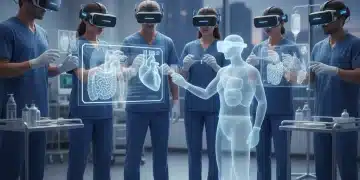
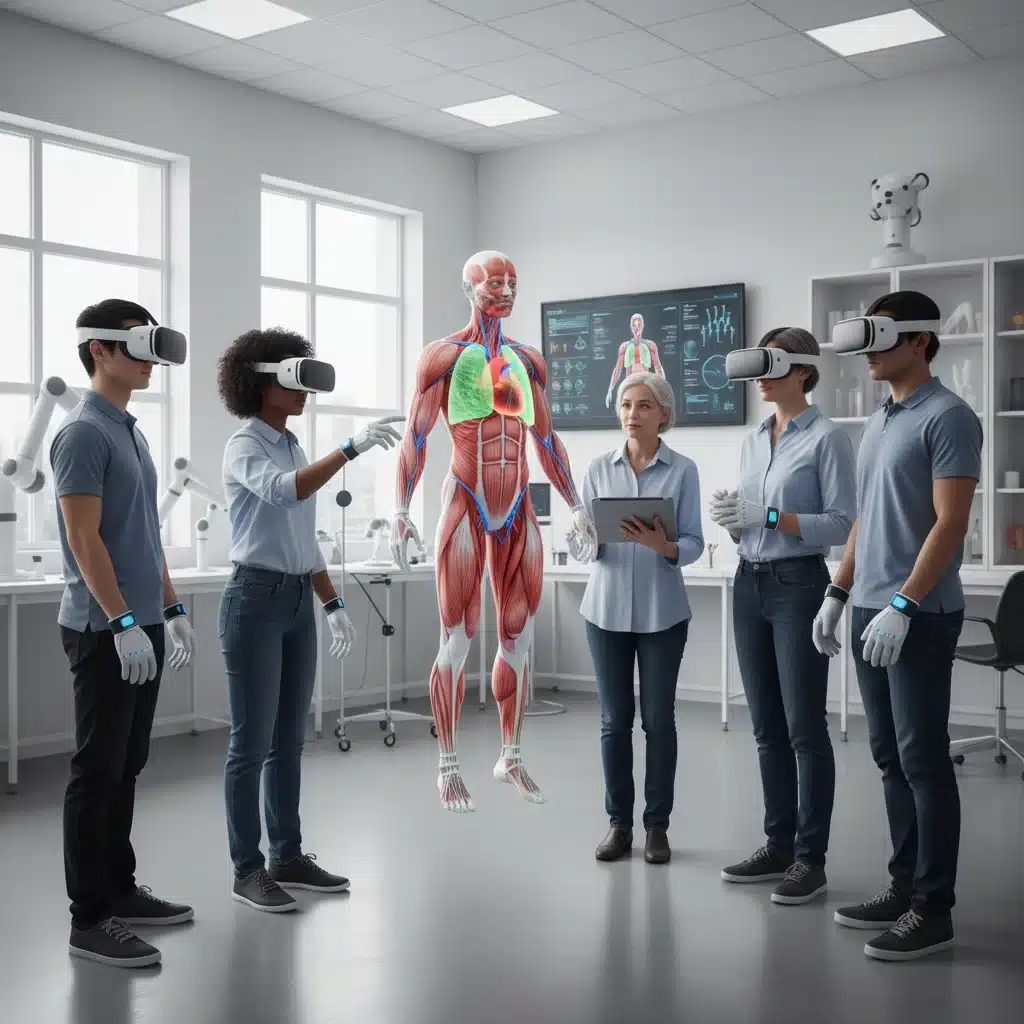
One of the most immediate benefits of VR is its ability to provide unparalleled anatomical visualization. Instead of relying on static 2D images or even cadavers, students can explore the human body in 3D, from any angle, and at any scale. They can virtually dissect organs, examine complex vascular structures, and understand the spatial relationships between different body parts in a way that traditional methods simply cannot match. This deep, interactive understanding is crucial for specialties like surgery, radiology, and pathology.
Safe and Repeatable Practice for Complex Procedures
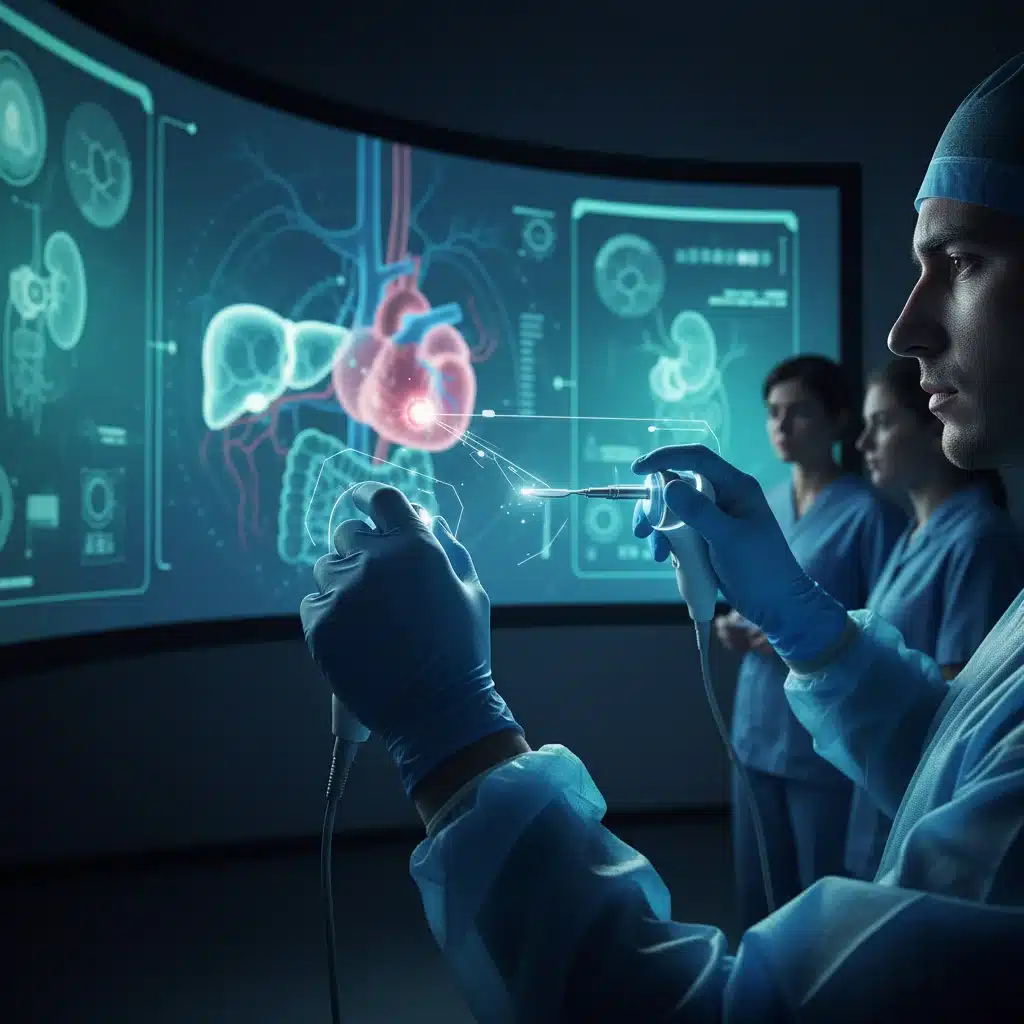
Performing surgical procedures or complex interventions for the first time on a real patient carries inherent risks. VR eliminates this risk by providing a safe sandbox for practice. Students can repeatedly perform surgeries, practice intubations, or manage critical care scenarios without fear of error. This iterative practice builds muscle memory, refines motor skills, and boosts confidence before ever stepping into an operating room or emergency department. The ability to reset and repeat a scenario immediately after an error is a game-changer for skill acquisition.
Exposure to Rare and High-Stakes Scenarios
Some medical conditions or emergencies are rare but require immediate and precise action. Training for such events in a real-world setting is often impractical or impossible. VR allows institutions to simulate these high-stakes scenarios, exposing students to situations they might not encounter during their entire clinical rotations. This includes mass casualty incidents, rare surgical complications, or even ethical dilemmas, preparing them for a wider range of challenges.
Objective Performance Assessment and Feedback
VR platforms can meticulously track a student’s performance, recording every movement, decision, and outcome. This data-driven approach allows for objective assessment, identifying areas of strength and weakness with precision. Immediate, detailed feedback can be provided, guiding students on how to improve their techniques and decision-making processes. This contrasts with more subjective traditional assessments, leading to a more standardized and effective learning experience in VR medical training US programs.
Cost-Effectiveness and Accessibility
While initial investment in VR hardware and software can be significant, the long-term cost savings are substantial. VR simulations can reduce the need for expensive cadaver labs, specialized equipment, and extensive travel for clinical experiences. Furthermore, VR can make high-quality medical education more accessible to students in remote areas or those with limited resources, democratizing access to advanced training opportunities.
Current Adoption Trends in US Medical Institutions
The adoption of VR in US medical institutions is no longer a futuristic concept; it’s a present-day reality. Leading medical schools, teaching hospitals, and simulation centers across the country are actively integrating VR into their curricula, often through dedicated VR labs or partnerships with technology developers.
Leading Institutions and Their Initiatives
Institutions like Stanford University, Case Western Reserve University, and the Mayo Clinic have been at the forefront of VR integration. Case Western, for instance, has developed an entire anatomy curriculum around Microsoft HoloLens, allowing students to explore detailed holographic anatomical models. Stanford’s Virtual Heart project provides an immersive experience for understanding complex cardiac conditions. These pioneering efforts demonstrate the versatility of VR across different medical disciplines.
Types of Training Utilizing VR
The applications of VR in medical training are diverse:
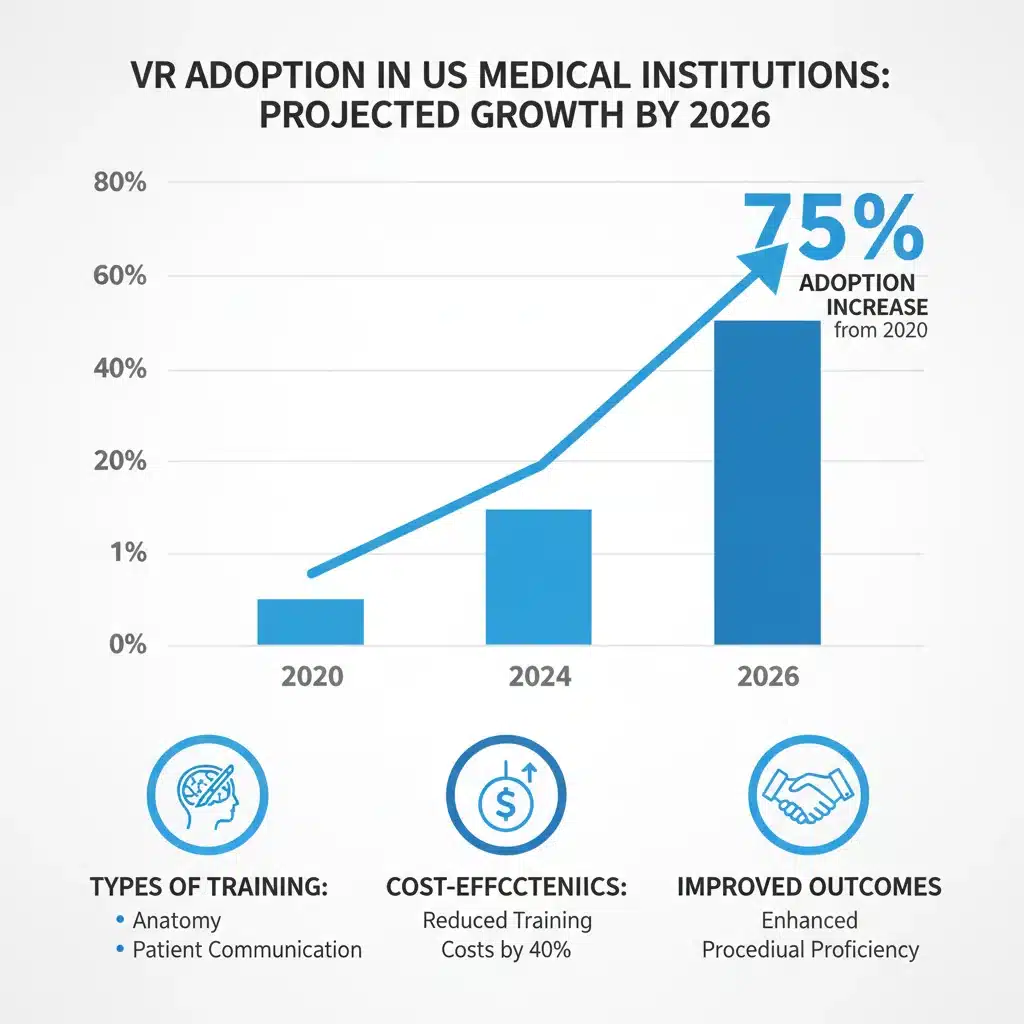
- Anatomy and Physiology: Immersive 3D exploration of human organs, systems, and their functions.
- Surgical Training: Practice complex procedures, from laparoscopic surgery to neurosurgery, with haptic feedback.
- Diagnostic Skills: Simulating patient encounters to practice diagnosis, differential reasoning, and treatment planning.
- Patient Communication: Role-playing scenarios to develop empathy, break bad news, or explain complex medical information.
- Emergency Medicine: Training for trauma response, mass casualty events, and critical care interventions.
- Rehabilitation: VR-based therapies for physical and cognitive rehabilitation, helping patients regain function.
Projected Adoption by 2026: A Look Ahead
By 2026, the integration of VR into VR medical training US programs is expected to reach a critical mass. Several factors will contribute to this widespread adoption, solidifying VR’s role as a standard tool in medical education.
Technological Advancements and Affordability
Continued advancements in VR hardware will lead to even more comfortable, higher-fidelity headsets at lower price points. This will make VR solutions more accessible to a broader range of institutions, including smaller medical schools and community hospitals. Software will also become more sophisticated, offering more realistic simulations, advanced analytics, and easier content creation tools.
Curriculum Integration and Standardization
As more institutions embrace VR, there will be a growing push for standardization of VR-based curricula and best practices. Medical regulatory bodies and accrediting agencies will likely develop guidelines for integrating VR into competency-based medical education. This will ensure that VR training is not just an add-on but an integral part of achieving specific learning outcomes.
Evidence-Based Outcomes and Research
The increasing body of research demonstrating the effectiveness of VR in improving surgical skills, diagnostic accuracy, and patient outcomes will further drive adoption. As more studies validate VR’s impact on clinical performance, institutions will feel more confident in their investments. This evidence will also help secure funding and support for VR initiatives.
Interprofessional Training and Teamwork
VR is uniquely positioned to facilitate interprofessional training, allowing medical students, nursing students, and other healthcare trainees to collaborate in simulated environments. By 2026, we can expect more VR scenarios designed to foster teamwork, communication, and leadership skills among diverse healthcare teams, reflecting the collaborative nature of modern healthcare.
Challenges and Considerations for Widespread VR Adoption
Despite the immense potential, the journey to widespread VR adoption in US medical training is not without its hurdles. Addressing these challenges will be crucial for realizing the full benefits of this technology.
Initial Investment and Funding
While VR hardware is becoming more affordable, the initial investment in high-quality headsets, powerful computing systems, and specialized VR software can still be substantial. Institutions need robust funding models, whether through grants, philanthropic donations, or strategic partnerships, to establish and maintain VR training facilities. The cost of developing new, highly realistic VR content is also a significant factor.
Content Creation and Customization
Creating high-fidelity, medically accurate VR content requires specialized expertise in both medical science and virtual reality development. This is a time-consuming and expensive process. Institutions may struggle to find or fund developers who can create customized content tailored to their specific curriculum needs. Collaboration between medical experts and VR developers will be key to overcoming this challenge.
Integration into Existing Curricula
Seamlessly integrating VR modules into already packed medical school curricula requires careful planning and buy-in from faculty. It’s not enough to simply introduce VR; it must be strategically aligned with learning objectives and assessed effectively. Faculty development programs are essential to train educators on how to effectively use VR as a teaching tool and how to incorporate it into their courses.
Technological Infrastructure and Support
Implementing VR at scale requires robust IT infrastructure, including high-speed internet, powerful local networks, and dedicated technical support staff. Troubleshooting hardware and software issues, managing updates, and ensuring smooth operation of VR labs will be ongoing challenges. Institutions must invest in the necessary infrastructure and personnel to support their VR initiatives.
Addressing Simulator Sickness and User Experience
While VR technology has improved, some users may still experience simulator sickness (nausea, dizziness) due to motion discrepancies. Designing VR experiences that minimize these effects and ensuring comfortable, intuitive user interfaces will be critical for widespread acceptance among students and faculty. Regular breaks and proper guidance on VR usage can help mitigate these issues.
The Future Impact of VR on Medical Education and Healthcare
By 2026 and beyond, the widespread adoption of VR in US medical training will have a transformative impact not only on education but on the broader healthcare ecosystem.
Improved Patient Safety and Outcomes
One of the most significant long-term impacts will be improved patient safety. By allowing medical professionals to practice complex procedures and critical decision-making in a risk-free environment, VR reduces the likelihood of errors in real-world clinical settings. This translates directly to better patient outcomes and a higher quality of care. Graduates trained with VR will enter the workforce with a higher level of practical competence and confidence.
Personalized Learning Experiences
VR platforms can adapt to individual learning styles and paces, offering personalized training paths. Students who need more practice on a particular skill can get it without holding back their peers, and advanced students can explore more complex scenarios. This personalized approach can optimize learning efficiency and ensure that every student reaches their full potential.
Global Collaboration and Remote Training
VR can break down geographical barriers in medical education. Institutions can collaborate on developing shared VR curricula, allowing students from different locations to train together in virtual spaces. This also opens possibilities for remote training programs, providing high-quality medical education to underserved regions or allowing specialists to train others globally without extensive travel. The VR medical training US model can inspire international collaborations.
Accelerated Skill Acquisition
The immersive and interactive nature of VR, coupled with immediate feedback, can significantly accelerate skill acquisition. What might take months or years to master through traditional apprenticeship models could potentially be achieved in a shorter timeframe with intensive, focused VR training. This efficiency is crucial in a rapidly evolving medical field.
Enhanced Surgical Planning and Pre-operative Rehearsal
Beyond general training, VR is increasingly being used for patient-specific surgical planning. Surgeons can create a 3D VR model of a patient’s anatomy from MRI or CT scans and rehearse complex procedures virtually before the actual surgery. This pre-operative rehearsal can identify potential challenges, refine surgical approaches, and ultimately lead to safer and more efficient operations.
Conclusion: VR as the Future of Medical Excellence
The trajectory of Virtual Reality in US medical training is clear: it is on a path to widespread adoption and integration by 2026. The compelling benefits of enhanced anatomical understanding, safe and repeatable practice, exposure to rare scenarios, objective assessment, and cost-effectiveness make VR an indispensable tool for modern medical education. While challenges related to funding, content creation, and infrastructure remain, innovative solutions and collaborative efforts are paving the way for overcoming them.
As US institutions continue to invest in and refine their VR programs, we can anticipate a new generation of healthcare professionals who are exceptionally well-prepared, highly skilled, and more confident in their abilities. The impact will resonate throughout the healthcare system, leading to improved patient safety, better outcomes, and a more efficient delivery of care. VR medical training US is not just changing how doctors are taught; it’s shaping the future of medical excellence.
The journey towards a fully VR-integrated medical curriculum is an exciting one, promising to unlock unprecedented opportunities for learning, innovation, and ultimately, for human well-being. By embracing this technology, US medical institutions are not just keeping pace with the future; they are actively defining it.