FDA MedTech Guidelines 2026: Impact on Training & Development

The landscape of medical technology (MedTech) is perpetually evolving, driven by rapid advancements in science, engineering, and digital innovation. However, alongside this innovation, regulatory bodies like the U.S. Food and Drug Administration (FDA) continuously refine their guidelines to ensure patient safety, product efficacy, and ethical development practices. The year 2026 is poised to bring significant shifts, particularly concerning the FDA’s educational guidelines for MedTech development. These forthcoming changes are not merely administrative updates; they represent a fundamental recalibration of how MedTech professionals are trained, how devices are designed, and how companies navigate the intricate path from concept to market. Understanding these latest FDA MedTech Guidelines is paramount for anyone involved in the sector, from nascent startups to established multinational corporations. The implications for training, development, and overall compliance are far-reaching, demanding proactive adaptation and strategic foresight.
The FDA’s role extends beyond just approving devices; it actively shapes the ecosystem through guidance documents, workshops, and educational initiatives. These efforts are designed to foster a culture of quality and compliance, ensuring that medical devices meet the highest standards of safety and performance. The anticipated 2026 guidelines are expected to place an even greater emphasis on comprehensive educational frameworks, demanding a more integrated approach to training throughout the entire product lifecycle. This article delves deep into these projected changes, exploring their potential impact on training methodologies, curriculum development, and the operational strategies of MedTech companies. We will examine the specific areas likely to be affected, offering insights into how organizations can prepare for and thrive under the new regulatory regime. The goal is not just to comply, but to leverage these guidelines as an opportunity to enhance innovation, improve product quality, and ultimately, deliver better outcomes for patients.
The Evolution of FDA Regulatory Frameworks and Their Educational Imperative
To fully grasp the significance of the 2026 FDA MedTech Guidelines, it’s essential to understand the historical context of FDA regulation. Over decades, the FDA has progressively refined its approach to medical devices, moving from a reactive stance to a more proactive and preventative one. Early regulations often focused on post-market surveillance and addressing issues after they arose. However, with the increasing complexity of medical devices, the agency recognized the critical importance of upstream interventions – specifically, ensuring that developers and manufacturers possess the requisite knowledge and skills from the outset. This shift underpinned the introduction of various quality system regulations (QSRs), good manufacturing practices (GMPs), and design control principles, all of which inherently carry an an educational imperative.
The current regulatory landscape, governed by frameworks like 21 CFR Part 820 (Quality System Regulation), already mandates extensive training and competence requirements for personnel. Companies are required to establish and maintain procedures for identifying training needs and ensuring that all personnel performing activities affecting product quality are adequately trained. However, the anticipated 2026 guidelines are expected to elevate these requirements, potentially introducing more specific mandates for continuous education, competency assessments, and specialized training modules tailored to emerging technologies like AI/ML in medical devices, cybersecurity, and personalized medicine. This means that merely having a training program in place may no longer suffice; the focus will likely shift towards demonstrable proficiency and continuous professional development aligned with evolving technological and regulatory standards.
Moreover, the FDA has increasingly emphasized a Total Product Lifecycle (TPL) approach, which views a medical device’s journey from concept to obsolescence as a continuous process requiring vigilance and adaptation. Educational guidelines are integral to this approach, ensuring that knowledge and best practices are maintained and updated at every stage. The 2026 updates are expected to reinforce this TPL perspective, demanding that training programs not only cover initial development and manufacturing but also extend to post-market surveillance, device servicing, and even decommissioning, ensuring a holistic understanding of regulatory responsibilities. This comprehensive view underscores the FDA’s commitment to safeguarding public health throughout the entire lifespan of a medical device, making robust educational frameworks a non-negotiable component of compliant MedTech development.
Key Areas of Impact: Where the 2026 Guidelines Will Make a Difference
The 2026 FDA MedTech Guidelines are projected to influence several critical areas within the MedTech development lifecycle. Understanding these specific points of impact is crucial for companies to strategically allocate resources and adapt their training programs effectively. One of the most significant areas will undoubtedly be in the realm of digital health and artificial intelligence (AI)/Machine Learning (ML). As AI-powered diagnostics, treatment algorithms, and monitoring devices become more prevalent, the FDA is keen to ensure that developers understand the unique regulatory challenges associated with these technologies, including issues of bias, data privacy, algorithm transparency, and continuous learning systems.
Training programs will need to incorporate modules on AI/ML ethics, validation methodologies for adaptive algorithms, and cybersecurity best practices specific to connected medical devices. This goes beyond traditional software validation, requiring a deeper understanding of data science principles and their application in a regulated environment. Companies will need to invest in upskilling their workforce, not just in regulatory affairs, but also in engineering, data science, and clinical roles, to ensure a unified understanding of these complex interdependencies. The emphasis will be on demonstrating that personnel are competent not only in developing these technologies but also in understanding their potential risks and mitigating them effectively according to the new FDA MedTech Guidelines.
Cybersecurity and Data Integrity: A Non-Negotiable Training Focus
Another paramount area of impact will be cybersecurity and data integrity. With the increasing interconnectivity of medical devices, the threat of cyberattacks poses a direct risk to patient safety and data privacy. The FDA has already issued extensive guidance on pre-market and post-market cybersecurity considerations, and the 2026 educational guidelines are expected to formalize and strengthen the training requirements in this domain. This will necessitate comprehensive training for all personnel involved in device design, development, manufacturing, and maintenance, covering topics such as threat modeling, risk assessment, secure coding practices, vulnerability management, and incident response planning.
Companies will need to establish robust training programs that are regularly updated to reflect the evolving threat landscape. This includes not only technical personnel but also management and clinical staff who interact with these devices, ensuring a holistic understanding of cybersecurity responsibilities across the organization. The goal is to embed a security-first mindset throughout the entire product lifecycle, making cybersecurity a core competency rather than an afterthought. The FDA MedTech Guidelines will likely push for demonstrable proof of such training, potentially through certifications or regular audits of training effectiveness, ensuring that companies are not just checking a box but genuinely enhancing their resilience against cyber threats.
Personalized Medicine and Companion Diagnostics: Tailored Training Needs
The burgeoning field of personalized medicine and companion diagnostics also represents a significant area of impact. As medical treatments become increasingly tailored to individual patient profiles, the devices and diagnostics that support these therapies require specialized development and regulatory considerations. The 2026 guidelines are expected to address the unique educational needs associated with these complex products, including training on biomarker identification, assay development, genetic data interpretation, and the intricate co-development pathways for drugs and devices.
Personnel involved in these areas will require specialized training that bridges the gap between traditional medical device development and pharmaceutical development. This includes understanding statistical methodologies for biomarker validation, ethical considerations in genetic testing, and the regulatory nuances of combination products. The FDA’s focus will be on ensuring that professionals possess the interdisciplinary expertise required to develop and commercialize these highly sophisticated products responsibly. The new FDA MedTech Guidelines will likely call for more integrated training programs that cross conventional departmental boundaries, fostering a more collaborative and knowledgeable workforce capable of navigating the complexities of personalized medicine.

Strategies for MedTech Companies to Prepare for 2026
Preparing for the 2026 FDA MedTech Guidelines requires a strategic and proactive approach. Companies cannot afford to wait until the guidelines are fully implemented; instead, they should begin assessing their current training infrastructures and identifying potential gaps now. The first step involves a comprehensive training needs analysis. This should go beyond simply reviewing existing job descriptions and instead involve a detailed assessment of the skills and competencies required for future MedTech development, particularly in light of emerging technologies and anticipated regulatory changes. Engaging with regulatory experts and industry consultants can provide valuable insights into the likely direction of the FDA’s educational mandates.
Once gaps are identified, companies should focus on curriculum development and enhancement. This may involve updating existing training modules, creating entirely new courses, or incorporating external certification programs. The emphasis should be on practical, application-oriented training that goes beyond theoretical knowledge. For instance, instead of just teaching about cybersecurity principles, training should include hands-on exercises in threat modeling or incident response simulations. Leveraging e-learning platforms, virtual reality (VR), and augmented reality (AR) can provide immersive and scalable training solutions, especially for complex procedures or device interactions, ensuring that the new FDA MedTech Guidelines are effectively integrated.
Investing in Continuous Professional Development (CPD)
The concept of Continuous Professional Development (CPD) will become even more critical under the new guidelines. The rapidly changing technological and regulatory landscape means that a one-time training event is no longer sufficient. Companies must foster a culture of lifelong learning, providing ongoing opportunities for employees to update their skills and knowledge. This could involve regular workshops, seminars, access to industry conferences, and subscriptions to relevant academic journals or online learning platforms. Establishing internal communities of practice where employees can share knowledge and best practices can also be highly effective.
Furthermore, companies should consider developing internal expertise by training a cadre of dedicated trainers who are intimately familiar with both the technical aspects of MedTech development and the nuances of FDA regulations. These internal experts can then cascade knowledge throughout the organization, ensuring consistency and relevance in training delivery. The investment in CPD is not just about compliance; it’s about building a highly skilled, adaptable, and resilient workforce capable of driving innovation while adhering to the highest standards of safety and quality, directly addressing the spirit of the FDA MedTech Guidelines.
Leveraging Technology for Training and Compliance
Technology will play a pivotal role in meeting the educational demands of the 2026 FDA MedTech Guidelines. Learning Management Systems (LMS) are essential for managing training records, tracking completion rates, and demonstrating compliance during audits. Modern LMS platforms offer advanced features such as personalized learning paths, competency assessments, and integration with HR systems, streamlining the entire training process. Furthermore, simulation tools and virtual environments can provide safe and effective ways to train personnel on complex device operations or emergency procedures without the need for expensive physical prototypes or clinical settings.
Data analytics can also be leveraged to assess the effectiveness of training programs. By analyzing performance data, companies can identify areas where training may be lacking or where specific individuals or teams require additional support. This data-driven approach allows for continuous improvement of training programs, ensuring that they remain relevant and impactful. Implementing robust version control and documentation systems for training materials is also crucial, as the FDA requires meticulous record-keeping to demonstrate compliance with educational mandates. Embracing these technological solutions will not only help companies meet the 2026 FDA MedTech Guidelines but also enhance overall operational efficiency and quality.
The Broader Implications for MedTech Innovation and Market Access
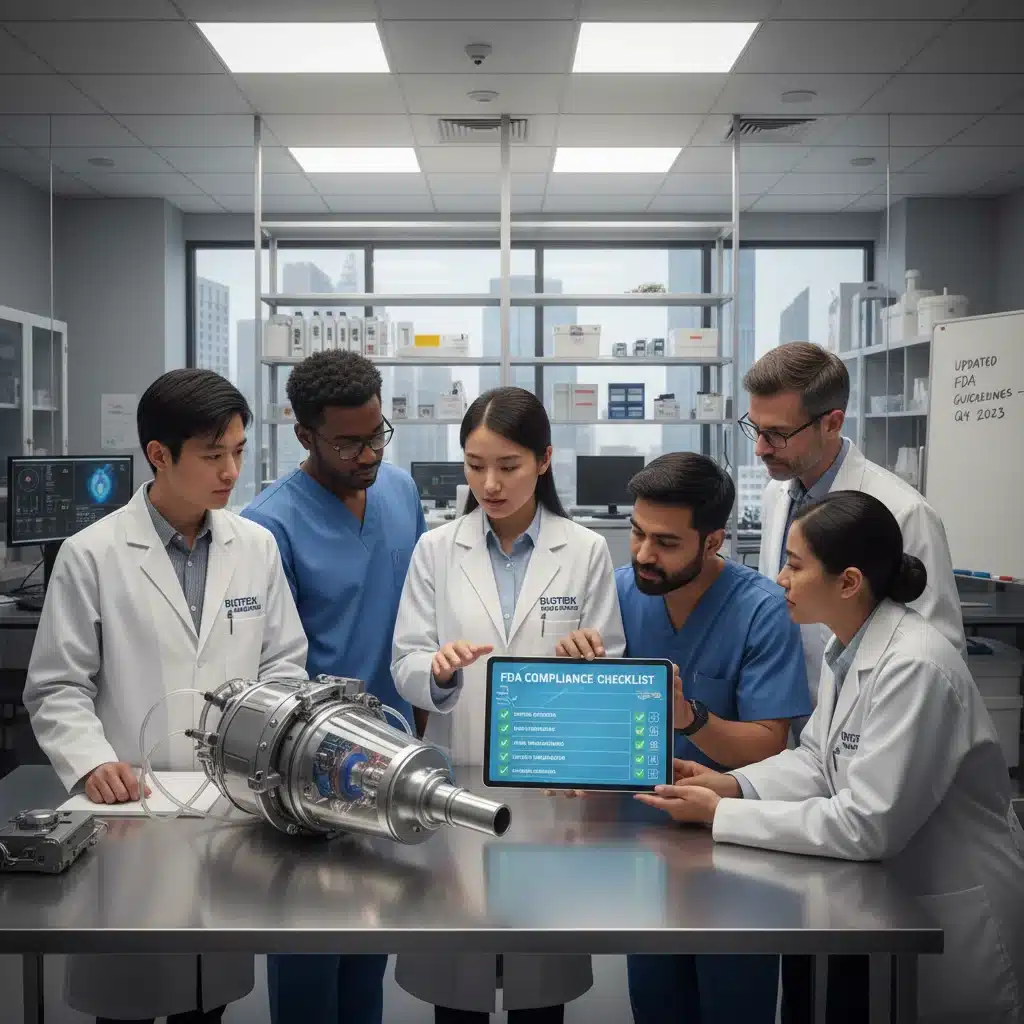
The 2026 FDA MedTech Guidelines, while primarily focused on education and training, will have broader implications for MedTech innovation and market access. A workforce that is well-versed in the latest regulatory requirements, emerging technologies, and best practices is inherently more capable of innovative problem-solving. When developers understand the regulatory guardrails from the outset, they can design devices that are not only groundbreaking but also inherently compliant, reducing the likelihood of costly redesigns or regulatory delays down the line. This proactive approach to compliance can significantly accelerate the path to market, giving companies a competitive edge.
Moreover, the emphasis on quality and demonstrable competence through enhanced educational requirements can elevate the overall standard of MedTech products. This can lead to greater trust from healthcare providers and patients, fostering wider adoption of new technologies. A robust training infrastructure also makes a company more attractive to top talent, as professionals seek environments that invest in their continuous growth and development. This can create a virtuous cycle where highly skilled individuals drive further innovation, reinforcing the company’s position as a leader in the MedTech space, all while adhering to the rigorous FDA MedTech Guidelines.
International Harmonization and Global Competitiveness
It is also important to consider the international implications. While the FDA MedTech Guidelines are specific to the U.S. market, regulatory bodies worldwide often look to the FDA as a benchmark. Enhanced educational requirements in the U.S. could influence similar trends in other major markets, leading to a greater push for global harmonization of training standards. Companies that proactively adapt to the FDA’s new guidelines will be better positioned to navigate complex international regulatory landscapes, facilitating smoother global market access for their products.
Conversely, companies that fail to adapt risk falling behind, not just in the U.S. but globally. The ability to demonstrate a highly trained and competent workforce will increasingly become a differentiator in an increasingly competitive global market. Therefore, viewing the 2026 guidelines as an opportunity to raise internal standards, rather than merely a compliance burden, is critical for long-term success and sustained global competitiveness. The strategic integration of these educational mandates into a company’s core operational framework will be a defining characteristic of leading MedTech innovators in the coming years, ensuring they remain at the forefront of both technology and regulatory excellence, as dictated by the evolving FDA MedTech Guidelines.
Conclusion: Navigating the Future of MedTech with Enhanced Education
The anticipated 2026 FDA MedTech Guidelines for educational frameworks mark a pivotal moment for the medical technology industry. These guidelines underscore the FDA’s unwavering commitment to patient safety and product quality, pushing companies to elevate their training and development strategies to unprecedented levels. From the complexities of AI/ML and the critical importance of cybersecurity to the tailored needs of personalized medicine, the demands on the MedTech workforce are expanding, requiring a more sophisticated and continuously updated skill set.
For MedTech companies, the path forward is clear: proactive engagement, strategic investment in robust training programs, and a cultural shift towards continuous professional development are not just recommendations but necessities. By conducting thorough training needs analyses, developing comprehensive and adaptive curricula, and leveraging advanced technological solutions, organizations can not only meet but exceed the forthcoming regulatory expectations. The benefits extend far beyond mere compliance, fostering a more innovative, efficient, and ultimately, more impactful MedTech ecosystem.
Embracing the spirit of these new FDA MedTech Guidelines means viewing education as an integral component of product quality and a driver of innovation. Companies that strategically prepare for these changes will be better positioned to navigate the evolving regulatory landscape, accelerate market access, attract top talent, and maintain a competitive edge in a rapidly transforming global industry. The future of MedTech development is intrinsically linked to the continuous learning and adaptability of its professionals, making 2026 a defining year for educational excellence in the pursuit of better healthcare outcomes.