In an era defined by rapid technological advancement, the healthcare industry has embraced digital transformation with open arms. From electronic health records (EHRs) and telemedicine to wearable devices and AI-driven diagnostics, digital health solutions are revolutionizing patient care, improving efficiency, and expanding access to vital services. However, this digital leap comes with a significant and growing challenge: safeguarding the vast amounts of sensitive patient data generated and transmitted daily. The landscape of digital health cybersecurity in the US is more critical than ever, especially as cyberattacks targeting healthcare organizations continue to escalate at an alarming rate.
The sheer volume and sensitivity of patient data make healthcare a prime target for cybercriminals. Personal health information (PHI), financial details, and even genetic data are highly valuable on the dark web, leading to a constant barrage of phishing attempts, ransomware attacks, and data breaches. Recent reports indicate a disturbing trend: a significant increase in healthcare data breaches, underscoring the urgent need for robust cybersecurity measures.
The Escalating Threat Landscape in Digital Health
The US healthcare sector has witnessed an unprecedented surge in cyberattacks. A 20% increase in breaches this year alone highlights a critical vulnerability that demands immediate and comprehensive attention. These aren’t just minor incidents; they often involve millions of patient records, leading to severe financial penalties, reputational damage, and, most importantly, compromised patient trust and potential harm. The motivations behind these attacks are varied, ranging from financial gain through data sales and ransomware payments to state-sponsored espionage and hacktivism.
Common Cyberattack Vectors in Healthcare:
- Ransomware: This remains one of the most disruptive forms of attack, where malicious software encrypts an organization’s data, demanding a ransom for its release. Healthcare providers, often operating on thin margins and with critical patient care on the line, are particularly susceptible to paying these ransoms, further fueling the attackers.
- Phishing and Social Engineering: Human error is frequently the weakest link in any security chain. Phishing emails, designed to trick employees into revealing credentials or downloading malware, continue to be a primary entry point for attackers into healthcare systems.
- Insider Threats: While often unintentional, insider threats, whether from negligent employees or malicious actors within an organization, can lead to significant data breaches. Access to sensitive patient data by authorized personnel, if not properly managed and monitored, poses a considerable risk.
- Supply Chain Attacks: Healthcare organizations rely on a complex web of third-party vendors for everything from software and medical devices to billing services. A vulnerability in any part of this supply chain can expose the entire system to attack.
- IoT and Medical Device Vulnerabilities: The proliferation of Internet of Things (IoT) devices and connected medical equipment introduces new attack surfaces. Many of these devices were not designed with robust security features, making them easy targets for exploitation.
Understanding the Regulatory Framework: HIPAA and Beyond
In the US, the Health Insurance Portability and Accountability Act (HIPAA) is the cornerstone of patient data protection. HIPAA mandates strict rules for the privacy and security of PHI, requiring healthcare providers, health plans, and healthcare clearinghouses (known as covered entities) and their business associates to implement administrative, physical, and technical safeguards. Non-compliance can lead to hefty fines and legal repercussions, emphasizing the critical importance of adhering to these regulations for effective digital health cybersecurity.
Key Aspects of HIPAA for Cybersecurity:
- HIPAA Privacy Rule: Establishes national standards for the protection of individually identifiable health information.
- HIPAA Security Rule: Specifies administrative, physical, and technical safeguards that covered entities and their business associates must implement to protect electronic PHI (ePHI). This includes access controls, audit controls, integrity controls, and transmission security.
- HIPAA Breach Notification Rule: Requires covered entities and business associates to provide notification following a breach of unsecured PHI.
Beyond HIPAA, other regulations and frameworks also influence digital health cybersecurity. State-specific data breach notification laws, the HITECH Act (which strengthened HIPAA’s enforcement provisions), and emerging frameworks like NIST Cybersecurity Framework provide additional guidance and requirements for securing patient data. Navigating this complex regulatory landscape requires a dedicated and continuous effort from healthcare organizations.
Building a Resilient Digital Health Cybersecurity Strategy
Given the persistent and evolving nature of cyber threats, a proactive and multi-layered approach to digital health cybersecurity is indispensable. Organizations must move beyond basic compliance and cultivate a culture of security that permeates every level of their operations. Here are key components of a robust strategy:
1. Comprehensive Risk Assessments and Management
Regular and thorough risk assessments are the foundation of any effective cybersecurity program. These assessments identify potential vulnerabilities, evaluate the likelihood and impact of various threats, and help prioritize security investments. Risk management isn’t a one-time event; it’s an ongoing process of identifying, analyzing, and mitigating risks as the threat landscape and technological environment evolve.
- Vulnerability Scanning and Penetration Testing: Regularly testing systems for weaknesses that attackers could exploit.
- Threat Intelligence: Staying informed about the latest cyber threats, attack techniques, and vulnerabilities relevant to the healthcare sector.
- Third-Party Risk Management: Assessing and managing the cybersecurity risks posed by vendors and business associates.
2. Strong Access Controls and Authentication
Limiting access to sensitive data on a ‘need-to-know’ basis is fundamental. Implementing strong authentication mechanisms is crucial to ensure that only authorized individuals can access patient information. This is a core tenet of effective digital health cybersecurity.
- Multi-Factor Authentication (MFA): Requiring users to provide two or more verification factors to gain access, significantly reducing the risk of unauthorized access due to compromised credentials.
- Role-Based Access Control (RBAC): Granting permissions based on an individual’s role within the organization, ensuring employees only have access to the data necessary for their job functions.
- Regular Access Reviews: Periodically reviewing and updating access privileges to ensure they remain appropriate and remove access for former employees or those with changed roles.
3. Data Encryption and Integrity
Encrypting data, both at rest (stored on servers, devices) and in transit (during transmission), is a vital safeguard against unauthorized access. Encryption renders data unreadable to anyone without the correct decryption key, making it useless to attackers even if they manage to steal it. Maintaining data integrity ensures that information has not been altered or destroyed in an unauthorized manner.
- End-to-End Encryption: Implementing encryption for all communication channels and data storage.
- Data Loss Prevention (DLP) Solutions: Tools that prevent sensitive information from leaving the organization’s control.
- Regular Backups and Recovery Plans: Essential for restoring data in the event of a ransomware attack or data corruption.
4. Employee Training and Awareness
As mentioned, human error is a significant vulnerability. Continuous cybersecurity training and awareness programs are essential to educate staff about phishing, social engineering tactics, secure password practices, and the importance of reporting suspicious activities. A well-informed workforce is an organization’s first line of defense in digital health cybersecurity.
- Simulated Phishing Attacks: Regularly testing employees’ ability to identify and report phishing attempts.
- Security Awareness Campaigns: Ongoing education through newsletters, posters, and workshops.
- Clear Policies and Procedures: Ensuring all employees understand and adhere to the organization’s cybersecurity policies.
5. Incident Response and Recovery Planning
Despite best efforts, breaches can and do occur. Having a well-defined and regularly tested incident response plan is crucial for minimizing the damage and ensuring a swift recovery. This plan should outline steps for identification, containment, eradication, recovery, and post-incident analysis.
- Dedicated Incident Response Team: A team responsible for managing and responding to security incidents.
- Communication Plan: A strategy for communicating with patients, regulatory bodies, and the public in the event of a breach.
- Business Continuity and Disaster Recovery: Plans to ensure critical operations can continue during and after a cyberattack.
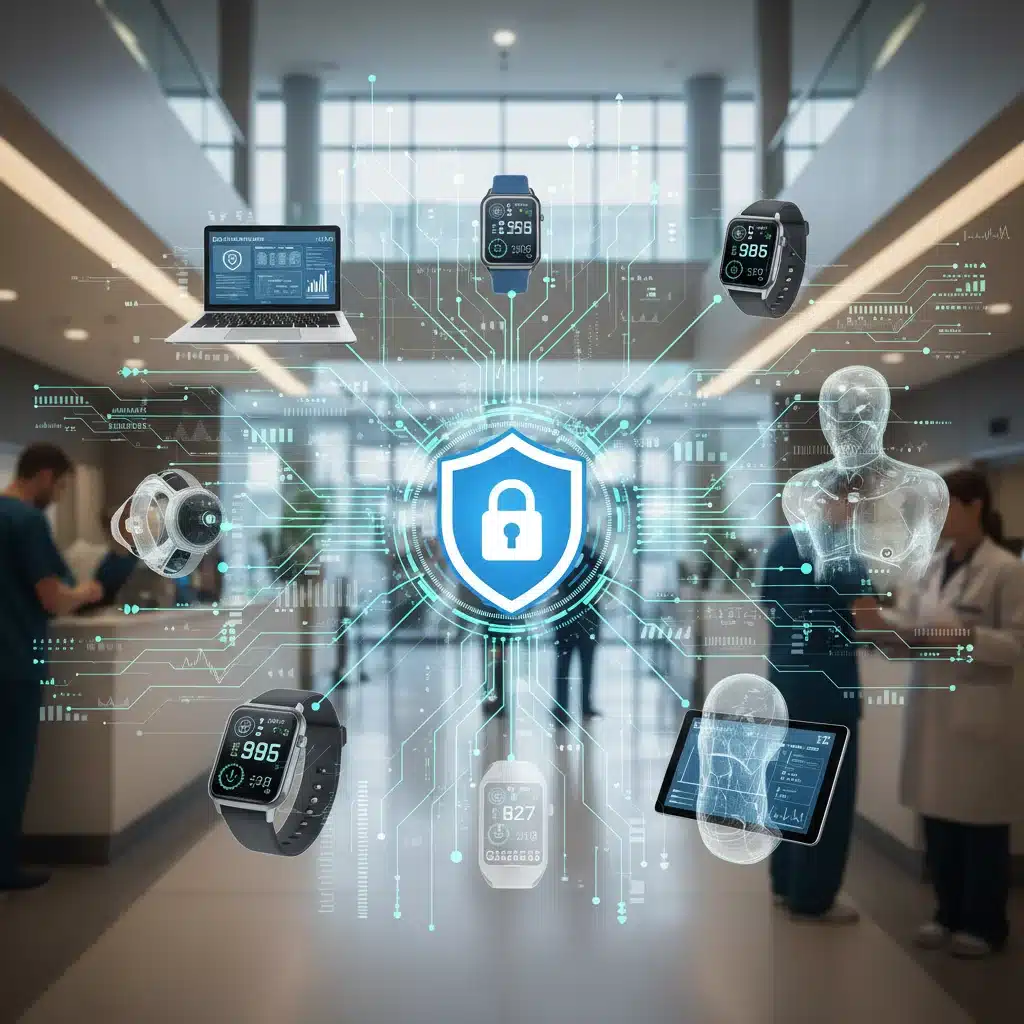
6. Securing Medical Devices and IoT
The increasing integration of medical devices and IoT into healthcare environments presents unique cybersecurity challenges. These devices often have limited computing power, non-upgradable firmware, and default passwords, making them easy targets. Securing them requires specialized approaches within the overall digital health cybersecurity framework.
- Device Inventory and Assessment: Maintaining a comprehensive inventory of all connected devices and assessing their vulnerabilities.
- Network Segmentation: Isolating medical devices on separate network segments to limit their exposure.
- Vendor Collaboration: Working with device manufacturers to ensure security updates and patches are provided and installed.
The Role of Emerging Technologies in Digital Health Cybersecurity
While technology introduces new risks, it also offers powerful solutions for enhancing cybersecurity. Emerging technologies are playing an increasingly vital role in bolstering defenses against sophisticated cyber threats in the digital health landscape.
Artificial Intelligence (AI) and Machine Learning (ML)
AI and ML can revolutionize digital health cybersecurity by automating threat detection, identifying anomalies in network traffic, and predicting potential attack vectors. These technologies can analyze vast amounts of data in real-time, pinpointing suspicious activities that human analysts might miss. For instance, AI can learn normal network behavior and flag deviations, such as unusual data access patterns or unauthorized device connections, significantly improving the speed and accuracy of threat identification.
- Behavioral Analytics: AI-powered systems can monitor user and entity behavior to detect deviations from established baselines, indicating potential insider threats or compromised accounts.
- Automated Threat Response: ML algorithms can be trained to automatically respond to certain types of threats, quarantining infected systems or blocking malicious IP addresses.
- Vulnerability Prediction: AI can analyze historical data on vulnerabilities and exploits to predict future attack trends, allowing organizations to proactively strengthen their defenses.
Blockchain Technology
Blockchain, with its decentralized and immutable ledger, holds significant promise for enhancing the security and integrity of patient data. While not a standalone cybersecurity solution, it can provide a secure and transparent way to manage access to EHRs, track data provenance, and ensure data integrity. Each transaction or access event is recorded on a distributed ledger, making it extremely difficult for unauthorized parties to alter records without detection.
- Secure Data Sharing: Blockchain can facilitate secure and auditable sharing of patient data between authorized healthcare providers, researchers, and patients themselves.
- Identity Management: Decentralized identity solutions built on blockchain can empower patients with greater control over their health information, determining who can access it and for how long.
- Supply Chain Security: Tracking medical supplies and pharmaceuticals on a blockchain can ensure their authenticity and prevent counterfeiting, which has indirect cybersecurity benefits by reducing the risk of compromised devices entering the supply chain.
Zero Trust Architecture
The traditional ‘perimeter security’ model, where everything inside the network is implicitly trusted, is no longer sufficient in today’s complex digital health environments. Zero Trust Architecture operates on the principle of ‘never trust, always verify.’ This means that every user, device, and application attempting to access resources, whether inside or outside the network, must be authenticated and authorized. This approach significantly enhances digital health cybersecurity by minimizing the impact of breaches, as even if an attacker gains entry, their lateral movement within the network is severely restricted.
- Micro-segmentation: Dividing the network into smaller, isolated segments, with strict controls over traffic flow between them.
- Continuous Verification: Continuously authenticating and authorizing users and devices, rather than granting one-time access.
- Least Privilege Access: Granting users and systems only the minimum level of access required to perform their functions.

Challenges and Future Outlook for Digital Health Cybersecurity
Despite advancements, the path to fully secure digital health cybersecurity is fraught with challenges. The rapid pace of technological innovation in healthcare often outstrips the development and implementation of corresponding security measures. The shortage of skilled cybersecurity professionals in the healthcare sector is another significant hurdle, leaving many organizations understaffed and vulnerable.
Key Challenges:
- Talent Gap: A severe shortage of cybersecurity experts with specialized knowledge in healthcare IT.
- Legacy Systems: Many healthcare organizations still rely on outdated IT infrastructure that is difficult to secure and update.
- Interoperability vs. Security: Balancing the need for seamless data exchange between different systems with robust security protocols.
- Funding and Resources: Smaller healthcare providers often lack the financial resources to invest in advanced cybersecurity solutions.
Looking ahead, the future of digital health cybersecurity will likely involve a greater emphasis on collaborative defense strategies, information sharing between organizations, and government-led initiatives to bolster the sector’s resilience. The adoption of security-by-design principles, where security is integrated into the development of digital health solutions from the outset, will become increasingly critical. Furthermore, as personalized medicine and genomics become more prevalent, the protection of highly sensitive genetic data will introduce new layers of complexity and urgency.
Patient education will also play a crucial role. Empowering patients with knowledge about protecting their own health information, recognizing phishing attempts, and understanding the privacy settings of digital health apps can significantly contribute to overall security. The collective effort of healthcare providers, technology developers, regulators, and patients themselves will be essential in building a secure and trustworthy digital health ecosystem.
Conclusion: A Continuous Commitment to Patient Data Protection
The digital transformation of healthcare offers immense benefits, but it irrevocably binds the future of patient care to the robustness of its cybersecurity defenses. The increasing frequency and sophistication of cyberattacks underscore the fact that digital health cybersecurity is not merely an IT issue; it is a fundamental component of patient safety and public health. For organizations in the US healthcare sector, a continuous, adaptive, and comprehensive commitment to securing patient data is not just a regulatory requirement but an ethical imperative.
By implementing strong regulatory compliance, adopting advanced security technologies, fostering a security-aware culture, and continuously adapting to emerging threats, the healthcare industry can mitigate risks and ensure that the promise of digital health is realized without compromising the privacy and trust of its patients. The battle against cyber threats is ongoing, but with vigilance, collaboration, and strategic investment, the digital health landscape can be made safer and more secure for everyone.