From Classroom to Clinic: Bridging the Gap with Advanced MedTech Education Programs in 2026
Anúncios
Anúncios
From Classroom to Clinic: Bridging the Gap with Advanced MedTech Education Programs in 2026
The landscape of healthcare is undergoing a rapid and profound transformation, driven largely by the relentless pace of technological innovation. In this era, the demand for healthcare professionals who are not only clinically adept but also technologically fluent has never been more critical. This is where advanced MedTech education programs in 2026 are playing a pivotal role, fundamentally reshaping how future doctors, nurses, and allied health professionals are trained. The traditional model of medical education, while foundational, often struggled to keep pace with the swift evolution of medical technology, creating a noticeable gap between academic learning and real-world clinical application. However, the current generation of MedTech education programs is explicitly designed to bridge this divide, ensuring that graduates are not just ready for the clinic but are also poised to lead the charge in medical innovation.
The integration of cutting-edge medical technologies into daily clinical practice is no longer a futuristic concept; it is our present reality. From advanced imaging systems and robotic surgery to AI-powered diagnostics and personalized medicine, technology has permeated every facet of patient care. Consequently, the educational frameworks that prepare individuals for these roles must evolve commensurately. MedTech education programs are at the forefront of this evolution, incorporating immersive learning experiences, interdisciplinary collaboration, and hands-on training with the very tools that define modern healthcare. By focusing on practical application alongside theoretical knowledge, these programs ensure that students develop a comprehensive understanding of how technology enhances patient outcomes, streamlines processes, and ultimately revolutionizes healthcare delivery.
The year 2026 marks a significant milestone in this educational journey. We are witnessing the maturation of curricula that have been meticulously crafted over the past few years to address the specific needs of a technologically advanced healthcare system. These programs are not merely adding technology modules to existing courses; they are fundamentally rethinking the entire pedagogical approach. The goal is to cultivate a new generation of healthcare providers who are not only comfortable with technology but are also critical thinkers, problem-solvers, and innovators capable of adapting to future technological advancements. This article will delve into the intricacies of these advanced MedTech education programs, exploring their core components, the challenges they address, and their immense potential to shape the future of healthcare.
Anúncios
The Evolution of Medical Education: A Shift Towards Technology Integration
For centuries, medical education has relied on a model centered around lectures, textbooks, and apprenticeships. While effective for transmitting foundational knowledge and clinical skills, this model has faced increasing pressure to adapt to the rapid technological advancements in medicine. The sheer volume and complexity of new medical devices, diagnostic tools, and therapeutic approaches necessitate a more dynamic and integrated educational framework. The shift towards technology integration in medical education is not just about introducing new gadgets; it’s about fundamentally changing how students learn, practice, and think about healthcare.
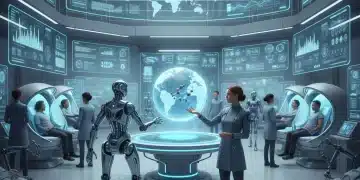
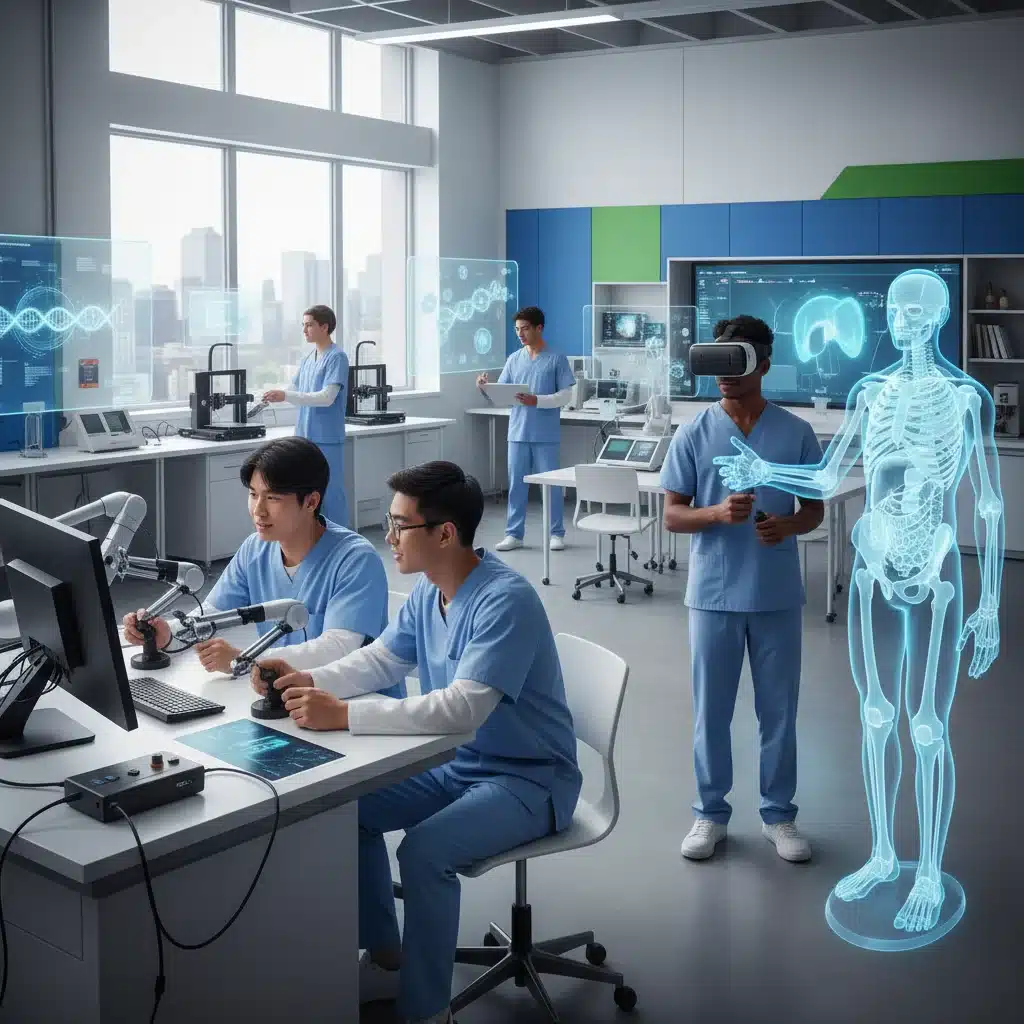
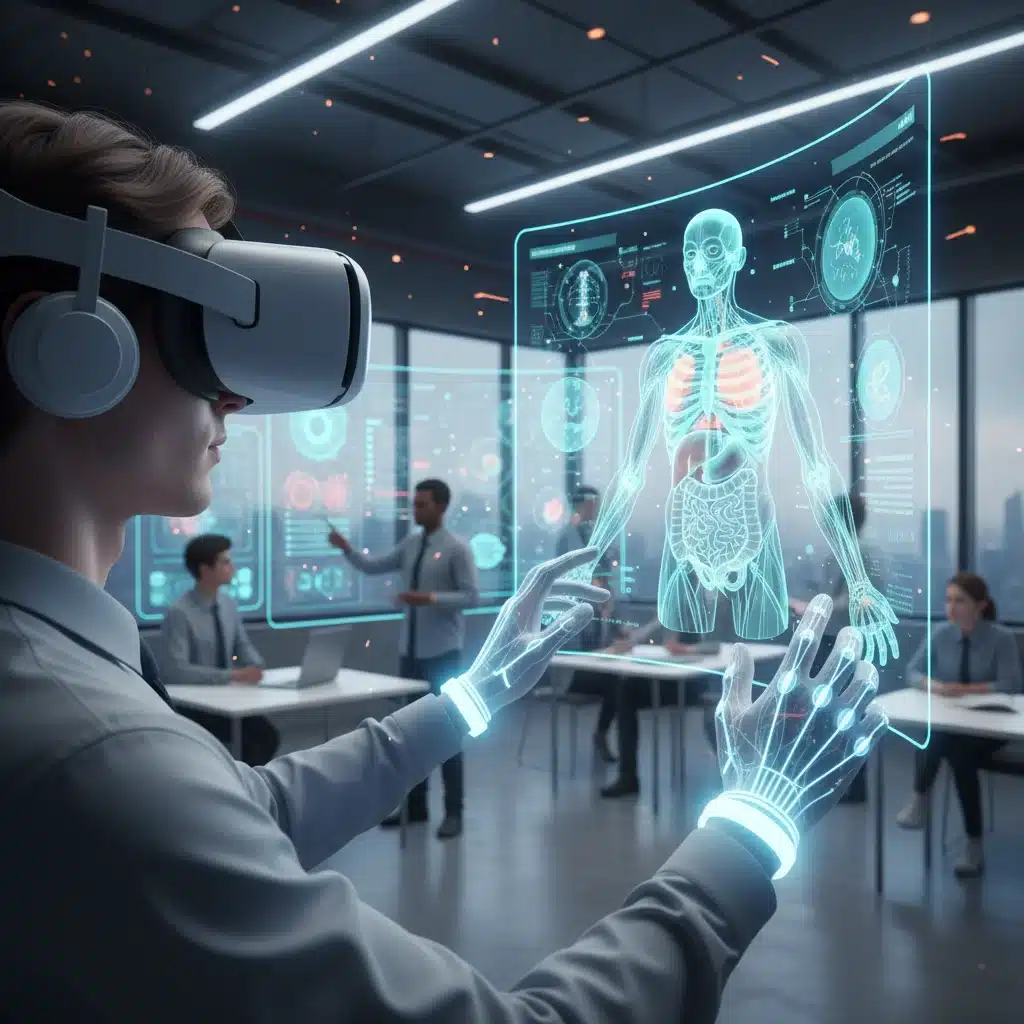
The early stages of this evolution saw the introduction of computer-based learning and digital medical records. However, these were often supplementary rather than central to the curriculum. Today, MedTech education programs are embedding technology at every level. This includes sophisticated simulation labs that replicate real-world clinical scenarios, virtual reality (VR) and augmented reality (AR) platforms for anatomical study and surgical training, and the use of artificial intelligence (AI) for diagnostic support and data analysis. These tools are no longer just aids; they are integral components of the learning process, providing students with unparalleled opportunities for hands-on experience in a safe and controlled environment.
Moreover, the focus has shifted from simply understanding how to operate a piece of equipment to comprehending the underlying principles, ethical implications, and potential for innovation. Future healthcare professionals need to be able to evaluate new technologies critically, understand their limitations, and integrate them effectively into patient care pathways. This requires a curriculum that emphasizes not just technical proficiency but also critical thinking, ethical reasoning, and a strong foundation in data science and biomedical engineering principles. The transformation of medical education into a technologically integrated discipline is essential for preparing a workforce capable of navigating the complexities of modern healthcare.
Key Components of Advanced MedTech Education Programs in 2026
The advanced MedTech education programs of 2026 are characterized by several innovative components designed to create well-rounded, technologically proficient healthcare professionals. These components move beyond traditional didactic methods, embracing experiential learning, interdisciplinary collaboration, and continuous skill development.
Immersive Simulation and Experiential Learning
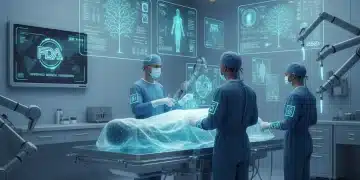
One of the hallmarks of these programs is the extensive use of immersive simulation. High-fidelity mannequins, virtual reality surgical simulators, and augmented reality diagnostic trainers allow students to practice complex procedures and decision-making in a risk-free environment. These simulations mimic real clinical scenarios, from managing acute emergencies to performing intricate surgical interventions, providing immediate feedback and opportunities for repetition. This experiential learning approach is crucial for developing muscle memory, refining critical thinking skills, and building confidence before engaging with actual patients.
Interdisciplinary Collaboration and Team-Based Learning
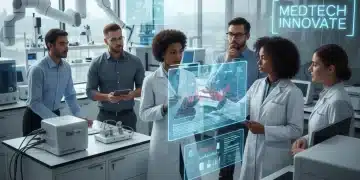
Modern healthcare is inherently collaborative, involving diverse teams of professionals. Advanced MedTech education programs emphasize interdisciplinary learning, bringing together students from different healthcare disciplines (e.g., medicine, nursing, biomedical engineering, public health) to work on complex cases. This fosters a deeper understanding of each other’s roles, improves communication, and prepares students for the realities of team-based care. Projects often involve developing solutions to real-world healthcare challenges, promoting innovative thinking and collaborative problem-solving using technology.
Data Science and AI in Healthcare
The explosion of health data has made data literacy a non-negotiable skill for healthcare professionals. These programs integrate modules on data science, biostatistics, and artificial intelligence, teaching students how to interpret complex datasets, utilize AI-powered diagnostic tools, and understand machine learning applications in predictive analytics and personalized medicine. This ensures that graduates are not just consumers of technology but informed users who can leverage data to improve patient outcomes and optimize healthcare delivery.
Ethical Considerations and Regulatory Frameworks
With the rapid advancement of MedTech comes a host of ethical dilemmas and regulatory challenges. Advanced MedTech education programs dedicate significant attention to bioethics, data privacy, and the regulatory landscape governing medical devices and AI in healthcare. Students learn to critically evaluate the societal impact of new technologies, navigate complex ethical scenarios, and understand the importance of compliance and patient safety in innovation.
Partnerships with Industry and Clinical Settings
Strong partnerships with medical device manufacturers, pharmaceutical companies, and leading hospitals are integral to these programs. These collaborations provide students with access to the latest technologies, real-world case studies, internships, and mentorship opportunities. Such direct exposure to industry and clinical environments ensures that the curriculum remains relevant and that graduates are well-prepared for the demands of the modern healthcare workforce.
Bridging the Gap: From Theory to Practice
The most critical objective of advanced MedTech education programs is to effectively bridge the gap between theoretical knowledge acquired in the classroom and its practical application in clinical settings. This transition has historically been a significant challenge for new graduates, often leading to a steep learning curve and initial discomfort with complex medical technologies. However, the structured approach of modern MedTech education aims to smooth this transition, making graduates ‘clinic-ready’ from day one.
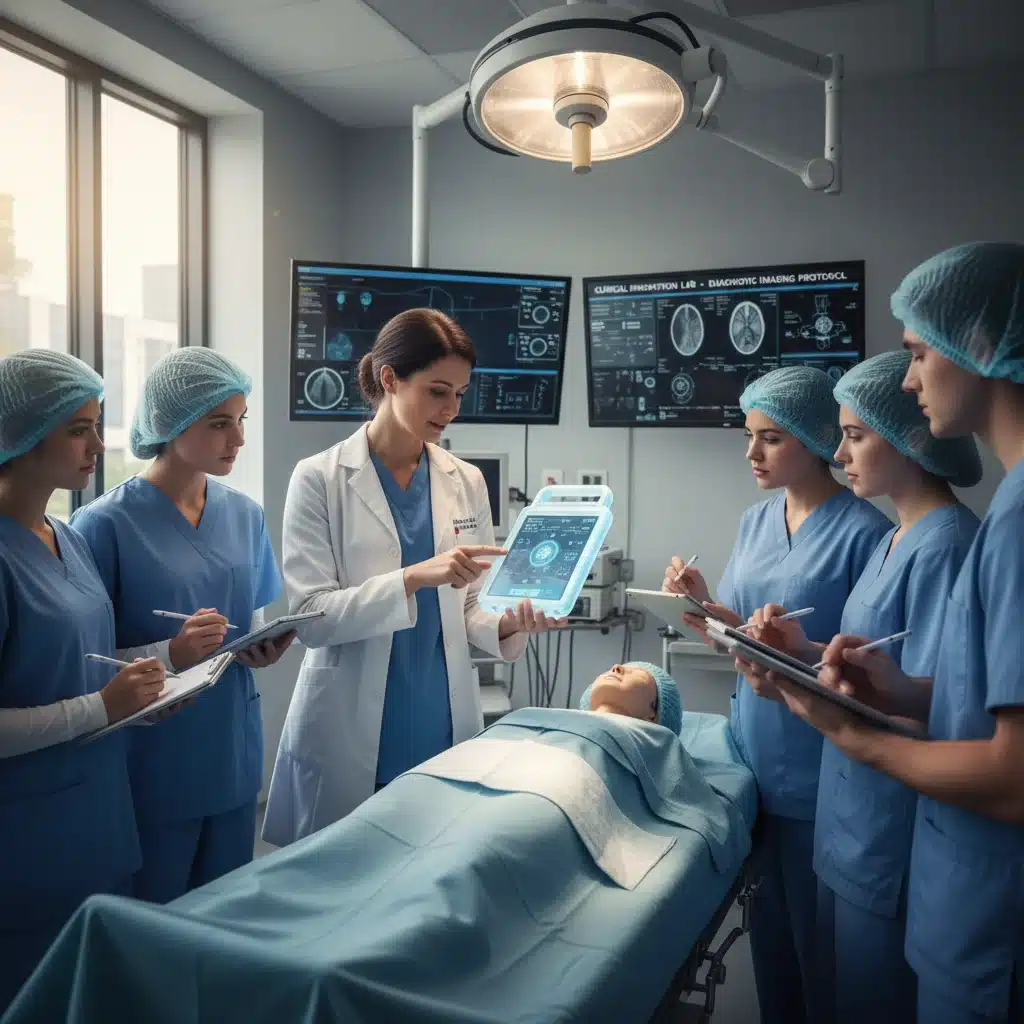
One of the primary mechanisms for achieving this is the extensive use of simulation, as previously mentioned. By repeatedly engaging in simulated clinical scenarios, students develop a level of comfort and proficiency with medical devices and procedures that was previously only attainable through direct patient contact. This allows them to make mistakes, learn from them, and refine their skills without any risk to patients. The fidelity of these simulations, often incorporating haptic feedback and realistic patient responses, further enhances the learning experience, making it almost indistinguishable from real-world practice.
Furthermore, these programs are increasingly integrating early clinical exposure and structured rotations in technology-intensive departments. Students are placed in environments where advanced medical technologies are routinely used, such as interventional radiology suites, robotic surgery theaters, and advanced diagnostics labs. Under the supervision of experienced clinicians and technologists, they observe, assist, and gradually take on more responsibility, gaining invaluable practical experience. This direct exposure not only familiarizes them with the technology but also with the workflow, communication protocols, and decision-making processes inherent in technologically advanced clinical settings.
Another crucial aspect is the emphasis on problem-based learning and project-based learning. Students are presented with real clinical problems and challenged to propose technology-driven solutions. This involves researching existing technologies, understanding their limitations, and even conceptualizing new ones. Such an approach cultivates critical thinking, innovation, and an entrepreneurial mindset, preparing graduates not just to use technology but also to contribute to its development and improvement. This proactive engagement ensures that they are not just passive recipients of technology but active participants in its evolution within healthcare.
The feedback loops incorporated into these programs are also vital. Students receive continuous assessment and constructive feedback on their technical skills, decision-making abilities, and ethical reasoning in technology-mediated scenarios. This iterative process allows for continuous improvement and ensures that graduates meet the high standards required for competent and safe practice in a technologically advanced healthcare environment. The goal is to produce professionals who are not only skilled but also reflective and adaptable, capable of continuous learning and improvement throughout their careers.
Challenges and Opportunities in MedTech Education
While the advancements in MedTech education programs are transformative, they are not without their challenges. However, these challenges often present significant opportunities for further innovation and refinement.
Cost and Accessibility
One of the most significant challenges is the high cost associated with acquiring and maintaining advanced medical technologies for educational purposes. High-fidelity simulators, VR/AR equipment, and sophisticated diagnostic tools are expensive, which can limit access for some institutions and students. Opportunities lie in developing more affordable open-source solutions, leveraging cloud-based platforms for virtual simulations, and fostering stronger public-private partnerships to subsidize equipment and training.
Rapid Technological Obsolescence
The rapid pace of technological change means that educational equipment can become outdated quickly. This necessitates a flexible curriculum that can adapt to new technologies and a robust infrastructure for continuous upgrades. The opportunity here is to focus on teaching foundational principles of technology and adaptability, rather than just specific device operation, ensuring that graduates are equipped to learn and master new tools throughout their careers.
Faculty Training and Development
Educators themselves need to be proficient in the latest MedTech to effectively teach students. This requires continuous professional development for faculty, ensuring they are up-to-date with new technologies and pedagogical approaches. Programs that invest in training their faculty in emerging technologies and innovative teaching methods will be better positioned to deliver high-quality MedTech education programs.
Standardization and Accreditation
As these programs evolve, there is a growing need for standardization and accreditation to ensure quality and consistency across institutions. Developing clear benchmarks for curriculum content, simulation hours, and clinical competencies will be crucial. This presents an opportunity to establish global best practices for MedTech education, facilitating the recognition of qualifications and promoting international collaboration.
Ethical and Societal Implications
The ethical implications of advanced MedTech, such as AI bias, data privacy, and equitable access, are complex and require careful consideration within the curriculum. Opportunities exist to integrate robust ethics education, promoting critical discourse and responsible innovation among future healthcare professionals. This ensures that technological advancement is pursued in a manner that upholds human dignity and societal well-being.
The Future Impact of Advanced MedTech Education Programs
The long-term impact of advanced MedTech education programs on healthcare in 2026 and beyond is expected to be profound and far-reaching. These programs are not just training individuals; they are shaping the very fabric of the healthcare system.
Enhanced Patient Safety and Outcomes
By preparing healthcare professionals who are highly skilled in using advanced medical technologies, these programs will significantly contribute to enhanced patient safety. Fewer errors, more precise diagnoses, and optimized treatment plans will lead to better patient outcomes and a higher quality of care. The confidence and competence gained through extensive simulation and hands-on training translate directly into safer clinical practice.
Accelerated Innovation and Research
Graduates from these programs will be at the forefront of medical innovation. Their deep understanding of both clinical needs and technological capabilities will enable them to identify areas for improvement, contribute to the development of new devices and therapies, and drive research that pushes the boundaries of medicine. The interdisciplinary nature of their training fosters a mindset of continuous inquiry and innovation.
Improved Efficiency and Cost-Effectiveness
Technologically fluent healthcare professionals can leverage MedTech to improve efficiency in clinical workflows, reduce administrative burdens, and optimize resource allocation. This can lead to more cost-effective healthcare delivery without compromising quality. The ability to effectively integrate and manage complex technological systems will be a key driver of operational excellence in healthcare institutions.
Global Health Equity
As MedTech education becomes more accessible and standardized, it has the potential to contribute to global health equity. By equipping healthcare professionals worldwide with the skills to utilize advanced technologies, it can help address disparities in access to quality care, particularly in underserved regions. The development of scalable and affordable educational solutions will be crucial in realizing this potential.
A More Resilient Healthcare Workforce
The challenges highlighted by recent global health crises underscore the need for a resilient and adaptable healthcare workforce. Professionals trained in advanced MedTech education programs are inherently more adaptable, equipped with the skills to rapidly learn and integrate new technologies in response to evolving healthcare demands. Their proficiency in digital tools and remote care technologies makes them vital assets in building a more robust and responsive healthcare system.
Conclusion
The year 2026 marks a pivotal moment in medical education, with advanced MedTech education programs leading the charge in transforming how healthcare professionals are trained. By meticulously integrating cutting-edge technologies, fostering interdisciplinary collaboration, and emphasizing experiential learning, these programs are successfully bridging the historically challenging gap between classroom theory and clinical practice. The result is a new generation of healthcare providers who are not only clinically competent but also technologically fluent, ethically grounded, and poised to drive innovation.
The impact of these programs extends far beyond individual competence. They are laying the groundwork for a future healthcare system characterized by enhanced patient safety, accelerated innovation, improved efficiency, and greater global health equity. While challenges such as cost, rapid technological obsolescence, and faculty development remain, the opportunities for growth and positive transformation are immense. As we move forward, continuous investment in these advanced educational models, coupled with ongoing collaboration between academia, industry, and clinical practice, will be paramount. Ultimately, the success of these MedTech education programs will be measured by their ability to empower healthcare professionals to navigate the complexities of modern medicine, embrace technological advancements, and deliver the highest quality of care to patients worldwide.