AI in US Digital Diagnostics: Transforming Patient Care by 2027

The landscape of healthcare is undergoing a profound transformation, driven by technological advancements that were once the stuff of science fiction. At the forefront of this revolution is Artificial Intelligence (AI), particularly its burgeoning role in digital diagnostics. In the United States, the integration of AI into diagnostic processes is not just an incremental improvement; it represents a paradigm shift, promising to redefine patient care, enhance diagnostic accuracy, and streamline healthcare operations. By 2027, the impact of AI in US digital diagnostics is expected to be pervasive, influencing everything from early disease detection to personalized treatment plans. This article delves into the core innovations, challenges, and future outlook of AI in this critical sector, focusing on how it will reshape patient care.
The journey of AI in healthcare has been marked by rapid progress. From its early applications in data analysis to its current sophisticated capabilities in image recognition and predictive modeling, AI has consistently demonstrated its potential to augment human expertise. In digital diagnostics, this potential is particularly potent. The sheer volume of data generated in healthcare today – from medical images and laboratory results to electronic health records – is overwhelming for human analysis alone. AI, with its capacity to process and interpret vast datasets at unprecedented speeds, offers a powerful solution. It can identify subtle patterns, detect anomalies, and provide insights that might otherwise be missed, thereby significantly improving the precision and timeliness of diagnoses. This enhancement in diagnostic capabilities is not merely about efficiency; it’s about saving lives, preventing disease progression, and ultimately, improving the quality of life for millions of Americans.
The Rise of AI in US Digital Diagnostics: A New Era of Precision Medicine
The term AI digital diagnostics encompasses a wide range of applications where artificial intelligence algorithms are used to analyze digital medical data to aid in disease detection, diagnosis, and prognosis. This includes, but is not limited to, the analysis of radiology images (X-rays, CT scans, MRIs), pathology slides, genomic data, and even real-time physiological monitoring. The primary goal is to empower healthcare providers with more accurate, faster, and more accessible diagnostic tools, leading to earlier interventions and more effective treatments. The United States, with its robust healthcare infrastructure and significant investment in research and development, is at the vanguard of this revolution.
Key Drivers for AI Adoption in US Digital Diagnostics
Several factors are accelerating the adoption of AI digital diagnostics across the US healthcare system. Firstly, the increasing complexity of medical data necessitates advanced analytical tools. Diseases are becoming more nuanced, and diagnostic criteria are evolving, making it challenging for human experts to keep pace. AI can help synthesize this complexity. Secondly, there is a growing demand for healthcare services, coupled with a shortage of specialized medical professionals. AI can help bridge this gap by automating routine tasks, augmenting the capabilities of existing staff, and even providing preliminary diagnostic assessments in remote or underserved areas. Thirdly, the push towards value-based care models emphasizes outcomes and efficiency, areas where AI can deliver substantial improvements. By reducing diagnostic errors and speeding up the diagnostic process, AI contributes directly to better patient outcomes and lower healthcare costs.
Moreover, the regulatory environment, while cautious, is becoming more receptive to AI-driven medical devices. The FDA has already approved numerous AI algorithms for diagnostic use, signaling a clear path for future innovations. This regulatory clarity, combined with significant private and public investment, is creating a fertile ground for the widespread deployment of AI digital diagnostics solutions. The ethical considerations surrounding AI in medicine, such as data privacy, algorithmic bias, and accountability, are also being actively addressed, paving the way for responsible and equitable integration.
Innovation 1: Enhanced Medical Imaging Analysis with AI
One of the most impactful applications of AI digital diagnostics is in the realm of medical imaging. Radiologists and pathologists often deal with an immense volume of images, each requiring meticulous examination. AI algorithms, particularly those based on deep learning, have demonstrated remarkable capabilities in analyzing these images, often surpassing human performance in specific tasks. For instance, AI can detect subtle abnormalities in mammograms indicative of early-stage breast cancer, identify polyps in colonoscopy images, or spot microscopic cancerous cells in pathology slides.
Early Disease Detection and Improved Accuracy
The ability of AI to process vast quantities of image data quickly and accurately translates directly into earlier disease detection. For conditions like cancer, early diagnosis is paramount to successful treatment. AI-powered systems can act as a ‘second pair of eyes,’ flagging suspicious areas for human review, thereby reducing the chances of missed diagnoses. This not only improves diagnostic accuracy but also reduces the cognitive load on healthcare professionals, allowing them to focus on more complex cases and patient interaction. Studies have shown that AI can reduce false positives and false negatives in various imaging modalities, leading to more precise and reliable diagnoses.
Furthermore, AI can quantify features within images that are invisible to the naked eye, providing quantitative biomarkers that can aid in diagnosis and prognosis. For example, AI can analyze tumor characteristics to predict response to therapy or assess the aggressiveness of a disease. This level of detail empowers clinicians to make more informed decisions, leading to more personalized and effective treatment strategies. The ongoing research and development in this area promise even more sophisticated capabilities, such as real-time image analysis during surgical procedures or the integration of multi-modal imaging data for a holistic view of patient health.

Innovation 2: Predictive Analytics and Personalized Treatment Pathways
Beyond image analysis, AI digital diagnostics is revolutionizing healthcare through predictive analytics. By leveraging large datasets of patient information – including genetic profiles, medical history, lifestyle factors, and treatment outcomes – AI algorithms can identify individuals at high risk for developing certain diseases. This proactive approach to healthcare allows for targeted preventive measures and early interventions, significantly improving long-term patient health outcomes.
Risk Stratification and Proactive Interventions
Predictive AI models can forecast the likelihood of a patient developing conditions like diabetes, cardiovascular disease, or even sepsis, long before symptoms manifest. This enables clinicians to intervene early with lifestyle modifications, preventive medications, or closer monitoring. For example, AI can analyze a patient’s electronic health record to identify subtle risk factors for heart disease that might not be immediately apparent to a human clinician. By flagging these risks, AI empowers healthcare providers to initiate preventive strategies, potentially averting serious health crises.
Moreover, AI is instrumental in personalizing treatment pathways. Traditional medicine often follows a ‘one-size-fits-all’ approach, but AI allows for tailoring treatments based on an individual’s unique biological and clinical profile. By analyzing a patient’s genomic data, for instance, AI can predict how they will respond to specific drugs, helping to select the most effective therapy and minimize adverse reactions. This precision medicine approach is particularly impactful in oncology, where AI can help oncologists choose the most appropriate chemotherapy regimen or targeted therapy based on the genetic makeup of a tumor. The ability of AI digital diagnostics to provide these personalized insights marks a significant leap forward in delivering truly patient-centric care.
Innovation 3: Integrated Diagnostic Platforms and Workflow Optimization
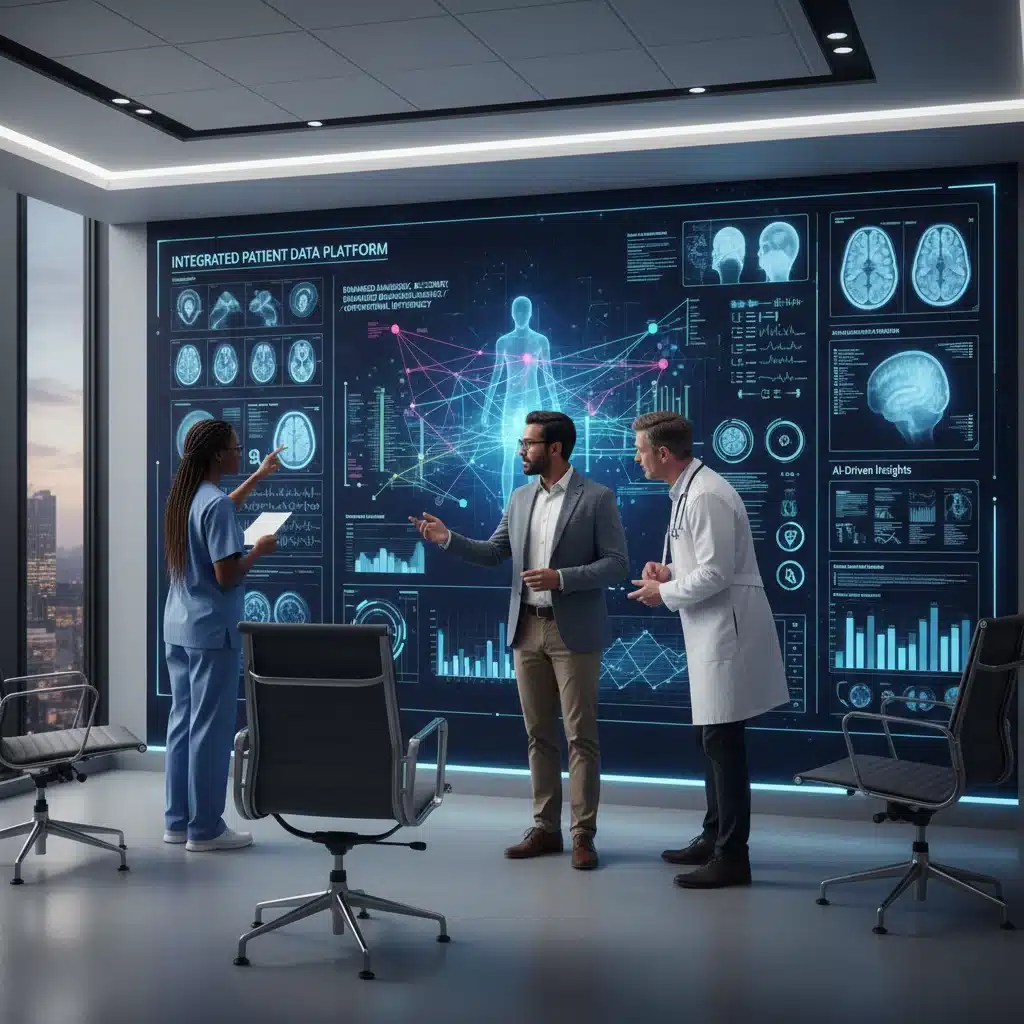
The third major innovation driven by AI digital diagnostics is the development of integrated diagnostic platforms that optimize healthcare workflows. Healthcare systems are often fragmented, with different departments using disparate systems and data formats. This fragmentation can lead to inefficiencies, communication breakdowns, and delays in diagnosis and treatment. AI is stepping in to unify these processes, creating seamless workflows that enhance efficiency and improve coordination across the care continuum.
Streamlining Workflows and Improving Efficiency
AI-powered platforms can integrate data from various sources – electronic health records (EHRs), laboratory information systems (LIS), radiology information systems (RIS), and even wearable devices – into a single, comprehensive view. This holistic patient profile allows healthcare providers to access all relevant information quickly, reducing the time spent searching for data and improving the speed of diagnosis. For example, an AI system can automatically flag critical lab results, integrate them with relevant imaging findings, and present a consolidated report to the clinician, highlighting key diagnostic indicators.
Furthermore, AI can automate many administrative and clerical tasks associated with diagnostics, such as scheduling appointments, managing referrals, and generating reports. This automation frees up healthcare professionals to focus on direct patient care, thereby increasing productivity and reducing operational costs. In a healthcare system grappling with rising costs and staff shortages, these efficiencies are invaluable. By 2027, integrated AI digital diagnostics platforms are expected to be standard in many US hospitals and clinics, transforming the way diagnostic information is managed and utilized.
Challenges and Considerations in AI Digital Diagnostics
While the promise of AI digital diagnostics is immense, its widespread adoption is not without challenges. These challenges span technical, ethical, and regulatory domains, requiring careful consideration and collaborative solutions.
Data Quality and Availability
AI algorithms are only as good as the data they are trained on. A significant challenge in healthcare is the availability of high-quality, diverse, and unbiased datasets. Medical data can be messy, incomplete, or inconsistently formatted, making it difficult to train robust AI models. Moreover, ensuring data privacy and security, especially with sensitive patient information, is paramount. Healthcare organizations must invest in robust data governance frameworks and cybersecurity measures to protect patient data from breaches and misuse.
Algorithmic Bias and Equity
Another critical concern is algorithmic bias. If AI models are trained on datasets that do not adequately represent diverse patient populations, they may perform poorly or even generate biased outcomes for certain demographic groups. This could exacerbate existing health disparities. Addressing algorithmic bias requires careful attention to data collection, model development, and validation processes, ensuring that AI solutions are equitable and beneficial for all patients.
Regulatory and Ethical Frameworks
The rapid pace of AI innovation often outstrips the development of regulatory frameworks. Regulators like the FDA are working to establish clear guidelines for the development, validation, and deployment of AI-powered medical devices, but this remains an evolving area. Ethical considerations, such as accountability for AI-generated diagnostic errors, the role of human oversight, and patient consent for data use, also need to be thoroughly addressed to build trust and ensure responsible AI implementation.
Integration into Clinical Workflows
Finally, integrating new AI technologies into existing clinical workflows can be complex. Healthcare professionals need training and support to effectively use AI tools. Resistance to change, lack of interoperability between systems, and the need for significant infrastructure upgrades can all hinder adoption. Successful integration requires a human-centered design approach, ensuring that AI tools are intuitive, user-friendly, and genuinely enhance clinical practice rather than adding complexity.
The Future of Patient Care: AI-Powered Diagnostics by 2027
Looking ahead to 2027, the impact of AI digital diagnostics on patient care in the US will be transformative. We can anticipate several key developments that will redefine how diseases are diagnosed and managed.
Ubiquitous AI Assistance for Clinicians
AI will become an indispensable assistant for clinicians across various specialties. Radiologists will rely on AI for initial image screening, pathologists for identifying anomalies, and general practitioners for risk stratification and personalized treatment recommendations. This ubiquitous AI assistance will not replace human experts but rather augment their capabilities, allowing them to make more accurate and timely decisions. The synergy between human intelligence and artificial intelligence will lead to a new era of diagnostic excellence.
Democratization of Advanced Diagnostics
AI digital diagnostics will play a crucial role in democratizing access to advanced diagnostic capabilities, particularly in rural and underserved areas. Telemedicine platforms integrated with AI can allow patients to receive high-quality diagnostic assessments remotely, reducing geographical barriers to care. Point-of-care AI devices will enable rapid diagnostics in non-traditional settings, bringing advanced medical insights closer to patients. This decentralization of diagnostics will lead to more equitable healthcare access and improved outcomes for a broader population.
Proactive and Preventive Healthcare Models
The shift from reactive to proactive healthcare will be significantly accelerated by AI. With enhanced predictive analytics, healthcare systems will be better equipped to identify individuals at risk before they become acutely ill. This will enable a greater focus on preventive medicine, lifestyle interventions, and early disease management, leading to healthier populations and reduced healthcare burdens. AI will empower individuals to take a more active role in managing their health, supported by personalized insights and recommendations.
Continuous Learning and Evolution of AI Systems
By 2027, AI diagnostic systems will be more sophisticated, capable of continuous learning and adaptation. As more data becomes available and algorithms are refined, these systems will become even more accurate and reliable. The integration of real-world evidence and feedback loops will ensure that AI models evolve and improve over time, staying abreast of new medical knowledge and emerging disease patterns. This dynamic evolution will solidify AI’s role as a cornerstone of modern medical diagnostics.
Conclusion: Embracing the Future of AI in Digital Diagnostics
The journey of AI digital diagnostics in the US healthcare system is on an accelerating trajectory. By 2027, the innovations in enhanced medical imaging analysis, predictive analytics, and integrated diagnostic platforms will have fundamentally reshaped patient care. While challenges related to data quality, algorithmic bias, and regulatory frameworks persist, ongoing efforts to address these issues are paving the way for a future where AI is a trusted and indispensable partner in diagnosis and treatment.
The ultimate beneficiaries of this revolution will be patients, who will experience more accurate, timely, and personalized care. Healthcare providers will be empowered with advanced tools, allowing them to focus on the human aspects of medicine while AI handles complex data analysis. The promise of AI in US digital diagnostics is not merely about technological advancement; it’s about fostering a healthier, more efficient, and more equitable healthcare system for all. Embracing this future requires continued collaboration among technologists, clinicians, policymakers, and patients to harness the full potential of AI for the betterment of human health.