2026 SSDI Application Process: A Comprehensive 6-Part Series Guide

Understanding the 2026 Social Security Disability Insurance (SSDI) Application Process: A 6-Part Series
Navigating the Social Security Disability Insurance (SSDI) application process can often feel like traversing a labyrinth. It’s a journey fraught with paperwork, deadlines, and a deep need for understanding complex regulations. For those facing disabilities that prevent them from working, SSDI can be a lifeline, providing crucial financial support. As we look towards 2026, understanding the nuances of the SSDI application 2026 process becomes paramount. This comprehensive 6-part series is designed to demystify each stage, offering clarity, guidance, and actionable advice to help you successfully secure the benefits you deserve.
The Social Security Administration (SSA) continuously refines its procedures, and while the core principles of SSDI remain consistent, specific requirements and processing times can evolve. Our goal is to equip you with the most current and relevant information for the SSDI application 2026, ensuring you are well-prepared for every step.
Part 1: Eligibility Requirements for SSDI in 2026
Before embarking on the SSDI application 2026 journey, it’s crucial to determine if you meet the fundamental eligibility criteria. SSDI is not a welfare program; it’s an insurance program that you’ve paid into through your payroll taxes. Therefore, eligibility hinges on two primary factors: your work history and the severity of your medical condition.
Work Credits: The Foundation of Your Claim
To qualify for SSDI, you must have accumulated a sufficient number of ‘work credits’ through your employment. These credits are earned by paying Social Security taxes on your earnings. In 2026, the amount of earnings required for one credit is likely to be around $1,730 (this figure adjusts annually for inflation). You can earn up to four credits per year. The total number of credits you need depends on your age when your disability began:
- Under Age 24: You generally need 6 credits earned in the 3-year period ending when your disability started.
- Age 24 to 31: You generally need to have worked half the time between age 21 and the time you became disabled. For example, if you become disabled at age 27, you would need 3 years of work (12 credits) out of the past 6 years.
- Age 31 or Older: You generally need 20 credits earned in the 10-year period immediately before your disability began. Most people need 40 credits total, with 20 of those earned in the last 10 years.
It’s important to check your Social Security Statement regularly to monitor your work credits. You can access this statement online through your my Social Security account.
Defining Disability According to the SSA
The SSA has a very specific and strict definition of disability. To qualify for SSDI, you must have a medical condition that meets the following criteria:
- It prevents you from engaging in any substantial gainful activity (SGA). For 2026, the SGA amount is projected to be approximately $1,550 per month for non-blind individuals and $2,590 for blind individuals. If your earnings exceed these amounts, you are generally not considered disabled.
- It has lasted or is expected to last for at least 12 months, or is expected to result in death.
- It is a severe impairment that significantly limits your ability to perform basic work activities.
The SSA does not consider partial or short-term disability. Your inability to perform your previous job is not enough; the SSA must determine that you cannot perform any substantial gainful activity in the national economy, considering your age, education, and work experience.
Medical Conditions and the Blue Book
The SSA maintains a list of medical conditions, known as the ‘Blue Book’ or ‘Listing of Impairments,’ that are considered severe enough to prevent an individual from engaging in SGA. If your condition meets or is medically equal to a listing in the Blue Book, you may be approved more quickly. However, even if your condition isn’t specifically listed, you can still qualify if your impairment prevents you from working.
Part 2: Gathering Essential Documentation for Your 2026 SSDI Application
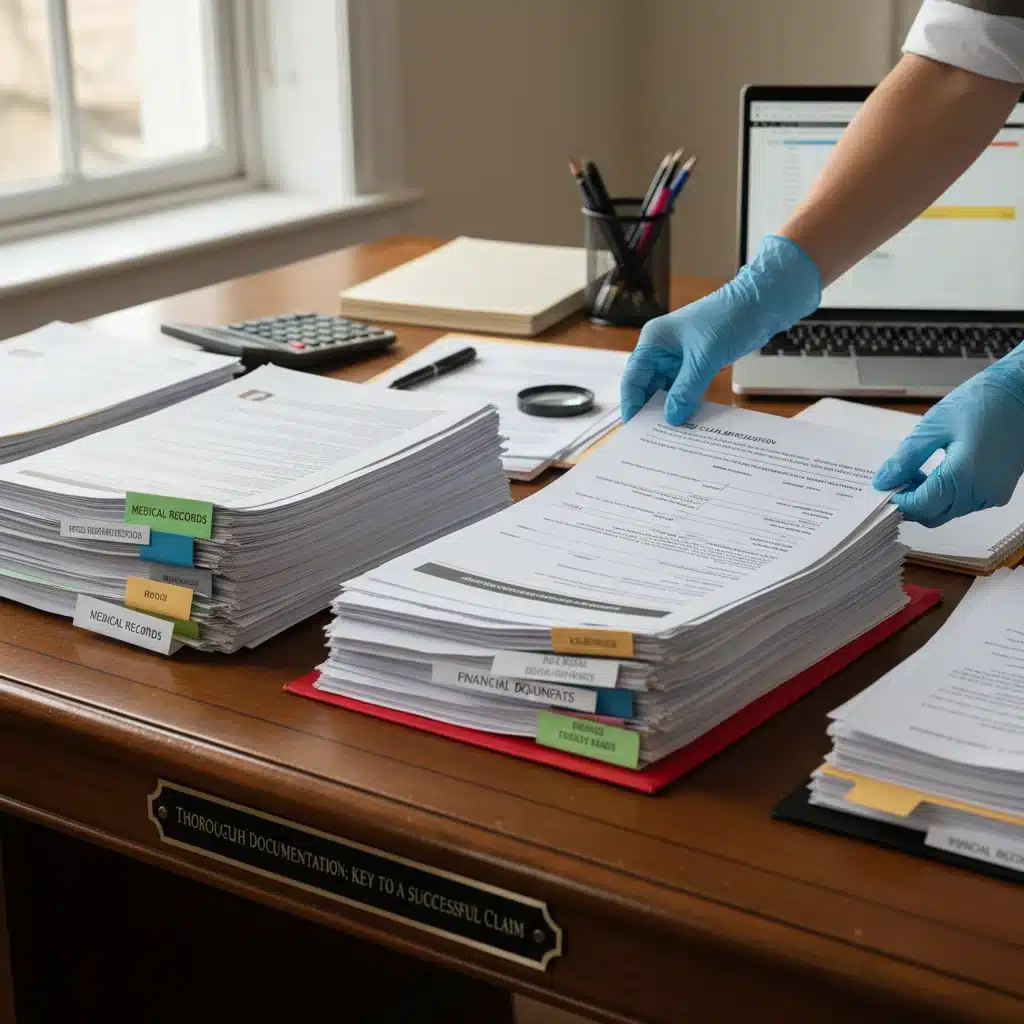
One of the most critical aspects of a successful SSDI application 2026 is providing thorough and accurate documentation. The SSA relies heavily on objective medical evidence to make its determination. Without comprehensive records, even the most severe disability might be denied. Start gathering these documents well in advance of your application.
Medical Records: The Backbone of Your Claim
This is arguably the most important category of documentation. You will need:
- Doctor’s Notes and Reports: Include all visits, diagnoses, treatment plans, prognoses, and any limitations your doctor has noted.
- Hospitalization Records: Discharge summaries, operative reports, and any other documentation from hospital stays related to your condition.
- Test Results: X-rays, MRIs, CT scans, blood tests, nerve conduction studies, psychological evaluations, and any other diagnostic tests.
- Medication Lists: A complete list of all prescribed medications, dosages, and how they affect your condition and daily life.
- Therapy Records: Physical therapy, occupational therapy, mental health counseling, etc.
- Specialist Reports: Opinions and findings from any specialists you have seen (e.g., neurologists, orthopedists, psychiatrists, oncologists).
Ensure your medical records are as detailed as possible, clearly outlining the severity of your condition, your symptoms, the treatments attempted, and how your disability impacts your ability to perform work-related activities. It’s often helpful to ask your treating physicians to provide a detailed letter outlining your functional limitations.
Work History and Financial Information
Beyond medical evidence, the SSA will also need information about your work history and financial situation:
- Work History: A detailed list of your past jobs, including dates of employment, job duties, and how your disability now prevents you from performing those tasks or similar work.
- Earnings Records: Your Social Security Statement will provide your earnings history, but having pay stubs or W-2s can be helpful for verification.
- Other Income: Information about any other benefits you receive (e.g., workers’ compensation, long-term disability insurance) as these can affect your SSDI benefits.
- Bank Account Information: For direct deposit of benefits.
Personal Information and Identifying Documents
You will also need standard personal identification documents:
- Social Security Card
- Birth Certificate
- Proof of U.S. Citizenship or lawful alien status
- Marriage Certificate (if applicable)
- Divorce Decrees (if applicable)
- Children’s Birth Certificates and Social Security numbers (if applying for benefits for them)
Organize all these documents meticulously. Creating a binder with sections for each type of document can be incredibly useful. Make copies of everything you send to the SSA.
Part 3: The Initial Application Process for SSDI in 2026
Once you’ve confirmed your eligibility and gathered your documentation, the next step is to formally submit your SSDI application 2026. This can be done online, by phone, or in person at a local Social Security office. Applying online is often the most convenient method for many.
Completing the Application Forms
The primary forms you’ll need to complete include:
- Application for Disability Benefits (Form SSA-16-BK): This is the main application form, requesting personal information, work history, and details about your medical condition.
- Disability Report (Form SSA-3368-BK): This crucial form asks for detailed information about your medical conditions, doctors, treatments, medications, and how your disability affects your daily activities. Be as thorough and descriptive as possible. Provide names, addresses, and phone numbers for all your healthcare providers.
- Authorization to Disclose Information (Form SSA-827): This form grants the SSA permission to obtain your medical records from your doctors and hospitals.
When filling out these forms, be honest, detailed, and consistent. Any discrepancies can lead to delays or denials. Focus on how your disability limits your ability to perform work-related tasks and daily activities, rather than just listing your diagnoses.
The Role of Disability Determination Services (DDS)
After you submit your application, the SSA sends it to a state agency called Disability Determination Services (DDS). DDS employees, including disability examiners and medical consultants, are responsible for making the initial medical determination of your disability. They will:
- Review all the medical evidence you submitted.
- Contact your doctors and other medical sources to obtain additional records.
- May schedule you for a Consultative Examination (CE) with an independent doctor if they need more information or clarification. Attend all scheduled CEs, as failure to do so can lead to denial.
The DDS decision is based solely on your medical evidence and how it aligns with the SSA’s definition of disability. They do not consider your financial need.
Part 4: Understanding the Decision and What Comes Next
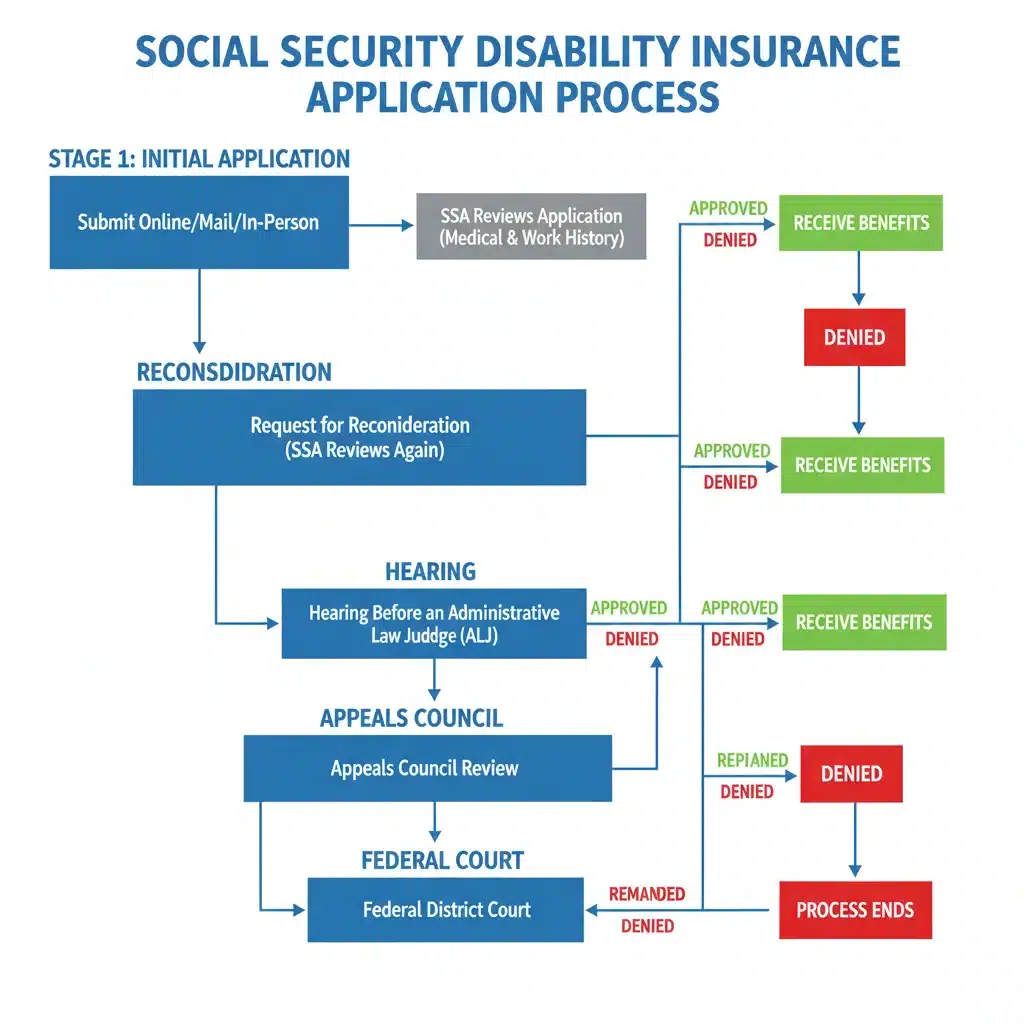
Once DDS has completed its review, they will send their decision back to the SSA, which will then notify you by mail. The wait for a decision can be lengthy, often several months. It’s important to monitor your application status online or by contacting the SSA directly, but patience is key.
Approval: What to Expect
If your SSDI application 2026 is approved, the notice will include information about:
- The date your disability began (your ‘onset date’).
- The amount of your monthly benefit.
- When your benefits will start (there is typically a five-month waiting period from your onset date before benefits can begin).
- Information about Medicare eligibility (you generally become eligible for Medicare 24 months after your SSDI cash benefits begin).
Even after approval, the SSA may periodically review your case to ensure you still meet the definition of disability. These are called Continuing Disability Reviews (CDRs).
Denial: Don’t Give Up!
Unfortunately, many initial SSDI applications are denied. A denial is not the end of the road. It’s crucial to understand the reasons for denial, which will be outlined in your notice. Common reasons include:
- Insufficient medical evidence.
- Failure to follow prescribed treatment.
- The SSA believes you can still perform some type of work.
If denied, you have the right to appeal the decision. There are several levels of appeal, and statistics show that many applicants are approved at later stages of the appeals process. Do not be discouraged by an initial denial. The appeals process will be covered in detail in Part 5 of this series.
Part 5: Navigating the SSDI Appeals Process in 2026
Receiving a denial for your SSDI application 2026 can be disheartening, but it is a common occurrence. Many successful applicants are initially denied. Understanding and effectively navigating the appeals process is crucial. You have 60 days from the date you receive the denial letter to file an appeal.
Reconsideration
This is the first level of appeal. You request that the SSA reconsider its initial decision. Your case will be reviewed by a different disability examiner and medical consultant at DDS who were not involved in the original decision. You should submit any new medical evidence that has become available since your initial application. This could include new doctor visits, test results, or specialist opinions. While the reconsideration stage has a low approval rate, it is a mandatory step before proceeding to the next level.
Hearing by an Administrative Law Judge (ALJ)
If your application is denied at the reconsideration stage, the next step is to request a hearing before an Administrative Law Judge (ALJ). This is often where applicants have the highest chance of approval. The hearing is an opportunity for you to present your case directly to a judge, explain how your disability affects you, and provide testimony. Your attorney (if you have one) can question witnesses, including medical and vocational experts who may be present.
At the ALJ hearing, the judge will consider all the evidence in your file, any new evidence you submit, and your testimony. They will also consider your age, education, work experience, and residual functional capacity (what you can still do despite your limitations).
Appeals Council Review
If the ALJ denies your claim, you can request a review by the Social Security Appeals Council. The Appeals Council will review the ALJ’s decision to determine if it was made in accordance with SSA regulations and policies. They can affirm the ALJ’s decision, reverse it, or send it back to the ALJ for a new hearing. The Appeals Council rarely overturns ALJ decisions, but it’s another step in the process.
Federal Court Review
The final stage of appeal is to file a lawsuit in federal district court. This is a complex legal process and typically requires the assistance of an attorney. The federal court will review the SSA’s decision to ensure that it was supported by substantial evidence and that proper legal procedures were followed.
Tips for the Appeals Process
- Don’t Miss Deadlines: Strict 60-day deadlines apply to each appeal stage. Missing a deadline can result in having to start the entire application process over.
- Submit New Evidence: Every appeal stage is an opportunity to provide additional medical evidence. Keep seeing your doctors and ensure all your symptoms and limitations are well-documented.
- Consider Legal Representation: An experienced disability attorney can significantly improve your chances of success, especially at the ALJ hearing and federal court levels. They understand the legal requirements, can gather evidence, prepare you for testimony, and represent your best interests.
Part 6: Maximizing Your Chances: Tips and Resources for Your 2026 SSDI Application
Successfully navigating the SSDI application 2026 process requires diligence, organization, and persistence. Beyond understanding the steps, there are several strategies and resources that can significantly improve your chances of approval.
Key Strategies for Success
- Be Thorough and Honest: Provide complete and accurate information on all forms. Inconsistencies or omissions can raise red flags.
- Focus on Functional Limitations: When describing your condition, emphasize how it prevents you from performing work-related activities. Instead of just stating ‘I have back pain,’ explain ‘My back pain prevents me from sitting for more than 30 minutes, lifting more than 5 pounds, or bending, making it impossible to perform my previous job duties as a retail clerk or any sedentary work.’
- Maintain Consistent Medical Treatment: The SSA looks for evidence that you are actively seeking and following prescribed medical treatment for your condition. Gaps in treatment can be interpreted as your condition not being severe enough to warrant ongoing care.
- Keep a Detailed Journal: Document your symptoms, pain levels, side effects of medication, and how your disability impacts your daily life. This can be invaluable for filling out forms and preparing for a hearing.
- Communicate with Your Doctors: Ensure your doctors understand that you are applying for disability and that their notes should reflect your functional limitations. Ask them to be specific about what you can and cannot do.
- Don’t Give Up After a Denial: As highlighted in Part 5, many claims are approved on appeal. Persistence is key.
Valuable Resources for Applicants
- Social Security Administration (SSA) Website: The official SSA website (ssa.gov) is an invaluable resource. You can apply online, check the status of your application, and find detailed information about SSDI programs.
- My Social Security Account: Create an account on the SSA website to access your earnings record, estimated benefits, and application status.
- Disability Advocates and Attorneys: These professionals specialize in SSDI claims. They can help you gather evidence, complete forms, represent you at hearings, and appeal denials. They typically work on a contingency basis, meaning they only get paid if you win your case.
- Non-Profit Organizations: Many organizations dedicated to specific medical conditions offer support and resources for disability applicants.
- Legal Aid Services: If you have low income, you may qualify for free or low-cost legal assistance from legal aid societies.
Common Pitfalls to Avoid
- Applying Too Soon: If your disability is new and still potentially improving, the SSA may deny your claim. Wait until your condition has stabilized and is expected to last at least 12 months.
- Lack of Medical Evidence: This is the most common reason for denial. Ensure your medical records are comprehensive and up-to-date.
- Failure to Follow Treatment: If your doctors recommend treatment and you don’t follow it without good reason, your claim may be denied.
- Earning Above SGA Limits: If you are working and earning above the Substantial Gainful Activity (SGA) limit, you will not qualify for SSDI.
By understanding the SSDI application 2026 process, meticulously preparing your documentation, and utilizing available resources, you can significantly increase your chances of a successful outcome. Remember, SSDI is a vital safety net for those who can no longer work due to a severe disability. Arm yourself with knowledge and persistence, and pursue the benefits you have earned.