
Navigating the 2026 US Regulatory Pathway for New Digital Health Devices: A Comprehensive Guide
The landscape of healthcare is undergoing a profound transformation, driven by the rapid advancements in digital health technologies. From wearable sensors and mobile health applications to artificial intelligence-powered diagnostic tools, digital health devices promise to revolutionize patient care, enhance efficiency, and expand access to medical services. However, innovation in this sector is inextricably linked with robust regulatory oversight, particularly in the United States, where the Food and Drug Administration (FDA) plays a pivotal role in ensuring the safety and effectiveness of these technologies. As we approach 2026, understanding the evolving digital health regulation framework is not just beneficial, but absolutely critical for manufacturers, developers, and healthcare providers alike.
The FDA’s approach to digital health is dynamic, constantly adapting to new technological paradigms while upholding its core mission of public health protection. This guide aims to demystify the complex US regulatory pathway for new digital health devices, providing a strategic roadmap for successful market entry and sustained compliance. We will delve into the critical steps, key considerations, and emerging trends that define the regulatory environment for 2026 and beyond, focusing on how companies can effectively navigate this intricate terrain.
The Evolving Landscape of Digital Health Regulation
Before diving into the specific steps, it’s important to grasp the fundamental shifts occurring in digital health regulation. The FDA recognizes that traditional medical device regulations, designed for physical hardware, often don’t perfectly fit software-based or AI-driven solutions. Consequently, the agency has been proactive in developing guidance tailored to digital health, including Software as a Medical Device (SaMD) and clinical decision support software (CDS). The emphasis is increasingly on a risk-based approach, ensuring that regulatory scrutiny is proportional to the potential harm a device could cause.
Key trends influencing the 2026 regulatory environment include:
- Increased Focus on Cybersecurity: With more devices connected and handling sensitive patient data, cybersecurity is no longer an afterthought but a foundational element of device design and regulatory submission.
- Real-World Evidence (RWE) and Real-World Data (RWD): The FDA is increasingly open to using RWE/RWD to support regulatory decisions, particularly for modifications to existing devices or for post-market surveillance.
- AI/Machine Learning-Based Medical Devices (AI/ML-MD): Specific guidance for AI/ML-MDs, including predetermined change control plans, is evolving to address the adaptive nature of these technologies.
- Interoperability and Data Exchange: As healthcare systems become more interconnected, the ability of digital health devices to securely and effectively exchange data with other systems is gaining regulatory importance.
- Patient-Centricity: The patient’s perspective, usability, and accessibility are increasingly factored into regulatory reviews, reflecting a broader shift towards patient-centered care.
Understanding these overarching trends is the first step in formulating a robust regulatory strategy for your digital health device. Now, let’s break down the essential steps for navigating the 2026 US regulatory pathway.
Step 1: Determine Device Classification and Intended Use
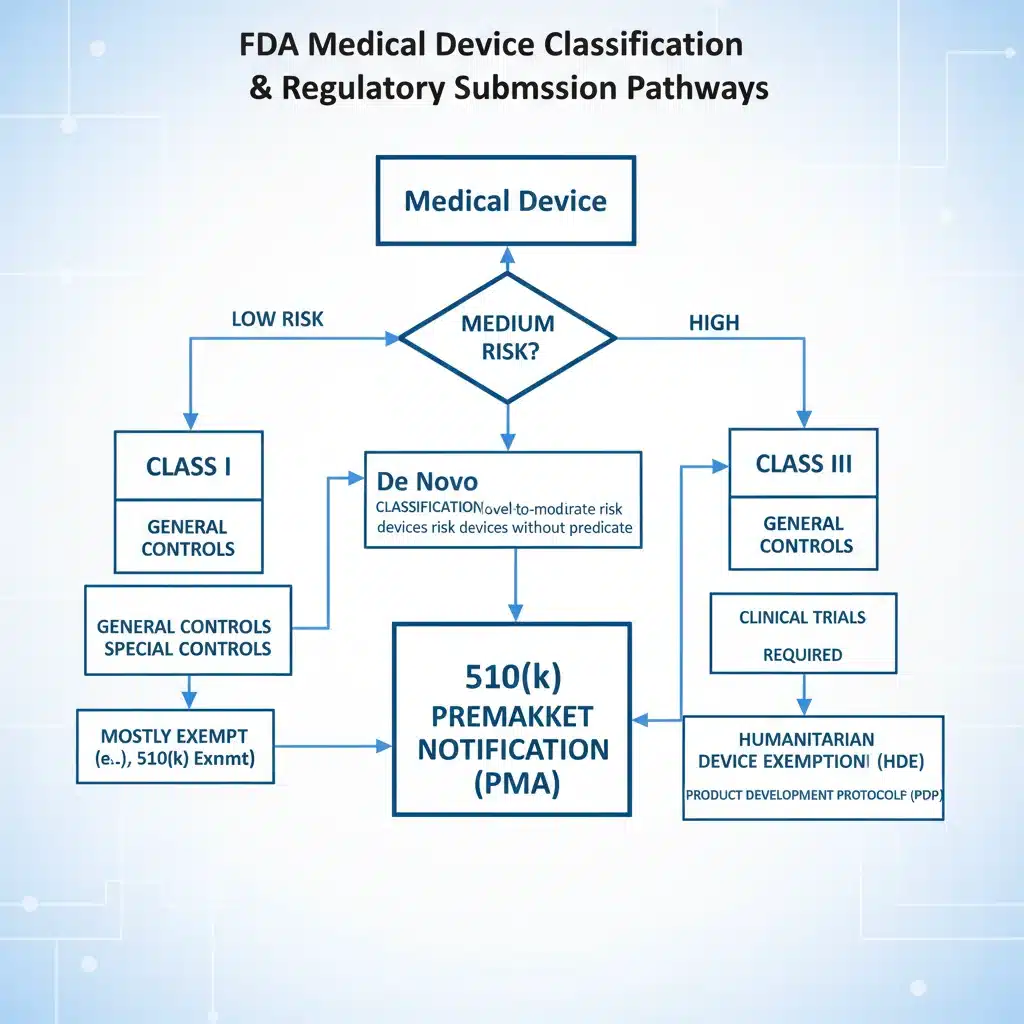
The cornerstone of any successful regulatory strategy is accurately defining your device’s classification and intended use. This initial assessment dictates the entire regulatory pathway. The FDA classifies medical devices into three categories: Class I, Class II, and Class III, based on the level of risk they pose to patients and users. The higher the class, the greater the regulatory control.
Understanding Device Classification (Class I, II, III)
- Class I Devices: These present the lowest risk to patients. Many general wellness products or simple digital tools might fall into this category. Most are exempt from premarket notification (510(k)), but still require adherence to General Controls (e.g., good manufacturing practices, labeling). Examples might include certain health tracking apps without diagnostic claims.
- Class II Devices: These represent moderate risk and typically require a 510(k) Premarket Notification. This submission demonstrates that the device is substantially equivalent to a legally marketed predicate device. The majority of digital health devices, especially those with diagnostic or therapeutic claims, fall into Class II. Examples include many continuous glucose monitoring (CGM) systems, certain mobile medical apps for managing chronic conditions, or digital therapeutics.
- Class III Devices: These are high-risk devices that sustain or support life, are implanted, or present a potential unreasonable risk of illness or injury. They require a Premarket Approval (PMA), which is the most rigorous type of device marketing application. While less common for purely software-based digital health, some highly complex AI-driven diagnostic tools or closed-loop systems could be Class III.
Defining Intended Use and Indications for Use
Crucially, the FDA regulates based on a device’s intended use, not just its technological capabilities. The intended use describes the general purpose of the device, while the indications for use specify the disease or condition the device will diagnose, treat, prevent, cure, or mitigate, and the patient population for whom the device is intended. A minor change in wording for intended use can dramatically alter the regulatory classification and required submission type.
For digital health, this distinction is particularly vital. A mobile app tracking steps might be a general wellness product (not regulated as a medical device), but if it claims to diagnose a heart condition based on step patterns, it becomes a medical device. Developers must be meticulous in defining what their device does and what claims they make about its function.
Early engagement with the FDA through programs like Q-Submission (Pre-Submission) is highly recommended to gain clarity on classification and anticipated data requirements. This proactive approach can save significant time and resources in the long run.
Step 2: Develop a Robust Quality Management System (QMS)
Regardless of classification, all medical device manufacturers must establish and maintain a Quality Management System (QMS) compliant with FDA’s Quality System Regulation (QSR), 21 CFR Part 820. For digital health devices, this includes specific considerations for software development lifecycle (SDLC) processes.
Key Elements of a Digital Health QMS
- Design Controls: This is paramount for digital health. It involves a systematic approach to ensure that device design meets user needs and intended uses. This includes design planning, inputs, outputs, review, verification, validation, and transfer. For software, this translates to detailed software requirements specifications, architecture design, coding standards, and rigorous testing.
- Risk Management: A comprehensive risk management process (e.g., ISO 14971) is essential to identify, evaluate, and control risks associated with the device throughout its lifecycle. This includes risks related to software bugs, data security, usability errors, and performance failures.
- Software Validation: All software used in the design, manufacture, packaging, labeling, storage, installation, and servicing of medical devices, or as a medical device itself, must be validated. This means demonstrating that the software consistently meets its intended specifications and user needs.
- Document Control and Record Keeping: A robust system for managing all design, testing, manufacturing, and post-market records is critical for demonstrating compliance during FDA inspections.
- Post-Market Surveillance and Corrective and Preventive Actions (CAPA): The QMS must include processes for monitoring device performance after market release, addressing complaints, reporting adverse events, and implementing CAPA to prevent recurrence.
For digital health devices, the QMS often needs to integrate agile development methodologies while still satisfying regulatory requirements. This requires careful planning and documentation to bridge the gap between rapid iteration and stringent quality controls. Investing in a strong QMS from the outset is not merely a compliance burden but a strategic advantage, leading to higher quality, safer, and more reliable devices.
Step 3: Prepare and Submit Premarket Application
Once the device is classified and a robust QMS is in place, the next step is to prepare and submit the appropriate premarket application to the FDA. The type of submission depends heavily on the device classification determined in Step 1.
Common Premarket Submission Types for Digital Health
- 510(k) Premarket Notification: As mentioned, most Class II digital health devices require a 510(k). The goal is to demonstrate substantial equivalence to a predicate device already legally marketed in the US. This involves providing detailed information on the device’s technological characteristics, performance data, and safety and effectiveness data. For software, this includes extensive documentation on software architecture, verification and validation (V&V) testing, risk management, and cybersecurity.
- De Novo Classification Request: If a novel digital health device has no predicate and is low-to-moderate risk (Class I or II), it may qualify for a De Novo classification. This pathway allows the FDA to classify novel devices into Class I or II, providing a pathway to market for truly innovative technologies that don’t fit existing classifications.
- Premarket Approval (PMA): Required for Class III devices, PMAs involve a more extensive and rigorous review process. Manufacturers must provide sufficient valid scientific evidence to assure the FDA of the device’s safety and effectiveness. This often requires large-scale clinical trials. While less common for purely software-based digital health, some AI-driven diagnostic or therapeutic systems could necessitate a PMA.
- Investigational Device Exemption (IDE): Before conducting clinical studies with a significant risk device (often Class III, but sometimes Class II), an IDE may be required. This allows the device to be used to collect safety and effectiveness data without being legally marketed.
Key Data Requirements for Digital Health Submissions
Regardless of the submission type, digital health devices typically require specific types of data:
- Software Documentation: Detailed descriptions of software architecture, design, development, and testing processes. This includes software requirements specifications, design specifications, traceability matrices, and V&V reports.
- Performance Data: Evidence demonstrating that the device performs as intended. This could involve analytical validation (e.g., accuracy of algorithms), technical performance (e.g., speed, reliability), and clinical performance (e.g., efficacy in a target population).
- Usability Engineering (Human Factors): Documentation demonstrating that the device is safe and effective for its intended users in its intended use environment. This is crucial for software interfaces to prevent user errors.
- Cybersecurity Documentation: A comprehensive cybersecurity plan addressing potential threats, vulnerabilities, and mitigation strategies throughout the device lifecycle. This includes risk assessments, threat modeling, and testing results.
- Clinical Data: Depending on the device’s risk and claims, clinical data (from studies or real-world evidence) may be required to demonstrate safety and effectiveness.
The FDA provides numerous guidance documents specifically for digital health, SaMD, and cybersecurity. Thoroughly reviewing these documents is essential for preparing a complete and compliant submission.
Step 4: Address Cybersecurity and Data Privacy
In the connected world of 2026, cybersecurity and data privacy are no longer optional add-ons but fundamental requirements for any digital health device. The FDA has significantly ramped up its expectations in this area, recognizing that vulnerabilities can directly impact patient safety and compromise sensitive health information.
FDA’s Cybersecurity Expectations
The FDA expects medical device manufacturers to implement robust cybersecurity measures throughout the total product lifecycle, from design to post-market. Key aspects include:
- Security by Design: Integrating cybersecurity considerations into the earliest stages of device design and development. This means building in security features rather than patching them on later.
- Risk Management: Conducting comprehensive cybersecurity risk assessments to identify potential threats, vulnerabilities, and the likelihood and impact of exploitation.
- Threat Modeling: A structured approach to identify potential threats to a system and prioritize mitigation efforts.
- Software Bill of Materials (SBOM): Providing a complete list of all software components, including open-source and commercial off-the-shelf (COTS) software, used in the device. This helps identify vulnerabilities in third-party components.
- Vulnerability Management: A plan for monitoring, identifying, assessing, and remediating new vulnerabilities that emerge after the device is on the market.
- Patching and Updates: A clear strategy for securely distributing and installing software patches and updates to address vulnerabilities.
- Incident Response Plan: A well-defined plan for responding to and recovering from cybersecurity incidents.
- Secure Communications: Ensuring that data transmitted to and from the device is encrypted and protected from unauthorized access.
The FDA’s Digital Health Center of Excellence provides invaluable resources and guidance on cybersecurity for medical devices. Compliance with these guidelines is not just about avoiding regulatory hurdles; it’s about building trust with users and protecting patient data.

Data Privacy (HIPAA and Beyond)
Beyond cybersecurity, digital health devices must also comply with data privacy regulations. In the US, the Health Insurance Portability and Accountability Act (HIPAA) is the primary federal law governing the privacy and security of protected health information (PHI). If your device creates, receives, maintains, or transmits PHI, you must ensure compliance as a covered entity or business associate.
Key HIPAA considerations:
- Privacy Rule: Sets national standards for the protection of PHI.
- Security Rule: Specifies administrative, physical, and technical safeguards to protect electronic PHI (ePHI).
- Breach Notification Rule: Requires covered entities and business associates to provide notification following a breach of unsecured PHI.
While HIPAA is foundational, other state-specific privacy laws and international regulations (like GDPR if you operate globally) may also apply. A comprehensive data privacy strategy is essential for any digital health device operating in the US market.
Step 5: Post-Market Surveillance and Continuous Compliance
Regulatory approval is not the end of the journey; it’s merely the beginning. The FDA requires continuous monitoring and compliance throughout a device’s lifecycle. Post-market surveillance is particularly critical for digital health devices, which often undergo frequent updates and iterations.
Key Post-Market Activities
- Adverse Event Reporting: Manufacturers must report adverse events (e.g., malfunctions, injuries, deaths) associated with their devices to the FDA. For software, this could include reporting critical bugs or cybersecurity breaches that impact patient safety.
- Complaint Handling: A robust system for receiving, evaluating, and processing customer complaints is required.
- Corrective and Preventive Actions (CAPA): Implementing CAPA processes to address identified problems and prevent their recurrence is a continuous requirement of the QMS.
- Software Updates and Changes: Any significant change to a legally marketed digital health device, especially those impacting its safety, effectiveness, or intended use, may require a new 510(k) submission or other regulatory approval. The FDA has specific guidance on when changes require new submissions versus simply documenting within the QMS.
- Annual Reporting: For PMA devices, annual reports are required to provide updates on device performance and any changes.
- Post-Market Studies: In some cases, the FDA may require post-market studies to gather additional data on a device’s long-term safety and effectiveness.
- Cybersecurity Monitoring and Updates: As mentioned, continuous monitoring for new vulnerabilities and implementing timely patches and updates is a critical ongoing responsibility.
The Importance of Continuous Compliance
The dynamic nature of software means that continuous compliance is paramount. A device that was compliant at the time of market clearance can quickly become non-compliant if updates are not managed correctly or if new cybersecurity threats emerge. Establishing a dedicated regulatory affairs team or partnering with regulatory experts is crucial for maintaining vigilance and adapting to evolving requirements.
Furthermore, the FDA conducts inspections of manufacturing facilities (including those for software development) to ensure compliance with QSR. A well-maintained QMS and meticulous documentation are your best defense during such inspections.
Emerging Considerations for 2026 and Beyond
As we look towards 2026, several additional factors will shape the digital health regulation landscape:
AI/ML-Based Medical Devices (AI/ML-MD)
The FDA is actively developing a regulatory framework for AI/ML-MDs that allows for continuous learning and adaptation while ensuring safety and effectiveness. This includes proposals for Predetermined Change Control Plans (PCCPs) that would allow manufacturers to make certain modifications to their AI algorithms within predefined limits without requiring a new premarket submission for each change. Staying abreast of this evolving guidance is crucial for developers of AI-driven digital health solutions.
Digital Health Technologies (DHTs) in Clinical Trials
The use of DHTs to collect data in clinical trials is increasing. The FDA is providing guidance on the appropriate use and validation of these technologies to ensure the integrity and reliability of clinical trial data. This opens new avenues for evidence generation but also introduces new regulatory considerations.
Decentralized Clinical Trials (DCTs)
Digital health devices are central to the rise of decentralized clinical trials, allowing data collection remotely. Regulatory guidance is evolving to support these innovative trial designs while maintaining data quality and patient safety.
Health Equity and Bias in Algorithms
There’s growing scrutiny on potential biases in AI algorithms used in digital health, particularly concerning health equity. Regulators are increasingly emphasizing the need for diverse and representative datasets in algorithm training and validation to ensure devices perform equitably across different patient populations.
Conclusion: A Strategic Approach to Digital Health Regulation
Navigating the 2026 US regulatory pathway for new digital health devices is undeniably complex, but it is an achievable goal with a well-planned and executed strategy. By systematically addressing device classification, implementing a robust QMS, preparing thorough premarket submissions, prioritizing cybersecurity and data privacy, and committing to continuous post-market surveillance, manufacturers can successfully bring their innovations to market.
The key to success lies in proactive engagement, continuous learning, and a deep understanding of FDA’s evolving expectations. Digital health is poised to redefine healthcare, and regulatory compliance is the essential bridge between groundbreaking innovation and safe, effective patient care. Embrace the challenges, leverage available resources, and collaborate with regulatory experts to ensure your digital health device not only meets but exceeds the standards of tomorrow’s healthcare landscape.
The future of healthcare is digital, and with careful navigation of the regulatory currents, your device can be a vital part of that future, transforming lives and advancing medical science.