US MedTech Patent Filings 2025: Global 5th Ranking Insights

US Ranks 5th Globally in MedTech Patent Filings for 2025: A Deep Dive into the Latest Report
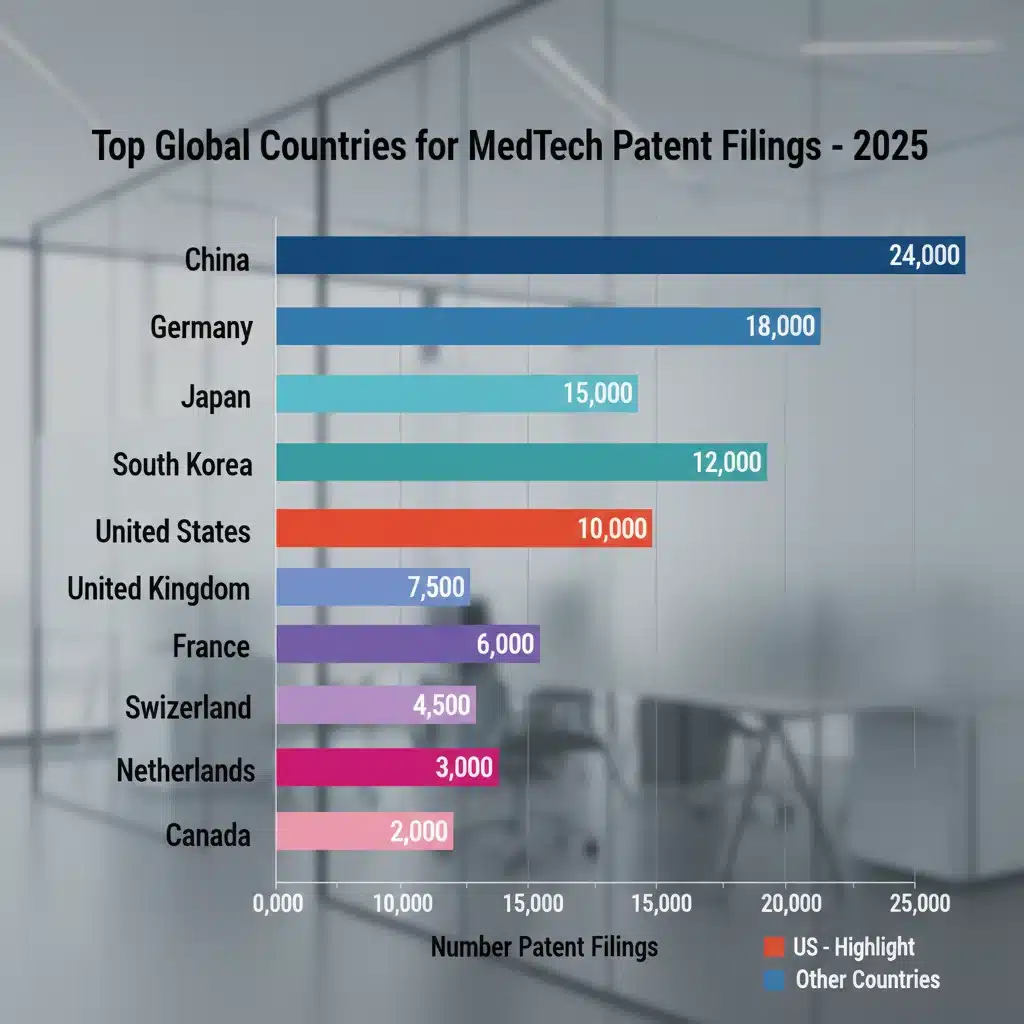
The medical technology (MedTech) sector is a cornerstone of global healthcare advancement, constantly pushing the boundaries of innovation to improve patient outcomes and quality of life. In a highly anticipated report released in January 2026, the landscape of global MedTech patent filings for the year 2025 has been unveiled, offering critical insights into the innovation powerhouse nations. The data reveals that the United States secured the 5th position globally in MedTech patent filings, a standing that prompts both commendation for its sustained innovation and a closer examination of the competitive dynamics at play.
This comprehensive analysis delves into the findings of the report, exploring what this ranking signifies for the US MedTech industry, the factors contributing to its position, and the implications for future innovation and investment. Understanding the nuances of MedTech patent filings is not merely an academic exercise; it’s a vital indicator of a nation’s technological prowess, economic competitiveness, and its commitment to addressing pressing global health challenges.
Understanding the Significance of MedTech Patent Filings
Patent filings serve as a robust proxy for innovation. In the MedTech sector, where research and development (R&D) cycles are often long and capital-intensive, securing patents is crucial for protecting intellectual property (IP), attracting investment, and ensuring a competitive edge. Each patent represents a novel invention, a solution to a medical problem, or an improvement to existing technologies. Therefore, a nation’s standing in MedTech patent filings directly reflects its capacity for groundbreaking discoveries and its ability to translate scientific knowledge into tangible healthcare solutions.
The report’s focus on 2025 data provides a fresh perspective on recent trends, capturing the impact of post-pandemic shifts, advancements in artificial intelligence (AI) and machine learning (ML) in healthcare, and the increasing emphasis on personalized medicine. The US, historically a leader in medical innovation, continues to demonstrate significant activity, even as other nations rapidly accelerate their own R&D efforts.
The Global Context: Where Does the US Stand?
While a 5th place ranking might seem modest to some, it’s essential to contextualize this within the intensely competitive global innovation landscape. Countries like China, Germany, Japan, and South Korea have significantly ramped up their investments in R&D and IP protection, leading to a more diversified distribution of patent activity. The report highlights that these nations have made substantial strides, often through strategic national initiatives, increased funding for research institutions, and streamlined patent application processes.
The US’s position, therefore, is not a sign of stagnation but rather an indication of the formidable progress being made by other global players. It underscores the need for continued investment, policy support, and collaborative efforts to maintain and enhance its innovative edge. The sheer volume of MedTech patent filings globally indicates a thriving and dynamic sector, poised for further transformative developments.
Factors Influencing US MedTech Innovation and Patent Activity
Several intertwined factors contribute to the US’s strong, albeit competitive, performance in MedTech patent filings. Understanding these elements is key to appreciating the complexities of the innovation ecosystem.
Robust Research and Development Ecosystem
The US boasts a world-class R&D ecosystem, characterized by leading universities, research hospitals, and a vibrant private sector. Institutions like Stanford, MIT, Johns Hopkins, and countless others are hotbeds of medical innovation, consistently producing groundbreaking research. This academic excellence often translates into patentable inventions, particularly in areas such as biotechnology, medical imaging, surgical robotics, and diagnostics. Federal funding agencies, such as the National Institutes of Health (NIH), also play a critical role in supporting foundational research that eventually leads to new MedTech solutions.
Venture Capital and Investment Landscape
The availability of venture capital and private equity funding is a significant driver of MedTech innovation in the US. Startups and established companies alike benefit from a robust investment landscape that is willing to fund high-risk, high-reward ventures. This financial backing enables companies to invest heavily in R&D, navigate complex regulatory pathways, and ultimately bring new technologies to market. The promise of substantial returns on successful patented technologies fuels this investment, creating a virtuous cycle of innovation and funding.
Strong Intellectual Property Protection
The US intellectual property system, administered by the United States Patent and Trademark Office (USPTO), is generally regarded as one of the strongest globally. This robust framework provides innovators with the confidence that their inventions will be protected, incentivizing them to invest time and resources into R&D. The clarity and enforceability of patent rights are crucial for companies looking to commercialize their technologies and prevent infringement, thereby safeguarding their competitive advantage.
Regulatory Environment and Market Access
While often perceived as challenging, the US regulatory environment, primarily overseen by the Food and Drug Administration (FDA), is also a factor in innovation. The FDA’s rigorous standards ensure that medical devices are safe and effective, fostering trust among healthcare providers and patients. Companies that successfully navigate the FDA approval process gain access to one of the world’s largest and most lucrative healthcare markets. The potential for significant market penetration acts as a powerful incentive for companies to innovate and secure patents for their MedTech solutions.
Emerging Trends and Key Areas of MedTech Innovation
The report also sheds light on the specific areas within MedTech where innovation is flourishing, both in the US and globally. These trends are shaping the future of healthcare and offer glimpses into where future MedTech patent filings will likely concentrate.
Artificial Intelligence and Machine Learning in Healthcare
AI and ML are revolutionizing MedTech, from diagnostic tools that can analyze medical images with unprecedented accuracy to predictive analytics that can forecast disease outbreaks. The integration of AI into medical devices and software is a rapidly expanding field, leading to a surge in patents related to algorithms, data processing, and AI-powered diagnostic and therapeutic solutions. The US is a leader in AI research, and this is clearly reflected in its MedTech patent portfolio.
Personalized Medicine and Digital Health
The shift towards personalized medicine, tailoring treatments to individual patient characteristics, is driving innovation in areas like genomics, pharmacogenomics, and targeted therapies. Digital health technologies, including wearable devices, remote patient monitoring systems, and telehealth platforms, are also experiencing explosive growth. These technologies aim to empower patients, improve access to care, and enhance the efficiency of healthcare delivery. Patents in these domains often cover novel sensors, data integration platforms, and user interfaces.
Robotics and Advanced Surgical Tools
Surgical robotics continues to advance, offering greater precision, minimally invasive procedures, and faster recovery times for patients. Innovations in robotic-assisted surgery, haptic feedback systems, and advanced instrumentation are generating a significant number of patents. These technologies enhance surgeon capabilities and improve patient outcomes, making them a high-value area for MedTech innovation.
Biomaterials and Regenerative Medicine
The development of new biomaterials for implants, prosthetics, and tissue engineering is another critical area. Regenerative medicine, which focuses on repairing or replacing damaged tissues and organs, holds immense promise. Patents in this sphere often relate to novel material compositions, tissue scaffolds, and bio-fabrication techniques that push the boundaries of what’s possible in reconstructive and restorative medicine.
Challenges and Opportunities for the US MedTech Sector
While the US maintains a strong position, there are inherent challenges and significant opportunities that will shape its future in MedTech patent filings and innovation.
Navigating Global Competition
The most evident challenge is the intensifying global competition. Other nations are not only increasing their patent output but are also becoming more sophisticated in their innovation strategies. The US must continue to foster an environment that encourages groundbreaking research and provides the necessary support for companies to translate these discoveries into protected intellectual property. This includes maintaining strong funding for basic science, promoting STEM education, and encouraging cross-border collaborations.
Regulatory Hurdles and Market Access
Despite the advantages of the US regulatory system, navigating the FDA approval process can be lengthy and costly, especially for novel and complex devices. Streamlining these processes while maintaining safety standards is a continuous challenge. Furthermore, ensuring equitable market access and reimbursement policies for new technologies is crucial for their adoption and commercial success, which in turn incentivizes further innovation and patent activity.
Talent Acquisition and Retention
The MedTech sector relies heavily on a highly skilled workforce, including engineers, scientists, clinicians, and regulatory experts. Attracting and retaining top talent in a competitive global market is a persistent challenge. Policies that support skilled immigration, invest in higher education, and promote lifelong learning are vital for sustaining the innovative capacity of the US MedTech industry.

Opportunities for Growth and Collaboration
Despite the challenges, immense opportunities exist. The growing global demand for advanced healthcare solutions, driven by aging populations and increasing prevalence of chronic diseases, presents a vast market for MedTech innovations. The US can leverage its strengths in fundamental research, venture capital, and a mature healthcare infrastructure to capitalize on these opportunities.
International collaborations, both academic and industrial, offer another avenue for growth. By partnering with leading institutions and companies worldwide, the US can accelerate R&D, share expertise, and expand market reach. Such collaborations can also lead to co-development of patents, further strengthening the global innovation ecosystem.
The Road Ahead: Sustaining US MedTech Leadership
To not only maintain but enhance its position in global MedTech patent filings, the US must adopt a multi-faceted approach. This involves continued strategic investment in R&D, fostering a supportive policy environment, and promoting a culture of innovation and entrepreneurship.
Increased Investment in Basic and Applied Research
Sustained and increased funding for both basic scientific research and applied technological development is paramount. This includes government grants, private sector R&D expenditures, and philanthropic support. Investing in cutting-edge areas like genomics, neuroscience, and advanced materials science will lay the groundwork for future MedTech breakthroughs.
Policy Support for Innovation and IP Protection
Policymakers have a crucial role to play in creating an environment conducive to innovation. This includes maintaining strong IP protection laws, streamlining regulatory processes without compromising safety, and offering incentives for companies to conduct R&D within the US. Policies that encourage technology transfer from academia to industry are also vital.
Fostering a Culture of Entrepreneurship and Collaboration
Encouraging entrepreneurship, particularly in the MedTech space, is essential. This involves supporting incubators, accelerators, and mentorship programs that help transform innovative ideas into viable commercial products. Furthermore, promoting collaboration between academia, industry, and government can accelerate the pace of innovation and facilitate the sharing of knowledge and resources.
Addressing Healthcare Disparities through Innovation
Another significant opportunity lies in directing MedTech innovation towards addressing global healthcare disparities. Developing affordable, accessible, and appropriate technologies for underserved populations, both domestically and internationally, can not only improve global health outcomes but also open new markets and drive further innovation. Patents in this area could focus on low-cost diagnostics, telemedicine solutions for remote areas, and sustainable medical devices.
Conclusion
The report detailing the US’s 5th place ranking in global MedTech patent filings for 2025 serves as a critical benchmark. It affirms the nation’s continued strength in medical innovation while simultaneously highlighting the growing competitiveness of other countries. The MedTech sector is dynamic, constantly evolving, and vital for the future of healthcare.
For the US to solidify and advance its leadership, a concerted effort is required from all stakeholders – government, industry, academia, and investors. By strategically investing in R&D, upholding robust IP protections, fostering a vibrant entrepreneurial ecosystem, and embracing global collaboration, the US can continue to be a driving force in shaping the future of medical technology and delivering life-changing innovations to patients worldwide. The insights from this report are not just statistics; they are a call to action, urging continuous vigilance and proactive strategies to ensure the US remains at the forefront of MedTech advancements.