
Understanding HSA Contribution Limits for 2026: A Practical Guide to Saving Over $1,000 Annually
In the ever-evolving landscape of healthcare and personal finance, Health Savings Accounts (HSAs) stand out as one of the most powerful and often underutilized tools for both saving on taxes and managing medical expenses. As we look ahead to 2026, understanding the updated HSA contribution limits is crucial for anyone aiming to maximize their financial well-being. These limits, adjusted annually for inflation, dictate how much you can contribute to your account, directly impacting your potential tax deductions and the growth of your tax-free savings.
Anúncios
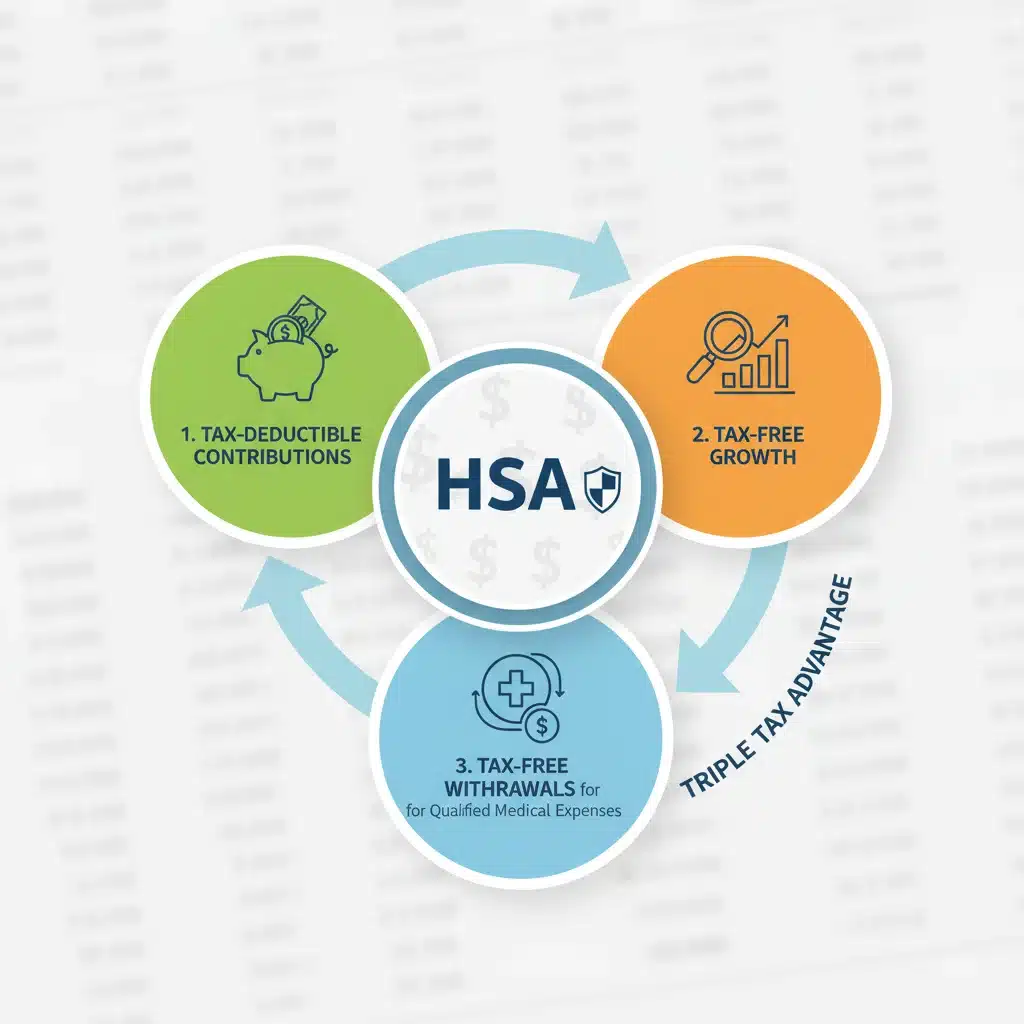
For many, an HSA is more than just a savings account for healthcare; it’s a robust investment vehicle that offers a unique ‘triple tax advantage.’ This means your contributions are tax-deductible, your investments grow tax-free, and withdrawals for qualified medical expenses are also tax-free. This combination makes HSAs an incredibly attractive option, not only for current healthcare needs but also as a significant component of long-term retirement planning. By strategically utilizing the HSA contribution limits, individuals and families can potentially save thousands of dollars annually, significantly reducing their taxable income while building a substantial nest egg for future medical costs.
This comprehensive guide will delve into everything you need to know about HSA contribution limits for 2026. We’ll cover who is eligible, the specific limits for individuals and families, the catch-up contributions for those aged 55 and over, and practical strategies to help you make the most of this powerful financial tool. Whether you’re new to HSAs or a seasoned contributor, staying informed about the latest limits and rules is key to optimizing your savings and securing your financial health.
Anúncios
What is an HSA and Why is it So Powerful?
Before diving into the specifics of the HSA contribution limits for 2026, let’s briefly recap what an HSA is and why it holds such a prominent position in personal finance. A Health Savings Account is a tax-advantaged savings account that can be used for qualified medical expenses. To be eligible for an HSA, you must be covered by a High Deductible Health Plan (HDHP) and not be enrolled in Medicare or another health plan that is not an HDHP. You also cannot be claimed as a dependent on someone else’s tax return.
The power of an HSA lies in its unparalleled tax benefits, often referred to as the ‘triple tax advantage’:
- Tax-Deductible Contributions: Money you contribute to an HSA is tax-deductible, reducing your taxable income in the year you contribute, even if you don’t itemize deductions.
- Tax-Free Growth: Any earnings from investments within your HSA grow tax-free. This means dividends, interest, and capital gains are not taxed as long as they remain in the account.
- Tax-Free Withdrawals: When you withdraw funds from your HSA for qualified medical expenses, those withdrawals are completely tax-free. This includes everything from doctor visits and prescription medications to dental work and vision care.
Beyond these immediate benefits, an HSA also offers incredible flexibility. Unlike Flexible Spending Accounts (FSAs), HSA funds roll over year after year, never expiring. This allows you to build a substantial balance over time. After age 65, your HSA can function much like a traditional IRA, allowing you to withdraw funds for any purpose without penalty, though non-medical withdrawals will be subject to ordinary income tax. This makes it an excellent tool for retirement planning, especially for covering healthcare costs in your later years.
HSA Contribution Limits 2026: The Numbers You Need to Know
The Internal Revenue Service (IRS) adjusts the HSA contribution limits annually to account for inflation. While the official limits for 2026 are typically announced in the latter half of 2025, we can project them based on historical trends and current inflation rates. For the purpose of this guide, we will use estimated figures based on reasonable projections. It’s important to note that these are projections, and actual numbers may vary slightly once officially released by the IRS.
Based on current trends, we anticipate the HSA contribution limits for 2026 to be approximately:
- Self-Only Coverage (Individual): Approximately $4,300 – $4,400. This is an increase from previous years, reflecting the rising cost of healthcare.
- Family Coverage: Approximately $8,650 – $8,800. This limit applies if your HDHP covers yourself and at least one other family member.
These limits represent the maximum amount you, your employer, or a combination of both can contribute to your HSA in a calendar year. It’s crucial to stay within these limits to avoid potential tax penalties. For individuals, contributing the maximum allowed can lead to significant tax deductions and accelerated growth of your savings.
It’s important to distinguish between the HSA contribution limits and the High Deductible Health Plan (HDHP) requirements. To be eligible for an HSA, your HDHP must meet specific criteria for minimum deductibles and maximum out-of-pocket expenses. For 2026, these thresholds are also expected to increase slightly.
- Minimum Annual Deductible for HDHPs: Expected to be around $1,650 for self-only coverage and $3,300 for family coverage.
- Maximum Annual Out-of-Pocket for HDHPs: Expected to be around $8,350 for self-only coverage and $16,700 for family coverage. This includes deductibles, co-payments, and other amounts, but not premiums.
Always verify these figures with official IRS publications once they are released to ensure accuracy for your 2026 planning.
Catch-Up Contributions for Those 55 and Over
For individuals aged 55 and older, the IRS allows an additional ‘catch-up contribution’ to their HSA. This is a significant benefit designed to help older workers bolster their healthcare savings as they approach retirement. The catch-up contribution is an extra $1,000 per year, above the standard individual or family contribution limit.
This means that if you are 55 or older (or will turn 55 by the end of the tax year), you can contribute an additional $1,000 to your HSA. For example, if the individual limit for 2026 is $4,350, an eligible individual aged 55 or over could contribute up to $5,350. If both spouses in a family are 55 or older, each spouse can make a separate $1,000 catch-up contribution to their own HSA, provided they each have an HSA account. This effectively boosts the total family contribution potential even further.
Eligibility for HSA Contributions in 2026
Meeting the HSA contribution limits is only half the battle; you must also be eligible to contribute. Eligibility is primarily determined by your health insurance coverage. To contribute to an HSA in 2026, you must:
- Be Covered by an HDHP: Your health insurance plan must be a High Deductible Health Plan that meets the IRS’s specific deductible and out-of-pocket maximum requirements for 2026 (as outlined above).
- Not Have Other Health Coverage: Generally, you cannot be covered by any other health plan that is not an HDHP. This includes Medicare, TRICARE, or a spouse’s non-HDHP. There are some exceptions, such as specific injury insurance, accident insurance, disability, dental care, vision care, or long-term care insurance.
- Not Be Enrolled in Medicare: If you are enrolled in Medicare, you are no longer eligible to contribute to an HSA. However, you can still use existing HSA funds for qualified medical expenses.
- Not Be Claimed as a Dependent: You cannot be claimed as a dependent on someone else’s tax return.
It’s crucial to review your health insurance plan annually to ensure it continues to qualify as an HDHP. If your plan changes or you enroll in other coverage, your eligibility to contribute to an HSA might be affected. Always consult with your HR department or health insurance provider if you have questions about your plan’s HDHP status.
Strategies to Maximize Your HSA Savings and Benefits
Simply meeting the HSA contribution limits is a good start, but truly maximizing the benefits requires a strategic approach. Here are several strategies to help you get the most out of your HSA:
1. Contribute the Maximum Allowed Annually
This is the most straightforward way to maximize your HSA. By contributing up to the annual HSA contribution limits (including catch-up contributions if applicable), you’ll receive the largest possible tax deduction and build your savings fastest. Even if you can’t contribute the full amount, aim to contribute as much as you comfortably can.
2. Treat Your HSA as an Investment Account
Many HSA providers offer investment options once your balance reaches a certain threshold (e.g., $1,000). Instead of just letting your funds sit in a cash account, consider investing a portion of your HSA balance in mutual funds, ETFs, or other investment vehicles. The tax-free growth potential is a significant advantage, especially over several years. For example, if you contribute the family maximum each year and invest it, the power of compound interest can lead to hundreds of thousands of dollars for future healthcare costs in retirement.
3. Pay for Current Medical Expenses Out-of-Pocket (If Possible)
One advanced strategy is to pay for current qualified medical expenses out-of-pocket, rather than immediately withdrawing from your HSA. Keep detailed records of these expenses. You can then reimburse yourself from your HSA at any point in the future, completely tax-free. This allows your HSA funds to continue growing tax-free for a longer period, making it an even more potent retirement savings tool. Imagine accumulating 10 or 20 years of medical receipts and then making a large tax-free withdrawal from a significantly grown HSA balance in retirement!
4. Understand Qualified Medical Expenses
Know what constitutes a qualified medical expense. The IRS provides a comprehensive list, which includes not only doctor visits and prescriptions but also dental care, vision care, chiropractic services, mental health care, and even certain over-the-counter medications with a doctor’s prescription. Understanding this list ensures you can confidently make tax-free withdrawals when needed.
5. Plan for Retirement Healthcare Costs
Healthcare is one of the largest expenses in retirement. An HSA is uniquely positioned to address this. By maximizing your HSA contribution limits throughout your working years and investing the funds, you can build a substantial fund specifically for retirement healthcare. After age 65, your HSA acts like a traditional IRA, allowing withdrawals for any purpose (taxed as ordinary income if not for medical expenses), but retaining its tax-free status for qualified medical costs.
6. Consider Employer Contributions
Many employers contribute to their employees’ HSAs as part of their benefits package. These employer contributions count towards the annual HSA contribution limits. Be aware of how much your employer contributes so you can adjust your own contributions accordingly to hit the maximum allowed without over-contributing.

Common Mistakes to Avoid with Your HSA
While HSAs offer incredible benefits, there are a few common pitfalls to avoid to ensure you fully leverage their potential and stay compliant with IRS rules:
- Over-Contributing: Exceeding the HSA contribution limits can lead to a 6% excise tax on the excess amount for each year it remains in the account. Be diligent in tracking your contributions.
- Using Funds for Non-Qualified Expenses Before Age 65: Withdrawals for non-qualified medical expenses before age 65 are subject to ordinary income tax AND a 20% penalty. This penalty is waived after age 65, making it more flexible in retirement.
- Not Investing Your Funds: Leaving a large HSA balance in a low-interest cash account means missing out on the significant tax-free growth potential. Once you have an emergency fund built up within your HSA, consider investing the rest.
- Not Keeping Records: If you pay for medical expenses out-of-pocket with the intention of reimbursing yourself later, you MUST keep meticulous records. Without them, you won’t be able to prove that your future withdrawals are for qualified expenses.
- Not Understanding HDHP Rules: Ensure your health plan truly qualifies as an HDHP. If it doesn’t, any contributions you make to an HSA will not be tax-deductible and could be subject to penalties.
The Future of Healthcare Savings: Why HSAs are More Important Than Ever
As healthcare costs continue to rise, the importance of tools like HSAs becomes even more pronounced. The ability to save, invest, and withdraw funds tax-free for medical expenses provides a critical financial buffer. By understanding and utilizing the HSA contribution limits for 2026, you are not just saving for a rainy day; you are actively engaging in strategic financial planning that can impact your health, wealth, and retirement security.
The flexibility of HSAs, combined with their powerful tax advantages, makes them an indispensable part of a well-rounded financial strategy. Whether you’re just starting your career, raising a family, or nearing retirement, an HSA can provide peace of mind knowing you have a dedicated, tax-efficient fund for healthcare needs. Making the maximum allowable contributions, especially considering the 2026 HSA contribution limits, is a proactive step towards financial independence and healthcare readiness.
Beyond the immediate tax benefits, the long-term growth potential of an invested HSA cannot be overstated. Imagine building a fund that, over decades, could cover a significant portion of your retirement healthcare expenses, which are often cited as one of the largest financial uncertainties for retirees. By consistently contributing up to the annual limits, you are harnessing the power of compound interest to work in your favor, creating a robust financial safety net.
Actionable Steps for 2026 Planning
To ensure you’re ready to maximize your HSA in 2026, consider these actionable steps:
- Verify HDHP Eligibility: Review your health insurance plan’s details for 2026 to confirm it meets the IRS’s HDHP requirements for deductibles and out-of-pocket maximums.
- Determine Your Contribution Goal: Based on the projected HSA contribution limits for 2026 (individual, family, and catch-up), decide how much you aim to contribute.
- Set Up Automatic Contributions: If possible, set up automatic payroll deductions to your HSA. This ‘set it and forget it’ approach ensures consistent contributions throughout the year.
- Explore Investment Options: If you haven’t already, research the investment options available through your HSA provider. Consider moving funds beyond your emergency cash reserve into investments.
- Keep Meticulous Records: Start a system for tracking all qualified medical expenses, especially if you plan to pay out-of-pocket and reimburse yourself later.
- Stay Informed: Keep an eye out for the official IRS announcement of the 2026 HSA limits, typically released in late 2025, and adjust your plans accordingly.
Conclusion: Secure Your Financial Future with Strategic HSA Use
The Health Savings Account remains an incredibly valuable tool for managing healthcare costs and boosting your long-term financial security. By staying informed about the HSA contribution limits for 2026 and implementing smart strategies, you can unlock significant tax advantages, grow your savings tax-free, and build a robust fund for both immediate and future medical needs. Don’t overlook the power of your HSA; it’s a key component in a comprehensive financial plan that can save you thousands of dollars and provide invaluable peace of mind. Start planning today to make the most of your HSA in 2026 and beyond, ensuring a healthier and wealthier future for yourself and your family.