Demystifying Blockchain in Healthcare: A 2026 Educational Perspective for MedTech Professionals
The healthcare industry stands on the precipice of a monumental transformation, driven by technological innovation. Among the myriad of emerging technologies, blockchain in healthcare has garnered significant attention, promising to revolutionize everything from patient data management to drug supply chain integrity. For MedTech professionals, understanding this paradigm shift is not just an advantage; it’s a necessity. As we look towards 2026, the foundational knowledge of blockchain’s applications, benefits, and challenges within the medical technology landscape will be crucial for navigating a rapidly evolving digital health ecosystem.
This comprehensive guide aims to demystify blockchain technology for MedTech professionals, offering a forward-looking perspective on its integration into healthcare. We will delve into its core principles, explore its diverse applications, highlight the compelling advantages it offers, and candidly address the hurdles that must be overcome for widespread adoption. Prepare to equip yourself with the insights needed to thrive in the future of healthcare technology.
What is Blockchain? A Core Understanding for MedTech
At its heart, blockchain is a decentralized, distributed ledger technology (DLT) that records transactions across a network of computers. Each ‘block’ in the chain contains a timestamped list of transactions, and once a block is added, it cannot be altered without changing all subsequent blocks, which would require the consensus of the entire network. This inherent immutability and transparency are what make blockchain so powerful, particularly for industries like healthcare where data integrity and security are paramount.
For MedTech professionals, it’s essential to move beyond the cryptocurrency association and understand blockchain as a robust infrastructure for secure, transparent, and auditable data management. Imagine a system where every piece of patient data, every medical device interaction, and every supply chain movement is recorded in an unalterable, cryptographically secured ledger. This is the promise of blockchain in healthcare.
Key Characteristics of Blockchain:
- Decentralization: No single entity controls the network, reducing single points of failure and censorship.
- Immutability: Once data is recorded, it cannot be changed or deleted, ensuring data integrity.
- Transparency: All participants can see the ledger (though data can be encrypted for privacy), fostering trust.
- Security: Cryptographic hashing and consensus mechanisms protect the network from tampering.
- Traceability: Every transaction can be tracked back to its origin, crucial for auditing and accountability.
Understanding these fundamental characteristics is the first step towards appreciating how blockchain healthcare medtech can revolutionize operations and patient care.
Transformative Applications of Blockchain in Healthcare for MedTech Professionals
The potential applications of blockchain in healthcare are vast and varied, offering solutions to some of the industry’s most persistent challenges. For MedTech professionals, these applications represent new avenues for innovation, improved efficiency, and enhanced patient safety.
1. Secure and Interoperable Electronic Health Records (EHRs)
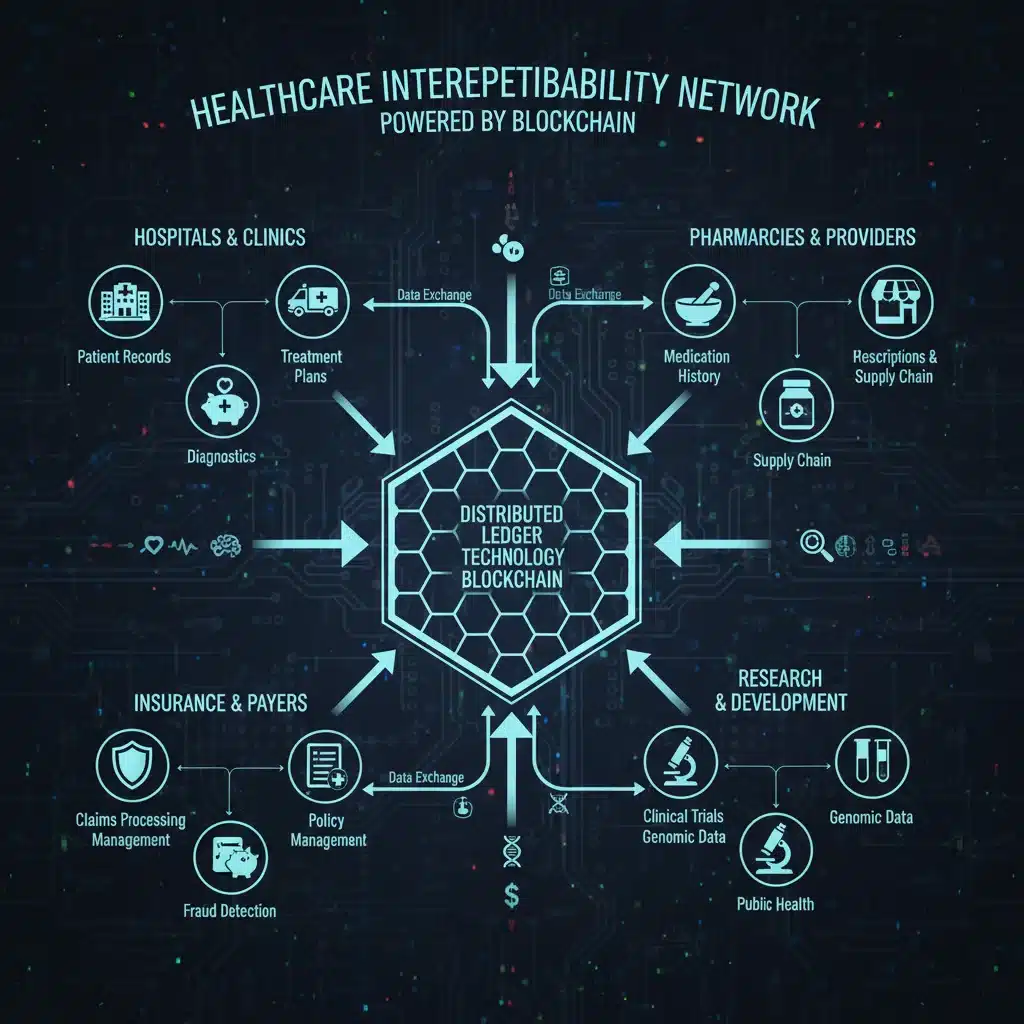
One of the most talked-about applications is the creation of secure, patient-centric EHRs. Currently, patient data is often fragmented across different systems, making it difficult for healthcare providers to access a complete medical history. Blockchain can create an immutable, shared ledger where patient data is securely stored and accessible to authorized parties. Patients could have greater control over their data, granting and revoking access as needed. This enhances data integrity and privacy, addressing a critical need for blockchain healthcare medtech solutions.
Imagine a scenario where a patient’s medical history, from primary care visits to specialist consultations and medical device implant data, is all linked via a blockchain. This allows for seamless data exchange between different providers, reducing diagnostic errors, improving treatment coordination, and ultimately leading to better patient outcomes. MedTech companies can integrate their device data directly into these blockchain-powered EHRs, providing a holistic view of patient health.
2. Pharmaceutical Supply Chain Management
Counterfeit drugs are a global problem, posing significant health risks and costing billions. Blockchain’s traceability features can provide an unparalleled level of transparency in the pharmaceutical supply chain. Each step of a drug’s journey – from manufacturing to distribution to the pharmacy shelf – can be recorded on a blockchain. This allows for real-time tracking and verification, ensuring the authenticity and integrity of medications.
For MedTech, this extends to tracking medical devices. From manufacturing origin to sterile processing and eventual patient use, blockchain can provide an auditable trail, enhancing recall efficiency and ensuring device authenticity. This is particularly relevant for high-value or implantable devices where provenance is critical.
3. Medical Device Data Security and Integrity
With the proliferation of IoT-enabled medical devices, data security becomes even more critical. These devices generate vast amounts of sensitive patient data. Blockchain can secure this data at its source, providing an immutable record of device performance, sensor readings, and diagnostic information. This ensures that data used for clinical decisions and research is trustworthy and untampered.
Furthermore, blockchain can facilitate secure firmware updates and authentication for medical devices, preventing unauthorized access or malicious alterations. This proactive approach to security is a game-changer for blockchain healthcare medtech, protecting both patients and device manufacturers.

4. Clinical Trials Management and Research
Clinical trials are complex, costly, and often plagued by data integrity issues. Blockchain can enhance the transparency and auditability of clinical trial data, from patient recruitment and consent to data collection and results reporting. Immutable records of trial protocols, patient consent, and adverse events can significantly improve the trustworthiness of research findings.
For MedTech companies involved in R&D, this means more reliable trial data, faster regulatory approvals, and increased public trust in their innovations. It also enables secure sharing of anonymized data for collaborative research, accelerating medical breakthroughs.
5. Healthcare Insurance Claims Processing
The current healthcare insurance claims process is notoriously inefficient, involving multiple intermediaries and prone to fraud. Blockchain can streamline this process by creating a transparent and immutable record of claims. Smart contracts – self-executing contracts with the terms of the agreement directly written into code – can automate claims processing, reducing administrative overhead and speeding up reimbursements.
This benefits MedTech companies by ensuring faster and more transparent payment for their devices and services, improving cash flow and reducing disputes. The overall efficiency gains contribute to a more sustainable blockchain healthcare medtech ecosystem.
Compelling Benefits of Blockchain for MedTech Professionals
The integration of blockchain in healthcare offers a multitude of benefits that directly impact MedTech professionals and the broader healthcare ecosystem. These advantages address long-standing pain points and pave the way for a more efficient, secure, and patient-centric future.
1. Enhanced Data Security and Privacy
Cybersecurity breaches in healthcare are a growing concern, compromising sensitive patient information and eroding trust. Blockchain’s cryptographic security and decentralized nature make it highly resistant to tampering and unauthorized access. Data stored on a blockchain is encrypted and distributed across multiple nodes, making it incredibly difficult for malicious actors to compromise the entire system. This is a critical advantage for MedTech, which often deals with highly sensitive patient identifiers and medical device data.
Furthermore, blockchain can facilitate fine-grained access control, allowing patients to dictate who sees their health records and for what purpose. This empowers patients and ensures compliance with stringent data privacy regulations like HIPAA and GDPR.
2. Improved Data Interoperability and Exchange
One of healthcare’s most significant challenges is the lack of interoperability between disparate systems. Patient data often resides in silos, hindering coordinated care and research. Blockchain acts as a universal, secure layer for data exchange, enabling seamless communication between different healthcare providers, medical devices, and research institutions. This means MedTech devices can contribute data to a patient’s comprehensive record without compatibility issues, fostering a truly integrated healthcare experience.
This enhanced interoperability facilitates a holistic view of patient health, leading to more accurate diagnoses, personalized treatment plans, and improved care coordination, which are all central to the evolution of blockchain healthcare medtech.
3. Increased Transparency and Trust
The inherent transparency and immutability of blockchain foster greater trust among all stakeholders in the healthcare ecosystem. Patients can trust that their data is accurate and secure. Providers can trust the authenticity of medical records and device data. Regulators can trust the integrity of clinical trial results and supply chain information. This increased trust is foundational for collaborative innovation and efficient operations within the MedTech sector.
4. Reduced Costs and Operational Efficiencies
By automating processes through smart contracts, reducing administrative overhead, and minimizing fraud, blockchain can significantly lower operational costs in healthcare. For MedTech companies, this translates to more efficient supply chains, faster claims processing, and streamlined regulatory compliance. The elimination of intermediaries in many processes further contributes to cost savings, allowing resources to be redirected towards patient care and innovation.
5. Empowered Patients and Personalized Medicine
With greater control over their health data, patients become more active participants in their care journey. This empowerment, combined with the ability to securely share comprehensive health data, paves the way for truly personalized medicine. MedTech innovations, from diagnostic tools to therapeutic devices, can leverage this rich, secure data to offer highly tailored solutions, optimizing treatment efficacy and patient outcomes. This symbiotic relationship between patient empowerment and technological advancement is a hallmark of blockchain healthcare medtech.
Challenges and Considerations for Blockchain Adoption in Healthcare
While the promise of blockchain in healthcare is undeniable, its widespread adoption is not without significant challenges. MedTech professionals must be aware of these hurdles to effectively plan for integration and contribute to viable solutions.
1. Scalability and Performance
Healthcare systems generate enormous volumes of data. Traditional blockchain networks, particularly public ones, have faced scalability issues, struggling to process a high number of transactions per second. For real-time applications in healthcare, such as monitoring critical medical device data or facilitating rapid patient record access, scalability is paramount. Solutions like private/permissioned blockchains, sidechains, and sharding are being explored to address these performance concerns for blockchain healthcare medtech implementations.
2. Regulatory and Legal Frameworks
The regulatory landscape for blockchain technology is still evolving. Healthcare is a heavily regulated industry, and integrating a new, decentralized technology requires careful consideration of existing laws (e.g., HIPAA, GDPR) and the development of new frameworks. Questions around data ownership, liability in decentralized systems, and compliance with data retention policies need clear answers. MedTech companies must navigate this complex legal environment, often requiring collaboration with legal experts and regulatory bodies.
3. Interoperability with Legacy Systems
Healthcare organizations often rely on decades-old legacy IT systems. Integrating blockchain solutions with these existing infrastructures is a significant technical challenge. It requires robust API development, data standardization efforts, and a phased approach to adoption to ensure continuity of care and avoid disruptions. The transition period will likely be complex and resource-intensive.
4. Data Privacy and Confidentiality
While blockchain offers enhanced security, the transparent nature of public blockchains raises concerns about patient privacy. Solutions like zero-knowledge proofs, homomorphic encryption, and permissioned blockchains (where only authorized parties can view specific data) are crucial for maintaining confidentiality while leveraging blockchain’s benefits. MedTech solutions must be designed with these privacy-preserving techniques at their core to ensure patient trust.
5. Cost of Implementation and Energy Consumption
Developing and implementing blockchain solutions can be expensive, requiring significant investment in infrastructure, talent, and ongoing maintenance. Furthermore, some blockchain consensus mechanisms (like Proof of Work) are energy-intensive, raising environmental concerns. MedTech companies will need to conduct thorough cost-benefit analyses and explore energy-efficient blockchain protocols to ensure sustainable adoption.
6. User Adoption and Education
Any new technology faces resistance, and blockchain is no exception. Healthcare professionals, including MedTech specialists, will require extensive education and training to understand and effectively utilize blockchain-powered systems. Simplified user interfaces and clear demonstrations of value will be essential for driving adoption across the diverse healthcare workforce.
The Future Outlook: Blockchain in Healthcare for MedTech Professionals by 2026 and Beyond
Looking ahead to 2026, the trajectory for blockchain in healthcare is one of cautious yet determined progress. While widespread, full-scale adoption might still be a few years away, significant pilot programs, strategic partnerships, and niche applications will have undoubtedly matured. For MedTech professionals, this means a growing expectation of blockchain literacy and an increasing demand for devices and solutions that are ‘blockchain-ready’.
Key Trends to Watch:
- Increased Focus on Permissioned Blockchains: To address privacy and scalability concerns, private or consortium-based blockchains will likely dominate healthcare applications, offering controlled access and higher transaction throughput.
- Standardization Efforts: Industry consortia and standards bodies will work towards establishing common protocols and data formats for blockchain integration, crucial for achieving true interoperability across the MedTech ecosystem.
- Hybrid Solutions: Expect to see hybrid models where blockchain acts as a secure ‘trust layer’ for sensitive metadata and access control, while large volumes of clinical data remain in existing secure databases.
- Smart Contracts for Automation: The use of smart contracts will expand beyond claims processing to automate regulatory compliance, device maintenance schedules, and even personalized treatment pathways based on patient data.
- Tokenization of Health Data: While controversial, the concept of patients owning and potentially monetizing their anonymized health data through tokens could gain traction, fostering new research models and patient incentives.
MedTech companies that proactively invest in understanding and integrating blockchain healthcare medtech solutions will be at the forefront of innovation. This includes developing devices that can securely feed data into blockchain networks, designing software that leverages blockchain for data integrity, and exploring new business models based on decentralized data sharing.
Preparing for a Blockchain-Enabled Future: Advice for MedTech Professionals
For MedTech professionals aiming to stay relevant and competitive in the coming years, proactively engaging with blockchain technology is essential. Here are actionable steps:
- Educate Yourself: Start with the fundamentals. Understand how blockchain works, its different types (public, private, consortium), and its core components like smart contracts and consensus mechanisms. Online courses, industry reports, and specialized workshops can be invaluable.
- Identify Use Cases: Think critically about your specific area within MedTech. Where are the current inefficiencies, security gaps, or interoperability challenges? How could blockchain offer a solution? Brainstorm potential pilot projects within your organization.
- Collaborate and Network: Engage with blockchain developers, healthcare IT experts, and other MedTech innovators. Attend industry conferences and join relevant online communities. Partnerships will be key to developing robust solutions.
- Pilot Projects: Encourage your organization to undertake small-scale pilot projects. This hands-on experience is crucial for understanding the practicalities, challenges, and real-world benefits of blockchain in healthcare.
- Advocate for Standards: Participate in industry discussions and working groups focused on establishing blockchain standards for healthcare. Your input can shape the future interoperability of MedTech devices.
- Focus on Data Governance: As blockchain emphasizes data integrity and ownership, develop a strong understanding of data governance principles, privacy regulations, and ethical considerations.
The journey towards a fully blockchain-integrated healthcare system is complex and multifaceted. However, the potential rewards – enhanced patient safety, improved operational efficiency, and transformative new care models – are too significant to ignore. By embracing this technology, MedTech professionals can play a pivotal role in shaping the future of digital health.
Conclusion
The year 2026 will likely mark a critical inflection point for blockchain in healthcare, moving from experimental pilots to more concrete, albeit still evolving, implementations. For MedTech professionals, this educational perspective underscores the importance of not just observing, but actively participating in this technological revolution. Blockchain offers a robust framework to address some of healthcare’s most entrenched problems, from data security and interoperability to supply chain integrity and clinical trial transparency.
While challenges such as scalability, regulatory ambiguity, and integration with legacy systems persist, ongoing innovation and collaborative efforts are steadily paving the way for solutions. By understanding the core principles, exploring diverse applications, recognizing the profound benefits, and anticipating future trends, MedTech professionals can position themselves and their organizations to lead in a blockchain healthcare medtech era. The future of healthcare is decentralized, secure, and interconnected, and blockchain is poised to be its foundational layer.