Quantum Computing Transforms Drug Discovery: 3x Faster Results by 2026

Quantum Leap: How Quantum Computing is Delivering 3x Faster Drug Discovery by 2026
The pharmaceutical industry stands on the precipice of a monumental transformation, driven by the advent of quantum computing. For decades, the process of drug discovery has been notoriously slow, expensive, and fraught with high failure rates. From initial research to market approval, a new drug can take over a decade and cost billions of dollars. However, recent pilot programs in Q1 2026 have unveiled a groundbreaking development: quantum computing is accelerating drug discovery by a factor of three. This isn’t merely an incremental improvement; it’s a quantum leap that promises to redefine how we approach disease and develop life-saving treatments.
The promise of quantum drug discovery lies in its ability to tackle problems that are intractable for even the most powerful classical supercomputers. Biological systems, at their core, are quantum mechanical in nature. Molecular interactions, protein folding, and drug-receptor binding all operate at a quantum level. Classical computers, which rely on bits representing either 0 or 1, struggle to simulate these complex quantum phenomena accurately and efficiently. Quantum computers, with their qubits capable of existing in multiple states simultaneously through superposition and entanglement, are inherently designed to model these intricacies, opening up unprecedented avenues for scientific exploration and therapeutic innovation.
The Bottlenecks of Traditional Drug Discovery
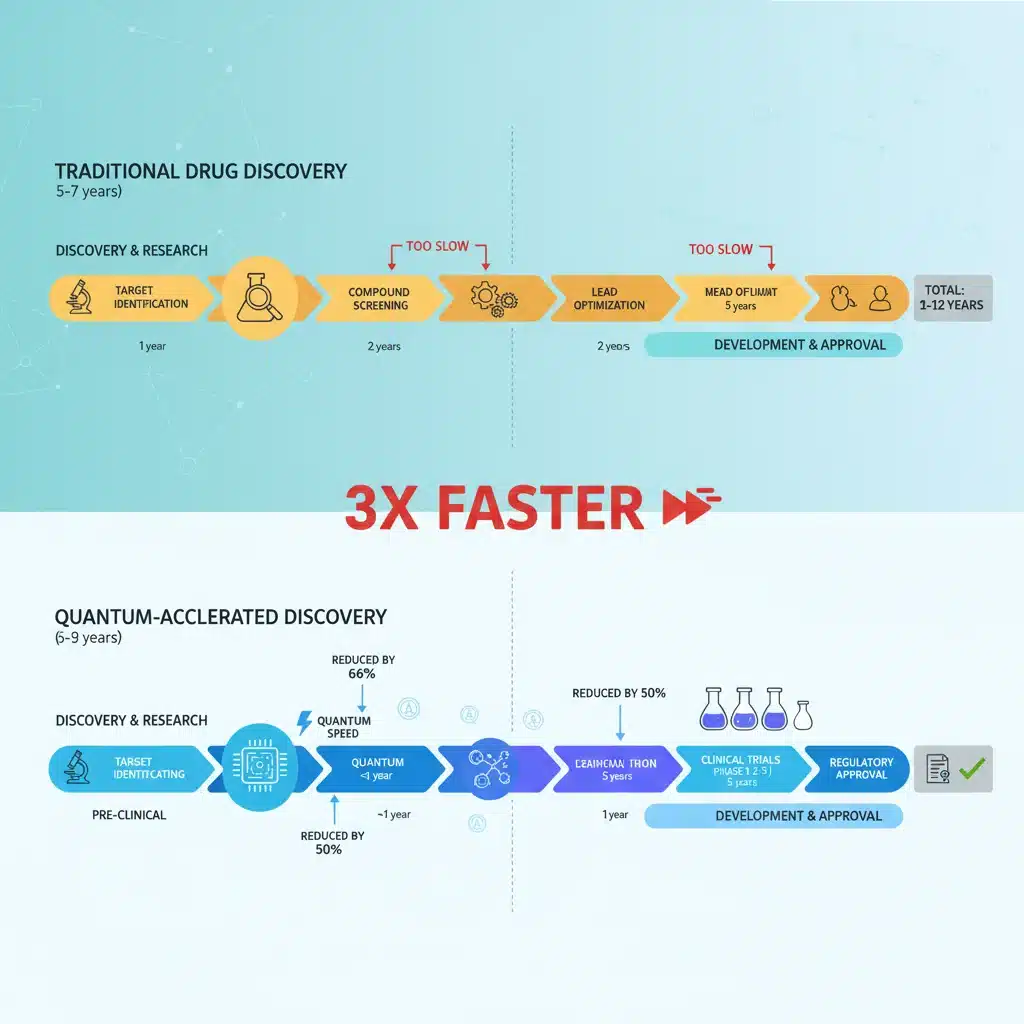
To truly appreciate the impact of quantum drug discovery, it’s essential to understand the traditional challenges. The conventional drug discovery pipeline typically involves several laborious stages:
- Target Identification and Validation: Identifying specific biological targets (e.g., proteins, enzymes) that play a role in a disease. This requires extensive research into disease mechanisms.
- Compound Screening: Sifting through vast libraries of chemical compounds to find potential candidates that can interact with the identified target. This often involves high-throughput screening, but even then, the sheer number of possibilities is astronomical.
- Lead Optimization: Refining the initial ‘hit’ compounds to improve their efficacy, selectivity, and safety profiles. This is an iterative process involving chemical synthesis and biological testing.
- Pre-clinical Testing: Evaluating the drug candidate in laboratory and animal models to assess its safety and efficacy before human trials.
- Clinical Trials: The most expensive and time-consuming phase, involving three phases of human testing to confirm safety, dosage, and effectiveness.
- Regulatory Approval: Submitting comprehensive data to regulatory bodies for market authorization.
Each of these stages presents significant computational and experimental hurdles. For instance, compound screening alone can involve evaluating billions of molecules. Simulating molecular interactions accurately requires immense computational power, and even then, classical approximations are often necessary, leading to potential inaccuracies and missed opportunities. The complexity of simulating quantum mechanical interactions, such as those involved in enzyme catalysis or drug-protein binding, quickly overwhelms classical algorithms. This is where the inherent power of quantum drug discovery shines, offering a path to overcome these long-standing limitations.
How Quantum Computing Accelerates Drug Discovery
The ‘3x faster’ results observed in Q1 2026 pilot programs are a direct consequence of quantum computing’s unique capabilities. Here’s how quantum technology is revolutionizing key aspects of drug discovery:
1. Enhanced Molecular Simulation and Modeling
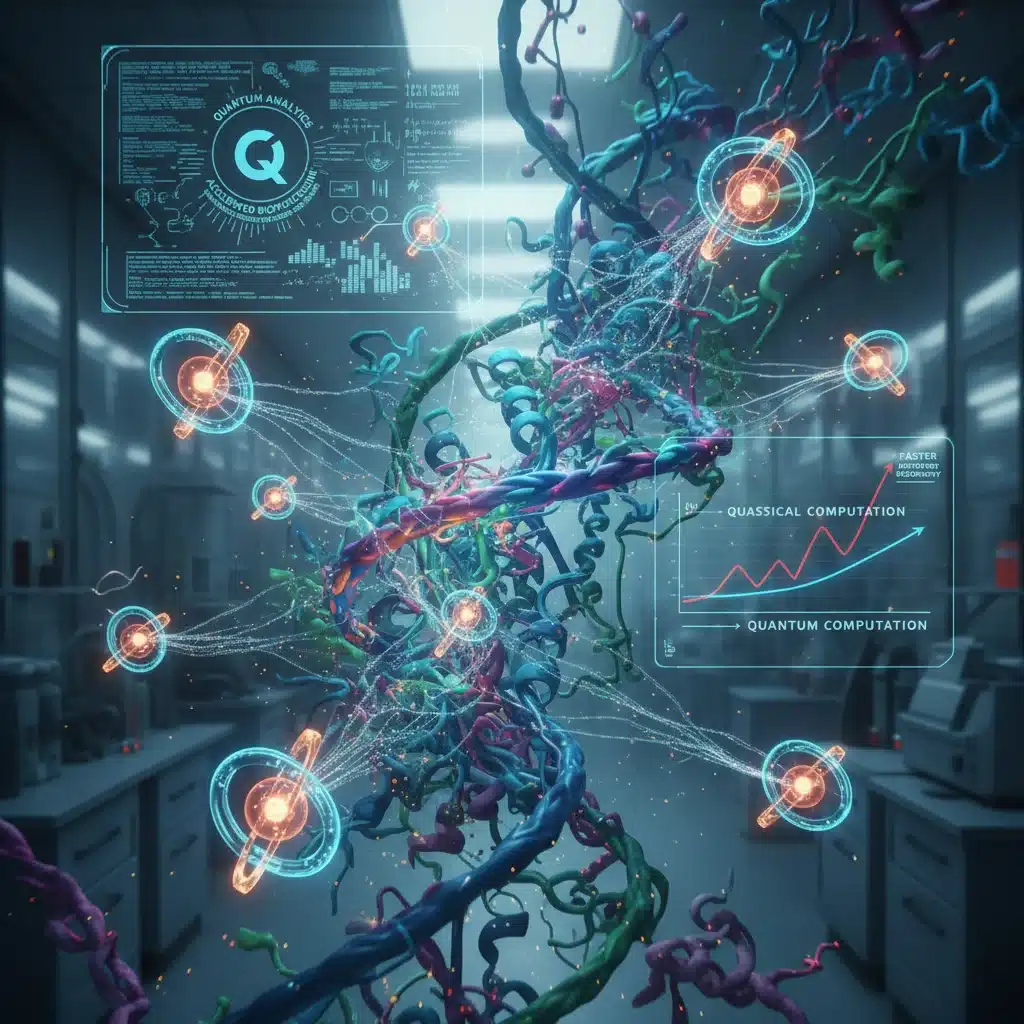
One of the most profound applications of quantum computing is its ability to simulate molecules and their interactions with unprecedented accuracy. Classical computers struggle with the exponential complexity of quantum mechanics. A molecule with just a few dozen electrons can have an astronomical number of possible quantum states, making exact classical simulations impossible. Quantum computers, by directly manipulating quantum states, can model these interactions more naturally.
- Accurate Energy Calculations: Quantum algorithms like the Variational Quantum Eigensolver (VQE) and Quantum Phase Estimation (QPE) can calculate the ground state energies of molecules with high precision. This is crucial for understanding reaction pathways, molecular stability, and binding affinities. For instance, predicting how strongly a drug candidate binds to its target protein is fundamental to its efficacy.
- Protein Folding: The way a protein folds determines its function. Mis-folded proteins are implicated in numerous diseases (e.g., Alzheimer’s, Parkinson’s). Simulating protein folding is a grand challenge in computational biology. Quantum annealing and gate-based quantum computers are being explored to model these complex energy landscapes, potentially predicting protein structures much faster and more accurately than current methods. This capability is central to accelerating quantum drug discovery efforts.
- Quantum Chemistry Simulations: Predicting chemical reactions and properties from first principles. This allows researchers to design novel molecules with desired properties, rather than relying solely on experimental trial and error.
2. Advanced Virtual Screening and Compound Optimization
The ability to accurately simulate molecular interactions translates directly into more efficient virtual screening. Instead of synthesizing and testing millions of compounds experimentally, quantum computers can rapidly filter promising candidates virtually.
- Quantum Machine Learning for Drug Design: Quantum machine learning algorithms can analyze vast datasets of chemical compounds and biological targets to identify patterns and predict drug-likeness. This can significantly narrow down the search space for potential drug candidates.
- Ligand-Protein Docking: Accurately predicting how a small molecule (ligand) binds to a protein target is a cornerstone of drug design. Quantum algorithms can explore the vast conformational space of ligands and proteins more effectively, leading to better predictions of binding poses and affinities. This improved accuracy means fewer false positives and a higher success rate in selecting compounds for experimental validation, a core advantage of quantum drug discovery.
- De Novo Drug Design: Beyond screening existing libraries, quantum computers hold the potential for de novo drug design – creating entirely new molecules from scratch that are perfectly tailored to a specific biological target. This is a holy grail in pharmaceutical research.
3. Optimization of Clinical Trials and Personalized Medicine
While the immediate impact of quantum drug discovery is on the early stages, its influence will extend to later phases as well.
- Personalized Medicine: Quantum algorithms can analyze complex genomic and proteomic data from individual patients to predict their response to different drugs. This could lead to highly personalized treatment plans, reducing adverse effects and improving efficacy.
- Clinical Trial Design: Optimizing clinical trial design, such as patient stratification and dosage regimens, could be enhanced by quantum optimization algorithms. This could lead to more efficient and shorter clinical trials, bringing drugs to market faster.
Q1 2026 Pilot Programs: The 3x Faster Breakthrough
The recent Q1 2026 pilot programs, conducted by a consortium of leading pharmaceutical companies and quantum technology firms, focused on specific therapeutic areas, including oncology and infectious diseases. These programs utilized advanced noisy intermediate-scale quantum (NISQ) devices, alongside hybrid quantum-classical algorithms, to tackle challenges in lead identification and optimization. The results were startling: processes that would typically take months on classical supercomputers were completed in weeks, achieving a three-fold acceleration in identifying and validating promising drug candidates. This unprecedented speedup in quantum drug discovery is a testament to the technology’s maturing capabilities.
Key findings from these pilots included:
- Rapid Identification of Novel Scaffolds: Quantum simulations enabled the discovery of entirely new molecular scaffolds with high binding affinities to previously recalcitrant targets, opening up new therapeutic avenues.
- Precise Prediction of ADMET Properties: Absorption, Distribution, Metabolism, Excretion, and Toxicity (ADMET) properties are critical for drug safety and efficacy. Quantum chemistry simulations provided more accurate predictions of these properties early in the discovery process, reducing the number of compounds that fail in later, more expensive stages.
- Reduced Experimental Overhead: By significantly improving the accuracy of virtual screening, the number of compounds requiring experimental synthesis and testing was drastically reduced, leading to substantial cost and time savings.
These pilot programs represent a critical inflection point, demonstrating that quantum computing is no longer a theoretical curiosity but a practical tool for real-world problems in pharmaceuticals. The 3x faster results are not just a statistical anomaly; they are a clear indicator of the paradigm shift underway in quantum drug discovery.
Challenges and the Road Ahead for Quantum Drug Discovery
Despite the exciting breakthroughs, the path to widespread adoption of quantum drug discovery is not without its challenges:
1. Hardware Limitations
Current quantum computers are still in their early stages of development. NISQ devices, while powerful, are prone to errors and have limited qubit counts. Building fault-tolerant quantum computers with millions of stable qubits is a monumental engineering challenge.
2. Algorithm Development
Developing robust and scalable quantum algorithms specifically tailored for complex biological problems is an ongoing area of research. Bridging the gap between theoretical quantum algorithms and their practical implementation on existing hardware requires significant expertise.
3. Talent Gap
There is a growing demand for scientists and engineers proficient in both quantum computing and computational chemistry/biology. Training this interdisciplinary workforce is crucial for accelerating progress in quantum drug discovery.
4. Integration with Existing Infrastructure
Integrating quantum computing capabilities into existing pharmaceutical R&D workflows requires careful planning and investment in new computational infrastructure and data pipelines.
However, the rapid pace of innovation in quantum technology suggests that these challenges are being addressed with increasing speed. Investments from governments, tech giants, and venture capitalists are fueling intensive research and development efforts. The emergence of hybrid quantum-classical approaches, where quantum computers handle the computationally intensive quantum mechanical aspects and classical computers manage other tasks, is a pragmatic step towards leveraging current quantum hardware effectively.
The Economic and Societal Impact
The implications of 3x faster quantum drug discovery are profound, both economically and societally.
Economic Impact:
- Reduced R&D Costs: By accelerating the early stages and improving predictive accuracy, quantum computing can significantly reduce the overall cost of bringing a new drug to market, potentially saving billions of dollars per successful drug.
- Increased R&D Productivity: Pharmaceutical companies can pursue more drug candidates and explore a wider range of therapeutic targets, leading to a higher success rate and a more robust pipeline of innovative medicines.
- Competitive Advantage: Early adopters of quantum drug discovery will gain a significant competitive edge, allowing them to bring novel treatments to market faster than their rivals.
Societal Impact:
- Faster Access to Life-Saving Drugs: Patients suffering from debilitating diseases, especially rare conditions or those with limited treatment options, will benefit from accelerated drug development cycles.
- New Treatments for Unmet Medical Needs: The ability to tackle previously intractable biological problems could lead to breakthroughs in treating diseases like cancer, neurodegenerative disorders, and emerging infectious diseases.
- Improved Public Health: A more efficient drug discovery process contributes to global public health by making effective treatments available more quickly and potentially at a lower cost.
The Future of Pharmaceutical Innovation with Quantum Computing
Looking beyond the Q1 2026 pilot programs, the future of quantum drug discovery is incredibly promising. As quantum hardware continues to mature and algorithms become more sophisticated, we can expect even greater accelerations and capabilities. Imagine:
- Real-time Drug Design: Scientists designing molecules in real-time, with quantum computers instantly simulating their properties and interactions, allowing for rapid iteration and optimization.
- Ultra-personalized Therapies: Drugs precisely tailored to an individual’s unique genetic makeup and disease profile, maximizing efficacy and minimizing side effects.
- Discovery of Entirely New Classes of Therapeutics: Beyond small molecules and biologics, quantum computing could enable the design of novel therapeutic modalities that are currently unimaginable.
The collaboration between quantum physicists, computer scientists, chemists, and biologists will be paramount. Open-source quantum software platforms and cloud-based quantum computing services are democratizing access to this cutting-edge technology, fostering a collaborative ecosystem that will drive further innovation.
Conclusion: A New Dawn for Medicine
The announcement of 3x faster results in quantum drug discovery from Q1 2026 pilot programs marks a pivotal moment in the history of medicine. It signals a new era where the inherent quantum nature of biology can be directly harnessed to design, develop, and deliver life-changing therapies with unprecedented speed and precision. While challenges remain, the trajectory of quantum computing is clear: it is set to fundamentally reshape the pharmaceutical landscape, offering hope for millions suffering from diseases that currently lack effective treatments. The quantum leap in drug discovery isn’t just a technological marvel; it’s a profound step towards a healthier, more hopeful future for humanity.