Upskilling in AI & ML for Healthcare: 3-Month Roadmap 2026
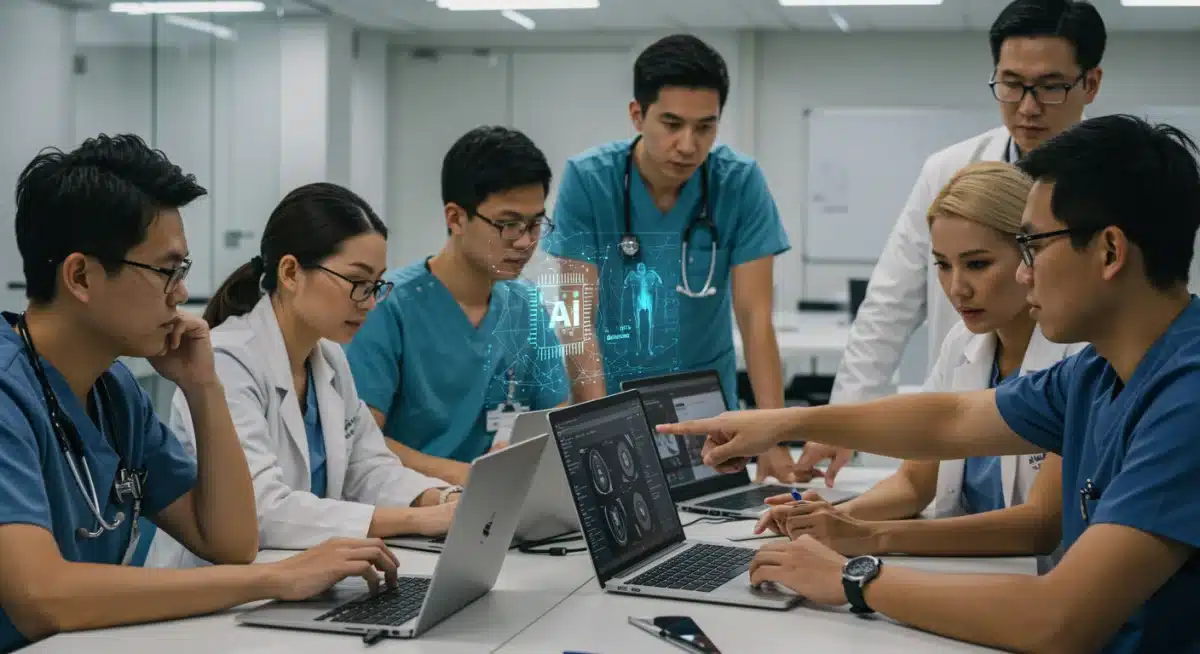
This 3-month learning roadmap for 2026 provides a strategic guide for professionals seeking to upskill in AI and Machine Learning within the healthcare sector, outlining essential modules and practical applications to foster career growth.
Are you ready to transform your career and become a pivotal player in the future of medicine? Our comprehensive guide on Upskilling in AI and Machine Learning for Healthcare: A 3-Month Learning Roadmap for 2026 is designed to equip you with the essential knowledge and skills needed to navigate the evolving landscape of medical technology.
The AI and Machine Learning Revolution in Healthcare
The healthcare industry is on the cusp of a profound transformation, driven by the rapid advancements in artificial intelligence (AI) and machine learning (ML). These technologies are no longer confined to research labs; they are actively reshaping diagnostics, treatment planning, drug discovery, and patient care. Understanding their fundamental principles and applications is becoming indispensable for any healthcare professional aiming to stay relevant and contribute meaningfully to innovative solutions.
This revolution is not just about automating tasks but about augmenting human capabilities, allowing clinicians to make more informed decisions, personalize treatments, and predict health outcomes with greater accuracy. The integration of AI and ML promises to enhance efficiency, reduce costs, and ultimately improve patient lives. However, this shift also creates a demand for a workforce skilled in these emerging areas, prompting many to consider significant upskilling initiatives.
Embracing AI and ML in healthcare means recognizing the immense potential they hold for addressing complex medical challenges. From analyzing vast genomic datasets to predicting disease outbreaks and streamlining administrative processes, the scope of these technologies is continually expanding. Professionals who proactively engage with this learning curve will find themselves at the forefront of medical innovation, ready to adapt and lead in a dynamic environment.
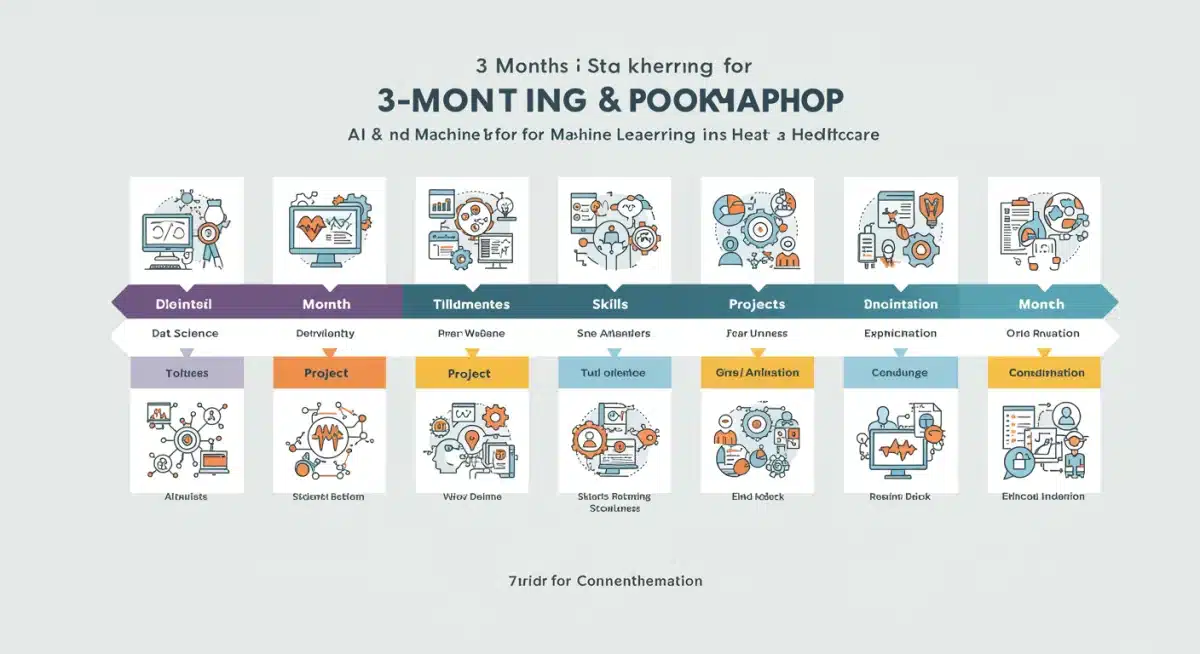
Month 1: Foundational Concepts and Data Literacy
The first month of your upskilling journey focuses on building a robust foundation in the core concepts of AI and Machine Learning, alongside developing critical data literacy skills. Without a solid understanding of these basics, delving into more complex applications can be challenging. This initial phase is crucial for establishing the mental models and technical vocabulary necessary for subsequent learning.
Data is the lifeblood of AI and ML. Therefore, understanding how to acquire, clean, and interpret data is paramount. This month will introduce you to various data types encountered in healthcare, from electronic health records to medical images, and the ethical considerations surrounding their use. Developing proficiency in these areas will set the stage for practical application.
Understanding AI and ML Fundamentals
Begin by grasping the fundamental differences and overlaps between artificial intelligence, machine learning, and deep learning. Explore common algorithms and their general applications. This theoretical grounding will provide context for the practical skills you will develop.
- Introduction to AI concepts: supervised, unsupervised, and reinforcement learning.
- Basic ML algorithms: linear regression, logistic regression, decision trees.
- Understanding neural networks and the basics of deep learning.
Data Science Essentials for Healthcare
Healthcare data presents unique challenges due to its complexity, sensitivity, and varied formats. This section will introduce you to data collection methods, data cleaning techniques, and basic statistical analysis relevant to medical contexts. Proficiency in data manipulation is non-negotiable for effective AI and ML implementation.
- Introduction to Python for data science (NumPy, Pandas).
- Data preprocessing techniques: handling missing values, normalization.
- Basic statistical analysis for healthcare datasets.
By the end of Month 1, you should feel comfortable with the foundational theories of AI and ML and possess basic data handling skills using Python. This initial investment in core knowledge will significantly ease your progression through the more advanced modules, ensuring a comprehensive understanding of the technologies at play.
Month 2: Practical Applications and Model Development
Having established a strong theoretical and data literacy foundation, Month 2 transitions into the practical application of AI and ML in real-world healthcare scenarios. This phase emphasizes hands-on experience, focusing on developing and evaluating machine learning models tailored to specific medical challenges. The goal is to move beyond theory and build tangible skills that can be directly applied.
You will explore various types of healthcare data, including medical imaging and clinical notes, and learn how to preprocess and utilize them for model training. This practical exposure is key to understanding the nuances and complexities of applying these technologies in a sensitive and regulated environment like healthcare.
Machine Learning for Medical Diagnostics
This module focuses on using ML algorithms for diagnostic purposes. You will learn to implement models that can assist in identifying diseases from various data sources. The emphasis will be on practical coding exercises and understanding model performance metrics relevant to clinical accuracy.
- Image recognition with deep learning (CNNs) for radiology.
- Predictive modeling for disease early detection.
- Natural Language Processing (NLP) for analyzing clinical notes and patient records.
Ethical AI and Data Privacy in Healthcare
The application of AI in healthcare comes with significant ethical responsibilities and strict privacy regulations. This section delves into the critical aspects of data governance, patient consent, and ensuring fairness and transparency in AI models. Understanding these principles is as important as technical proficiency.
- HIPAA compliance and data protection laws.
- Bias detection and mitigation in AI algorithms.
- Ensuring model interpretability and explainability.
Month 2 is about translating theoretical knowledge into practical skills. By developing and evaluating actual machine learning models for healthcare applications, you will gain invaluable experience and a deeper appreciation for the challenges and opportunities that lie ahead. This hands-on approach solidifies understanding and prepares you for more advanced projects.
Month 3: Advanced Topics and Project Integration
The final month of your upskilling roadmap is dedicated to exploring advanced AI and ML topics and integrating your acquired knowledge into comprehensive projects. This phase is designed to consolidate your learning, challenge your problem-solving abilities, and simulate real-world development cycles. It’s where all the pieces come together, showcasing your ability to design and implement sophisticated solutions.
You will delve into more specialized areas of AI, considering how these can be deployed and managed in a clinical setting. The culmination of this month is a capstone project, allowing you to apply everything you’ve learned to a significant healthcare challenge, demonstrating your readiness for advanced roles.
Implementing AI in Clinical Workflows
Beyond model development, understanding how to integrate AI solutions into existing clinical workflows is crucial for successful adoption. This module covers deployment strategies, considerations for scalability, and continuous monitoring of AI systems in a healthcare environment. The focus is on practical implementation and operational aspects.
- Introduction to MLOps for healthcare.
- Cloud platforms (AWS, Azure, Google Cloud) for AI deployment.
- Monitoring and maintaining AI models in production.
Advanced Machine Learning Techniques and Future Trends
Stay ahead of the curve by exploring cutting-edge AI and ML techniques that are emerging in healthcare. This includes areas like federated learning, explainable AI (XAI), and reinforcement learning in medical contexts. Understanding these trends will position you as a forward-thinking professional capable of anticipating future innovations.
- Federated learning for privacy-preserving data analysis.
- Explainable AI (XAI) methods for clinical decision support.
- Introduction to quantum machine learning in healthcare (emerging).
Month 3 culminates in a significant project that allows you to synthesize your knowledge and skills. This project will serve as a powerful testament to your capabilities, demonstrating your readiness to contribute to the rapidly evolving field of AI and ML in healthcare. It’s an opportunity to showcase your expertise and problem-solving prowess.
Resources and Continuous Learning for AI ML Healthcare Upskilling
Successfully completing a 3-month roadmap is a significant achievement, but the journey of learning in AI and ML is continuous, especially in a dynamic field like healthcare. Accessing the right resources and cultivating a habit of lifelong learning are crucial for sustained growth and staying abreast of new developments. The landscape of AI and ML in healthcare is constantly evolving, with new algorithms, datasets, and ethical considerations emerging regularly.
This section provides guidance on where to find reliable information, how to engage with the community, and strategies for maintaining your expertise beyond the initial upskilling period. Building a strong network and actively participating in discussions will enhance your learning experience and open new opportunities.
Recommended Online Courses and Platforms
Many reputable platforms offer specialized courses in AI and ML for healthcare. These resources often provide structured learning paths, practical exercises, and certifications that can validate your skills. Choosing platforms with industry recognition can be beneficial for career advancement and help you solidify your AI ML Healthcare Upskilling.
- Coursera and edX: Specializations in AI for Medicine.
- DeepLearning.AI: Courses focused on deep learning applications.
- Kaggle: Data science competitions and community forums.
Joining the AI in Healthcare Community
Engagement with the broader AI and healthcare community is invaluable. This includes participating in forums, attending webinars, and connecting with peers and experts. Such interactions can provide insights into current challenges, emerging trends, and potential collaborations. Networking is a powerful tool for professional development and staying informed about the latest advancements in AI ML Healthcare Upskilling.
- Professional organizations: AMIA, HIMSS AI Task Force.
- Online communities: Reddit (r/MachineLearning, r/HealthcareIT), LinkedIn groups.
- Conferences and workshops: RSNA, AACC, Medtronic AI Summit.
Continuous learning is not merely an option but a necessity in the fast-paced world of AI and ML in healthcare. By leveraging these resources and actively participating in the community, you can ensure your skills remain sharp and relevant, empowering you to contribute effectively to the future of medicine.
Career Opportunities and Impactful Roles
With a comprehensive understanding of AI and ML in healthcare, a wealth of career opportunities opens up, allowing you to make a significant impact on patient care and medical innovation. The demand for professionals who can bridge the gap between advanced technology and clinical practice is rapidly growing. These roles are not just about technical expertise but also about the ability to understand and address complex healthcare challenges with innovative solutions.
From improving diagnostic accuracy to personalizing treatment plans, individuals with expertise in this domain are becoming indispensable. This section highlights some of the key roles and areas where your newly acquired skills will be most valuable, illustrating the diverse pathways available after completing your Upskilling in AI and Machine Learning for Healthcare roadmap.
Emerging Job Roles in AI Healthcare
The convergence of AI and healthcare has given rise to new and exciting job titles. These roles often require a blend of technical skills, clinical knowledge, and a strong ethical compass. Understanding these positions can help you tailor your continued learning and career aspirations.
- AI Clinical Specialist: Focusing on integrating AI tools into patient care.
- Medical Data Scientist: Analyzing large datasets to extract clinical insights.
- AI Ethicist (Healthcare): Ensuring responsible and fair AI development.
- Bioinformatics Analyst: Applying computational techniques to biological data.
Making a Difference in Patient Outcomes
The ultimate goal of applying AI and ML in healthcare is to improve patient outcomes. Professionals in this field have the unique opportunity to contribute to advancements that can save lives, enhance quality of life, and make healthcare more accessible and efficient. Your skills will directly translate into tangible benefits for patients and healthcare systems alike.
- Developing predictive models for early disease detection.
- Creating personalized treatment recommendations based on genomic data.
- Optimizing hospital operations and resource allocation.
- Enhancing medical imaging analysis for faster and more accurate diagnoses.
By pursuing a career in AI and ML in healthcare, you are not just entering a high-demand field; you are becoming a part of a movement that is fundamentally changing how medicine is practiced. The impact you can make is profound, offering both professional fulfillment and the satisfaction of contributing to a healthier future for all.
Navigating Challenges and Future Outlook
While the prospects for AI and ML in healthcare are incredibly promising, navigating this evolving field also entails addressing significant challenges. These include issues related to data privacy, regulatory hurdles, and the need for continuous adaptation to new technological advancements. A realistic understanding of these obstacles is vital for effective implementation and long-term success in your AI ML Healthcare Upskilling journey.
Successfully overcoming these challenges requires a collaborative approach, involving technologists, clinicians, policymakers, and ethicists. The future outlook, despite these hurdles, remains overwhelmingly positive, with continuous innovation driving progress. Staying informed and adaptable will be key to thriving in this dynamic environment.
Key Challenges in AI Adoption
Implementing AI solutions in healthcare is not without its difficulties. Barriers range from technical complexities to human factors, such as resistance to change and the need for extensive training. Addressing these challenges systematically is crucial for widespread adoption and successful integration of AI tools.
- Data interoperability and standardization across healthcare systems.
- Regulatory approval processes for AI-driven medical devices.
- Building trust among clinicians and patients in AI-powered diagnostics.
- Managing the high computational costs associated with advanced AI models.
The Future Landscape of AI in Healthcare
Looking ahead, AI and ML are poised to become even more deeply embedded in every facet of healthcare. Advances in areas like personalized medicine, robotic surgery, and virtual health assistants will continue to redefine patient care. Professionals who are well-versed in these technologies will be instrumental in shaping this future.
- Hyper-personalized medicine leveraging AI for individual treatment plans.
- Greater integration of AI in preventive care and public health.
- Development of autonomous AI systems for routine diagnostic tasks.
- Expansion of AI-powered virtual care and remote patient monitoring.
The journey of Upskilling in AI and Machine Learning for Healthcare is one of continuous learning and adaptation. By understanding the challenges and embracing the future outlook, you can position yourself as a leader in this transformative field, ready to contribute to groundbreaking innovations that will define the next era of medicine.
| Key Milestone | Brief Description |
|---|---|
| Month 1: Foundations | Build core AI/ML concepts and data literacy with Python. |
| Month 2: Applications | Practical model development for diagnostics, ethical AI. |
| Month 3: Advanced & Project | Explore advanced topics, complete a capstone project. |
| Continuous Learning | Utilize online courses, communities, and conferences for growth. |
Frequently Asked Questions About AI & ML Upskilling in Healthcare
Before embarking on this 3-month roadmap, a basic understanding of mathematics, particularly algebra and statistics, is highly recommended. Familiarity with programming concepts, ideally in Python, will also provide a significant advantage for grasping the initial modules effectively and applying coding principles.
To successfully complete this intensive 3-month roadmap, an estimated commitment of 10-15 hours per week is generally recommended. This includes time for lectures, coding exercises, project work, and reviewing materials to ensure a thorough understanding of all concepts and applications.
Yes, you will primarily need Python installed with key libraries such as NumPy, Pandas, Scikit-learn, and TensorFlow/Keras. Integrated Development Environments (IDEs) like Jupyter Notebooks or VS Code are also highly recommended for practical coding and project development throughout the learning journey.
Projects will range from basic data analysis and visualization in Month 1 to developing predictive models for disease diagnosis or prognosis in Month 2. The capstone project in Month 3 will involve a more comprehensive application, such as building an AI system for medical image classification or clinical decision support.
You can validate your skills by showcasing your capstone project in a portfolio, pursuing certifications from recognized online platforms (e.g., Coursera, edX, DeepLearning.AI), and actively participating in data science competitions like Kaggle. Networking and presenting your work can also significantly enhance your professional profile.
Conclusion
The journey of Upskilling in AI and Machine Learning for Healthcare: A 3-Month Learning Roadmap for 2026 offers a clear, actionable path for professionals eager to contribute to the future of medicine. By systematically building foundational knowledge, engaging in practical applications, and exploring advanced topics, you can position yourself at the forefront of medical innovation. The rapid evolution of AI and ML in healthcare demands continuous learning and adaptability, but the rewards—in terms of career growth and impact on patient care—are immense. Embrace this opportunity to transform your expertise and help shape a healthier, more technologically advanced future.