Medicare Part D 2026: Unpacking the 15% Savings for Prescriptions

Anúncios
Decoding the 2026 Medicare Part D Changes: What 15% Savings Mean for Your Prescriptions
The landscape of healthcare is constantly evolving, and for millions of Americans, understanding these shifts is crucial, especially when it comes to prescription drug costs. As we look towards 2026, significant changes are on the horizon for Medicare Part D, promising a welcome relief for many beneficiaries: a 15% reduction in prescription drug costs. These updates are not just minor tweaks; they represent a fundamental restructuring designed to make essential medications more affordable. For seniors and individuals with disabilities who rely on Medicare Part D, these changes could translate into substantial financial savings and improved access to necessary treatments. Understanding the nuances of these reforms, the timeline for their implementation, and their potential impact on your personal finances is key to navigating your healthcare in the coming years. This comprehensive guide will delve deep into the 2026 Medicare Part D changes, focusing on the highly anticipated 15% savings, recent updates, and the broader financial implications for beneficiaries.
Anúncios
The journey to these 2026 reforms began with the Inflation Reduction Act (IRA) of 2022, a landmark piece of legislation that introduced several provisions aimed at lowering drug prices and out-of-pocket costs for Medicare beneficiaries. While some aspects of the IRA, such as the $35 cap on insulin costs and free vaccines, have already taken effect, the most impactful changes to Medicare Part D’s overall structure are slated for 2025 and, more significantly, 2026. The 15% savings is a direct result of these legislative efforts, a move designed to alleviate the financial burden of high prescription drug costs that have long plagued many seniors.
Understanding the Core Changes to Medicare Part D in 2026
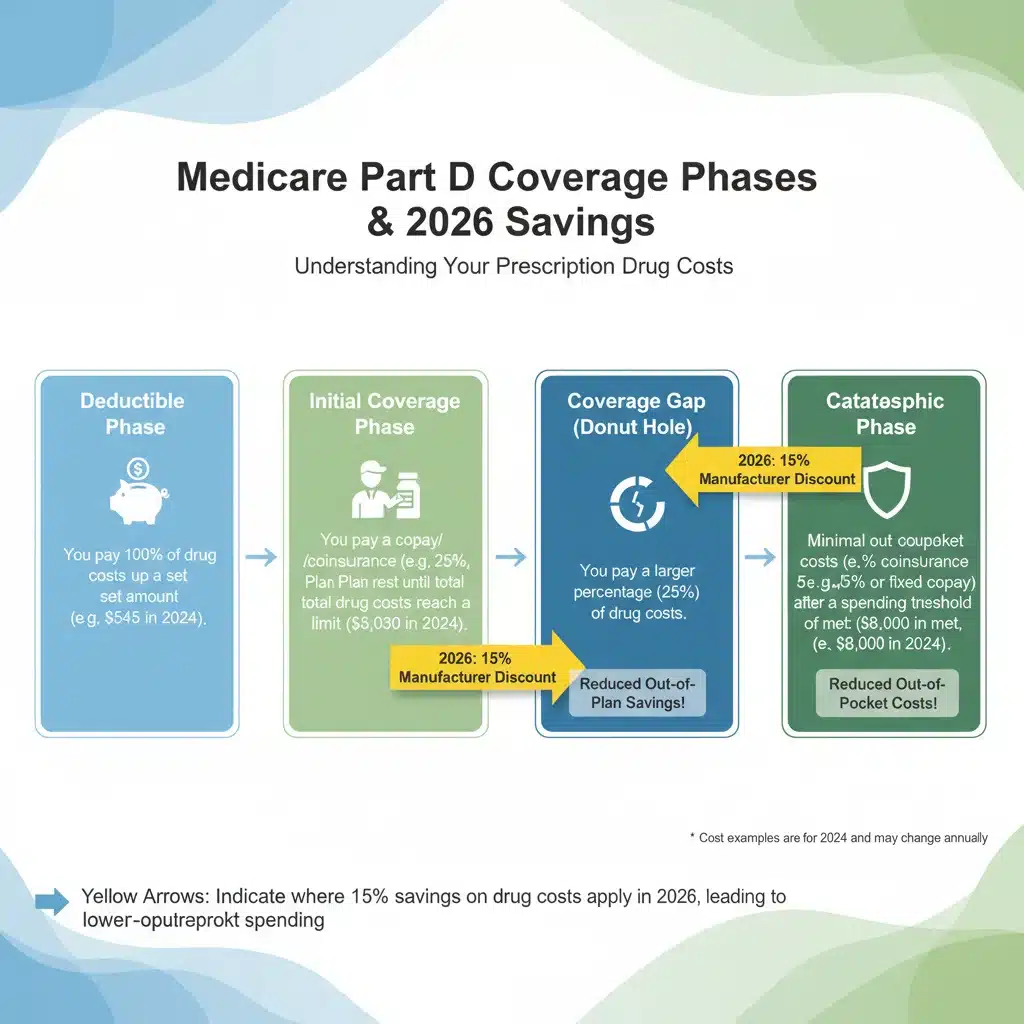
To fully grasp the significance of the 15% savings, it’s essential to first understand the existing structure of Medicare Part D and how it’s being modified. Currently, Medicare Part D plans involve several phases of coverage: the deductible, initial coverage phase, coverage gap (or ‘donut hole’), and catastrophic coverage. Beneficiaries’ out-of-pocket costs vary significantly across these phases, often leading to unpredictable and high expenses, especially for those with chronic conditions requiring expensive medications.
Anúncios
The 2026 reforms introduce a redesigned Part D benefit structure that aims to streamline costs and provide greater financial predictability. The most prominent change, beyond the 15% savings, is the establishment of a $2,000 annual cap on out-of-pocket prescription drug costs for all Medicare Part D beneficiaries, effective in 2025. This cap is a game-changer, ensuring that no Medicare beneficiary will have to pay more than $2,000 out of their own pocket for covered Part D drugs in a given year. While this cap takes effect in 2025, the 15% savings further enhances its impact by reducing the amount beneficiaries contribute to reaching that cap.
Specifically, the 15% savings will primarily impact the catastrophic coverage phase. Under the current system, once beneficiaries reach the catastrophic phase (after their out-of-pocket spending, including deductible, initial coverage, and coverage gap, exceeds a certain threshold), they are responsible for a small percentage (typically 5%) of their drug costs, while Medicare pays the rest. The 2026 changes eliminate this 5% coinsurance in the catastrophic phase. This means that once you reach the catastrophic phase, your out-of-pocket costs for covered Part D drugs will drop to zero. The 15% savings refers to the overall reduction in total drug costs that will be realized across the program due to these structural changes, particularly the elimination of the 5% coinsurance in the catastrophic phase and other adjustments to plan liability.
Another crucial element of the reforms is the shift in responsibility for drug costs among beneficiaries, plans, and drug manufacturers. The IRA increases the financial responsibility of drug manufacturers in the catastrophic phase and introduces a new manufacturer discount program in the initial coverage and coverage gap phases. These changes are designed to incentivize lower drug prices and ensure that the burden of high costs is not disproportionately borne by beneficiaries.
The Financial Impact: What 15% Savings Really Means for Your Wallet
For many, the promise of 15% savings translates directly into tangible financial relief. Let’s break down the practical implications:
- Reduced Out-of-Pocket Spending: The most direct benefit is a decrease in the amount you’ll pay for your prescriptions. While the $2,000 cap in 2025 is significant, the elimination of the 5% coinsurance in the catastrophic phase in 2026 means that once you hit that cap, your costs for the remainder of the year will be zero. This is a substantial improvement, especially for individuals with high-cost chronic conditions or those taking multiple expensive medications.
- Greater Predictability: The new structure, particularly the out-of-pocket cap, brings much-needed predictability to prescription drug costs. Instead of facing potentially unlimited expenses in the catastrophic phase, beneficiaries will know their maximum annual liability. This allows for better financial planning and reduces the anxiety associated with unexpected drug bills.
- Enhanced Access to Medications: Lower costs can lead to improved medication adherence. When drugs are more affordable, beneficiaries are less likely to skip doses or forgo necessary prescriptions due to financial constraints. This can lead to better health outcomes and a higher quality of life.
- Impact on Premiums and Deductibles: While the primary focus is on out-of-pocket costs, these structural changes could also indirectly influence Part D plan premiums and deductibles. The increased contributions from manufacturers and the government’s role in the catastrophic phase might help stabilize or even reduce premium increases over time, though this will vary by plan and market.
Consider a hypothetical scenario: currently, a beneficiary with very high drug costs might pay thousands of dollars in the catastrophic phase. In 2026, once they reach the $2,000 out-of-pocket cap, their payments stop. The 15% savings figure is an aggregate program-wide estimate of how much less beneficiaries will pay overall due to these reforms, particularly the elimination of the 5% coinsurance in the catastrophic phase and other adjustments.
Recent Updates and Legislative Context
The journey to the 2026 Medicare Part D changes has been a multi-year process, primarily driven by the Inflation Reduction Act (IRA). While the IRA was signed into law in 2022, its provisions are being rolled out in phases. Here’s a quick recap of the timeline:
- 2023: Insulin costs capped at $35 per month per covered insulin product, and adult vaccines recommended by the Advisory Committee on Immunization Practices (ACIP) are available for free under Part D.
- 2024: The 5% coinsurance in the catastrophic phase is eliminated for Low-Income Subsidy (LIS) beneficiaries. The coverage gap discount program for brand-name drugs increases.
- 2025: The most significant change is the implementation of the $2,000 annual out-of-pocket cap for all Medicare Part D beneficiaries. This means no one will pay more than $2,000 for their covered prescription drugs in a year.
- 2026: The full impact of the redesigned benefit structure takes effect, including the elimination of the 5% coinsurance for all beneficiaries in the catastrophic phase, which contributes significantly to the projected 15% overall savings. This also involves modifications to how the government, plans, and manufacturers share costs.
These legislative changes represent a monumental shift in how Medicare Part D operates, moving towards a system that offers greater protection against high drug costs. The ongoing implementation requires careful monitoring by both beneficiaries and policymakers to ensure the intended benefits are realized.
Navigating Your Medicare Part D Options for 2026 and Beyond
With these significant changes on the horizon, proactive planning is more important than ever. Here’s how you can prepare and make the most of the upcoming Medicare Part D reforms:
1. Review Your Current Plan Annually
Even with the upcoming changes, it’s crucial to review your Medicare Part D plan during the Annual Enrollment Period (AEP), which typically runs from October 15 to December 7 each year. Plans can change their formularies (list of covered drugs), premiums, deductibles, and cost-sharing amounts annually. What was the best plan for you this year might not be next year, especially with the new structure taking effect.
2. Understand the $2,000 Out-of-Pocket Cap
Familiarize yourself with the $2,000 annual out-of-pocket cap that begins in 2025. This cap will significantly limit your financial exposure. If you anticipate high drug costs, knowing this maximum will help you budget and plan accordingly. Remember, the 15% savings in 2026 will further reduce the amount you need to spend to reach this cap.
3. Keep an Eye on Your Drug Costs Throughout the Year
Even with the cap, it’s wise to track your prescription spending. Most Part D plans provide statements that detail your year-to-date out-of-pocket costs. This helps you understand where you are in relation to your deductible, initial coverage limit, and the eventual $2,000 cap.
4. Explore Low-Income Subsidies (LIS)
If you have limited income and resources, you might qualify for Extra Help, also known as the Low-Income Subsidy (LIS). This program helps pay for Part D premiums, deductibles, and co-payments. The IRA has enhanced LIS benefits, making it even more beneficial for eligible individuals. The elimination of the 5% coinsurance in the catastrophic phase for LIS beneficiaries in 2024 was an early step, and the broader 2026 changes will offer additional relief.
5. Consult with a Trusted Advisor
Medicare can be complex. Consider speaking with a State Health Insurance Assistance Program (SHIP) counselor or a qualified financial advisor who specializes in Medicare. They can provide personalized advice, help you compare plans, and explain how the 2026 changes will specifically impact your situation based on your medications and financial circumstances.
6. Review Your Medications with Your Doctor
Regularly discuss your medications with your healthcare provider. Sometimes, there might be lower-cost generic alternatives or different treatment plans that can achieve similar health outcomes. This can further reduce your overall prescription drug spending, complementing the savings from the Medicare Part D reforms.
7. Stay Informed About Formulary Changes
Part D plans have formularies that list the drugs they cover. These formularies can change annually. Ensure that your current medications will still be covered by your chosen plan in 2026 and that they are in a preferred tier to maximize your savings. If your drug is not on the formulary, or is in a high-cost tier, discuss alternatives with your doctor or consider switching plans.

Long-Term Outlook and Future Considerations
The 2026 Medicare Part D changes are a significant step towards making prescription drugs more affordable and predictable for beneficiaries. However, the healthcare landscape is always evolving. Here are some long-term considerations:
- Drug Price Negotiation: The IRA also introduced provisions allowing Medicare to negotiate drug prices for certain high-cost medications. This program is being phased in, with the first negotiated prices expected to take effect in 2026. This could lead to even greater savings for beneficiaries on specific drugs.
- Innovation vs. Affordability: There’s an ongoing debate about how drug price controls and reduced out-of-pocket costs might impact pharmaceutical innovation. While the goal is to make drugs affordable, policymakers also aim to ensure that pharmaceutical companies continue to invest in developing new life-saving treatments.
- Medicare Solvency: The long-term solvency of Medicare is a continuous concern. While these changes offer immediate benefits to beneficiaries, their overall impact on the Medicare trust fund will be closely watched.
- Beneficiary Education: The success of these reforms also hinges on effective beneficiary education. It’s crucial that individuals understand their new benefits, how to access them, and how to make informed decisions about their Part D coverage.
These reforms represent a significant policy achievement aimed at addressing the long-standing issue of high prescription drug costs in the United States. While the 15% savings is a key highlight, it’s part of a broader package of changes designed to provide greater financial security and peace of mind for Medicare beneficiaries.
Conclusion
The 2026 Medicare Part D changes, particularly the projected 15% savings on prescription drug costs, mark a pivotal moment for millions of Americans. These reforms, born from the Inflation Reduction Act, promise not only reduced out-of-pocket expenses but also greater predictability and improved access to essential medications. The elimination of the 5% coinsurance in the catastrophic phase and the implementation of an annual $2,000 out-of-pocket cap are monumental shifts that will profoundly impact the financial well-being of beneficiaries.
As these changes approach, it’s imperative for Medicare beneficiaries to stay informed, review their current plans, and proactively plan for their healthcare needs. Engaging with trusted advisors, understanding the nuances of the new benefit structure, and regularly assessing medication costs will ensure that you maximize the benefits offered by these historic reforms. The future of Medicare Part D looks brighter, offering a path to more affordable and accessible prescription drug coverage for those who need it most.