2026 Prescription Drug Discount Cards: Top 5 Programs for Average Savings of 15-25%
In an era where healthcare costs continue to climb, finding ways to save on essential medications is more crucial than ever. For many Americans, prescription drug costs can be a significant burden, often leading to difficult choices between health and financial stability. This is where drug discount cards come into play, offering a vital lifeline by providing substantial savings on a wide range of prescriptions. As we look ahead to 2026, understanding the landscape of these programs and identifying the top performers can empower you to make informed decisions and achieve average savings of 15-25% or even more.
Prescription drug discount cards are not insurance. Instead, they are programs that negotiate lower prices with pharmacies, passing those savings directly to the consumer. They are particularly beneficial for individuals who are uninsured, have high deductibles, or whose insurance plans don’t cover certain medications. With the pharmaceutical market constantly evolving, keeping up-to-date with the best drug discount cards is essential for maximizing your savings. This comprehensive guide will delve into the top 5 prescription drug discount card programs for 2026, comparing their features, benefits, and how they can help you manage your medication expenses effectively.
Understanding Prescription Drug Discount Cards: More Than Just a Piece of Plastic
Before diving into specific programs, it’s important to grasp the fundamental concept of drug discount cards. These cards work by leveraging the collective bargaining power of millions of users. The companies operating these programs negotiate discounted rates with pharmacies for thousands of prescription medications. When you present your discount card, the pharmacy charges you the pre-negotiated, lower price instead of the standard retail price. This process is typically seamless and requires no enrollment fees, no personal information sharing, and no activation. You simply present the card at the pharmacy.
The savings can vary significantly depending on the medication, the pharmacy, and the specific discount card program. While average savings often range from 15% to 25%, some users report saving upwards of 80% on certain generic drugs. It’s also crucial to remember that these cards can often be used alongside your insurance, but not usually for the same prescription at the same time. If the discount card offers a better price than your insurance co-pay, you can opt to use the card instead. This flexibility makes drug discount cards a powerful tool in your healthcare arsenal, especially for those unexpected prescriptions or medications not covered by your primary plan.
Who Benefits Most from Drug Discount Cards?
- The Uninsured: This is perhaps the most obvious group. Without insurance, retail prescription prices can be astronomical. Discount cards provide a much-needed financial buffer.
- Those with High Deductibles: If you have a high-deductible health plan, you might pay full price for medications until you meet your deductible. A discount card can significantly reduce these out-of-pocket costs.
- Individuals with Limited or No Prescription Coverage: Some insurance plans have very limited prescription benefits or exclude certain expensive medications. Discount cards can fill these gaps.
- People Taking Non-Covered Medications: If your doctor prescribes a drug that isn’t on your insurance formulary, a discount card can make it affordable.
- Anyone Seeking Additional Savings: Even with good insurance, it’s always worth checking a discount card’s price. Sometimes, the discount card price can be lower than your insurance co-pay.
Key Factors to Consider When Choosing a Drug Discount Card
With several prominent drug discount cards available, selecting the right one requires careful consideration. Here are the key factors to evaluate:
- Pharmacy Network: Does the card work at your preferred pharmacies? A larger network generally means more convenience and potentially more competitive pricing.
- Medication Coverage: While most cards cover a broad range of generic and brand-name drugs, some might offer better discounts on specific medications you frequently use.
- Average Savings: Look for programs that consistently offer competitive average savings (e.g., 15-25% as a baseline).
- Ease of Use: Is the card easy to obtain and use? Are there user-friendly apps or websites to compare prices?
- Customer Support: Good customer support can be invaluable if you encounter issues at the pharmacy.
- Transparency: Are the pricing and terms clear and easy to understand?
Top 5 Prescription Drug Discount Card Programs for 2026
Based on extensive research, user reviews, and projected performance for 2026, here are the top 5 drug discount cards that consistently offer significant savings and excellent user experience.
1. GoodRx
GoodRx has long been a leader in the prescription savings space, and it continues to be a top contender for 2026. Known for its user-friendly platform and extensive pharmacy network, GoodRx allows users to compare prices from various pharmacies and find coupons for thousands of medications. It’s incredibly easy to use: simply search for your drug, find the best price, and show the coupon at the pharmacy. GoodRx often provides savings of up to 80% on generic medications and a respectable percentage on brand-name drugs.
- Strengths: Widest pharmacy network, highly intuitive app and website, transparent pricing, often has the best prices for many generic drugs.
- Potential Drawbacks: While excellent for generics, brand-name drug discounts can sometimes be less competitive than other specialized programs.
- Average Savings: 15-25% on average, with potential for 80%+ on generics.
- Best For: Nearly everyone, especially those who want to quickly compare prices across multiple pharmacies.
2. SingleCare
SingleCare is another robust option that has gained significant traction due to its competitive pricing and straightforward approach. Unlike some programs that require you to clip coupons, SingleCare uses a single card that automatically applies discounts. They pride themselves on offering consistent, low prices and often have direct partnerships with pharmacies, which can lead to deeper discounts on certain medications. SingleCare also offers a loyalty program where users can earn rewards for refills.
- Strengths: Strong direct pharmacy partnerships, consistent low prices, loyalty program, easy to use with one card.
- Potential Drawbacks: Pharmacy network might be slightly smaller than GoodRx in some rural areas.
- Average Savings: 15-25% on average, often competing directly with GoodRx for lowest prices.
- Best For: Individuals looking for consistent savings and a simple, no-fuss experience, plus those who appreciate loyalty rewards.
3. Optum Perks
Optum Perks, backed by Optum (a subsidiary of UnitedHealth Group), offers substantial savings on both generic and brand-name prescriptions. Their program is designed to be user-friendly, providing access to discounts through their website, app, or printable card. Optum Perks boasts a large network of pharmacies and is known for its strong discounts on a wide array of medications. They also offer a price-check tool to help users find the lowest cost for their prescriptions.
- Strengths: Backed by a major healthcare company, broad pharmacy network, good discounts on both generic and brand-name drugs, strong price comparison tools.
- Potential Drawbacks: Some users report that while discounts are good, they might not always be the absolute lowest compared to GoodRx or SingleCare for every single drug.
- Average Savings: 15-25% on average, with competitive pricing across a wide range of medications.
- Best For: Those who prefer a program backed by a large healthcare entity and value comprehensive coverage across many drug types.
4. RxSaver by RetailMeNot
RxSaver, powered by RetailMeNot, combines prescription savings with the coupon expertise of its parent company. This program provides coupons for thousands of prescription drugs, accessible via their website or app. RxSaver is particularly effective for finding discounts at major retail pharmacies, and its integration with RetailMeNot often means users can find additional deals or stack savings where permissible. It’s another excellent choice among drug discount cards for consistent savings.
- Strengths: Easy access to coupons, strong partnerships with major retail pharmacies, backed by RetailMeNot’s coupon expertise.
- Potential Drawbacks: Might be less comprehensive for independent pharmacies compared to GoodRx.
- Average Savings: 15-25% on average, often performing well for common prescriptions at large chains.
- Best For: Shoppers who are already familiar with RetailMeNot and those who primarily use large chain pharmacies.
5. America’s Pharmacy (formerly FamilyWize)
America’s Pharmacy, previously known as FamilyWize, has a long-standing history of helping Americans save on prescriptions. This non-profit focused program is committed to making prescriptions affordable for everyone. They offer a simple, free-to-use card that provides significant discounts at most major pharmacies. America’s Pharmacy often partners with community organizations to distribute cards, emphasizing accessibility and broad reach. Their focus on community and affordability makes them a reliable choice among drug discount cards.
- Strengths: Strong community focus, easy to use, significant discounts, especially on widely used medications.
- Potential Drawbacks: User interface might not be as modern or feature-rich as some competitors.
- Average Savings: 15-25% on average, with a strong commitment to affordability.
- Best For: Individuals looking for a straightforward, reliable discount program with a community-oriented mission.
Maximizing Your Savings with Drug Discount Cards in 2026
Simply having a drug discount card is the first step; maximizing your savings requires a bit more strategy. Here’s how you can ensure you’re getting the best possible price on your medications:
1. Compare Prices Religiously
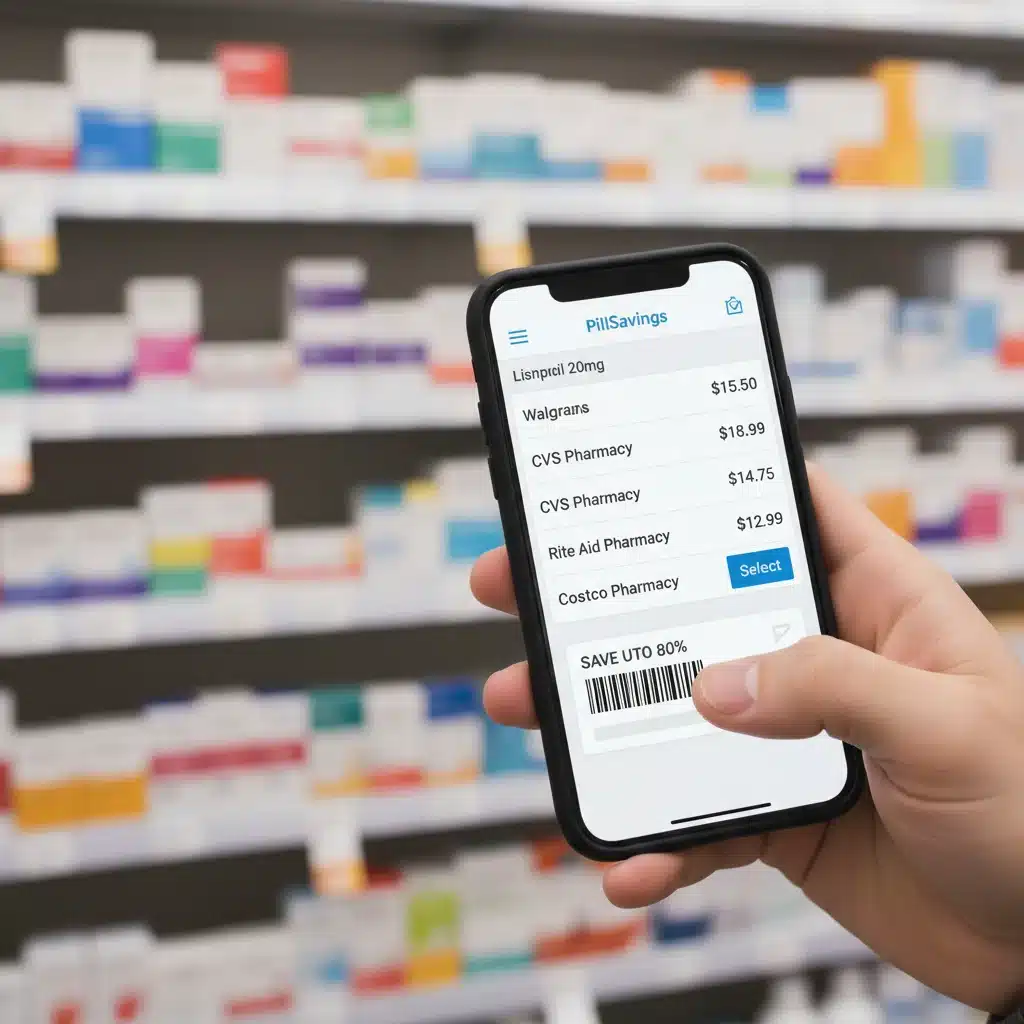
Never assume one card will always have the best price. Prices can fluctuate daily and vary significantly between different discount programs and even different pharmacies using the same program. Use the apps or websites of GoodRx, SingleCare, and Optum Perks to compare prices for your specific medication at nearby pharmacies before you head out. A few minutes of comparison shopping can save you a substantial amount of money.
2. Check Both Generic and Brand-Name Options
Generic drugs are almost always cheaper than their brand-name counterparts. If a generic is available, ask your doctor if it’s a suitable option for you. Even with generics, however, prices can vary wildly. Some drug discount cards might offer better deals on specific generics, while others excel with brand-name medications.
3. Inquire About 90-Day Supplies
For maintenance medications, getting a 90-day supply instead of a 30-day supply can often result in lower per-pill costs. Always check if this option is available and if the discount card applies to larger quantities.
4. Don’t Forget Your Insurance
Remember, drug discount cards are not insurance, but they can complement it. Always ask your pharmacist to run your prescription through both your insurance and your discount card to see which offers the lower price. You can’t use both simultaneously for the same prescription, but you can choose the option that saves you more money. This is particularly useful if you have a high deductible or if your insurance doesn’t cover a specific drug.
5. Explore Manufacturer Coupons and Patient Assistance Programs
For very expensive brand-name drugs, especially those without a generic equivalent, manufacturer coupons or patient assistance programs can offer even deeper discounts. These programs are often found on the drug manufacturer’s website. While separate from drug discount cards, they are another layer of savings worth exploring.
6. Stay Informed About Pharmacy Changes
Pharmacy networks and pricing agreements can change. What was the cheapest pharmacy last month might not be this month. Regularly checking prices and being aware of changes in your local pharmacy landscape can help you stay ahead of the curve.
The Future of Prescription Drug Savings in 2026 and Beyond
The landscape of prescription drug pricing is constantly evolving. In 2026, we can expect continued innovation in how drug discount cards operate, with more sophisticated algorithms for price comparison, enhanced personalization based on medication history, and potentially even deeper integrations with other healthcare services. The competition among these programs is a win for consumers, driving them to offer more competitive pricing and better features.
Furthermore, legislative efforts to control drug costs may also impact the effectiveness and necessity of discount cards. However, even with potential policy changes, the need for direct, immediate savings for consumers will likely remain. Drug discount cards will continue to serve as an indispensable tool for managing medication expenses, ensuring that more people have access to the treatments they need without facing insurmountable financial barriers.
Common Questions About Drug Discount Cards
Are drug discount cards legitimate?
Yes, absolutely. The top drug discount cards discussed here are legitimate programs that have helped millions of Americans save money on prescriptions. They work by negotiating bulk discounts with pharmacies, which is a standard business practice.
Do I need to sign up or pay a fee to use these cards?
Most reputable drug discount cards, including the ones listed, are free to use and do not require any sign-up or membership fees. You can often print a card from their website or use their mobile app directly.
Can I use a drug discount card with my health insurance?
You cannot typically use both your health insurance and a drug discount card for the same prescription at the same time. However, you can choose which one offers the better price. Always ask your pharmacist to compare the cost with your insurance versus the discount card.
Will a drug discount card affect my insurance deductible or out-of-pocket maximum?
When you use a drug discount card, the amount you pay typically does not count towards your insurance deductible or out-of-pocket maximum. This is because you are paying a discounted cash price, not using your insurance benefits.
What if my pharmacy doesn’t accept a specific drug discount card?
While the top programs have extensive networks, it’s possible a specific pharmacy might not participate. If this happens, you can either try a different pharmacy in the card’s network or try a different discount card program. Many pharmacies accept multiple programs.
Are these cards only for generic medications?
No, while drug discount cards often provide the most significant savings on generic medications, they also offer discounts on many brand-name drugs. The percentage of savings on brand names might be lower, but it can still be substantial.
Conclusion
Navigating the complexities of prescription drug costs can be challenging, but drug discount cards offer a powerful and accessible solution. For 2026, programs like GoodRx, SingleCare, Optum Perks, RxSaver by RetailMeNot, and America’s Pharmacy stand out as the top contenders, consistently delivering average savings of 15-25% and often much more. By understanding how these cards work, knowing which factors to consider, and adopting smart strategies for comparison shopping, you can significantly reduce your out-of-pocket medication expenses.
Don’t let high prescription costs compromise your health or your budget. Take advantage of these invaluable tools to ensure you get the medications you need at a price you can afford. Stay proactive, compare prices, and empower yourself with the knowledge to make the best decisions for your healthcare in 2026 and beyond.