
Maximizing Your 2026 Vision and Dental Benefits: A Comparison of Coverage Options to Save 20% on Out-of-Pocket Costs
As we look ahead to 2026, understanding and effectively utilizing your vision and dental benefits is more crucial than ever. For many, these benefits are often overlooked or underutilized, leading to unnecessary out-of-pocket expenses. However, with a strategic approach and a clear understanding of your coverage options, you can significantly reduce your healthcare costs, potentially saving up to 20% on vision and dental care in 2026. This comprehensive guide will delve into the intricacies of various plans, compare their benefits, and provide actionable strategies to help you make the most of your Vision Dental Benefits 2026.
The Crucial Role of Vision and Dental Health in Overall Well-being
Before we dive into the specifics of coverage, it’s vital to acknowledge the profound impact of vision and dental health on your overall well-being. Poor oral hygiene can lead to serious health issues, including heart disease, diabetes complications, and respiratory infections. Similarly, regular eye exams can detect not only vision problems but also early signs of systemic diseases like glaucoma, cataracts, and even diabetes. Investing in your vision and dental health is not just about aesthetics; it’s about safeguarding your long-term physical and financial health. Ignoring these aspects can lead to more complex and costly treatments down the line, making the proactive management of your Vision Dental Benefits 2026 an intelligent decision.
Understanding Your Vision Dental Benefits 2026: The Basics
Navigating the world of insurance can be daunting, but a fundamental understanding of key terms and plan types will empower you to make informed decisions. Vision and dental insurance plans come in various forms, each with its own structure regarding premiums, deductibles, copayments, and annual maximums.
Types of Vision Insurance Plans:
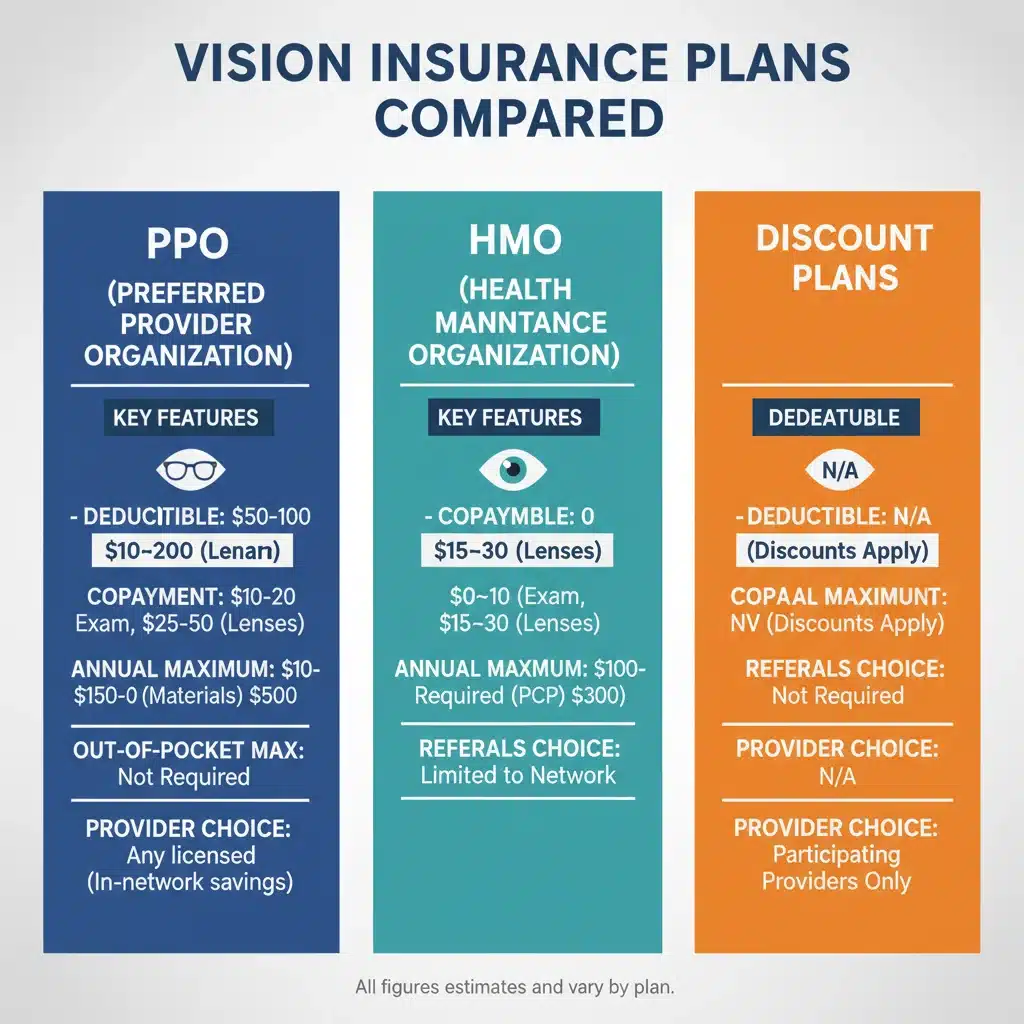
- Vision Discount Plans: These are not insurance but rather membership programs that offer discounts on eye care services and products from participating providers. They typically have lower monthly fees but no coverage for services, only reduced prices.
- Vision Insurance (HMO/PPO): These plans function much like medical insurance. HMO (Health Maintenance Organization) plans usually require you to choose a primary eye care provider within their network, while PPO (Preferred Provider Organization) plans offer more flexibility to see out-of-network providers, though often at a higher cost. They cover a portion of eye exams, glasses, and contact lenses, often with specific allowances and copayments.
- Stand-alone Vision Plans: Many individuals purchase separate vision plans if their medical insurance doesn’t include adequate vision coverage. These plans are specifically designed for eye care needs.
- Integrated Medical Plans: Some comprehensive medical insurance plans include vision benefits, often as a rider or an integrated component. It’s crucial to check your medical plan’s details to see if this is an option for your Vision Dental Benefits 2026.
Types of Dental Insurance Plans:
- Dental PPO (Preferred Provider Organization): The most common type, PPO plans offer a network of dentists but also allow you to see out-of-network providers, albeit with higher out-of-pocket costs. They typically cover a percentage of services after a deductible is met.
- Dental HMO (Health Maintenance Organization): These plans usually require you to choose a primary dentist within their network. They often have lower premiums and no deductibles, but less flexibility in choosing your provider.
- Discount Dental Plans: Similar to vision discount plans, these offer reduced rates on dental services from participating dentists. They are not insurance and don’t pay for services directly.
- Indemnity Plans (Traditional Plans): These plans offer the most flexibility, allowing you to see any dentist you choose. The insurance company pays a set percentage of the cost, and you are responsible for the rest.
- Direct Reimbursement Plans: With these plans, your employer reimburses you for a percentage of your dental expenses, regardless of the dentist you choose. There are no networks, deductibles, or copayments in the traditional sense.
Comparing Coverage Options: What to Look for in 2026
When comparing Vision Dental Benefits 2026, it’s essential to look beyond just the monthly premium. A cheaper premium might mean higher deductibles, larger copayments, or limited coverage for the services you actually need. Here’s a breakdown of key factors to consider:
For Vision Benefits:
- Eye Exam Coverage: Does the plan cover annual comprehensive eye exams? What is the copayment?
- Eyeglass Frame Allowance: Is there a specific dollar amount or a percentage covered for frames? How often can you get new frames?
- Lens Coverage: What percentage of standard lenses is covered? Are progressive, anti-reflective, or scratch-resistant coatings included or discounted?
- Contact Lens Allowance: Is there a specific allowance for contact lenses, and does it cover a fitting fee?
- Network Size and Specialist Access: Does the plan have a broad network of optometrists and ophthalmologists? Is it easy to find a provider near you?
- Waiting Periods: Are there any waiting periods before certain benefits become active?
For Dental Benefits:
- Preventive Care Coverage: Most plans cover 100% of preventive services like cleanings, exams, and X-rays. Confirm this is the case.
- Basic Procedures Coverage: What percentage of fillings, extractions, and root canals are covered?
- Major Procedures Coverage: How much do they cover for crowns, bridges, dentures, and oral surgery? This is where significant out-of-pocket costs can arise.
- Orthodontics Coverage: If you or your family members might need braces, check if orthodontics are covered, and if so, what the age limits and lifetime maximums are.
- Deductibles: How much do you have to pay out-of-pocket before the insurance starts covering costs?
- Annual Maximums: This is the total amount your insurance will pay in a given year. Understand this limit to avoid surprises.
- Copayments/Coinsurance: What percentage of the cost are you responsible for after meeting your deductible?
- Network and Provider Choice: Do you have the flexibility to choose your own dentist, or are you restricted to a network?
- Waiting Periods: Many dental plans have waiting periods for basic (e.g., 6 months) and major (e.g., 12 months) procedures. Plan your treatments accordingly.
When evaluating your options for Vision Dental Benefits 2026, consider your personal and family needs. Do you have a history of dental issues? Do you or your children need orthodontics? Do you have a strong prescription for glasses or contacts? Your answers to these questions will guide you toward the most cost-effective and comprehensive plan.
Strategies to Save 20% on Out-of-Pocket Costs in 2026
Achieving a 20% reduction in your out-of-pocket vision and dental expenses for 2026 is an ambitious but entirely attainable goal. It requires proactive planning and smart utilization of your benefits. Here are several strategies to help you get there:
1. Understand Your Plan Inside and Out:
The first and most critical step is to thoroughly read and understand your plan documents. Many people simply glance over their benefits package. Take the time to understand your deductibles, copayments, coinsurance, annual maximums, and any waiting periods. Knowing these details for your Vision Dental Benefits 2026 will prevent unexpected bills.
2. Prioritize Preventive Care:
Both vision and dental insurance plans heavily emphasize preventive care, often covering it at 100%. Regular eye exams and dental cleanings are your best defense against more serious and expensive problems. By catching issues early, you can avoid costly procedures like root canals, extractions, or complex vision treatments. Schedule your annual eye exam and two dental cleanings early in 2026 to maximize this benefit.
3. Utilize In-Network Providers:
Most PPO and all HMO plans offer significant savings when you use in-network providers. These providers have pre-negotiated rates with your insurance company, leading to lower costs for you. Before scheduling any appointment, confirm that your chosen dentist or optometrist is part of your plan’s network for your Vision Dental Benefits 2026.
4. Batch Your Procedures:
If you anticipate needing multiple dental procedures (e.g., several fillings, a crown, and a deep cleaning), coordinate with your dentist to schedule them strategically. If you’ve met your deductible and haven’t hit your annual maximum, it might be beneficial to get as much work done as possible within the same benefit year to maximize your coverage.
5. Maximize Your Annual Maximum:
Many people don’t reach their annual maximum, leaving money on the table. If you have major dental work planned or ongoing treatments, try to utilize your full annual maximum if it aligns with your treatment plan. This requires careful planning with your dental provider.
6. Consider Health Savings Accounts (HSAs) or Flexible Spending Accounts (FSAs):
If you have access to an HSA or FSA through your employer, these accounts are powerful tools for saving on healthcare costs. You contribute pre-tax dollars, which can then be used for eligible medical, dental, and vision expenses. This effectively reduces your taxable income and provides a dedicated fund for your Vision Dental Benefits 2026, leading to significant savings.
7. Review and Adjust Your Coverage Annually:
Your healthcare needs can change from year to year. During open enrollment periods, take the time to review your current vision and dental plans. Are they still meeting your needs? Has your family grown? Do you anticipate needing major work? Adjusting your plan to better suit your upcoming needs can lead to substantial savings. For instance, if you know you’ll need extensive dental work in 2026, it might be worth investing in a plan with a higher annual maximum, even if the premium is slightly higher.
8. Ask for Itemized Bills and Clarify Costs:
Don’t be afraid to ask your provider for an itemized bill before and after services. This allows you to compare the costs with your explanation of benefits (EOB) from your insurance company. If something doesn’t look right, question it. Sometimes billing errors occur, and catching them can save you money.
9. Explore Discount Programs and Bundles:
Beyond traditional insurance, look into discount programs offered by professional organizations, AARP, or even some vision and dental chains. Sometimes, bundling vision and dental plans from the same provider can also lead to discounts. These can supplement your existing Vision Dental Benefits 2026 or serve as an alternative if traditional insurance is too expensive.
10. Negotiate Cash Prices:
For services not covered by your insurance or if you have a high deductible, don’t hesitate to ask your provider if they offer a cash discount. Many practices are willing to negotiate a lower price for patients paying upfront, especially for routine services.
Case Studies: Realizing Savings with Vision Dental Benefits 2026
To illustrate the potential for savings, let’s consider a couple of hypothetical scenarios for 2026:
Case Study 1: The Proactive Family
The Johnson family (parents and two children) has a PPO dental plan with a $50 deductible per person, 100% coverage for preventive care, 80% for basic, and 50% for major services, with an annual maximum of $1,500 per person. They also have a vision plan covering annual eye exams with a $10 copay and $150 allowance for frames/lenses every 12 months.
- Dental Strategy: All four family members get their two annual cleanings and exams. One child needs two fillings ($200 total) and the other needs a root canal ($1,000). Mr. Johnson needs a crown ($1,200).
- Vision Strategy: Both children and Mrs. Johnson get their annual eye exams and new glasses. Mr. Johnson only needs an exam.
- Savings: By utilizing in-network providers, scheduling cleanings early, and getting all necessary work done within the benefit year, the family maximizes their Vision Dental Benefits 2026. The root canal and crown are significant expenses, but with 50% coverage after deductibles, their out-of-pocket costs are significantly reduced compared to paying full price. They strategically use their frame allowances, ensuring everyone gets new glasses when needed. Total estimated out-of-pocket savings for 2026: over $2,000 (well over a 20% reduction from full self-pay costs).
Case Study 2: The Individual with High Needs
Sarah, a single professional, has a history of vision issues and anticipates needing extensive dental work in 2026. She chooses a higher-premium PPO dental plan with a $2,000 annual maximum and 70% coverage for major services after a $75 deductible. Her vision plan has a $200 frame/lens allowance and a $15 copay for exams.
- Dental Strategy: Sarah needs two crowns ($2,400 total) and a deep cleaning ($400). She also gets her two preventive cleanings.
- Vision Strategy: Sarah gets her annual eye exam and uses her full allowance for progressive lenses and new frames.
- Savings: By selecting a plan with a higher annual maximum, Sarah ensures significant coverage for her major dental work. Her out-of-pocket for the crowns would be approximately $720 (after deductible and 70% coverage) instead of $2,400. The deep cleaning is also covered at 80% after deductible. Her vision plan covers most of her expensive progressive lenses. Total estimated out-of-pocket savings for 2026: over $1,800, representing more than a 20% saving on her anticipated costs by leveraging her Vision Dental Benefits 2026 effectively.
The Future of Vision Dental Benefits 2026: Trends to Watch
The landscape of healthcare benefits is constantly evolving. As we approach 2026, several trends are likely to shape how vision and dental benefits are offered and utilized:
1. Integration with Overall Health:
There’s a growing recognition of the strong link between oral health, vision health, and overall systemic health. Expect to see more integrated benefit packages that bundle vision, dental, and even hearing benefits, emphasizing a holistic approach to wellness. This integration will make it easier to manage your Vision Dental Benefits 2026 alongside your general health coverage.
2. Telehealth and Virtual Consultations:
The rise of telehealth, accelerated by recent global events, is likely to continue impacting vision and dental care. While not all services can be delivered remotely, virtual consultations for initial assessments, follow-ups, and even some vision screenings may become more commonplace, offering convenience and potentially reducing costs.
3. Focus on Preventative Technology:
Advancements in diagnostic tools and preventative technologies will continue to emerge. Insurance plans may adapt to cover these new technologies that can detect issues earlier and prevent more invasive treatments down the line.
4. Personalized Benefit Options:
Employers and insurance providers are increasingly looking for ways to offer more personalized benefit packages. This could mean more options to customize your Vision Dental Benefits 2026 to fit your specific needs, rather than a one-size-fits-all approach.
5. Digital Tools for Benefit Management:
Expect more sophisticated apps and online portals that help you track your benefits, find in-network providers, estimate costs, and manage claims, making it easier than ever to maximize your Vision Dental Benefits 2026.
Common Pitfalls to Avoid When Using Your Vision Dental Benefits 2026
While maximizing your benefits can lead to significant savings, there are common mistakes that can inadvertently increase your out-of-pocket costs. Be aware of these pitfalls:
- Ignoring Waiting Periods: Scheduling a major procedure too soon after starting a new plan, only to find it’s not covered due to a waiting period, can be a costly error. Always confirm waiting periods.
- Not Verifying Network Status: Assuming a provider is in-network without verifying can lead to higher out-of-network rates. Always double-check with both your provider and your insurance company.
- Forgetting About Annual Maximums: Hitting your annual maximum mid-year without realizing it means you’ll be paying 100% for subsequent services. Keep track of your usage.
- Neglecting Preventive Care: Skipping annual exams and cleanings might save a small copay now, but it drastically increases the risk of needing expensive treatments later.
- Not Understanding Your EOB: Your Explanation of Benefits (EOB) details what your insurance covered and what you owe. Review it carefully to catch any discrepancies.
- Procrastinating on Treatment: Delaying necessary dental work or getting new glasses when your prescription changes can lead to worsening conditions and higher costs in the long run.
Preparing for Open Enrollment 2026
Open enrollment is your annual opportunity to review and make changes to your Vision Dental Benefits 2026. This is a critical time to ensure your coverage aligns with your needs and budget. Here’s how to prepare:
- Assess Your Needs: Look back at your healthcare usage from the past year. Did you utilize your vision benefits fully? Did you need more dental work than anticipated? Consider any expected changes for 2026, such as a child needing braces or a planned vision correction surgery.
- Review Current Plan Performance: Evaluate how well your current plan served you. Were there any unexpected out-of-pocket costs? Were you satisfied with the network of providers?
- Research New Options: Don’t just auto-renew. Explore all available options, including plans offered by your employer, state marketplaces, or private insurers. Compare premiums, deductibles, copayments, and annual maximums.
- Consult with HR or an Insurance Broker: If you find the options overwhelming, your HR department or a qualified insurance broker can provide valuable guidance and clarification on different plans and how they relate to your specific situation.
- Calculate Potential Costs: Use online tools or spreadsheets to estimate your total expected costs (premiums + potential out-of-pocket) for different plans. This will give you a clearer picture of the best value for your Vision Dental Benefits 2026.
Conclusion: Take Control of Your Vision Dental Benefits 2026
Maximizing your Vision Dental Benefits 2026 is not just about choosing the right plan; it’s about actively engaging with your coverage and making informed decisions throughout the year. By understanding the different types of plans, comparing coverage options carefully, and implementing strategic savings techniques, you can significantly reduce your out-of-pocket expenses, potentially by 20% or more. Prioritize preventive care, utilize in-network providers, leverage tax-advantaged accounts, and stay vigilant about your plan’s details. Your vision and dental health are integral to your overall well-being and a smart financial investment. Start planning now to ensure a healthier and more financially secure 2026.