Dental & Vision Benefits 2026: PPO vs. HMO Plans Explained

Understanding dental and vision benefits: A 2026 comparison of PPO vs. HMO plans is essential for consumers seeking optimal healthcare coverage, offering distinct approaches to cost, provider choice, and referral requirements.
Navigating the complex world of healthcare benefits can often feel overwhelming, especially when trying to discern the best options for your specific needs. When it comes to your oral and eye health, making the right choice between different insurance plans is paramount. This article aims to demystify Understanding Dental and Vision Benefits: A 2026 Comparison of PPO vs. HMO Plans, offering a clear and concise breakdown to help you make an informed decision for the upcoming year.
The foundational differences: PPO vs. HMO
When exploring dental and vision benefits, two acronyms frequently surface: PPO and HMO. These represent distinct approaches to healthcare delivery and payment, each with its own set of advantages and disadvantages. Grasping these fundamental differences is the first step toward selecting a plan that aligns with your priorities, whether they lean towards cost savings or maximum flexibility.
PPO: Preferred Provider Organization
A PPO plan offers a greater degree of flexibility when it comes to choosing your healthcare providers. With a PPO, you are not typically required to select a primary care dentist or optometrist, and you can usually see any specialist without a referral. This freedom comes with the understanding that staying within the plan’s network of preferred providers will result in lower out-of-pocket costs.
- Network Flexibility: You can choose any licensed dentist or optometrist, though staying in-network saves money.
- No Referrals: Direct access to specialists without needing a primary care physician’s referral.
- Higher Premiums: Generally, PPO plans come with higher monthly premiums compared to HMOs.
- Out-of-Network Coverage: Some coverage is usually provided for out-of-network services, but at a higher cost share.
HMO: Health Maintenance Organization
In contrast, an HMO plan typically requires you to choose a primary care dentist or optometrist within its defined network. This primary provider then acts as a gatekeeper, referring you to specialists if necessary. HMOs are known for their emphasis on coordinated care and usually come with lower monthly premiums and out-of-pocket costs, provided you stay within the network.
- Limited Network: You must choose providers within the HMO’s network, often a specific group or clinic.
- Referral System: Referrals are generally required to see specialists.
- Lower Premiums: Monthly costs are typically lower than PPO plans.
- No Out-of-Network Coverage: Except for emergencies, out-of-network services are usually not covered.
Understanding these core distinctions is vital. PPO plans offer more freedom at a potentially higher cost, while HMO plans offer greater affordability with stricter network limitations. Your personal preferences regarding provider choice and budget will heavily influence which type of plan is a better fit for your dental and vision needs in 2026.
Cost considerations: Premiums, deductibles, and co-pays in 2026
The financial aspect is often the deciding factor when selecting a dental and vision plan. Beyond the monthly premium, it’s crucial to understand how deductibles, co-pays, and co-insurance factor into your total out-of-pocket expenses. These elements collectively determine the true cost of your benefits throughout the year, especially with potential adjustments for 2026.
PPO plans typically feature higher monthly premiums, reflecting the greater flexibility they offer. However, they might also come with a deductible that you must meet before the insurance company begins to pay for services. Once the deductible is met, you’ll usually pay a co-insurance percentage for covered services, meaning the plan pays a portion, and you pay the rest. Out-of-network services often have higher deductibles and co-insurance rates.
HMO plans, while boasting lower premiums, often have a more straightforward cost structure. Many HMOs have fixed co-pays for various services, eliminating the need to meet a deductible for routine care. This predictability in cost can be very appealing for those who prefer to know their exact out-of-pocket expenses upfront. However, if you seek care outside the network, you’ll likely be responsible for the entire cost, except in emergency situations.
It’s important to analyze your anticipated usage of dental and vision services. If you foresee frequent specialist visits or prefer to stick with a specific out-of-network provider, the higher premiums of a PPO might be justified by the flexibility and partial coverage for out-of-network care. Conversely, if you are comfortable working within a defined network and primarily need routine check-ups, an HMO’s lower premiums and predictable co-pays could offer significant savings. Always review the detailed plan documents for specific 2026 cost structures, as these can vary widely even within the same plan type.
Provider networks and access to specialists
The network of providers available through your dental and vision plan directly impacts your access to care and choice of professionals. Understanding how PPO and HMO structures dictate these networks is critical for ensuring you can see your preferred doctors or find new ones conveniently. The breadth and limitations of these networks are key differentiators.
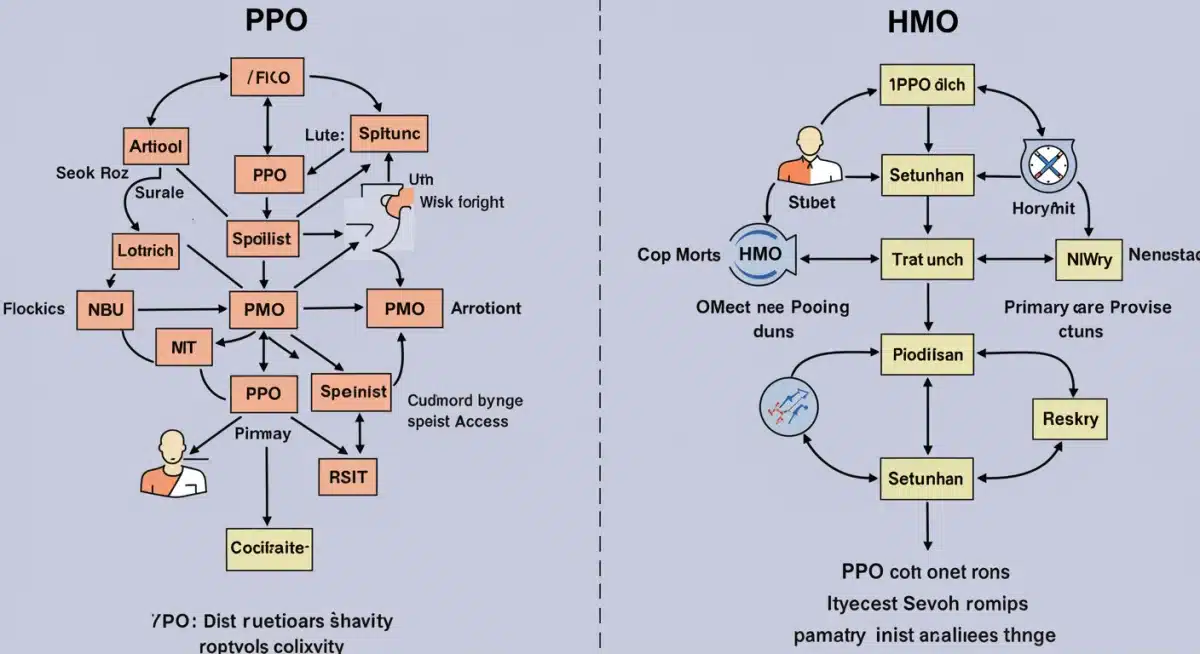
With a PPO plan, you have the freedom to choose almost any licensed dental or vision professional. While there’s a network of preferred providers where costs are lower, you retain the option to go out-of-network. This can be particularly beneficial if you have established relationships with specific dentists, orthodontists, or optometrists who are not part of any particular network. The ability to self-refer to specialists, without needing prior approval, adds another layer of convenience for those who value autonomy in their healthcare decisions.
HMO plans, by contrast, operate on a more restrictive model. You must select a primary care dentist and/or optometrist from the plan’s network. All your care, including referrals to specialists like oral surgeons or ophthalmologists, must be coordinated through this primary provider. This integrated approach aims to streamline care and reduce costs, but it means sacrificing some choice and flexibility. If you move or travel frequently, or if your preferred providers are not within the HMO’s network, this structure might present challenges.
Before committing to a plan, thoroughly research the provider networks. Check if your current dentists and optometrists are in-network for PPO plans, or if they are part of the specific HMO network you are considering. For HMOs, also confirm the availability of specialists within the network. This due diligence ensures that your chosen plan provides practical access to the care you need, minimizing disruptions to your established healthcare routines.
Flexibility and referrals: Navigating your care options
The degree of flexibility a plan offers and its requirements for referrals are significant factors that influence your overall experience with dental and vision benefits. These operational differences between PPO and HMO plans can determine how easily you access specialized care and how much control you have over your provider choices.
PPO plan flexibility
PPO plans are synonymous with flexibility. You typically do not need a referral from a primary care provider to see a specialist, such as an orthodontist, periodontist, or ophthalmologist. This direct access allows you to seek specialized care as soon as you identify a need, potentially saving time and simplifying the process. Furthermore, the option to seek out-of-network care, even if it means higher costs, provides a safety net if your preferred specialist is not within the plan’s network or if you require a specific treatment only offered by an out-of-network provider.
- Direct Specialist Access: No gatekeeper required for specialized dental or vision care.
- Out-of-Network Choice: Ability to visit any licensed provider, with some coverage for out-of-network services.
- Less Bureaucracy: Generally fewer administrative hurdles for accessing various services.
HMO plan referral system
HMO plans operate on a referral-based system. Your chosen primary care dentist or optometrist acts as your main point of contact and must authorize any visits to specialists. This system is designed to coordinate care and ensure that all treatments are medically necessary, which helps control costs. While this can streamline communication between your providers, it also means an extra step in accessing specialized services, which might not be ideal for everyone.
- Primary Care Gatekeeper: Referrals from your primary provider are necessary for specialist visits.
- In-Network Focus: Care is almost exclusively provided within the HMO’s defined network.
- Coordinated Care: Benefits from a centralized approach to managing your health needs.
Considering your personal preferences for managing your healthcare is key. If you value the freedom to choose your specialists and avoid extra administrative steps, a PPO might be more suitable. If you appreciate a coordinated care approach and are comfortable with a referral system, an HMO could be a cost-effective choice. Evaluate how much control you want over your care decisions when making your selection for 2026.
Emergency care and geographic considerations in 2026
Understanding how your dental and vision plan handles emergencies and what happens if you need care while traveling or move to a new area is crucial. These practical considerations can significantly impact your access to necessary services, especially with the evolving landscape of healthcare in 2026.
For PPO plans, emergency dental or vision care is generally covered both in-network and out-of-network, although out-of-network emergency services might still be subject to higher co-insurance or deductibles. The broader network and flexibility of PPOs also mean that if you are traveling within the United States, you are more likely to find an in-network provider, or at least receive some coverage for out-of-network care. If you relocate, transitioning your care is often simpler, as you are not strictly tied to a specific network or primary provider in your previous location.
HMO plans typically cover emergency care, regardless of whether it’s in-network or out-of-network, as long as the situation is deemed a true emergency. However, for non-emergency situations, seeking care outside of your HMO’s service area can be problematic, often resulting in no coverage. This becomes particularly important if you travel frequently or plan to move. If you relocate to an area where your current HMO has no network, you would likely need to switch plans entirely, which can be a complex process. It’s essential to verify the specific emergency and out-of-area coverage details for any HMO plan you consider, as these can vary.
Before finalizing your plan choice for 2026, consider your lifestyle. If you frequently travel or anticipate a move, the broader coverage and flexibility of a PPO might offer greater peace of mind. If you primarily stay within a specific geographic area and value predictable costs, an HMO could be suitable, provided you understand its limitations regarding out-of-area care. Always consult the plan’s policy documents for precise details on emergency and geographic coverage.
Making the best choice for your 2026 needs
Choosing between a PPO and an HMO dental and vision plan for 2026 is a personal decision that hinges on your individual healthcare needs, financial situation, and preferences. There is no one-size-fits-all answer, and what works best for one person might not be ideal for another. A thoughtful evaluation of several key factors will guide you to the most appropriate coverage.
First, assess your current and anticipated healthcare needs. Do you or your family members require frequent specialized dental or vision care, such as orthodontics, periodontics, or advanced eye treatments? If so, the direct access to specialists and broader provider choice offered by a PPO might be invaluable, despite potentially higher premiums. If your needs are primarily routine check-ups and minor procedures, an HMO with its lower monthly costs and predictable co-pays could be more advantageous, provided its network meets your needs.
Second, consider your budget. PPO plans often come with higher monthly premiums but can offer more flexibility in provider choice and out-of-network coverage. HMO plans typically have lower premiums and out-of-pocket costs, but with stricter network limitations and referral requirements. Evaluate your financial comfort level with both higher upfront costs for flexibility versus lower upfront costs with less choice. Remember to factor in potential deductibles, co-pays, and co-insurance for both types of plans.
Finally, think about your lifestyle and preferences. Do you prefer having complete control over your choice of providers and the ability to self-refer to specialists? A PPO aligns better with this preference. Are you comfortable with a more structured approach, where a primary provider coordinates your care within a specific network? An HMO might be a good fit. Also, consider your travel habits and geographic stability. If you move or travel frequently, the broader coverage of a PPOs might offer greater security. By carefully weighing these factors, you can confidently select the dental and vision plan that best serves your needs in 2026.
| Key Feature | Description |
|---|---|
| Provider Choice | PPO offers broad choice (in/out-of-network), HMO limits to specific network. |
| Referral Requirements | PPO typically needs no referrals; HMO requires primary care referrals for specialists. |
| Cost Structure | PPO: higher premiums, deductibles, co-insurance. HMO: lower premiums, fixed co-pays. |
| Emergency Coverage | Both cover emergencies, but PPO offers more flexibility for non-emergency out-of-area care. |
Frequently asked questions about dental and vision plans
The main difference lies in provider choice and referrals. PPO plans offer more flexibility, allowing you to see any dentist without a referral, often with partial out-of-network coverage. HMO plans require you to choose a primary dentist within their network and typically need referrals for specialists, with no out-of-network coverage.
Generally, PPO vision plans tend to have higher monthly premiums due to their greater flexibility and broader network options. HMO vision plans typically come with lower premiums and fixed co-pays, but require you to stay within a more restricted network for coverage.
No, typically with a PPO dental plan, you do not need a referral to see a specialist like an orthodontist. You can usually go directly to any orthodontist, though staying within the plan’s network will result in lower out-of-pocket costs and better benefits.
Most HMO plans cover true emergency dental care regardless of whether it’s in-network or out-of-network. However, for non-emergency situations or routine care while traveling outside your plan’s service area, you would likely not be covered, except in very specific circumstances outlined by your plan.
The best way is to directly contact your dentist’s or optometrist’s office and inquire which insurance plans they accept. You can also check the provider directory on the insurance company’s website or call their member services line for confirmation regarding 2026 plans.
Conclusion
Choosing the right dental and vision benefits plan for 2026 requires careful consideration of various factors, including cost, flexibility, and access to providers. Whether you opt for the broad network and direct specialist access of a PPO, or the lower premiums and coordinated care of an HMO, understanding the nuances of each plan type is essential. By evaluating your personal healthcare needs, financial situation, and lifestyle, you can make an informed decision that ensures optimal oral and optical health coverage in the coming year. Remember to review specific plan documents thoroughly to confirm all terms and conditions.