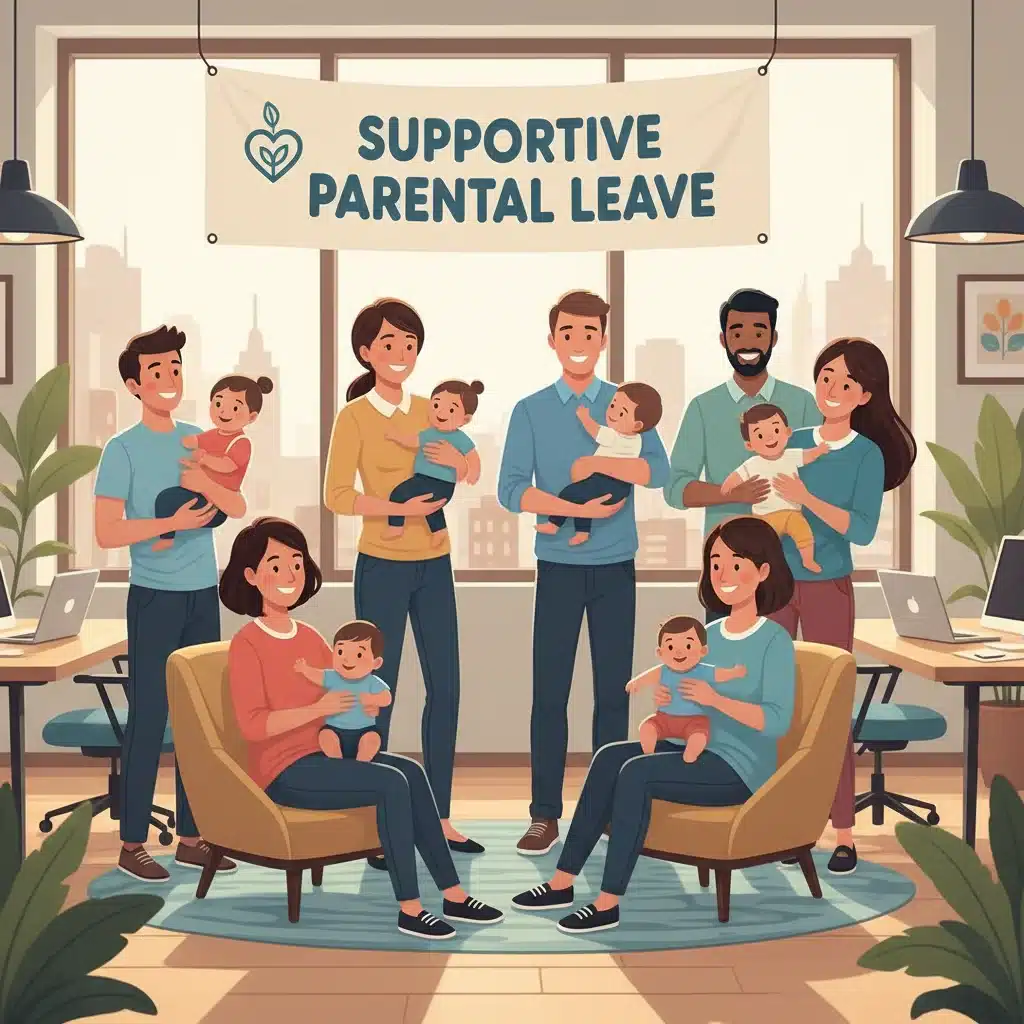
Parental Leave Benefits 2026: What’s New and How to Secure Up to 12 Weeks of Paid Time Off
The journey into parenthood is a transformative one, filled with joy, challenges, and countless new responsibilities. For many, one of the primary concerns is how to balance these new family demands with professional life. This is where robust parental leave 2026 policies become not just a perk, but a necessity. As we look ahead to 2026, the landscape of parental leave benefits continues to evolve, reflecting a growing recognition of the importance of supporting new parents. This comprehensive guide will delve into the latest developments, what you can expect, and crucially, how to navigate the system to secure up to 12 weeks or more of paid time off to bond with your new child.
Understanding your rights and options regarding parental leave 2026 is paramount. Whether you’re an expectant parent, planning for adoption, or considering fostering, the ability to take time away from work without financial hardship is invaluable. We’ll explore federal mandates like the Family and Medical Leave Act (FMLA), delve into the expanding array of state-level paid family leave programs, and examine how forward-thinking employers are shaping their own policies to attract and retain top talent. By the end of this article, you’ll be equipped with the knowledge and strategies to confidently approach your employer and plan for this significant life event.
The Evolving Landscape of Parental Leave in 2026
The concept of parental leave has undergone a significant transformation over the past decades. What was once primarily a maternity benefit, often unpaid, has gradually expanded to include fathers, adoptive parents, and foster parents, with an increasing emphasis on paid leave. This shift is driven by a combination of societal changes, advocacy efforts, and a growing body of research demonstrating the profound benefits of parental leave for children’s development, parental well-being, and even employer productivity and retention.
In 2026, we anticipate continued momentum in several key areas:
- Increased State-Level Paid Family Leave Programs: More states are expected to implement or expand their paid family leave programs, filling the gaps left by the federal FMLA. These programs typically provide partial wage replacement for a specified period, making parental leave more accessible for a wider range of workers.
- Employer-Led Initiatives: Many companies, particularly those in competitive industries, are recognizing the strategic advantage of offering generous parental leave benefits. Expect to see more employers go above and beyond federal and state mandates, offering longer paid leave periods, flexible return-to-work options, and additional family support services.
- Focus on Paternity and Partner Leave: There’s a growing awareness of the importance of fathers and non-birthing partners being able to take significant time off. Policies are increasingly designed to be gender-neutral, promoting shared parenting responsibilities and stronger family bonds.
- Inclusion of Adoptive and Foster Parents: Modern parental leave policies are increasingly inclusive, ensuring that parents who grow their families through adoption or foster care receive the same leave benefits as birth parents.
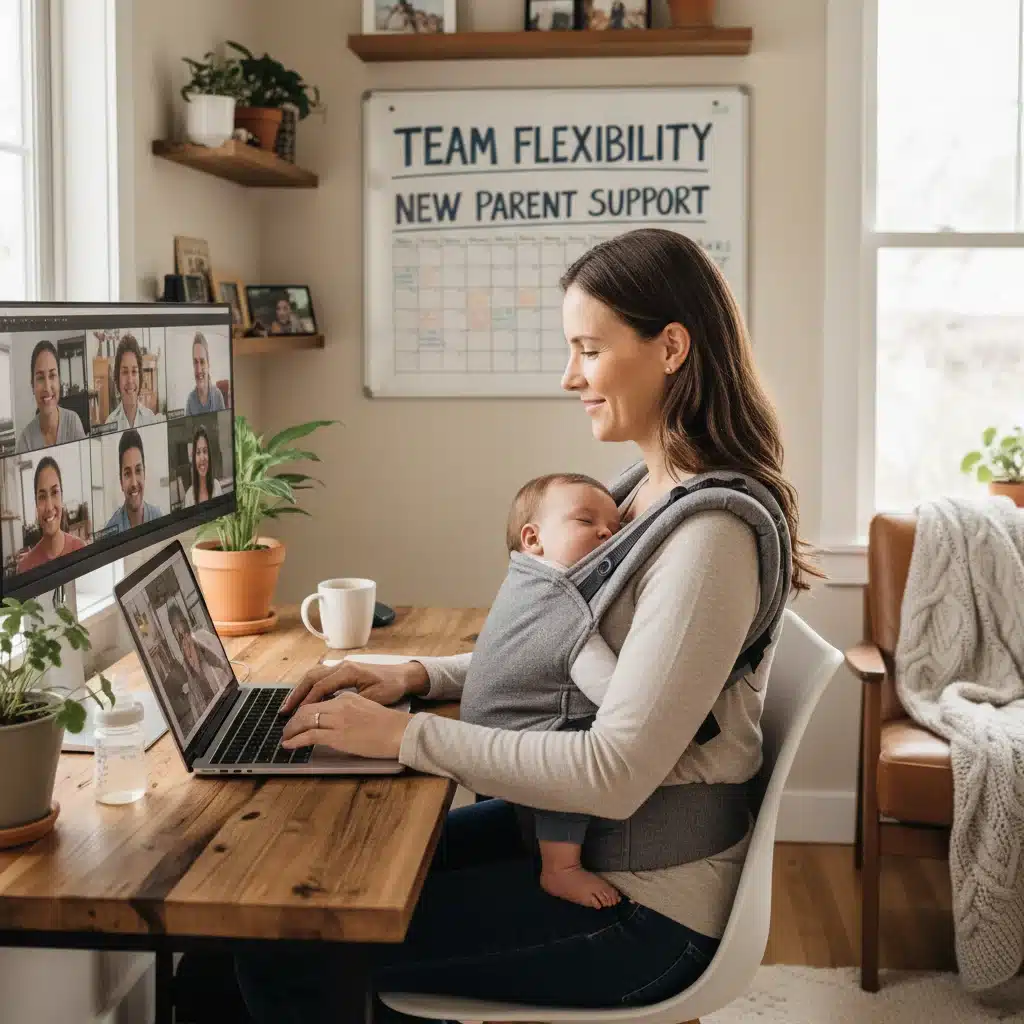
- Enhanced Remote Work and Flexibility: The ongoing trend towards remote and hybrid work models will likely continue to influence parental leave. Employers may offer more flexible return-to-work arrangements or extended periods of remote work post-leave to ease the transition for new parents.
Staying informed about these changes is crucial for anyone planning to take parental leave 2026. The specifics can vary significantly depending on your location and employer, so proactive research is key.
Federal Mandates: The Family and Medical Leave Act (FMLA)
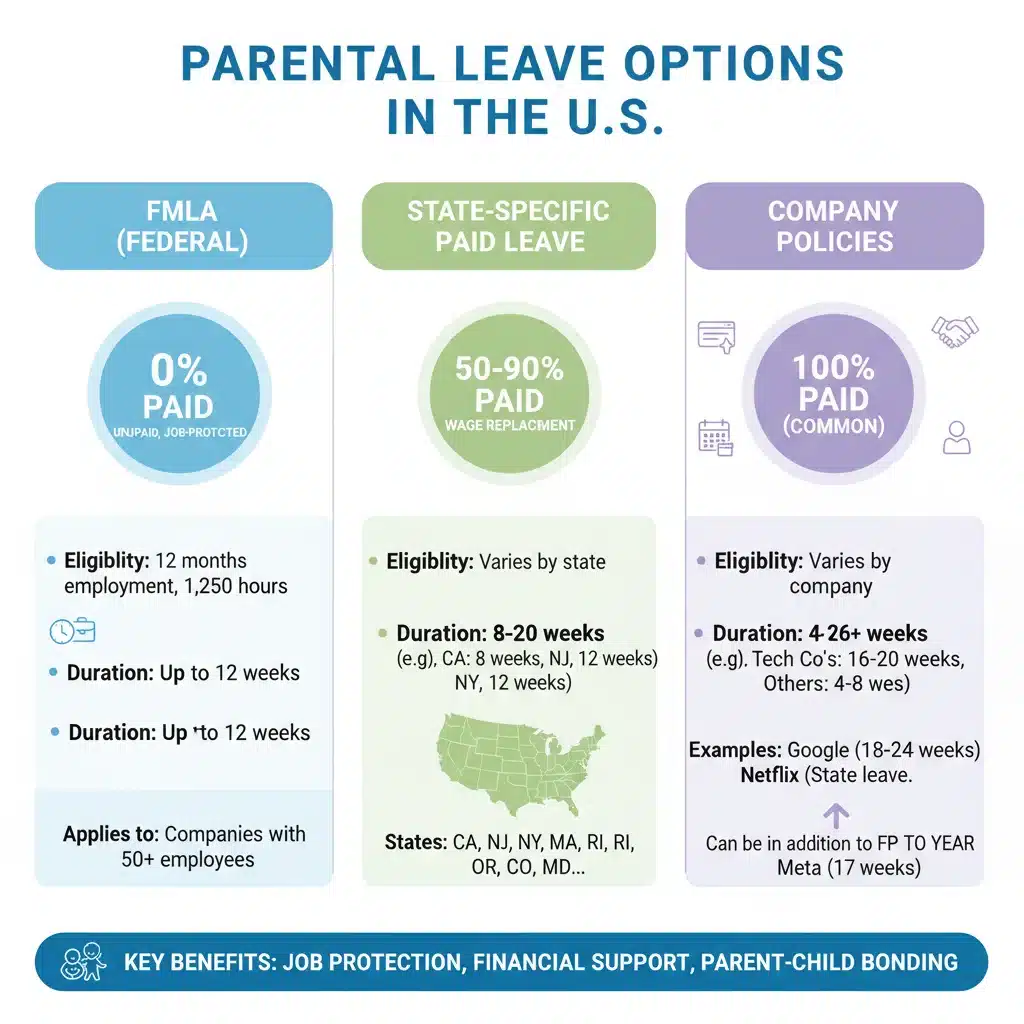
At the federal level, the cornerstone of parental leave is the Family and Medical Leave Act (FMLA). Enacted in 1993, the FMLA provides eligible employees with up to 12 weeks of unpaid, job-protected leave per year for specific family and medical reasons, including the birth of a child, adoption, or foster care placement. While FMLA is a vital safety net, it’s important to understand its limitations and requirements.
Who is Eligible for FMLA?
To be eligible for FMLA leave, an employee must meet several criteria:
- Employer Size: Work for a covered employer, which generally includes private-sector employers with 50 or more employees within 75 miles, and all public agencies (local, state, federal).
- Length of Service: Have worked for the employer for at least 12 months. These 12 months do not have to be consecutive.
- Hours Worked: Have worked at least 1,250 hours during the 12 months immediately preceding the leave.
Key Aspects of FMLA for Parental Leave:
- Job Protection: Your job, or an equivalent position, is protected upon your return from FMLA leave.
- Health Benefits: Your employer must maintain your group health benefits during your leave as if you were still working.
- Unpaid Leave: FMLA itself does not mandate paid leave. However, employees can choose to use accrued paid leave (sick leave, vacation days) concurrently with FMLA leave.
- Intermittent Leave: FMLA can be taken intermittently or on a reduced schedule if medically necessary or if the employer agrees. For parental leave, this usually requires employer approval.
- Notice Requirements: Employees are generally required to provide 30 days’ advance notice when the need for leave is foreseeable (e.g., due to a birth or adoption).
While FMLA guarantees job protection, the lack of pay can be a significant barrier for many families. This is where state-level paid family leave programs and employer-specific policies become critical in securing comprehensive parental leave 2026 benefits.
State-Level Paid Family Leave Programs: A Growing Trend
The most significant expansion in parental leave 2026 is expected to come from state-level paid family leave (PFL) programs. These programs are designed to provide partial wage replacement to workers who need to take time off for family and medical reasons, including bonding with a new child. As of late 2023, several states and the District of Columbia have enacted PFL laws, and more are expected to follow suit by 2026.
States with Existing or Upcoming PFL Programs (as of late 2023, subject to change by 2026):
- California
- New Jersey
- Rhode Island
- New York
- Washington
- Massachusetts
- Connecticut
- Oregon
- Colorado
- Maryland
- Delaware
- Maine
- Minnesota
- District of Columbia
Each state’s program has its own unique eligibility requirements, benefit amounts, and duration. Typically, these programs are funded through employee payroll deductions, similar to unemployment insurance or temporary disability insurance. The benefit amount is often a percentage of the employee’s average weekly wage, up to a certain maximum. For example, some states offer up to 90% of wages for lower-income workers, while others cap benefits at a set weekly amount.
How PFL Programs Enhance Parental Leave 2026:
Paid family leave programs significantly enhance the ability of new parents to take time off by addressing the financial burden of unpaid leave. When combined with FMLA, employees can often secure both job protection and partial wage replacement. This allows families to focus on bonding with their new child without the added stress of lost income.
It is absolutely essential to research the PFL laws in your specific state, as these can be complex and are subject to change. Your state’s labor department website is usually the best resource for the most up-to-date information on parental leave 2026 programs.
Employer-Provided Parental Leave Benefits
Beyond federal and state mandates, many employers offer their own parental leave benefits, often exceeding legal requirements. These employer-provided benefits are a crucial component of attracting and retaining talent, particularly in competitive job markets. As we head into 2026, expect more companies to expand their offerings.
Common Employer Benefits for Parental Leave 2026:
- Paid Parental Leave: This is the most sought-after benefit. Companies may offer a specific number of weeks (e.g., 6, 8, 12, or even more) at full or partial pay. This is distinct from using accrued sick or vacation time.
- Gender-Neutral Policies: Progressive employers are increasingly offering gender-neutral parental leave, ensuring that all parents, regardless of gender or role, receive the same benefits.
- Phased Return-to-Work Programs: To ease the transition back to work, some companies offer a phased return, allowing parents to gradually increase their hours over a period of weeks or months.
- Backup Childcare: Some employers provide access to subsidized or free backup childcare services, which can be invaluable during unexpected childcare disruptions.
- Lactation Support: Dedicated lactation rooms, breast milk shipping services for traveling mothers, and flexible pumping schedules are becoming standard for supportive employers.
- Parental Coaching and Employee Resource Groups (ERGs): Companies may offer resources like parental coaching, support groups, or ERGs specifically for parents to help them navigate the challenges of balancing work and family.
- Flexibility and Remote Work: The option for continued remote work or flexible schedules after parental leave is a significant benefit that helps parents manage their new responsibilities.
Researching Your Employer’s Policy:
Before you even think about requesting parental leave 2026, thoroughly research your company’s existing policies. This information is typically found in:
- Your employee handbook or policy manual.
- The HR portal or intranet.
- By speaking confidentially with an HR representative.
It’s important to understand how company-provided leave interacts with FMLA and any state PFL benefits. Often, paid company leave runs concurrently with FMLA, meaning your job is protected while you receive pay. Some companies may also top up state PFL benefits to ensure you receive a higher percentage of your regular salary.
How to Secure Up to 12 Weeks (or More) of Paid Time Off
Maximizing your parental leave 2026 often involves strategically combining different types of leave. Here’s a step-by-step approach:
Step 1: Understand Your Eligibility for FMLA
First, determine if you meet the FMLA eligibility requirements (covered employer, 12 months of service, 1,250 hours worked). Even if your company offers paid leave, FMLA provides federal job protection, which is crucial.
Step 2: Research Your State’s Paid Family Leave (PFL) Program
If your state has a PFL program, understand its specific rules: eligibility, benefit amount, maximum duration, and how to apply. PFL can provide much-needed income during your leave.
Step 3: Review Your Employer’s Parental Leave Policy
Examine your company’s employee handbook or HR resources for details on their paid parental leave, short-term disability (if applicable for birth parents), and any other family-friendly benefits. Pay close attention to:
- The duration of paid leave offered.
- Whether the leave is gender-neutral.
- How company leave interacts with FMLA and state PFL.
- Any waiting periods or eligibility criteria specific to your company.
Step 4: Combine Leave Types Strategically
This is where you can often achieve 12 weeks or more of paid time off. Here are common combinations:
- FMLA + State PFL: Your FMLA leave provides job protection, and your state PFL provides partial wage replacement.
- FMLA + Company Paid Leave: Many companies’ paid parental leave policies run concurrently with FMLA, ensuring both pay and job protection.
- FMLA + State PFL + Company Paid Leave: In some ideal scenarios, your company might supplement state PFL benefits, or offer additional paid leave beyond what the state provides, all while FMLA protects your job.
- Accrued PTO/Sick Leave: Don’t forget any accrued vacation, personal days, or sick leave. These can often be used to extend your paid leave period, either before or after other benefits kick in or run out.
- Short-Term Disability (for birth parents): For birth parents, short-term disability insurance (either employer-provided or private) can cover the physical recovery period after childbirth (typically 6-8 weeks). This often runs concurrently with FMLA and may be separate from parental bonding leave.
For example, a birth parent might use 6-8 weeks of short-term disability (paid), followed by 4-6 weeks of state PFL or company-paid parental leave for bonding, all while FMLA runs concurrently for 12 weeks of job protection. This could easily lead to 10-14 weeks of paid time off.
Step 5: Plan and Communicate Early
Once you have a clear understanding of your options, communicate with your HR department early. Provide the required notice for FMLA and any company-specific policies. Discuss your desired leave dates, how different leave types will be coordinated, and your plan for returning to work. Early planning ensures a smoother process and allows your employer to prepare for your absence.
Navigating the Application Process for Parental Leave 2026
The application process for parental leave 2026 can seem daunting, but breaking it down into manageable steps will help. Each component (FMLA, state PFL, employer benefits) will likely have its own set of forms and requirements.
1. Initiate FMLA Request:
- Notify HR: Inform your HR department of your intention to take FMLA leave for the birth or placement of a child. Provide at least 30 days’ notice if foreseeable.
- Complete Forms: You will likely receive FMLA forms, including a request for leave and possibly a medical certification form (for birth parents) or documentation for adoption/foster care.
- Submit Documentation: Provide any required documentation, such as a doctor’s note, adoption papers, or foster care placement documentation.
2. Apply for State Paid Family Leave (if applicable):
- Visit State Website: Go to your state’s labor or paid family leave program website.
- Review Eligibility & Requirements: Ensure you meet all state-specific criteria and gather necessary documents (e.g., birth certificate, adoption decree, wage information).
- Submit Application: Complete the online or paper application according to your state’s guidelines. Be aware of application deadlines relative to your leave start date.
- Coordinate with Employer: Your employer may need to provide information to the state program, or you may need to inform the state that your employer is supplementing benefits.
3. Apply for Employer-Provided Leave:
- Follow Company Protocol: Adhere to your company’s specific procedures for requesting parental leave. This might involve an internal HR portal, a specific form, or a direct conversation with your manager and HR.
- Understand Payouts: Clarify how and when you will receive your paid leave benefits from the company.
4. Consider Short-Term Disability (for birth parents):
- Check Policy: If you have short-term disability insurance, review the policy for maternity benefits.
- File Claim: Work with your doctor and HR/insurance provider to file a claim, typically after the birth.
Keep meticulous records of all communications, forms submitted, and deadlines. This will help you manage the process effectively and ensure you receive all eligible benefits for your parental leave 2026.
Key Considerations for a Smooth Parental Leave Transition
Beyond securing your leave, a smooth transition before, during, and after your parental leave 2026 is vital for both your family’s well-being and your career. Here are some key considerations:
Before Leave:
- Create a Handover Plan: Work with your manager to create a detailed plan for your absence. Document ongoing projects, key contacts, login information, and any critical deadlines.
- Train Colleagues: If possible, train colleagues who will cover your responsibilities.
- Set Expectations: Discuss with your manager the extent of contact you’ll have during your leave. It’s often best to set clear boundaries to fully disconnect and enjoy your time with your family.
- Automate Where Possible: Set up out-of-office replies for email and voicemail, and delegate tasks that can be automated.
- Financial Planning: Even with paid leave, your income might be reduced. Create a budget for your leave period to manage expenses.
During Leave:
- Focus on Family: Resist the urge to check work emails or calls unless absolutely necessary and pre-arranged. This time is precious for bonding and recovery.
- Stay Informed (Optionally): If you wish, arrange for a trusted colleague to send occasional updates on major company news, but avoid getting pulled back into day-to-day tasks.
- Prepare for Return: A few weeks before your scheduled return, start thinking about logistics like childcare arrangements and your new daily routine.
Returning to Work:
- Phased Return: If your company offers it, consider a phased return to ease back into your role.
- Communicate Needs: If you need accommodations like flexible hours, remote work, or lactation breaks, communicate these needs to HR and your manager well in advance of your return.
- Re-integrate: Schedule one-on-one meetings with your manager and key colleagues to catch up on projects and changes.
- Be Patient with Yourself: It takes time to adjust to being a working parent. Be kind to yourself as you navigate this new chapter.
The Benefits of Comprehensive Parental Leave
The push for more generous parental leave 2026 policies isn’t just about employee well-being; it offers significant advantages for employers and society as a whole:
- Improved Child Development: Extensive research shows that early parental involvement is crucial for a child’s cognitive, social, and emotional development.
- Enhanced Parental Health: Paid leave is associated with lower rates of postpartum depression and improved physical health for new mothers. It also allows fathers to be more involved from the outset, positively impacting their mental health.
- Increased Employee Retention: Companies offering generous parental leave see higher retention rates, reducing recruitment and training costs. Employees are more loyal and productive when they feel supported.
- Greater Gender Equality: Gender-neutral parental leave promotes a more equitable distribution of caregiving responsibilities, helping to close the gender pay gap and advance women’s careers.
- Positive Company Culture: A supportive parental leave policy signals that a company values its employees and their families, fostering a positive and inclusive work environment.
- Boosted Morale and Productivity: Employees returning from a well-supported leave are often more engaged, focused, and productive.
As we move towards 2026, the economic and social arguments for robust parental leave policies are stronger than ever. It’s a win-win for families, businesses, and the broader economy.
Looking Ahead: What Else Might Change by 2026?
While we’ve covered the primary trends, the landscape of parental leave 2026 could see further innovations:
- Federal Paid Leave Efforts: Although a comprehensive federal paid family leave program hasn’t materialized yet, advocacy continues. Any breakthrough could significantly alter the national landscape.
- Expanded Definitions of Family: Policies may become even more inclusive, recognizing a broader range of family structures and caregiving needs.
- Increased Focus on Mental Health Support: Alongside paid time off, expect more employers to offer mental health resources specifically tailored for new parents.
- Global Best Practices: As more countries offer extensive paid parental leave, there may be increased pressure for the U.S. to catch up, influencing both state and employer policies.
Staying informed through reliable sources like government labor departments, reputable HR organizations, and your employer’s HR team will be key to navigating these potential changes.
Conclusion: Empowering Parents in 2026
The prospect of welcoming a new child into your family is an exciting time, and understanding your parental leave options should alleviate, not add to, your stress. By 2026, the opportunities for comprehensive parental leave 2026, including significant paid time off, are more promising than ever before. Leveraging federal FMLA protections, exploring your state’s paid family leave programs, and understanding your employer’s specific benefits are all critical steps in securing the time you need.
Proactive planning, clear communication, and a thorough understanding of your rights and available resources will empower you to take full advantage of the evolving parental leave landscape. This precious time with your new family member is invaluable, and with the right strategy, you can secure up to 12 weeks or more of paid time off to embrace this incredible journey.
Remember, parental leave is not a luxury; it’s a fundamental support system for families and a smart investment for employers. Arm yourself with knowledge, advocate for your needs, and prepare for a rewarding period of bonding and growth with your child.