Bridging the MedTech Skills Gap: Educational Programs for 2026 Industry Demands

Bridging the MedTech Skills Gap: Educational Programs for 2026 Industry Demands
The medical technology (MedTech) sector is experiencing unprecedented growth, driven by rapid advancements in artificial intelligence, robotics, digital health, and personalized medicine. This innovation, while revolutionary, has created a significant challenge: a widening MedTech skills gap. As we approach 2026, the industry faces an urgent need for a workforce equipped with highly specialized, interdisciplinary competencies. This article explores the critical nature of this gap and how innovative educational programs are stepping up to meet the evolving demands of the MedTech landscape.
The Evolving MedTech Landscape and its Talent Imperative
The MedTech industry is no longer confined to traditional medical devices. It now encompasses a vast ecosystem where engineering, software development, data science, clinical expertise, and regulatory knowledge converge. This convergence means that the traditional skill sets are no longer sufficient. Companies are seeking professionals who can navigate complex regulatory environments, design user-centric digital health solutions, analyze vast datasets for diagnostic insights, and develop intelligent surgical robots. The pace of change is relentless, making continuous learning and adaptation paramount.
By 2026, the global MedTech market is projected to reach over $600 billion, fueled by an aging population, rising chronic disease prevalence, and increased access to healthcare in developing economies. This expansion necessitates a robust talent pipeline. However, many educational institutions have struggled to keep pace with the industry’s rapid evolution, leading to a disconnect between academic output and industry needs. This disconnect is the core of the MedTech skills gap, threatening to slow down innovation and delay the delivery of life-saving technologies to patients.
Identifying the Critical Skills for 2026 and Beyond
To effectively address the MedTech skills gap, it’s crucial to first identify the most critical competencies required for the future workforce. These can be broadly categorized into technical, interdisciplinary, and soft skills:
Technical Skills: The Foundation of Innovation
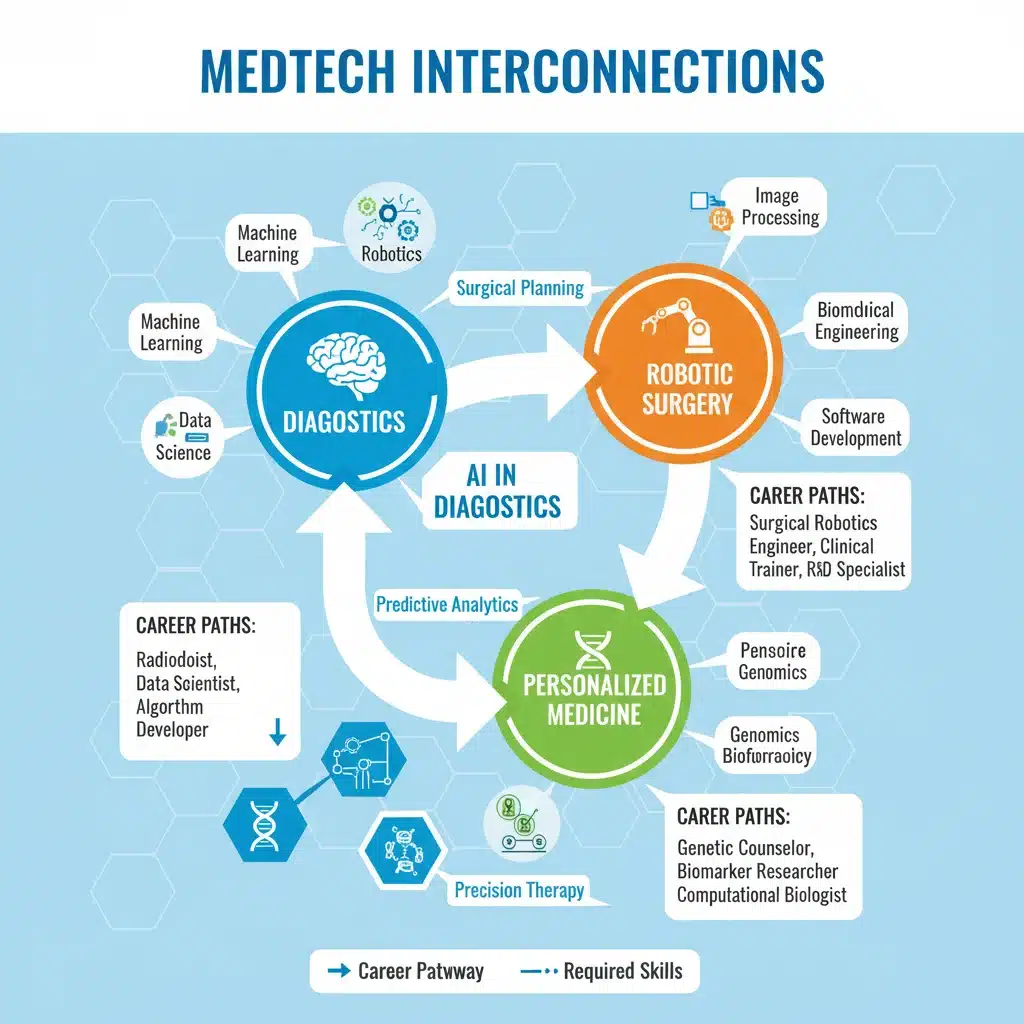
- Artificial Intelligence (AI) & Machine Learning (ML): Essential for diagnostics, predictive analytics, drug discovery, and personalized treatment plans. Professionals need to understand AI algorithms, data interpretation, and ethical implications.
- Robotics & Automation: Key for surgical assistance, rehabilitation, and automated laboratory processes. Skills include robotic programming, mechatronics, and human-robot interaction.
- Data Science & Analytics: The ability to collect, process, and derive insights from large and complex datasets is vital for clinical trials, real-world evidence generation, and health outcomes improvement.
- Cybersecurity: With increasing connectivity of medical devices and patient data, robust cybersecurity knowledge is non-negotiable to protect sensitive information and ensure device integrity.
- Software Development & Cloud Computing: Proficiency in developing secure, scalable software for medical devices, digital health platforms, and cloud-based healthcare solutions.
- Bioinformatics & Genomics: Understanding genetic data and its application in personalized medicine, diagnostics, and therapeutic development.
- Advanced Materials & Nanotechnology: For developing next-generation implants, drug delivery systems, and diagnostic tools.
Interdisciplinary Skills: Bridging the Gaps
- Regulatory Affairs & Compliance: Navigating the complex and ever-changing global regulatory landscape (FDA, CE Mark, etc.) is critical for bringing MedTech products to market.
- Biomedical Engineering: A foundational understanding of engineering principles applied to biological and medical problems.
- Clinical Knowledge & User-Centric Design: Professionals need to understand clinical workflows, patient needs, and healthcare provider perspectives to design effective and usable solutions.
- Biostatistics: Essential for designing clinical studies, analyzing results, and validating the efficacy and safety of new medical technologies.
Soft Skills: The Enablers of Success
- Problem-Solving & Critical Thinking: The ability to analyze complex challenges and devise innovative solutions.
- Collaboration & Teamwork: MedTech projects are inherently multidisciplinary, requiring effective collaboration across diverse teams.
- Adaptability & Lifelong Learning: Given the rapid pace of technological change, a commitment to continuous learning is paramount.
- Communication: Effectively conveying complex technical and clinical information to diverse audiences.
- Ethical Reasoning: Navigating the ethical considerations surrounding new technologies, patient data, and clinical applications.
Educational Programs Responding to the Challenge
Recognizing the urgency of the MedTech skills gap, various educational institutions, industry bodies, and private organizations are developing innovative programs. These initiatives aim to produce a workforce that is not only technically proficient but also contextually aware and adaptable.
University-Industry Partnerships: A Synergistic Approach
Many leading universities are forging stronger ties with MedTech companies to co-create curricula that directly address industry needs. These partnerships often involve:
- Joint Research Projects: Students and faculty collaborate with industry professionals on real-world challenges, gaining practical experience and exposure to cutting-edge technologies.
- Internships and Co-op Programs: Providing students with invaluable hands-on experience within MedTech companies, often leading to full-time employment.
- Industry-Sponsored Capstone Projects: Students work on projects proposed by companies, applying their academic knowledge to solve actual business or technical problems.
- Guest Lecturers and Mentorships: Industry experts bring their practical insights into the classroom, enriching the learning experience.
For instance, some universities are launching specialized Master’s programs in Biomedical Data Science or Medical Robotics, often with input from advisory boards composed of MedTech leaders. These programs are designed to be agile, incorporating the latest technological advancements and regulatory changes into their coursework.
Specialized Certifications and Micro-Credentials
In a rapidly evolving field, traditional degree programs alone may not be enough. The rise of micro-credentials and specialized certifications allows professionals to quickly acquire specific skills needed to fill immediate gaps. These programs often focus on:
- Regulatory Affairs Certification (RAC): Essential for professionals navigating the complex approval processes for medical devices and diagnostics.
- Digital Health & Telemedicine Certifications: Covering the legal, ethical, and technical aspects of remote patient monitoring, virtual consultations, and digital therapeutics.
- AI in Healthcare Certificates: Focusing on the application of AI/ML algorithms in clinical settings, image analysis, and predictive modeling.
- Cybersecurity for Medical Devices: Training on protecting connected medical devices from cyber threats and ensuring patient safety.
These shorter, focused programs are ideal for upskilling current employees or for individuals looking to pivot into specific high-demand areas within MedTech. They offer flexibility and direct applicability to industry roles, effectively targeting specific aspects of the MedTech skills gap.

Online Learning Platforms and MOOCs
The accessibility of online learning has revolutionized education, particularly for professionals seeking to update their skills without interrupting their careers. Platforms like Coursera, edX, and dedicated industry portals offer a wide range of courses and specializations relevant to MedTech. These include:
- Courses on Python for data analysis in healthcare.
- Specializations in medical device design and manufacturing.
- Programs on health informatics and electronic health records.
- Workshops on regulatory compliance for global markets.
The flexibility and often lower cost of online learning make it a powerful tool in democratizing access to education and rapidly disseminating new knowledge to address the MedTech skills gap on a global scale.
Apprenticeships and On-the-Job Training
For highly practical and hands-on roles, apprenticeships and structured on-the-job training programs remain invaluable. These allow new entrants or career changers to learn directly from experienced professionals while contributing to real projects. Many MedTech companies are investing in these programs to cultivate their own talent pipelines, ensuring that employees gain specific skills tailored to their organizational needs and technologies.
These programs are particularly effective in areas requiring intricate knowledge of manufacturing processes, quality control, and the operation of specialized medical equipment. They provide a direct pathway to employment and ensure that theoretical knowledge is immediately applied in a practical, industry-relevant context.
The Role of Government and Policy in Addressing the Gap
Governments also play a crucial role in mitigating the MedTech skills gap. Policy initiatives can include:
- Funding for STEM Education: Increased investment in science, technology, engineering, and mathematics education from primary school upwards.
- Grants for University-Industry Collaboration: Incentivizing partnerships that lead to skill-aligned curricula and research.
- Immigration Policies: Attracting and retaining top global talent in critical MedTech fields.
- Standardization of Skills: Working with industry to define common skill frameworks and competencies, making it easier for educational providers to design relevant programs.
- Tax Incentives: Encouraging MedTech companies to invest in employee training and development programs.
Proactive government support can create an ecosystem that nurtures talent, fosters innovation, and ensures the long-term competitiveness of the MedTech sector.
Challenges and Future Directions
Despite these promising initiatives, challenges remain. The rapid evolution of technology means that curricula can quickly become outdated. There’s also the challenge of attracting diverse talent to the MedTech field, ensuring that the workforce reflects the global patient population it serves. Furthermore, smaller MedTech companies may lack the resources to invest heavily in training and development, relying more on external educational providers.
Looking ahead, addressing the MedTech skills gap will require a concerted, multi-faceted approach:
- Agile Curriculum Development: Educational institutions must adopt more agile methods for updating their programs, possibly through modular course structures that can be quickly adapted.
- Emphasis on Soft Skills: While technical skills are crucial, the ability to collaborate, communicate, and think critically will become even more important as MedTech becomes more interdisciplinary.
- Lifelong Learning Ecosystems: Fostering a culture where continuous learning is the norm, supported by accessible and relevant educational resources throughout a professional’s career.
- Global Collaboration: International partnerships between academic institutions, industry, and governments can help share best practices and create globally recognized standards for MedTech education.
- Focus on Ethics and Regulation: As MedTech delves deeper into sensitive areas like AI diagnostics and genomic editing, a strong emphasis on ethical considerations and regulatory compliance will be paramount in all educational programs.
Conclusion: Investing in the Future of MedTech
The MedTech skills gap is a critical challenge that, if left unaddressed, could impede the progress of medical innovation and ultimately impact patient care. However, the proactive and collaborative efforts of educational programs, industry leaders, and government bodies offer a clear path forward. By focusing on emerging technologies, fostering interdisciplinary knowledge, and nurturing essential soft skills, these programs are not just filling vacancies; they are shaping the future leaders and innovators of the MedTech sector.
The journey to bridge this gap is ongoing, requiring continuous adaptation and investment. For individuals, this means embracing lifelong learning and seeking out specialized training. For educational institutions, it means forging stronger industry ties and maintaining curriculum agility. For MedTech companies, it means investing in talent development and fostering a culture of continuous growth. Together, these efforts will ensure that the MedTech industry remains at the forefront of healthcare innovation, delivering transformative solutions that improve lives worldwide well beyond 2026.