MedTech Graduate Programs 2026: Choosing the Right Curriculum

The landscape of healthcare is undergoing a rapid transformation, driven by groundbreaking advancements in medical technology. For aspiring professionals seeking to make a significant impact in this dynamic field, pursuing a graduate degree in MedTech is not just an option, but a strategic imperative. As we look towards 2026, the demand for highly skilled individuals who can innovate, design, and implement cutting-edge medical solutions continues to soar. Choosing the right MedTech graduate programs can be a pivotal decision, shaping your career trajectory and equipping you with the specialized knowledge and skills necessary to thrive.
This comprehensive guide aims to demystify the process of selecting a MedTech graduate program, offering a detailed comparison of key curriculums for the year 2026. We will delve into what makes a program exceptional, explore various specializations, and provide insights into career opportunities post-graduation. Our goal is to empower you with the information needed to make an informed choice that aligns with your professional aspirations and personal strengths.
Navigating the Evolving World of MedTech Education
The term ‘MedTech’ encompasses a vast array of technologies and disciplines, from medical devices and diagnostics to digital health, bioinformatics, and regenerative medicine. Consequently, MedTech graduate programs are incredibly diverse, reflecting the multidisciplinary nature of the field. A successful program will not only provide a strong theoretical foundation but also emphasize practical application, research, and industry collaboration.
In 2026, the focus of these programs is increasingly shifting towards areas such as artificial intelligence (AI) and machine learning (ML) in healthcare, personalized medicine, cybersecurity for medical devices, and the ethical implications of new technologies. Understanding these trends is crucial when evaluating potential programs. Your chosen program should ideally be forward-thinking, incorporating the latest technological advancements and preparing you for the challenges and opportunities of tomorrow’s healthcare ecosystem.
Understanding the Core Components of Top MedTech Graduate Programs
When comparing MedTech graduate programs, it’s essential to look beyond just the university’s name. A holistic evaluation involves scrutinizing several key components that define the quality and relevance of the curriculum. These components are the building blocks of your future expertise and should align with your career goals.
Curriculum Structure and Flexibility
The curriculum is arguably the most critical aspect of any graduate program. Top MedTech graduate programs for 2026 typically offer a blend of core courses and elective options, allowing students to tailor their studies to specific interests. Core courses often cover fundamental principles such as biomedical engineering, medical device design, biomaterials, regulatory affairs, and clinical trials. Electives, on the other hand, provide opportunities for specialization in areas like:
- Digital Health and Telemedicine: Focusing on mobile health applications, remote monitoring, and virtual care platforms.
- AI and Machine Learning in Healthcare: Exploring the application of AI for diagnostics, drug discovery, and personalized treatment plans.
- Regulatory Science and Quality Assurance: Essential for navigating the complex regulatory landscape of medical device development and ensuring product safety and efficacy.
- Bioinformatics and Computational Biology: Utilizing computational tools to analyze biological data for medical insights.
- Medical Robotics and Automation: Designing and implementing robotic systems for surgery, rehabilitation, and assistive care.
- Biomanufacturing and Tissue Engineering: Developing processes for creating biological products and engineered tissues.
Look for programs that demonstrate a commitment to updating their curriculum regularly to reflect industry demands and technological shifts. A flexible curriculum that allows for interdisciplinary studies or joint degrees (e.g., MedTech and Business Administration) can also be highly beneficial, broadening your skill set and career prospects.
Faculty Expertise and Research Opportunities
The caliber of the faculty significantly influences the quality of a graduate program. Renowned professors with active research agendas bring invaluable real-world experience and cutting-edge knowledge to the classroom. Investigate the research interests of the faculty members in potential MedTech graduate programs. Do their areas of expertise align with your own passions and career goals? Are they publishing in leading journals and presenting at major conferences?
Beyond classroom instruction, robust research opportunities are paramount. Many top programs offer students the chance to participate in faculty-led research projects, often culminating in a thesis or dissertation. This hands-on experience is crucial for developing critical thinking, problem-solving skills, and a deeper understanding of the research and development process in MedTech. Look for programs with well-funded labs, state-of-the-art equipment, and a strong track record of securing grants and industry partnerships.
Industry Connections and Internships
The MedTech industry is highly collaborative, and strong connections between academic institutions and industry partners are a hallmark of leading MedTech graduate programs. These connections can manifest in various ways, including:
- Internship and Co-op Programs: Providing invaluable practical experience in real-world industry settings. Internships allow students to apply their theoretical knowledge, build professional networks, and gain a competitive edge in the job market.
- Industry-Sponsored Projects: Opportunities to work on projects directly funded by MedTech companies, addressing real industry challenges.
- Guest Lecturers and Workshops: Bringing industry leaders and experts into the classroom to share their insights and experiences.
- Career Fairs and Networking Events: Facilitating direct connections between students and potential employers.
A strong emphasis on industry engagement ensures that the curriculum remains relevant to the evolving needs of the MedTech sector and provides students with a clear pathway from academia to professional practice.
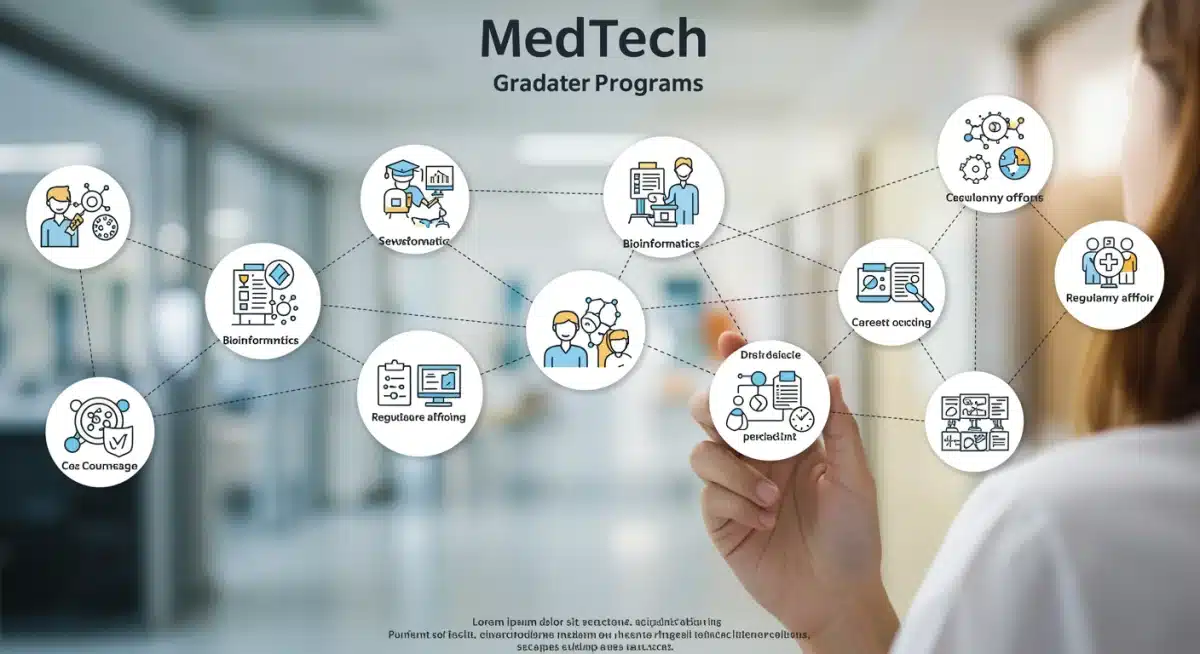
Key Specializations within MedTech Graduate Programs for 2026
As the MedTech field continues to diversify, so too do the specializations offered within graduate programs. Identifying the specialization that best suits your interests and career aspirations is a crucial step in choosing the right program. Here’s a look at some of the most prominent and in-demand specializations for 2026:
Medical Device Design and Development
This specialization focuses on the entire lifecycle of medical devices, from conceptualization and prototyping to testing, manufacturing, and commercialization. Students learn about biomechanics, materials science, electrical engineering principles, and software development as they apply to medical devices. A strong emphasis is placed on user-centered design, ensuring devices are not only effective but also safe and intuitive for healthcare professionals and patients.
Graduates with this specialization are well-prepared for roles as medical device engineers, product developers, R&D scientists, and project managers in companies that design and produce everything from surgical instruments to diagnostic equipment and implantable devices. Understanding the regulatory pathways (e.g., FDA, CE Mark) is also a critical component of this specialization, making it a cornerstone of many MedTech graduate programs.
Biomedical Imaging and Diagnostics
This specialization delves into the principles and applications of various medical imaging modalities, such as MRI, CT, ultrasound, and X-ray. Students learn about image acquisition, processing, analysis, and interpretation, often incorporating advanced computational techniques. The focus extends to developing new diagnostic tools and improving existing ones, with an increasing integration of AI for enhanced accuracy and efficiency.
Career paths for those specializing in biomedical imaging include imaging scientists, diagnostic equipment developers, clinical imaging specialists, and researchers in both academic and industrial settings. This area is vital for early disease detection, treatment monitoring, and personalized medicine, making it a highly impactful field within MedTech graduate programs.
Health Informatics and Digital Health
With the proliferation of electronic health records (EHRs), wearable devices, and telehealth platforms, health informatics and digital health have become critical areas of study. This specialization focuses on the collection, storage, analysis, and utilization of health data to improve patient care, optimize healthcare operations, and inform public health initiatives. Topics often include data analytics, health data security, interoperability, and the design of digital health solutions.
Graduates can pursue careers as health data analysts, clinical informaticists, digital health product managers, and cybersecurity specialists in healthcare. The ability to manage and interpret vast amounts of health data is a highly sought-after skill, making this specialization a cornerstone for the future of MedTech graduate programs.
Regulatory Affairs and Quality Management
Bringing a medical device or diagnostic tool to market is a complex process governed by stringent regulations. This specialization provides students with a deep understanding of global regulatory frameworks, quality management systems, and ethical considerations in MedTech. It covers areas such as FDA submissions, CE marking, clinical trial design and compliance, and post-market surveillance. Professionals in this field ensure that medical products are safe, effective, and comply with all legal requirements.
Roles include regulatory affairs specialists, quality assurance managers, compliance officers, and clinical research associates. For any aspiring professional in the MedTech industry, a solid grasp of regulatory affairs is invaluable, and this specialization within MedTech graduate programs offers that crucial expertise.
Biomaterials and Tissue Engineering
This specialization explores the design, synthesis, and application of materials used in medical devices and regenerative medicine. Students learn about biocompatibility, material properties, and the interaction of materials with biological systems. Topics include the development of artificial organs, tissue scaffolds, drug delivery systems, and advanced prosthetics. It combines principles from materials science, biology, and engineering.
Career opportunities range from research scientists and materials engineers to product development specialists in companies focused on implants, regenerative therapies, and advanced medical materials. This area represents the cutting edge of MedTech innovation, offering exciting prospects for those in MedTech graduate programs.
Factors to Consider When Choosing a Program
Beyond curriculum and specialization, several other factors play a crucial role in determining the best fit among MedTech graduate programs. These considerations can significantly impact your overall academic experience and future career success.
Accreditation and Reputation
Ensure that the program and institution are properly accredited by recognized bodies. Accreditation signifies that the program meets certain quality standards and that your degree will be recognized by employers and other academic institutions. While reputation isn’t everything, a program from a highly regarded university often comes with a stronger alumni network, better research funding, and more robust industry connections.
Location and Campus Environment
The geographic location of the university can be a significant factor, especially if you plan to seek internships or employment in a particular region. Universities located near major MedTech industry hubs often offer more opportunities for collaboration, internships, and networking. Consider the overall campus environment – does it foster innovation, collaboration, and a supportive learning atmosphere? The quality of life in the surrounding area is also an important personal consideration.
Cost and Financial Aid
Graduate education can be a substantial investment. Carefully review the tuition fees, living expenses, and other associated costs for each program. Explore available financial aid options, including scholarships, fellowships, teaching assistantships, and research assistantships. Many MedTech graduate programs offer funding opportunities, particularly for students involved in research, which can significantly reduce the financial burden.
Alumni Network and Career Services
A strong alumni network can be an invaluable resource for career development, mentorship, and job opportunities. Investigate the career paths of graduates from the programs you are considering. Do they hold positions you aspire to? Does the university offer robust career services specifically tailored to MedTech graduates, including resume building, interview preparation, and job placement assistance?

The Future of MedTech and Your Role in It (2026 and Beyond)
The MedTech industry is characterized by constant innovation and rapid evolution. As you prepare to embark on your graduate studies in 2026, you’ll be entering a field ripe with opportunities to shape the future of healthcare. Key trends that will continue to dominate the MedTech landscape include:
- Personalized Medicine: Tailoring treatments and devices to individual patient needs based on genetic, lifestyle, and environmental factors.
- Preventive Healthcare: Shifting focus from treating illness to preventing it, often through wearable sensors, AI-driven diagnostics, and remote monitoring.
- Minimally Invasive Procedures: Continued development of robotic surgery, endoscopic tools, and other technologies that reduce patient recovery time and improve outcomes.
- Interoperability and Data Integration: Creating seamless communication between different medical devices, EHRs, and healthcare systems to provide a holistic view of patient health.
- Global Health Equity: Developing affordable and accessible MedTech solutions for underserved populations worldwide.
By choosing one of the leading MedTech graduate programs, you are not just acquiring a degree; you are investing in the skills and knowledge that will enable you to contribute meaningfully to these transformative trends. Your expertise will be crucial in developing the next generation of medical devices, diagnostic tools, and digital health solutions that will improve countless lives.
Preparing Your Application for MedTech Graduate Programs
Once you have identified a few strong contenders for MedTech graduate programs, the next step is to prepare a compelling application. Here are some tips to strengthen your candidacy:
- Strong Academic Record: Maintain a high GPA, especially in relevant STEM courses.
- Relevant Experience: Gain practical experience through internships, research assistantships, or volunteer work in healthcare or engineering settings.
- Standardized Tests: Prepare thoroughly for the GRE or other required standardized tests.
- Letters of Recommendation: Secure strong letters from professors or supervisors who know your abilities and potential well.
- Statement of Purpose: Craft a clear, concise, and compelling statement that articulates your motivations for pursuing a MedTech graduate degree, your career goals, and why you believe that specific program is the right fit for you. Highlight any relevant projects, research, or experiences.
- Networking: Attend informational webinars, virtual open houses, and connect with current students or alumni to gain insights and demonstrate your interest.
Conclusion: Your Future in MedTech Awaits
The decision to pursue a graduate degree in MedTech is an exciting one, opening doors to a career filled with innovation, challenge, and profound impact. As you navigate the myriad of MedTech graduate programs available for 2026, remember to consider not just the prestige of the institution, but also the alignment of the curriculum with your interests, the expertise of the faculty, the strength of industry connections, and the overall fit with your personal and professional aspirations.
By carefully evaluating these factors, you can select a program that will provide you with a robust education, invaluable practical experience, and a strong foundation for a successful and fulfilling career in the ever-evolving world of medical technology. The future of healthcare depends on bright, dedicated minds like yours, and the right MedTech graduate program will equip you to be at the forefront of that future.
Take the time to research thoroughly, reach out to program representatives, and envision where your passion for MedTech can take you. Your journey to becoming a leader in medical innovation begins with this critical choice.