
Navigating the Health Insurance Marketplace 2026: Finding the Best Value for Your Family
The quest for affordable and comprehensive health insurance is a perennial challenge for many American families. As we look ahead to 2026, the Health Insurance Marketplace continues to be a critical resource for millions seeking coverage. For a family of four, understanding the nuances of the Marketplace, leveraging available subsidies, and comparing plans meticulously can translate into significant annual savings – potentially over $1,200. This comprehensive guide is designed to equip you with the knowledge and strategies needed to navigate the Health Insurance Marketplace 2026 effectively, ensuring your family receives the best possible coverage without breaking the bank.
The landscape of health insurance is constantly evolving, with new regulations, plan offerings, and subsidy structures emerging each year. The Health Insurance Marketplace 2026 will likely bring its own set of changes, making it imperative for families to stay informed and proactive. Our goal is to demystify this process, providing actionable insights that empower you to make informed decisions for your family’s health and financial well-being. We’ll delve into the types of plans available, how to calculate potential subsidies, key factors to consider when comparing policies, and strategies to maximize your savings.
Understanding the Health Insurance Marketplace 2026: Your Gateway to Coverage
The Health Insurance Marketplace, established under the Affordable Care Act (ACA), is an online platform where individuals and families can shop for health insurance plans. It’s designed to make health coverage more accessible and affordable, particularly for those who don’t receive insurance through an employer or government programs like Medicare or Medicaid. For the Health Insurance Marketplace 2026, the fundamental structure will remain, but details regarding plan availability, pricing, and eligibility for financial assistance may shift.
Key Features of the Marketplace
- Standardized Benefits: All plans offered on the Marketplace must cover ten essential health benefits, including emergency services, hospitalization, prescription drugs, mental health care, and maternity care. This ensures a baseline of comprehensive coverage across all options.
- No Discrimination: Insurers cannot deny coverage or charge more based on pre-existing conditions. This is a cornerstone of the ACA and remains a vital protection for all applicants.
- Financial Assistance: A significant advantage of the Marketplace is the availability of subsidies, known as Advance Premium Tax Credits (APTCs) and Cost-Sharing Reductions (CSRs), which can significantly lower your monthly premiums and out-of-pocket costs.
- Metal Categories: Plans are categorized into Bronze, Silver, Gold, and Platinum levels, indicating the percentage of healthcare costs the plan is expected to cover. This helps consumers quickly gauge the generosity of a plan.
For a family of four, navigating these features requires careful consideration. The choice between a Bronze plan with lower premiums but higher out-of-pocket costs, or a Silver plan with moderate premiums and better cost-sharing, often depends on your family’s health needs and financial situation. Understanding these categories is the first step towards making an informed decision within the Health Insurance Marketplace 2026.
Maximizing Savings: Subsidies and Financial Assistance in 2026
One of the most impactful ways to save money on health insurance through the Health Insurance Marketplace 2026 is by leveraging financial assistance. Many families qualify for subsidies that can drastically reduce their monthly premiums and out-of-pocket expenses. These subsidies are primarily based on your household income relative to the Federal Poverty Level (FPL).
Advance Premium Tax Credits (APTCs)
APTCs are designed to lower your monthly premium payments. If you qualify, the government pays a portion of your premium directly to your insurance company. Your eligibility and the amount of your APTC depend on your household income, family size, and the cost of the second-lowest-cost Silver plan in your area. For 2026, it’s crucial to accurately estimate your income to ensure you receive the correct amount of assistance. Overestimating your income could mean missing out on savings, while underestimating could lead to owing money back at tax time.
Cost-Sharing Reductions (CSRs)
CSRs are another form of financial assistance that helps reduce your out-of-pocket costs, such as deductibles, co-payments, and co-insurance. Unlike APTCs, CSRs are only available if you enroll in a Silver plan. If your income falls within a certain range, a Silver plan will offer you enhanced benefits, essentially making it a ‘super Silver’ plan with lower deductibles and co-pays. This can be a game-changer for a family of four, as it provides more comprehensive coverage at a lower effective cost.
How to Estimate Your Eligibility for 2026
To estimate your eligibility for subsidies in the Health Insurance Marketplace 2026, you’ll need to know your household income and family size. The Marketplace website (Healthcare.gov) provides tools and calculators to help you determine if you qualify and for how much. It’s important to include all sources of income and account for any changes that might occur in the coming year. For a family of four, even a modest income can make you eligible for substantial assistance, potentially saving you well over $1,200 annually.
The thresholds for subsidy eligibility are typically updated annually, so it’s essential to refer to the most current FPL guidelines for 2026 once they are released. These subsidies are often the key to making health insurance truly affordable for families, transforming what might seem like an expensive necessity into a manageable expense.
Comparing Plans on the Health Insurance Marketplace 2026: A Family’s Guide
Once you understand your eligibility for financial assistance, the next critical step is to compare the various plans available on the Health Insurance Marketplace 2026. This is where careful consideration can lead to significant savings and better coverage for your family of four. Don’t just look at the premium; a holistic approach is essential.
Understanding Metal Categories and Their Implications
- Bronze Plans: These have the lowest monthly premiums but the highest deductibles and out-of-pocket costs. They cover approximately 60% of healthcare costs. Bronze plans can be suitable for families who are generally healthy and anticipate needing minimal medical care, or for those who want to cover catastrophic events. However, for a family of four with potential regular doctor visits or prescriptions, these plans might lead to higher overall annual spending.
- Silver Plans: Silver plans offer moderate monthly premiums and moderate deductibles. They cover approximately 70% of healthcare costs. Crucially, Silver plans are the only plans eligible for Cost-Sharing Reductions (CSRs). This makes them an excellent choice for families who qualify for CSRs, as they can provide significantly better value than higher metal tiers.
- Gold Plans: With higher monthly premiums, Gold plans offer lower deductibles and out-of-pocket costs, covering around 80% of healthcare expenses. These are often a good fit for families who anticipate needing a fair amount of medical care and prefer the predictability of lower costs when they do need services.
- Platinum Plans: These plans have the highest monthly premiums but the lowest deductibles and out-of-pocket costs, covering about 90% of healthcare expenses. Platinum plans are ideal for families with chronic conditions or those who expect to use a lot of medical services and want the most comprehensive coverage with minimal out-of-pocket expenses.
Beyond the Metal: Key Factors to Evaluate
When comparing plans on the Health Insurance Marketplace 2026, consider more than just the metal category and premium. For a family of four, these factors are paramount:
- Deductibles: How much will your family have to pay out-of-pocket before the insurance company starts paying for most services? A lower deductible means you start receiving benefits sooner.
- Co-payments and Co-insurance: These are the fixed amounts (co-pays) or percentages (co-insurance) you pay for covered services after meeting your deductible. Look for plans with reasonable co-pays for common services like doctor visits and prescription drugs.
- Out-of-Pocket Maximum: This is the most you’ll have to pay for covered services in a plan year. Once you hit this limit, your insurance plan pays 100% of the costs for covered benefits. A lower out-of-pocket maximum provides greater financial protection against catastrophic health events.
- Provider Network: Ensure your family’s preferred doctors, specialists, and hospitals are in the plan’s network. Out-of-network care can be significantly more expensive. For a family of four, this often means checking for pediatricians, family doctors, and any specialists needed for ongoing conditions.
- Prescription Drug Coverage: If anyone in your family takes regular prescription medications, check the plan’s formulary (list of covered drugs) and their associated costs.
- Essential Health Benefits: While all plans cover these, the specifics of how they are covered (e.g., limits on therapy sessions, specific maternity benefits) can vary.
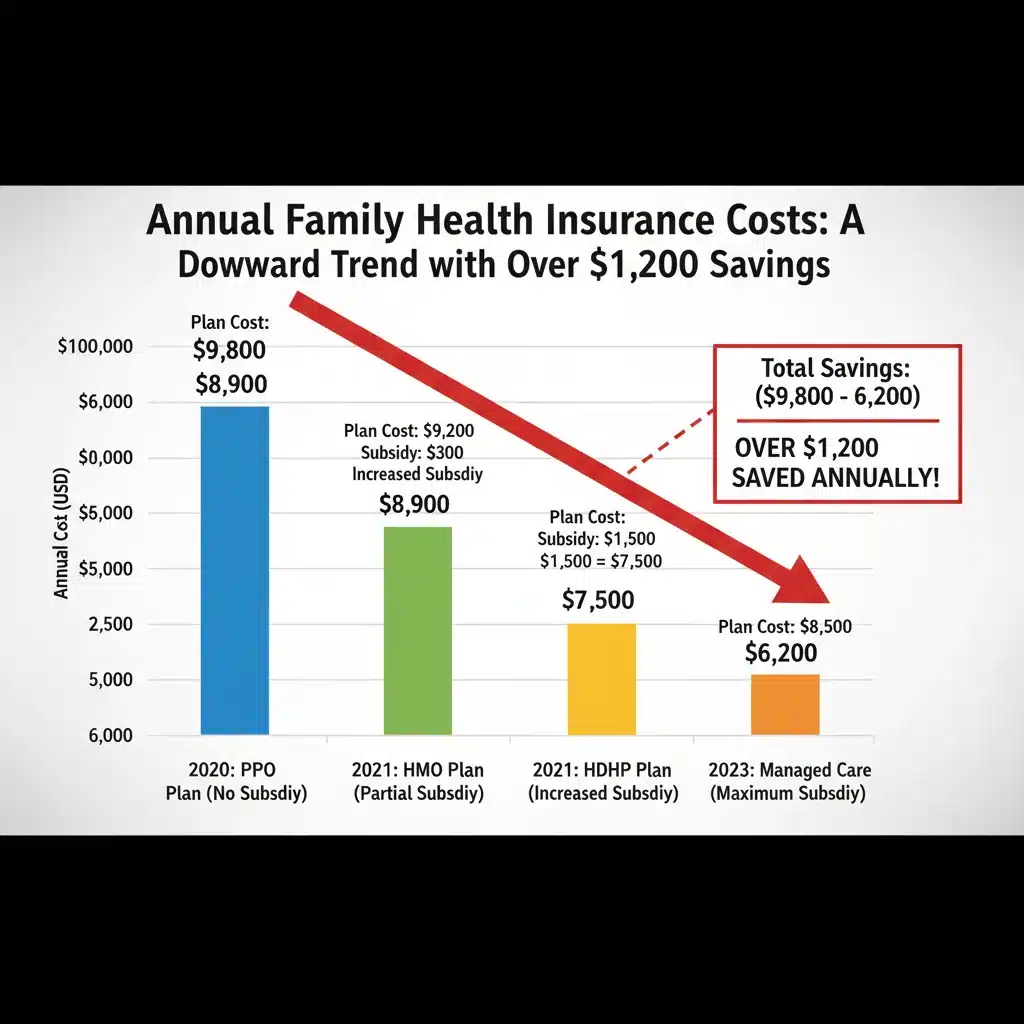
Strategies for Saving Over $1,200 on Your Family’s Health Insurance in 2026
Achieving significant savings on your family’s health insurance through the Health Insurance Marketplace 2026 is entirely possible with a strategic approach. Here’s how a family of four can aim to save over $1,200 annually:
1. Accurately Estimate Your Income and Family Size
This is the cornerstone of maximizing subsidies. Even small changes in income or family composition can impact your eligibility for APTCs and CSRs. Be diligent in projecting your Modified Adjusted Gross Income (MAGI) for 2026. If you anticipate a change in income during the year, update your Marketplace application promptly to avoid discrepancies.
2. Always Check for Cost-Sharing Reductions (CSRs) with Silver Plans
For many families, a Silver plan with CSRs offers the absolute best value. The enhanced benefits can make the effective cost of care much lower than a Bronze plan, even if the premium is slightly higher. The combination of premium tax credits and reduced deductibles/co-pays can lead to substantial savings, easily exceeding $1,200 for a family of four, especially if they utilize healthcare services.
3. Compare Total Out-of-Pocket Costs, Not Just Premiums
A low premium might seem attractive, but if it comes with a very high deductible and out-of-pocket maximum, your annual costs could be much higher, particularly if your family has ongoing health needs. Calculate the estimated total annual cost, including premiums, deductibles, and potential co-pays, based on your family’s anticipated healthcare usage. This helps you understand the true value of each plan.
4. Utilize the Marketplace’s Comparison Tools
The Healthcare.gov website provides robust comparison tools that allow you to filter plans by metal category, insurer, and even specific benefits. Use these tools to line up multiple options side-by-side and see how they compare on key metrics like premiums, deductibles, and out-of-pocket maximums. Pay close attention to how each plan handles essential health benefits relevant to your family.
5. Re-evaluate Annually During Open Enrollment
Do not simply re-enroll in your current plan without reviewing other options. Plans, prices, and your family’s health needs can change year over year. What was the best plan for your family in 2025 might not be in 2026. Open Enrollment is your annual opportunity to secure the best deal. Actively shopping the Health Insurance Marketplace 2026 can unveil new, more cost-effective plans or better subsidy opportunities.
6. Consider High-Deductible Health Plans (HDHPs) with Health Savings Accounts (HSAs)
If your family is generally healthy and you qualify for an HDHP, pairing it with an HSA can be a powerful savings strategy. Contributions to an HSA are tax-deductible, the money grows tax-free, and withdrawals for qualified medical expenses are also tax-free. This triple tax advantage can lead to significant long-term savings, especially when combined with lower HDHP premiums. Just ensure you have sufficient funds in the HSA to cover the high deductible should a major medical event occur.
7. Be Mindful of Network Restrictions
PPO, HMO, EPO, and POS plans all have different rules about how you access care. For a family of four, ensuring that your preferred doctors, pediatricians, and specialists are in-network is crucial. Out-of-network care can be very expensive and quickly erode any premium savings. Check the provider directories for each plan carefully.
Common Pitfalls to Avoid When Choosing a Plan
While the Health Insurance Marketplace 2026 offers numerous opportunities for affordable coverage, there are common mistakes families make that can lead to higher costs or inadequate coverage. Avoiding these pitfalls is key to saving over $1,200.
Choosing a Plan Based Solely on Premium
As mentioned, a low premium often means higher deductibles and out-of-pocket costs. For a family that uses healthcare services regularly, a slightly higher premium for a plan with better cost-sharing can result in lower overall annual spending.
Ignoring Cost-Sharing Reductions
Many families overlook the significant benefits of CSRs. If your income qualifies, a Silver plan with CSRs is almost always the best value. Failing to check for these can mean leaving substantial savings on the table.
Not Checking Doctor Networks
Switching doctors can be disruptive and inconvenient, especially for children. Always verify that your family’s current healthcare providers are in-network for any plan you consider. If they’re not, you’ll need to decide if the cost savings are worth finding new providers.
Underestimating Healthcare Needs
It’s easy to assume your family will remain perfectly healthy. However, unforeseen illnesses or accidents can happen. Choose a plan that offers adequate protection against catastrophic costs, even if it means a slightly higher premium. The out-of-pocket maximum is a critical number here.
Missing Open Enrollment Deadlines
Open Enrollment is the primary period to enroll or change plans for the upcoming year. Missing this window means you generally cannot get coverage or change plans unless you qualify for a Special Enrollment Period (SEP) due due to a qualifying life event (e.g., marriage, birth, loss of other coverage).

The Enrollment Process for the Health Insurance Marketplace 2026
Enrolling in a plan through the Health Insurance Marketplace 2026 is a straightforward process, but it requires attention to detail. Here’s a step-by-step guide:
1. Gather Necessary Information
Before you begin, have the following information ready for all members of your family:
- Social Security Numbers (SSNs) or document numbers for immigrants.
- Employer and income information for every member of your household (e.g., pay stubs, W2s, tax returns).
- Information about any job-based health coverage you or anyone in your household is eligible for.
2. Create an Account on Healthcare.gov
If you don’t already have one, you’ll need to create an account on the official Marketplace website. This is where you’ll fill out your application, compare plans, and enroll.
3. Complete Your Application
The application will ask for details about your household, income, and any current health coverage. Be honest and accurate, as this information determines your eligibility for subsidies. For a family of four, ensure all members are listed correctly.
4. Review Your Eligibility Results
After submitting your application, the Marketplace will inform you if you qualify for APTCs and/or CSRs, and the estimated amounts. This is a crucial step in understanding your true costs.
5. Compare Plans and Select the Best Option
Now comes the detailed comparison. Use the Marketplace tools to filter, sort, and compare plans based on premiums, deductibles, out-of-pocket maximums, and network types. Remember all the factors discussed earlier, especially for a family of four. Pay close attention to Silver plans if you qualify for CSRs.
6. Enroll in Your Chosen Plan
Once you’ve selected the best plan for your family, proceed to enroll directly through the Marketplace. You’ll typically make your first premium payment directly to the insurance company.
7. Stay Vigilant and Report Changes
Throughout 2026, if your income, family size, or other relevant information changes, report it to the Marketplace immediately. This ensures your subsidies are adjusted correctly and helps avoid issues at tax time.
The Future of Health Insurance: What to Expect Beyond 2026
While our focus is on the Health Insurance Marketplace 2026, it’s also worth briefly considering the broader trajectory of healthcare reform. The ACA has proven resilient, and its core tenets – guaranteed issue, essential health benefits, and subsidies – are likely to remain. However, policy discussions continue regarding further enhancements or adjustments to the Marketplace. These could include:
- Expanded Subsidies: There’s ongoing debate about making enhanced subsidies permanent or expanding eligibility further. Any such changes would provide even greater savings opportunities for families.
- Public Option: The idea of a government-run public health insurance option competing alongside private plans is periodically discussed. If implemented, this could introduce new choices and potentially drive down costs.
- State-Level Innovations: Many states are exploring their own innovations within the ACA framework, such as reinsurance programs to stabilize markets and lower premiums.
Staying informed about these potential developments can help your family prepare for future enrollment periods and continue to make the most informed choices for your healthcare needs. The agility to adapt to changes in the Health Insurance Marketplace 2026 and beyond will be a valuable asset for any family seeking to optimize their health coverage.
Conclusion: Empowering Your Family’s Health with Smart Choices
Navigating the Health Insurance Marketplace 2026 for a family of four doesn’t have to be an overwhelming task. By understanding the available plans, accurately calculating your eligibility for subsidies, and meticulously comparing options, your family can not only secure comprehensive health coverage but also achieve substantial financial savings – potentially well over $1,200 annually. The key is proactive engagement, thorough research, and leveraging the tools and resources provided by the Marketplace.
Remember to prioritize your family’s specific health needs, consider the total cost of ownership (premiums plus out-of-pocket expenses), and always re-evaluate your options during each Open Enrollment period. With these strategies in mind, you are well-equipped to make intelligent decisions that safeguard your family’s health and financial future in the ever-evolving landscape of health insurance.