AI in Healthcare Education: Essential Skills for MedTech Innovators by 2026

The landscape of healthcare is undergoing a profound transformation, driven by the rapid advancements in Artificial Intelligence (AI). This revolution is not just impacting diagnostics and treatment but is fundamentally reshaping how medical professionals are educated and trained. For MedTech innovators, understanding and adapting to this seismic shift is not merely an advantage; it’s a necessity for survival and growth. By 2026, the integration of AI into healthcare education will be so pervasive that a new set of core competencies will be indispensable. This article delves deep into these essential skills, providing an insider’s guide for those looking to lead the charge in the future of healthcare technology.
The traditional model of medical education, while foundational, often struggles to keep pace with the accelerating rate of technological innovation. AI offers a powerful solution, providing personalized learning experiences, sophisticated simulation environments, and data-driven insights that can enhance clinical reasoning and decision-making. However, harnessing this potential requires more than just deploying new tools; it demands a fundamental shift in mindset and a proactive acquisition of specialized skills. MedTech innovators, therefore, stand at the nexus of technology and education, tasked with bridging the gap and developing solutions that empower the next generation of healthcare providers. The future of AI Healthcare Education hinges on their vision and expertise.
The Dawn of AI in Medical Training: A Paradigm Shift
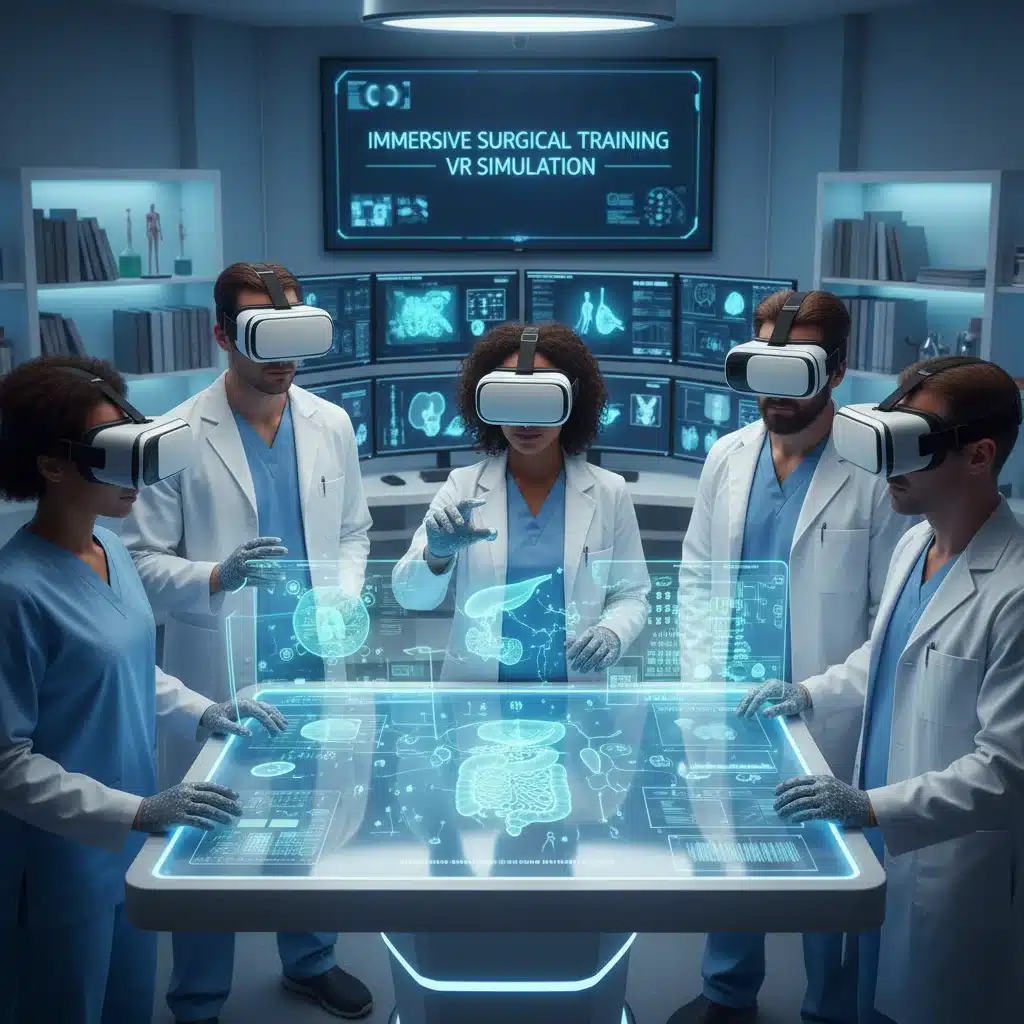
AI’s entry into medical education is not a fleeting trend but a foundational change. It promises to address several long-standing challenges, including the scalability of personalized learning, access to diverse clinical scenarios, and the objective assessment of skills. Imagine medical students learning complex surgical procedures in highly realistic virtual reality environments, guided by AI algorithms that provide real-time feedback on their performance. Or consider AI-powered tutors that adapt to individual learning styles, offering customized content and challenging students with cases tailored to their specific knowledge gaps. These are not distant dreams but increasingly tangible realities shaping AI Healthcare Education.
This paradigm shift necessitates that MedTech innovators not only understand the technical capabilities of AI but also its pedagogical implications. How can AI be designed to enhance, rather than replace, human instruction? What ethical considerations arise when AI plays a central role in shaping medical knowledge and practice? These are the complex questions that require innovative answers, and the skills outlined in this article are designed to equip professionals to tackle them effectively.
Skill 1: AI Literacy and Data Fluency
At the core of navigating the future of AI Healthcare Education is a robust understanding of AI itself. This goes beyond simply knowing what AI is; it involves a deep comprehension of its various branches (machine learning, deep learning, natural language processing), its underlying algorithms, and its strengths and limitations. MedTech innovators must be able to critically evaluate AI models, understand their biases, and interpret their outputs. Data fluency is equally crucial. Healthcare data is vast, complex, and often unstructured. Innovators need to understand data collection, cleaning, ethical handling, and how to derive meaningful insights from it to inform AI model development and educational content.
This skill set involves:
- Understanding AI Architectures: Familiarity with different machine learning models (e.g., neural networks, decision trees, support vector machines) and their appropriate applications in healthcare education.
- Data Preprocessing and Feature Engineering: The ability to prepare raw healthcare data for AI models, including handling missing values, normalization, and creating relevant features.
- Statistical Analysis and Interpretation: A strong grasp of statistical methods to validate AI model performance, understand uncertainty, and interpret results in a clinically meaningful context.
- Ethical AI Principles: Knowledge of ethical guidelines for AI development and deployment in healthcare, focusing on fairness, transparency, accountability, and patient privacy (e.g., HIPAA compliance).
- Bias Detection and Mitigation: The capacity to identify and address biases in AI algorithms and data sets that could lead to inequitable educational outcomes or clinical decisions.
Without a solid foundation in AI literacy and data fluency, MedTech innovators risk developing tools that are either ineffective, biased, or fail to meet the stringent requirements of the healthcare sector. This is the bedrock upon which all other skills are built for effective AI Healthcare Education.
Skill 2: Pedagogical Design for AI-Enhanced Learning
Developing effective AI tools for healthcare education requires more than just technical prowess; it demands a deep understanding of learning theories and pedagogical principles. MedTech innovators must be able to design AI-enhanced learning experiences that are engaging, effective, and aligned with educational objectives. This means moving beyond simply automating existing content and instead, leveraging AI to create entirely new and improved learning pathways.
Key aspects of this skill include:
- Understanding Adult Learning Theories: Applying principles like andragogy, cognitive load theory, and constructivism to design AI-driven educational interventions.
- Curriculum Development with AI Integration: The ability to integrate AI tools seamlessly into existing or new medical curricula, identifying where AI can best support learning outcomes.
- Adaptive Learning Pathway Design: Creating AI systems that can dynamically adjust content, pace, and difficulty based on individual learner performance and preferences.
- Gamification and Engagement Strategies: Incorporating game-like elements and interactive features into AI-powered learning platforms to enhance motivation and retention.
- Assessment and Feedback Mechanisms: Designing AI systems that can provide objective, personalized, and timely feedback on student performance, including complex clinical skills.
This skill ensures that the AI solutions developed are not just technologically advanced but also pedagogically sound, truly enhancing the learning experience for future healthcare professionals. The synergy between AI and education is critical for impactful AI Healthcare Education.
Skill 3: Clinical Domain Expertise and Interdisciplinary Collaboration
No amount of technical skill can compensate for a lack of understanding of the clinical context. MedTech innovators must possess or cultivate a strong appreciation for medical science, clinical practice, and patient care pathways. This doesn’t necessarily mean being a doctor, but it does require the ability to speak the language of healthcare professionals, understand their challenges, and identify genuine unmet needs that AI can address. Furthermore, the complexity of AI Healthcare Education demands an inherently interdisciplinary approach.

This involves:
- Clinical Workflow Understanding: Deep knowledge of how healthcare professionals operate, from diagnosis and treatment to patient management and communication.
- Problem Identification: The ability to identify specific pain points in medical education and training that AI can effectively solve.
- Collaboration with Clinicians: Actively engaging with doctors, nurses, and other healthcare educators to gather requirements, validate prototypes, and ensure clinical relevance.
- Translational Research Skills: Bridging the gap between AI research and practical clinical application, translating complex technical concepts into understandable insights for medical practitioners.
- Regulatory and Compliance Knowledge: Understanding the stringent regulatory landscape of healthcare (e.g., FDA, CE marking) and how it impacts the design and deployment of AI-powered educational tools.
Effective collaboration is paramount. Innovators must be able to work seamlessly with clinicians, educators, data scientists, and ethicists to create comprehensive and impactful AI Healthcare Education solutions. Without this interdisciplinary bridge, even the most advanced AI tools risk becoming irrelevant in the clinical setting.
Skill 4: Ethical AI Development and Governance
The integration of AI into healthcare, especially in education, raises significant ethical considerations. Bias in algorithms, data privacy, accountability for AI-driven decisions, and the potential impact on the human element of care are all critical areas that MedTech innovators must address proactively. Developing a strong ethical framework for AI development and deployment is not just good practice; it’s a moral imperative and a legal necessity.
This skill encompasses:
- Understanding AI Ethics Frameworks: Familiarity with established principles and guidelines for ethical AI in healthcare, such as those from WHO, IEEE, or national regulatory bodies.
- Privacy-Preserving AI Techniques: Implementing methods like differential privacy, federated learning, and anonymization to protect sensitive patient and student data.
- Transparency and Explainability (XAI): Designing AI models that are interpretable and can provide clear justifications for their outputs, particularly in high-stakes educational assessments or clinical simulations.
- Fairness and Equity in AI: Actively working to mitigate algorithmic bias to ensure that AI-powered educational tools are fair and equitable for all learners, regardless of demographic background.
- Accountability and Oversight: Establishing clear lines of responsibility for AI system performance and decisions, and developing mechanisms for human oversight and intervention.
Building trust in AI is paramount, and ethical development is the cornerstone of that trust. MedTech innovators must be champions of responsible AI, ensuring that their innovations serve humanity’s best interests within AI Healthcare Education.
Skill 5: User Experience (UX) and User Interface (UI) Design for Healthcare
Even the most sophisticated AI solution will fail if it’s not user-friendly and intuitive. In healthcare, where professionals operate under high-pressure conditions and time constraints, excellent UX/UI design is even more critical. MedTech innovators must be adept at designing AI-powered educational platforms and tools that are not only functional but also highly usable, accessible, and engaging for diverse learners.
Key elements include:
- Human-Centered Design Principles: Applying a user-centric approach throughout the development lifecycle, involving end-users (students, educators, clinicians) at every stage.
- Intuitive Interface Design: Creating clean, uncluttered, and easy-to-navigate interfaces that minimize cognitive load and allow users to focus on learning.
- Accessibility Standards: Ensuring that AI-powered educational tools are accessible to learners with disabilities, adhering to guidelines like WCAG.
- Feedback and Iteration: Establishing robust mechanisms for collecting user feedback and iteratively refining designs based on real-world usage.
- Visual Design for Medical Contexts: Understanding how to effectively use visual elements, data visualization, and interactive components to convey complex medical information clearly and concisely.
A poorly designed interface can negate the benefits of advanced AI. Innovators must ensure that their solutions for AI Healthcare Education are not just powerful but also a joy to use, fostering adoption and maximizing learning outcomes.
Skill 6: Scalability and Implementation Strategies
Developing a groundbreaking AI tool is one thing; successfully deploying it across diverse educational institutions and healthcare systems is another. MedTech innovators need to think beyond the prototype and consider the practicalities of scalability, integration, and sustainable implementation. This involves understanding IT infrastructure, interoperability standards, and change management processes within complex organizational structures.
This skill set demands:
- Cloud Computing and Infrastructure: Knowledge of cloud platforms (AWS, Azure, GCP) and how to design scalable, secure, and cost-effective AI solutions for educational use.
- Interoperability Standards: Familiarity with healthcare data standards (e.g., FHIR, DICOM) and educational technology standards (e.g., LTI, SCORM) to ensure seamless integration with existing systems.
- Deployment and Maintenance Planning: Developing strategies for rolling out AI solutions, providing ongoing support, and managing updates and maintenance.
- Change Management and Adoption: Understanding how to facilitate the adoption of new technologies within conservative environments like medical education, addressing resistance and promoting buy-in.
- Economic Viability and Business Models: Developing sustainable business models for AI-powered educational tools, considering licensing, subscription, or service-based approaches.
The impact of AI Healthcare Education will only be realized if innovations can move from pilot projects to widespread adoption. Innovators must be strategic thinkers, capable of navigating the complexities of large-scale implementation.
Skill 7: Continuous Learning and Adaptability
The field of AI is evolving at an unprecedented pace. What is cutting-edge today may be commonplace tomorrow. Therefore, one of the most critical skills for MedTech innovators is the capacity for continuous learning and extreme adaptability. They must stay abreast of the latest AI research, emerging technologies, and shifts in healthcare policy and educational pedagogy. This isn’t just about reading papers; it’s about actively experimenting, participating in communities, and embracing a growth mindset.
- Staying Current with AI Research: Regularly following academic publications, industry reports, and AI conferences to understand new algorithms, tools, and applications.
- Experimentation and Prototyping: A willingness to quickly develop and test new ideas, iterating rapidly based on feedback and results.
- Networking and Community Engagement: Actively participating in AI and healthcare communities to exchange knowledge, collaborate, and identify new opportunities.
- Critical Thinking and Problem-Solving: The ability to analyze complex challenges, break them down into manageable parts, and apply creative AI-driven solutions.
- Resilience and Agility: Adapting to unforeseen challenges, pivoting strategies when necessary, and maintaining a positive outlook in a rapidly changing environment.
The future belongs to those who are not just learners but also active contributors to the evolving landscape of AI Healthcare Education. This commitment to lifelong learning will ensure that MedTech innovators remain at the forefront of innovation.
The Strategic Imperative for MedTech Innovators
For MedTech innovators, the journey into AI Healthcare Education is not just about developing individual products; it’s about shaping the very fabric of future medical practice. The skills outlined above are interconnected and mutually reinforcing. A deep understanding of AI without pedagogical insight will lead to technically brilliant but educationally ineffective tools. Clinical expertise without ethical considerations can lead to harmful or biased outcomes. And even the best solutions will falter without robust implementation strategies.
By 2026, the demand for professionals possessing these hybrid skill sets will be immense. Companies that invest in developing these competencies within their teams will be best positioned to create impactful, market-leading solutions. Educational institutions will seek partnerships with innovators who can credibly integrate AI into their curricula. And ultimately, patients will benefit from a new generation of healthcare providers trained with the most advanced, personalized, and effective methods available.
The strategic imperative is clear: MedTech innovators must proactively embrace these skills, fostering a culture of continuous learning and interdisciplinary collaboration. This is not merely about staying competitive; it’s about fulfilling the profound responsibility to advance healthcare education and, by extension, the quality of patient care globally. The future of medicine is intelligent, and its educators and innovators must be equally so. The path to mastering AI Healthcare Education is challenging but immensely rewarding.
Conclusion: Paving the Way for a Smarter Medical Future
The integration of AI into healthcare education represents a monumental opportunity to revolutionize how medical knowledge is imparted and skills are honed. For MedTech innovators, this is a call to action. By cultivating a comprehensive skill set encompassing AI literacy, pedagogical design, clinical understanding, ethical governance, user-centric design, scalability, and an unwavering commitment to continuous learning, they can become the architects of a smarter, more effective medical future. The year 2026 is not far off, and the time to acquire these essential skills for navigating AI Healthcare Education is now. Those who embrace this challenge will not only drive innovation but also profoundly impact the lives of countless patients and the trajectory of global health.