Blockchain in Healthcare Education: Opportunities for 2026
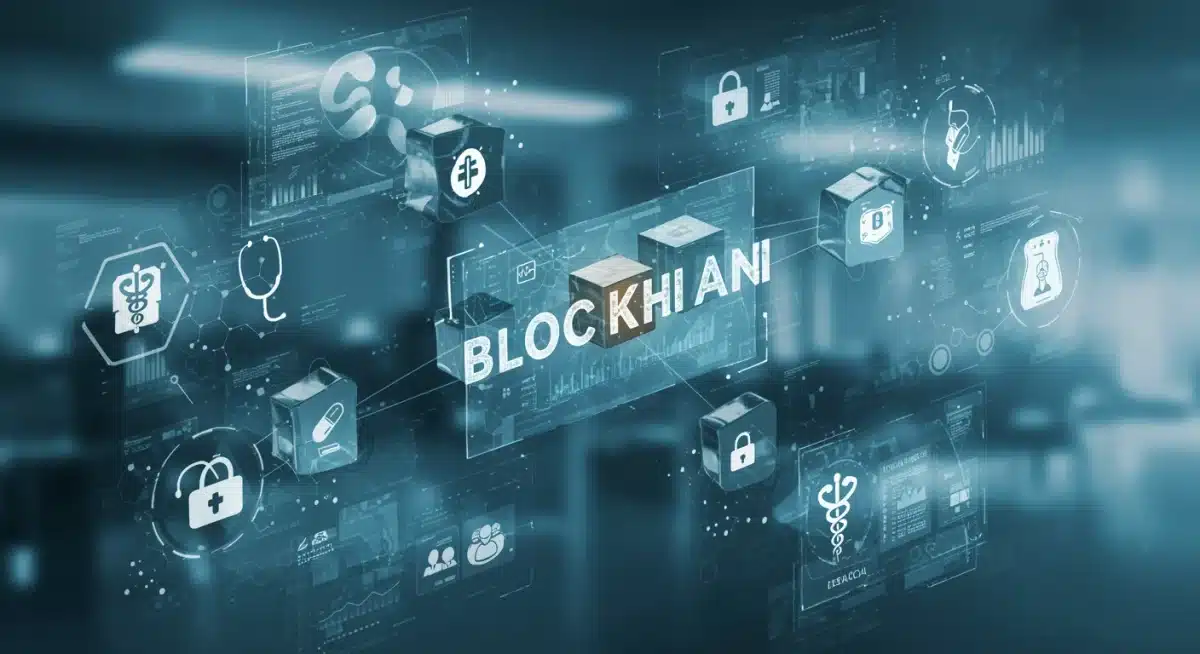
Blockchain technology is set to transform healthcare education by 2026, ensuring secure, transparent, and verifiable management of academic and professional credentials, thereby enhancing trust and efficiency in medical training programs.
Have you considered how emerging technologies might reshape the very foundations of medical training? In an era defined by rapid technological advancement, Understanding Blockchain’s Role in Healthcare Education: Opportunities for 2026 is becoming not just relevant, but essential. This innovative technology promises to bring unprecedented levels of security, transparency, and efficiency to how healthcare professionals are educated, credentialed, and continuously developed.
The Dawn of Blockchain in Medical Academia
The healthcare sector is undergoing a profound digital transformation, and education is no exception. Traditional methods of managing academic records, verifying credentials, and tracking continuing medical education (CME) often face challenges related to security, accessibility, and fraud. Blockchain, with its decentralized and immutable ledger system, offers a compelling solution to these long-standing issues, fundamentally altering how we perceive and conduct medical academia.
By providing an unchangeable record of every transaction or data entry, blockchain technology can create a verifiable history of a student’s academic journey and a professional’s career trajectory. This secure foundation supports a new paradigm for trust and efficiency, making it easier for institutions to manage records and for individuals to prove their qualifications without intermediaries. The implications for accreditation, licensing, and professional development are vast and transformative, promising a more robust and reliable system for all stakeholders.
Securing Academic Records and Certifications
One of the most immediate and impactful applications of blockchain in healthcare education is the secure management of academic records and certifications. Imagine a world where transcripts and diplomas cannot be tampered with, and their authenticity can be verified instantly by any authorized party. This is the promise of blockchain, offering a level of integrity that traditional paper-based or centralized digital systems simply cannot match.
- Immutable Transcripts: Every grade, course completion, and degree awarded can be recorded as a transaction on a blockchain, creating an unalterable and verifiable record.
- Fraud Prevention: The cryptographic nature of blockchain makes it incredibly difficult to forge credentials, significantly reducing the incidence of academic fraud.
- Instant Verification: Employers, licensing boards, and other educational institutions can instantly verify the authenticity of a candidate’s qualifications, saving time and resources.
- Global Recognition: Standardized blockchain-based credentials can facilitate easier recognition of qualifications across different countries and institutions.
The transition to blockchain-based record-keeping is not merely about digitizing existing processes; it’s about fundamentally enhancing the trustworthiness and efficiency of credential verification. This foundational shift is critical for maintaining high standards in healthcare, where the competence of practitioners directly impacts patient safety and well-being.
Streamlining Credential Verification and Licensing
The process of credential verification and professional licensing in healthcare is notoriously complex, time-consuming, and often fraught with administrative burdens. Healthcare professionals frequently move between states or even countries, necessitating a repetitive and often slow re-verification of their qualifications. Blockchain technology presents a powerful tool to simplify and accelerate these critical processes, leading to a more agile and responsive healthcare workforce.
Through a decentralized ledger, a healthcare professional’s entire portfolio of qualifications, licenses, and continuing education units can be stored securely and be made accessible to authorized entities with appropriate permissions. This eliminates the need for multiple, redundant verification steps, allowing practitioners to transition more smoothly between roles and locations, while ensuring that all necessary checks are performed with utmost accuracy and speed.
Enhanced Portability for Healthcare Professionals
The ability for healthcare professionals to easily transfer their verified credentials represents a significant advantage. Currently, obtaining licenses in new jurisdictions often involves a lengthy process of contacting previous institutions and licensing bodies, a delay that can hinder immediate workforce deployment. Blockchain can transform this by providing a universal, verifiable record.
- Single Source of Truth: A blockchain-based credential serves as a definitive, tamper-proof record of qualifications, accessible globally.
- Reduced Administrative Burden: Licensing boards and employers can bypass lengthy verification calls and paperwork, relying on the blockchain’s inherent trust.
- Faster Onboarding: New hires can be credentialed and onboarded more quickly, reducing delays in patient care delivery.
- Improved Workforce Mobility: Healthcare professionals can more easily relocate or work in different regions, responding to areas of high demand.
The adoption of blockchain in this area promises not just administrative relief, but also a strategic advantage for healthcare systems facing workforce shortages or needing to quickly deploy personnel in crisis situations. By making credentialing more efficient, blockchain directly supports the agility and resilience of the healthcare industry.
Personalized Learning and Skill Development
Beyond administrative efficiencies, blockchain also offers exciting possibilities for revolutionizing the learning experience itself. In an industry where knowledge and techniques evolve rapidly, continuous learning is paramount. Blockchain can facilitate more personalized, adaptive, and verifiable approaches to skill development, ensuring that healthcare professionals remain at the cutting edge of their fields.
By tracking granular learning achievements and skill acquisition on a blockchain, educators can create dynamic learning pathways tailored to individual needs and career goals. This allows for a more flexible and responsive educational ecosystem, moving away from a one-size-fits-all approach towards truly individualized professional growth. The verifiable nature of these learning records also adds significant value, allowing professionals to showcase specific competencies rather than just broad qualifications.
Micro-credentialing and Competency-Based Education
The concept of micro-credentials, small certifications for specific skills, aligns perfectly with blockchain’s capabilities. Instead of waiting for a full degree, learners can earn and verify smaller units of learning, demonstrating proficiency in particular areas. This is especially valuable in healthcare, where specialized skills are often required.
Blockchain allows for the secure issuance and verification of these micro-credentials, creating a detailed and dynamic profile of a professional’s skills. This shift towards competency-based education, where actual skills demonstrated are prioritized over time spent in a classroom, can lead to more effective and efficient training programs. It empowers learners to focus on areas where they need to grow and provides employers with a clear, verifiable understanding of a candidate’s specific abilities.
Ensuring Data Privacy and Security in Education
In the digital age, data privacy and security are paramount, particularly when dealing with sensitive personal and academic information. Healthcare education systems hold vast amounts of student data, making them attractive targets for cyberattacks. Blockchain technology inherently offers robust mechanisms to enhance data privacy and security, providing a more resilient framework for protecting educational records.
The decentralized nature of blockchain means there is no single point of failure that hackers can target. Furthermore, cryptographic techniques used in blockchain ensure that data is encrypted and that access is strictly controlled. This creates a secure environment where sensitive information, such as grades, medical history (for medical students), and personal identifiers, can be managed with a higher degree of confidence than with traditional centralized databases.
Protecting Sensitive Student Information
Student records often contain highly personal information, from academic performance to health records and demographic data. A breach of this information can have severe consequences for individuals. Blockchain’s architecture is designed to mitigate these risks significantly.
- Decentralized Storage: Data is distributed across a network, making it more resistant to single-point attacks and data loss.
- Cryptographic Security: Each data block is encrypted and linked to the previous one, ensuring data integrity and preventing unauthorized alteration.
- Access Control: Permissions can be precisely managed, allowing only authorized individuals or entities to access specific pieces of information.
- Auditability: Every access and modification to a record is logged on the blockchain, creating a transparent and unchangeable audit trail.
By implementing blockchain for student data management, educational institutions can not only comply with stringent privacy regulations like HIPAA and GDPR but also build greater trust with their students, assuring them that their sensitive information is handled with the utmost care and security.
Collaborative Research and Knowledge Sharing
The advancement of healthcare relies heavily on collaborative research and the efficient sharing of knowledge among institutions and professionals. However, current systems for sharing research data, intellectual property, and educational content can be cumbersome, slow, and lack transparency. Blockchain has the potential to transform these processes, fostering a more open, yet secure, environment for collaboration and innovation in healthcare education and research.
By creating a shared, immutable ledger for research data, clinical trial results, and educational modules, blockchain can ensure the integrity and provenance of information. This facilitates trust among collaborators and accelerates the dissemination of critical knowledge. Furthermore, smart contracts can automate agreements for data sharing and intellectual property rights, reducing legal complexities and administrative overhead.
Facilitating Inter-institutional Partnerships
Academic and research institutions often face challenges in establishing seamless partnerships due to varying data standards, trust issues, and complex legal frameworks. Blockchain can provide a neutral, secure platform for these collaborations.
Imagine a scenario where a multi-center clinical trial can securely record and share patient data (anonymized, of course) across all participating institutions, with every data point timestamped and verified on a blockchain. This not only enhances the integrity of the research but also speeds up data analysis and publication. Educational content, such as specialized training modules or case studies, can also be shared and licensed more efficiently through blockchain-based platforms, fostering a global learning community.
Challenges and Future Outlook for 2026
While the opportunities presented by blockchain in healthcare education are vast and compelling, its widespread adoption by 2026 is not without challenges. These include the need for significant infrastructure investment, the development of standardized protocols, overcoming regulatory hurdles, and ensuring the digital literacy of educators and learners. The integration of such a transformative technology requires careful planning, pilot programs, and a phased implementation strategy to ensure success and minimize disruption.
However, the potential benefits—enhanced security, streamlined administration, personalized learning, and improved collaboration—are too significant to ignore. As healthcare systems continue to embrace digital innovation, blockchain is poised to become an indispensable tool in shaping the future of medical education. Collaborative efforts between technology developers, educational institutions, and healthcare regulators will be crucial in realizing this vision, paving the way for a more robust and responsive healthcare workforce capable of meeting the demands of tomorrow.
Overcoming Implementation Obstacles
The path to integrating blockchain into healthcare education is not entirely smooth. There are considerable technical, financial, and human-factor challenges that need to be addressed for successful implementation.
- Interoperability: Ensuring blockchain systems can seamlessly integrate with existing legacy systems and other emerging technologies is vital.
- Scalability: As the volume of data grows, blockchain networks must be able to handle increased transaction loads without compromising speed or efficiency.
- Regulatory Frameworks: Clear guidelines and legal frameworks are needed to govern the use of blockchain in managing sensitive educational and medical data.
- User Adoption: Training faculty, staff, and students on new blockchain-based platforms will be essential to ensure smooth transitions and maximize benefits.
Despite these hurdles, the momentum for digital transformation in healthcare is strong. By focusing on practical, phased implementations and fostering collaboration among stakeholders, the healthcare education sector can effectively leverage blockchain to build a more secure, efficient, and innovative future for learning and professional development.
| Key Aspect | Brief Description |
|---|---|
| Secure Records | Immutable storage of academic credentials and certifications, preventing fraud. |
| Credential Verification | Streamlined and rapid verification of professional licenses and qualifications. |
| Personalized Learning | Supports micro-credentialing and competency-based education for tailored skill development. |
| Data Privacy | Enhanced security and controlled access to sensitive student and professional data. |
Frequently Asked Questions about Blockchain in Healthcare Education
Blockchain is a decentralized, distributed ledger technology that securely records transactions. In healthcare education, it applies by providing immutable records for academic credentials, streamlining verification processes, and enhancing data security for student information and professional licenses.
Blockchain prevents fraud by creating tamper-proof records of degrees, certifications, and licenses. Once an entry is made on the blockchain, it cannot be altered or removed, ensuring the authenticity and integrity of a professional’s qualifications, verifiable by anyone with permission.
Yes, by streamlining credential verification and promoting micro-credentialing, blockchain can make education more flexible and globally recognized. This potentially reduces barriers for professionals seeking to practice in different regions and fosters more personalized learning pathways accessible to diverse learners.
Blockchain offers enhanced data privacy through decentralization, cryptographic encryption, and transparent audit trails. This protects sensitive student information from cyberattacks and unauthorized access more effectively than traditional centralized databases, ensuring compliance with privacy regulations.
Key challenges include developing interoperability standards, ensuring scalability for large data volumes, establishing clear regulatory frameworks, and fostering user adoption among educators and students. Addressing these will require collaborative efforts and strategic planning for successful integration.
Conclusion
The journey towards fully integrating blockchain into healthcare education by 2026 is complex, yet undeniably promising. This innovative technology stands to revolutionize how academic records are secured, how credentials are verified, and how learning experiences are personalized. While obstacles such as infrastructure investment and regulatory alignment remain, the profound benefits of enhanced security, unparalleled transparency, and increased efficiency offer a compelling vision for the future. As the healthcare sector continues its digital evolution, blockchain will undoubtedly play a pivotal role in shaping a more robust, trustworthy, and adaptable educational framework for the next generation of medical professionals, ultimately benefiting patient care and public health.