2026 HSA Providers: Top Benefits & Features Compared

Navigating Your Health Future: A Deep Dive into 2026 HSA Providers
As we look towards 2026, the landscape of healthcare and personal finance continues to evolve. One of the most powerful tools at your disposal for managing healthcare costs and building long-term wealth is the Health Savings Account (HSA). An HSA offers a triple tax advantage: tax-deductible contributions, tax-free growth, and tax-free withdrawals for qualified medical expenses. With the increasing cost of healthcare, choosing the right HSA provider is more critical than ever. This comprehensive guide will explore the top 2026 HSA Providers, comparing their features, benefits, fees, and investment options to help you make an informed decision.
The decision of which HSA provider to choose can significantly impact your financial well-being. It’s not just about where you stash your cash; it’s about where you can grow it, access it conveniently, and manage it efficiently. Different providers cater to different needs, from those seeking aggressive investment opportunities to those prioritizing low fees and simplicity. Understanding these nuances is key to maximizing the potential of your Health Savings Account.
Understanding Health Savings Accounts (HSAs) in 2026
Before diving into specific 2026 HSA Providers, let’s briefly recap what makes HSAs such a valuable financial instrument. An HSA is a tax-advantaged savings account that can be used with a High-Deductible Health Plan (HDHP). The primary benefits include:
- Tax-Deductible Contributions: Money you contribute to your HSA is tax-deductible, reducing your taxable income in the year you contribute.
- Tax-Free Growth: Any interest earned, dividends, or investment gains within your HSA grow tax-free. This allows your money to compound more rapidly over time.
- Tax-Free Withdrawals: When used for qualified medical expenses, withdrawals from your HSA are entirely tax-free. This includes a wide range of expenses, from doctor visits and prescriptions to dental and vision care.
- Portability: Unlike Flexible Spending Accounts (FSAs), your HSA is yours. It stays with you even if you change jobs or health plans.
- Retirement Savings Vehicle: After age 65, you can withdraw funds for any purpose without penalty, though non-medical withdrawals will be taxed as ordinary income. This makes an HSA a powerful supplemental retirement savings tool.
For 2026, contribution limits and other regulations will be adjusted for inflation, typically increasing slightly each year. It’s crucial to stay updated on these limits to maximize your contributions. Eligibility for an HSA requires enrollment in an HDHP that meets specific deductible and out-of-pocket maximum thresholds. These thresholds are also subject to annual adjustments.
Key Considerations When Choosing Your 2026 HSA Provider
Selecting the ideal HSA provider involves more than just looking at the biggest names. Here are crucial factors to weigh:
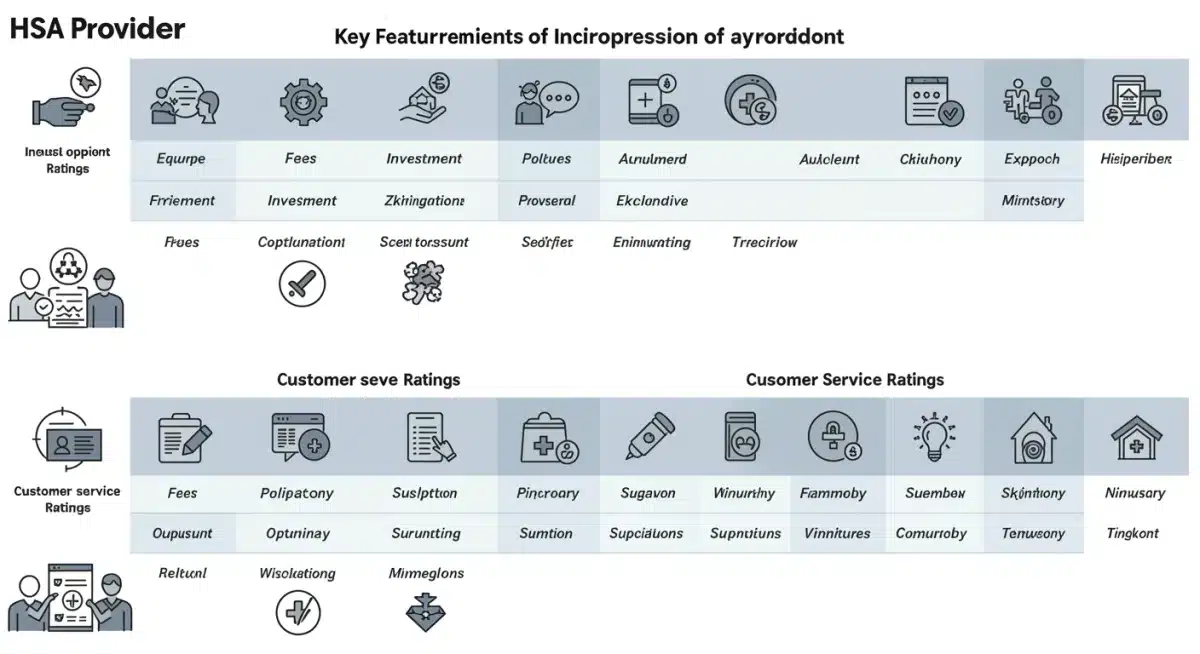
- Fees: These can significantly erode your savings over time. Look for monthly maintenance fees, investment fees, transaction fees, and any other hidden charges. Some providers waive fees for higher balances.
- Investment Options: For many, the ability to invest HSA funds is a major draw. Evaluate the range of investment choices (mutual funds, ETFs, individual stocks), their associated expense ratios, and the ease of managing your investments.
- Customer Service: Easy access to support, whether via phone, email, or live chat, is invaluable, especially when dealing with medical expenses or account queries.
- Digital Tools and User Experience: A user-friendly online portal and mobile app can make managing your HSA much simpler, from tracking expenses to making contributions and investments.
- Minimum Balances: Some providers require a minimum balance to invest or to waive certain fees. Ensure these align with your financial capacity.
- Debit Card/Payment Options: The convenience of paying directly for medical expenses with an HSA debit card or through online bill pay can be a significant advantage.
- Educational Resources: A provider that offers helpful resources and guidance on maximizing your HSA can be a great benefit, especially for new users.
Top 2026 HSA Providers: A Detailed Comparison
While the exact offerings can shift, certain providers consistently rank high due to their robust platforms, competitive fees, and diverse investment options. Here, we’ll examine some of the anticipated leading 2026 HSA Providers, highlighting their strengths and areas where they might be less competitive.
Provider 1: Fidelity HSA
Fidelity is a perennial favorite for many investors, and their HSA offering is no exception. Fidelity’s reputation for low-cost investing extends to their HSA. They are often lauded for their fee structure and extensive investment choices.
Key Benefits:
- No Account Fees: Fidelity typically charges no monthly maintenance fees, regardless of your balance, which is a significant advantage.
- Robust Investment Platform: Access to Fidelity’s wide array of mutual funds, ETFs, and individual stocks. This includes many commission-free ETFs and low-cost index funds, making it an excellent choice for investors.
- No Minimum to Invest: You can invest your HSA funds with no minimum cash balance requirement, allowing you to put all your savings to work immediately.
- Strong Customer Support: Fidelity is known for its comprehensive customer service, available through various channels.
- Integrated Financial Planning: For those who already use Fidelity for other investment accounts, the HSA integrates seamlessly into their broader financial picture.
Considerations:
- While their investment platform is top-notch, newcomers to investing might find the sheer volume of options slightly overwhelming.
- The debit card functionality and expense tracking might be less integrated than some HSA-specific platforms, though still perfectly functional.
Provider 2: Lively HSA
Lively has quickly risen as a prominent HSA provider, particularly appealing to those who value a modern, user-friendly digital experience and competitive fees. They have made a name for themselves by focusing exclusively on HSAs, which often translates to specialized features.
Key Benefits:
- No Monthly Fees for Individuals: Lively offers a free individual HSA account, making it highly attractive for those looking to minimize costs.
- Integrated Investment Options: Lively partners with leading investment platforms (often Charles Schwab or TD Ameritrade, depending on the year) to provide a seamless investment experience directly within their portal. This simplifies the process for users.
- Excellent User Interface: Their web and mobile platforms are intuitive and easy to navigate, making expense tracking and account management straightforward.
- Strong Employer Solutions: Lively is also a popular choice for employers, often providing a streamlined experience for company-sponsored HSAs.
- Dedicated Customer Service: Their focus on HSAs means their support staff are highly knowledgeable about the intricacies of these accounts.
Considerations:
- While investment options are good, they might not be as extensive or diverse as a pure brokerage like Fidelity.
- Some users might prefer having investment options directly managed by Lively rather than through a third-party partnership.
Provider 3: Optum Bank HSA
Optum Bank is one of the largest administrators of HSAs in the country, often integrated directly with health insurance plans, particularly those from UnitedHealthcare. Their strength lies in their widespread adoption and integration capabilities.
Key Benefits:
- Widespread Integration: If your employer or health plan uses Optum Bank, managing your HSA can be exceptionally convenient, with contributions often directly deducted from your paycheck.
- Robust Online Portal: Provides comprehensive tools for managing contributions, tracking expenses, and accessing funds.
- Variety of Investment Options: Optum typically offers a diversified selection of mutual funds, often categorized by risk tolerance, making it accessible for different types of investors.
- Established and Reliable: As a major player, Optum Bank offers stability and a proven track record.
Considerations:
- Fee structures can sometimes be higher than pure-play HSA providers, especially if you don’t meet certain balance requirements to waive monthly fees.
- The investment platform, while functional, might not offer the same depth or low-cost options as dedicated investment firms.
- Customer service experiences can vary, sometimes due to the sheer volume of accounts they manage.
Provider 4: HSA Bank
HSA Bank is another industry giant, known for its extensive experience and strong focus on Health Savings Accounts. They cater to both individuals and employers, offering a comprehensive suite of services.
Key Benefits:
- Extensive Experience: As one of the oldest and largest HSA administrators, HSA Bank brings a wealth of experience and stability.
- Broad Investment Platform: Offers a range of investment options, typically through a brokerage partner (like TD Ameritrade or Charles Schwab), providing access to mutual funds, ETFs, and other securities.
- Flexible Account Options: They provide various account types and features, including debit cards and online bill pay for easy access to funds.
- Educational Resources: HSA Bank often provides valuable educational materials to help account holders understand and maximize their HSA benefits.
Considerations:
- Like Optum Bank, HSA Bank’s fee structure can sometimes include monthly maintenance fees, which may be waived with higher balances. It’s crucial to review their specific fee schedule for 2026.
- The user interface, while functional, might not always be as modern or intuitive as some newer, tech-focused providers like Lively.
- Investment fees (expense ratios of funds) should be carefully reviewed, as they can sometimes be higher than those found with pure discount brokerages.
Choosing the Best 2026 HSA Provider for You
The ‘best’ 2026 HSA provider isn’t a universal answer; it depends entirely on your individual needs, financial goals, and comfort with investing. Here’s a guide to help you narrow down your choice:
For the Savvy Investor:
If you’re comfortable managing investments, prioritize low fees, and want a wide selection of investment vehicles, Fidelity HSA is likely your top choice. Its zero monthly fees and extensive investment platform make it ideal for maximizing growth.
For the Modern User and Fee-Conscious Individual:
If you value a sleek, intuitive digital experience, minimal fees, and a straightforward approach to investing, Lively HSA stands out. It’s particularly good for those who want to invest but appreciate a more curated selection and seamless integration.
For Employer-Sponsored Plans and Integration:
If your employer offers an HSA through Optum Bank or HSA Bank, and you value the convenience of payroll deductions and integrated health plan management, sticking with these providers might be the most practical option. Carefully review their fee structures and investment access to ensure they meet your needs.
For Those with Lower Balances or Just Starting:
Look for providers with no minimum balance requirements or waived fees for lower balances. Lively and Fidelity often shine in this area, ensuring your early contributions aren’t eroded by administrative costs.
Maximizing Your HSA in 2026
Once you’ve chosen your 2026 HSA provider, the next step is to maximize its potential. Here are some strategies:
- Contribute the Maximum: If financially feasible, aim to contribute the maximum allowed by the IRS each year. This maximizes your tax deductions and the amount available for tax-free growth.
- Invest Your Funds: Don’t just let your HSA balance sit in cash, especially if you have a substantial emergency fund elsewhere. Invest a portion of your HSA in low-cost index funds or ETFs to take advantage of the tax-free growth.
- Pay for Medical Expenses Out-of-Pocket (If Possible): If you have the cash flow, consider paying for current medical expenses out of your regular checking account and letting your HSA funds grow untouched. You can reimburse yourself tax-free later for any qualified medical expenses incurred after your HSA was established, even years down the line. Keep meticulous records!
- Keep Records: Maintain detailed records of all qualified medical expenses, especially if you plan to pay out-of-pocket and reimburse yourself later. This is crucial for tax purposes.
- Understand Qualified Expenses: Familiarize yourself with what constitutes a qualified medical expense. This includes deductibles, co-payments, prescription drugs, dental care, vision care, and even certain over-the-counter medications with a doctor’s prescription.
- Plan for Retirement: View your HSA as a powerful retirement savings tool. After age 65, it functions much like a traditional IRA, but with the added benefit of tax-free withdrawals for medical expenses.
The power of compound interest, coupled with the triple tax advantage, makes an HSA an indispensable part of your financial planning. By strategically choosing your 2026 HSA provider and actively managing your account, you can build a significant nest egg for future healthcare needs and overall financial security.

Future-Proofing Your Health Savings: Beyond 2026
While this guide focuses on 2026 HSA Providers, it’s important to think long-term. The healthcare landscape is constantly changing, and your HSA should be adaptable. Consider providers that offer:
- Flexibility in Investment Options: As your financial knowledge or risk tolerance evolves, you might want different investment choices. A provider with a broad and adaptable investment platform is beneficial.
- Scalability: If you anticipate your HSA balance growing significantly, ensure your chosen provider can handle larger balances without introducing punitive fees or limiting investment access.
- Innovation: Providers that continually update their digital tools and offer new features can enhance your user experience and management efficiency in the long run.
Regularly review your HSA provider’s fee schedule and investment performance. While switching providers can involve some paperwork, it might be worthwhile if you find a significantly better option that aligns more closely with your financial goals. Many providers facilitate transfers, making the process smoother than it once was.
The Role of Employers in HSA Choices
Many individuals access their HSAs through their employers. While your employer might have a preferred provider, you typically have the right to open an HSA with any eligible provider. If your employer’s chosen provider has high fees or limited investment options, you can open a separate HSA with a provider like Fidelity or Lively and transfer funds. This strategy allows you to benefit from employer contributions (if offered) while managing your investments with a provider that better suits your needs.
It’s crucial to understand your employer’s policies regarding HSA contributions and transfers. Some employers may only contribute to their designated provider, but you can usually initiate a trustee-to-trustee transfer of funds to your preferred HSA provider periodically. This allows you to consolidate your funds and manage them under the terms you prefer.
Conclusion: Making Your Informed Choice for 2026 HSA Providers
The world of Health Savings Accounts offers incredible opportunities for tax-advantaged savings and investment. By carefully evaluating the leading 2026 HSA Providers—Fidelity, Lively, Optum Bank, and HSA Bank—against your personal financial situation and investment goals, you can select the best partner for your healthcare journey.
Remember to prioritize low fees, diverse investment options, excellent customer service, and user-friendly digital tools. Whether you’re a seasoned investor looking for maximum growth or a first-time HSA user seeking simplicity, there’s a provider out there that’s right for you. Take the time to compare, ask questions, and make a decision that will empower your health and financial future in 2026 and beyond.
The triple tax advantage of HSAs is a powerful benefit that should not be overlooked. With healthcare costs continuing to rise, having a robust savings vehicle dedicated to medical expenses, that also doubles as a retirement account, is an invaluable asset. Choose wisely, contribute consistently, and let your health savings grow.